The Simple Trick That Finished The First Draft
It’s not a magic bullet, but it’s the only thing that works for me
The Simple Trick That Finished The First Draft
It’s not a magic bullet, but it’s the only thing that works for me
My apologies for the avalanche of posts recently. I’m slowly catching up by republishing everything I posted on Substack over the last few months. As I’m posting twice daily, the weekly newsletter, I should be all caught up soon. Then back to weekly posts. Previously published November 30 2025, on Writer on the Edge.
I was going to write this week’s newsletter the same way I’ve been doing it for weeks now — another update about Novel November, how things are going, blah blah blah. But then, I saw a reader’s comment on Substack.
Thanks for that, Rainbow Roxy. Your comment inspired this week’s post.
The question was simple: Do I have any tricks for hitting these enormous word counts over the period of a month?
And you know what? I do have a trick. Just one. But it’s the only thing that actually works.

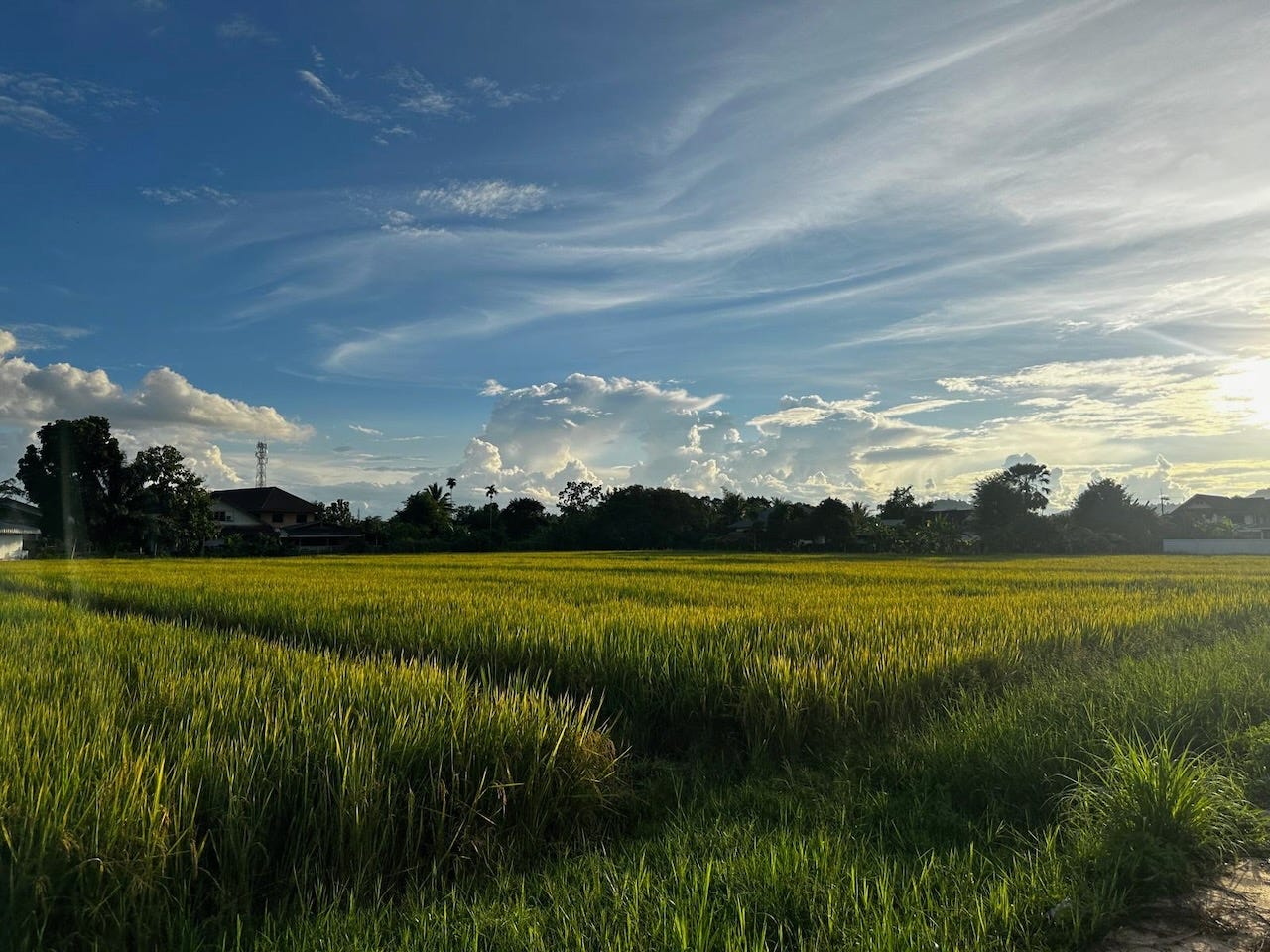
Fantastic View of Niagara
This image was taken from the Skylon Tower restaurant in 2011. A dream coach tour vacation, visiting the east side of Canada, ranging from Toronto to the Gulf of St. Lawrence. Good memories.
The Trick Isn’t What You Think
Let me be clear upfront: my daily word count was nowhere near as enormous as some people manage. Some writers consistently type 5,000 words plus every single day. I’ll never be like that because, frankly, it bores me. I need time for the story to gel, to figure out where it’s going, or let this mythical muse take me in new directions.
The trick to writing (actually dictating) nearly 75,000 words over 30 days wasn’t about forcing myself to write. It was about resistance. But not resistance against writing.
Resistance against the temptation to edit.
Yes, exactly. I know it sounds easy. There’s no magic bullet in the writing world, I’m afraid. This is pure self-discipline.
And I know, I absolutely know, that there are plot holes in my first draft. Massive plot holes you could drive a bus through. I see the character depth needs improvement overall, just about everywhere. I know there are characters mentioned who, on the face of it, should have been important but are hardly mentioned in the rest of the narrative. I could go on with a list as long as both my arms.
But the trick, as I think I so eloquently put it in my reply, is to resist the temptation to go and edit while you’re drafting.
Don’t do it.
Not Everyone Works This Way
Now, that’s not for everybody. Some people, especially experienced authors, write, cycle back, and rewrite, then cycle back. They make progress that way, so the previous day’s work is edited as they go, then write the new day’s work, and so on until they’re finished.
I know some authors achieve a near-perfect first draft. But it’s not really a first draft. It’s at a minimum a second draft. They’ve just been doing both at the same time.
It just depends on how your brain works.
My brain doesn’t work that way. I like things to be in order. I like things to be distinct, in distinct phases.
So that really was the trick. Yes. Now I have a first draft. I think it was around 102,000 words. And that may, or may not be, cut down or extended. Boring chunks could be deleted entirely, even passages which I’m very proud of.
What’s that old Stephen King requote? Kill your darlings.
But me being me, I won’t just delete them. I’ll move them to a folder or archive for good passages and use them as inspiration in the future, potentially.
Where I Struggled
The surprising thing about this first draft was where in the process I had the most difficulty.
The story’s idea was quite solid. It wasn’t the muddy middle, which I’d expected, and everyone says is the worst part of the process, or the most challenging part. True, it didn’t flow as easily as the first Act, but it was nowhere near as much of a struggle as the final chapters.
I knew, effectively, how the story would end, but getting there was a real issue. It meant that the transcriptions, the narrative, and the writing are spectacularly weak in the final act.
But I’m confident that I’ll have it massaged, fought into a good narrative. And depending on the genre, the word count may increase or decrease. I don’t really care, to be honest. The narrative will be done when it’s done. The story will be the story from start to finish.
What Comes Next
So, there we have it: the first draft is complete, and already I have an enormous list of improvements to make in the next draft.
The depth of character, the settings, some of the things I mentioned possibly last week or the week before, using all the senses, being descriptive, don’t tell but show. Show people, let people imagine. I don’t give character descriptions, for example. Or very basic descriptions. And I’ll let you guys fill in the blanks.
The reader is the one I’m writing this for. Not me. Yes, okay, I’m lying. I’m writing it for me. But also with the reader in mind. The reader has to find it interesting, a page-turner.
In terms of structure, I find myself leaning towards short chapters. Really scenes. And mini scenes within the chapters. That’s just the way I like to read fiction. And that just happens to have come out in the way I write fiction as well, which is kind of cool. Which means that this book is something, if I hadn’t written it and knew the story off by heart, I would find it an interesting read. A page-turner.
What happens next? What happens next? What happens next?
And that’s the idea, isn’t it? To get your readers unable to resist just one more chapter. And if we have short chapters, well, that temptation is near overwhelming, even at two o’clock in the morning when they have to be up at seven for work.
So, for my future readers, I’m sorry that you were kept awake half the night. But that just puts your life into perspective, doesn’t it? What’s more important? A good story or boring old day job?
Mission Accomplished
Anyway, I’m a happy bunny. I’ve managed to finish my first draft a month earlier than I had expected to. Even then, I thought I might have a first draft finished by the end of the year, but I wasn’t very confident.
But with the inspiration and the challenge of Novel November, that’s what really inspired me to sit down and get it done. And I have.
I’m still thinking about writing the entire process down in a post on the other channel. I’m not too sure. Yeah, probably that would be the place for it because it involves Claude and it involves voice memos and all that jazz. But it’s only valid for the first draft, of course.
Nuances will come when I start with the editing process. For the second draft, potentially the third draft. I did read something recently, I can’t remember where it was, and to be frank, I’m not really interested in finding out right now, that there could potentially be four drafts, five drafts, each one concentrating on different aspects of the narrative. Character depth, setting, and location, et cetera, et cetera.
Not too sure where it is, but I know it’s in my reading list somewhere or in a book somewhere. And that’s what I’ll be looking up over the next few weeks. I’ll probably start the editing process in the holidays. Maybe. Haven’t decided yet. I’ve got to have that feeling to do it, to start.
I’m excited. I won’t lie. I’m excited.
I’ve also got to think of the potential sequel or two sequels. Is this going to be a trilogy? Well, my feeling at the moment is yes, it should be mainly because the story is not complete. And I can see it requiring a lot more. Well, more story, I suppose.
Final Thoughts
The trick to finishing a first draft isn’t about writing faster or finding more time. It’s about resisting the urge to edit while you’re still creating. It’s about accepting that your first draft will have plot holes and weak characters and entire passages that need work. It’s about trusting that the editing phase exists for a reason, and that trying to do both at once is just asking for paralysis.
Some people can write and edit simultaneously. I can’t. My brain needs things in order, in distinct phases. And accepting that about myself is what allowed me to hit 102,000 words in a month (with a 30,000-word head start).
So if you’re struggling to finish that first draft, maybe the question isn’t “How do I write better?” Maybe it’s “How do I stop editing long enough to actually finish?”
Anyway, I hope you had a good and successful week. And I hope those Novel November challenges have had a successful month.
Until next week, take care of yourself. And have a great, great creative future.
Final Novel November Scoreboard
In case you missed it, I cruised past the Novel November target of 50,000 words last week; I hit the challenge target with 10 days to spare. Time flies when you’re having fun:
- Week 0 (Nov 1–2): 5,127 words ✓
- Week 1 (Nov 3–9): 19,842 words ✓
- Week 2 (Nov 10–16): 17,159 words ✓
- Week 3 (Nov 17–23): 17,564 words ✓
- Week 4 (Nov 24–30): 13,940 words ✓
Total word count: 73,632.
메타데이터
- post_id
- 61a6ed48fe6d
- slug
- the-simple-trick-that-finished-the-first-draft-61a6ed48fe6d
- url
- https://medium.com/@the-everyday-solopreneur/the-simple-trick-that-finished-the-first-draft-61a6ed48fe6d
- canonical_url
- https://medium.com/@the-everyday-solopreneur/the-simple-trick-that-finished-the-first-draft-61a6ed48fe6d
- author_url
- https://medium.com/@the-everyday-solopreneur
- status
- ok
- fetched_at
- 2026-08-03 02:51:34