The 1950s Paper That Teaches Contractors to Close Deals
Carbonless copy paper, invented in 1953, let a contractor sign a contract at a customer’s kitchen table and hand out copies on the spot. No…
The 1950s Paper That Teaches Contractors to Close Deals
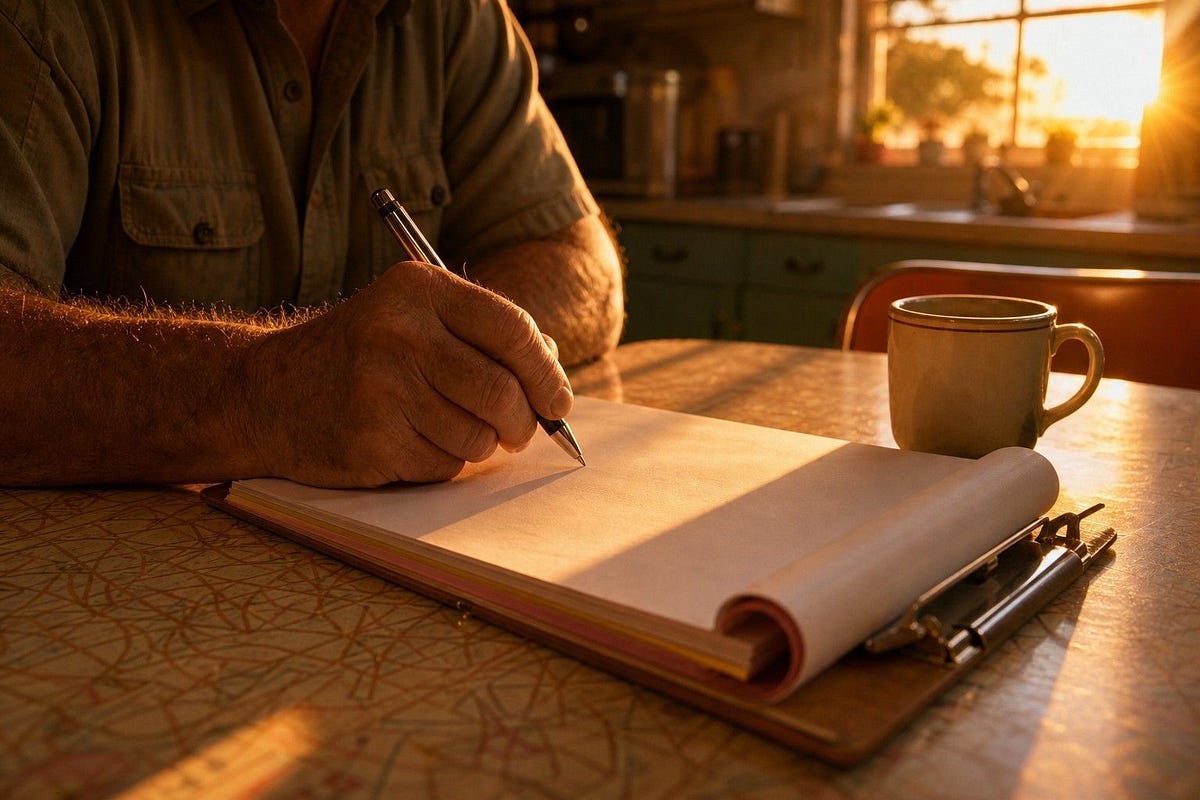
Carbonless copy paper, invented in 1953, let a contractor sign a contract at a customer’s kitchen table and hand out copies on the spot. No printer, no copier, no trip back to the office. It won because it removed friction at the exact moment money changed hands. That same rule decides who wins jobs today: the contractor who makes it easiest to say yes gets the work.
⚡ QUICK SUMMARY
Those white, yellow, and pink form pads were called carbonless copy paper, or NCR forms. Two chemists at National Cash Register invented the paper in 1953. It let a business owner close a deal and hand out copies instantly , with no machine in sight. The lesson for contractors: the tool that removes friction at the moment of sale wins . In 2026, that tool is digital.
If you ran a business before smartphones, you remember the pads. White sheet on top. Canary yellow in the middle. Pink on the bottom. You pressed hard with a pen, and your writing went through all three sheets like magic.
At SpeedMobi, we have helped home service contractors get found and close more jobs since 2013, serving more than 5,000 clients across 87+ trades. But long before we existed, one piece of paper was quietly doing the same job we do now: making the sale easier.
What Was Carbonless Copy Paper?
Carbonless copy paper was a form pad that made instant copies with nothing but pen pressure. Tiny ink capsules coated the back of each sheet. Press down, the capsules burst, and the writing appeared on the sheet below.
Two chemists at the National Cash Register Company, Barry Green and Lowell Schleicher, developed the microencapsulation system behind it. NCR filed the patent on June 30, 1953, and made the first commercial sale on March 26, 1954 (TAPPI, 2014). People called it NCR paper, short for No Carbon Required.
The three-layer version was the famous “triplicate form.” White copy for the customer. Yellow for the office. Pink for the truck or the job file.
What Did Business Look Like Before It?
Before carbonless paper, making a copy meant sliding a sheet of carbon paper between two pages and hoping for the best. Carbon paper was patented by Ralph Wedgwood all the way back in 1806 (Wired, 2009). It worked, but it was messy. It smudged your hands, your shirt, and your paperwork. Reading the bottom copy in a stack was a guessing game.
Then NCR paper showed up, and something important happened for every plumber, roofer, and electrician in America. A contractor could sit at a homeowner’s kitchen table, write up the job, get a signature, and hand the customer their copy right there. The office copy and the crew copy were already made. The deal was closed before the truck left the driveway.
Why Did Triplicate Forms Win?
Triplicate forms won because they removed a headache at the exact moment money changed hands. They did not win because the chemistry was clever. The customer never knew about ink capsules. They just knew the deal was simple, fast, and done.
💡 The Timeless Rule
Every hour between “yes” and “signed” gives the customer time to change their mind, and gives your competitor time to call back first. The winning tool shrinks that gap to zero.
Think about what the pad really did for a contractor in 1960:
1 It closed the deal on the spot
No “I’ll mail you the paperwork.” The signature happened while the customer was still excited.
2 It kept everyone on the same page
Customer, office, and crew all held the same record. No retyping, no “that’s not what we agreed to.”
3 It needed no machine and no power
The whole system fit on a clipboard. It worked in a kitchen, a driveway, or on a roof.

Where Is the Friction in Your Sales Process?
Our free assessment shows you where customers are dropping off between “interested” and “signed.”
What Is Today’s Version of the Triplicate Form?
Today’s triplicate form is the digital tool that closes the job the moment the customer says yes. The pen and pink sheet are gone, but the job they did still has to get done. Here is the modern match for each one:
How Do You Remove Friction From Your Own Sales Process?
Start by finding the one step where your customer has to wait. Every business has one. Ask yourself these questions:
✓ Can a customer sign the same day they say yes? ✓ Does your quote arrive while you are still top of mind? ✓ Do your office and your crew see the same job details? ✓ If someone calls at 7 PM, does anything answer?
The chemists at NCR did not set out to make paper prettier. They set out to kill a headache. Seventy years later, the businesses that win are still the ones that make saying yes the easiest part of the customer’s day.
The takeaway: tools do not win because they are fancy. They win because they remove a headache at the exact moment money changes hands. Find that moment in your business and make it effortless.

About the Author
Keith Carpenter , Founder of SpeedMobi. Keith founded SpeedMobi in 2013 and has helped over 5,000 home service businesses across the US and Canada get found online.

Make Saying Yes the Easiest Part of the Job
See how customers experience your business from first search to signed deal, free.
Originally published at https://www.speedmobi.com on August 13, 2026.
메타데이터
- post_id
- 623908c7dc4a
- slug
- the-1950s-paper-that-teaches-contractors-to-close-deals-623908c7dc4a
- url
- https://medium.com/@speedmobi/the-1950s-paper-that-teaches-contractors-to-close-deals-623908c7dc4a
- canonical_url
- https://medium.com/@speedmobi/the-1950s-paper-that-teaches-contractors-to-close-deals-623908c7dc4a
- author_url
- https://medium.com/@speedmobi
- status
- ok
- fetched_at
- 2026-08-17 13:45:53