Top Benefits of ISO Health and Safety Certification in the UAE
Introduction
Top Benefits of ISO Health and Safety Certification in the UAE
Introduction
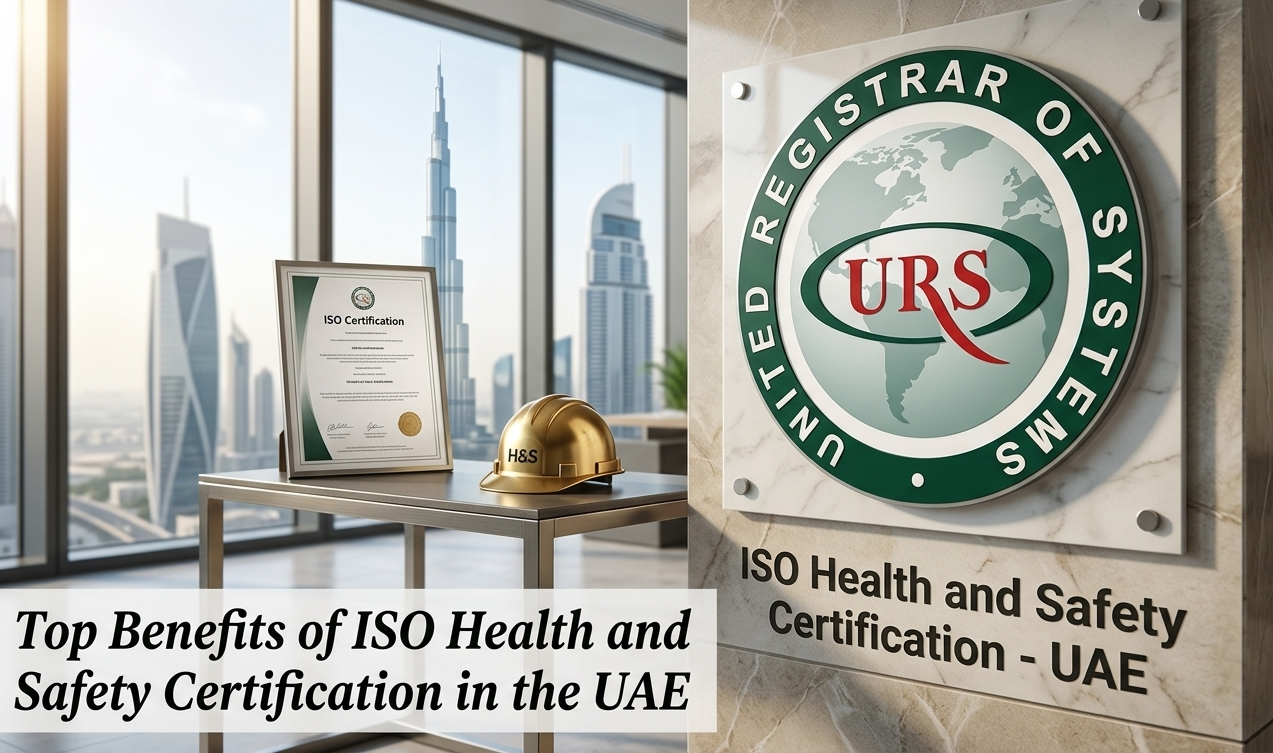
Workplace safety has become a major business priority across the UAE, especially in high-risk industries such as construction, oil & gas, logistics, manufacturing, and facilities management. With Dubai continuing to expand its infrastructure, commercial developments, and industrial operations, companies are under increasing pressure to maintain safer working environments, reduce incidents, and meet both legal and contractual requirements.
This is where ISO Health And Safety In Dubai plays a critical role. ISO 45001, the international standard for Occupational Health and Safety Management Systems (OHSMS), provides organizations with a structured framework to identify hazards, control risks, prevent workplace injuries, and improve overall safety performance. Instead of relying on reactive safety practices, ISO certification encourages businesses to adopt proactive planning, consistent monitoring, and continuous improvement.
Across global industries, ISO 45001 is widely recognized as the leading benchmark for workplace health and safety. Its adoption continues to grow rapidly because it supports stronger compliance, improves employee confidence, reduces operational disruptions, and enhances business reputation in competitive markets like the UAE.
In this blog, we will explore the top benefits of ISO Health and Safety Certification in the UAE, and why achieving ISO Health And Safety In Dubai is not only a compliance-driven decision, but also a strategic investment in long-term business growth. We will also explain how URS Middle East supports organizations in Dubai and across the UAE with professional guidance, implementation support, and certification readiness.
By the end, you will have a complete understanding of how ISO 45001 certification strengthens safety culture, improves business credibility, and helps organizations build a more sustainable and risk-controlled workplace environment.
What Is ISO Health And Safety Certification?
ISO Health and Safety Certification refers to achieving compliance with ISO 45001, the internationally recognized standard for Occupational Health and Safety Management Systems (OHSMS). It is designed to help organizations create a structured approach to preventing workplace injuries, illnesses, and fatalities by identifying hazards, controlling risks, and continuously improving safety performance.
Unlike basic safety policies that may focus only on meeting minimum legal requirements, ISO 45001 provides a complete management framework that integrates workplace safety into daily business operations. It ensures that safety is not treated as a separate responsibility but becomes part of the organization’s leadership strategy, employee culture, and operational planning.
ISO 45001: A Global Standard for Workplace Safety
ISO 45001 was developed to replace OHSAS 18001 and has become the global benchmark for health and safety management. It applies to organizations of all sizes and industries, whether the company operates in construction sites, manufacturing plants, warehouses, corporate offices, or service environments.
The core purpose of ISO 45001 is to help businesses:
- Reduce workplace accidents and occupational diseases
- Improve hazard identification and risk control measures
- Enhance emergency preparedness and response
- Strengthen compliance with safety laws and regulations
- Promote worker participation in safety programs
- Improve overall organizational resilience and operational continuity
This is why ISO 45001 is widely adopted across industries where safety risks are high, especially in countries like the UAE where regulatory enforcement and tender requirements are becoming increasingly strict.
What ISO Health And Safety In Dubai Means for Businesses
When businesses pursue ISO Health And Safety In Dubai, they are essentially adopting a recognized international safety framework that aligns with UAE market expectations. Dubai’s corporate sector is highly competitive, and many clients, developers, and government-related entities prefer working with companies that can demonstrate strong health and safety systems.
ISO 45001 certification also proves that an organization has implemented a consistent system to manage workplace safety risks, rather than relying on informal or incomplete procedures.
Key Components of ISO Health and Safety Certification
To achieve ISO 45001 certification, an organization must establish and maintain a complete Occupational Health and Safety Management System, which includes:
- A formal health and safety policy
- Hazard identification and risk assessments
- Compliance tracking with legal and contractual requirements
- Safety objectives and improvement programs
- Training and competence development
- Emergency preparedness planning
- Incident reporting and investigation procedures
- Internal audits and management reviews
- Continual improvement processes
This structured approach ensures that workplace safety is monitored, measured, and improved over time.
Why ISO Certification Is More Than a Certificate
Many businesses assume ISO certification is simply a documentation exercise, but in reality, it represents a measurable operational improvement. ISO 45001 certification demonstrates that safety is being managed systematically through leadership involvement, employee participation, and ongoing monitoring.
This is one of the key reasons why ISO Health and Safety certification is now seen as a business growth tool in the UAE rather than just a compliance requirement.
At URS Middle East, we help organizations implement ISO 45001 with the right planning, documentation, training, and audit readiness support to ensure certification success and long-term compliance.
Why ISO Health And Safety In Dubai Matters
In a rapidly growing business hub like Dubai, workplace safety is not just a regulatory requirement — it is a strategic necessity. Companies across sectors are expected to demonstrate proactive measures in managing occupational risks, protecting employees, and maintaining operational efficiency. Implementing ISO Health And Safety In Dubai ensures that organizations meet these expectations while creating measurable business value.
Alignment with UAE Regulations
The UAE has stringent laws governing workplace safety, including regulations enforced by the Ministry of Human Resources and Emiratisation (MOHRE), Dubai Municipality, and OSHAD in Abu Dhabi. ISO 45001 certification helps businesses systematically align with these requirements by implementing standard operating procedures, risk assessments, and incident reporting mechanisms.
This alignment ensures that organizations are not only compliant but also prepared for audits, inspections, and tender requirements that increasingly prioritize certified safety standards. By integrating ISO Health and Safety protocols, companies reduce the risk of legal penalties, fines, or operational shutdowns.
Meeting Market and Client Expectations
Many clients, contractors, and government entities in Dubai now require ISO-certified partners as part of their prequalification criteria. Having ISO Health And Safety In Dubai positions a business as reliable and responsible, increasing opportunities in competitive tenders and contracts.
This is especially critical in sectors such as:
- Construction: Large-scale infrastructure projects demand strict adherence to safety standards to minimize accidents.
- Oil & Gas: Hazardous operations require robust health and safety management systems to ensure employee protection.
- Manufacturing & Logistics: Safe processes reduce downtime and increase operational efficiency.
- Corporate & Service Industries: Even office environments benefit from structured risk management, particularly for employee well-being.
Enhancing Corporate Reputation
In Dubai’s business environment, reputation is closely tied to trust, quality, and safety. Organizations certified in ISO Health and Safety demonstrate a commitment to employee welfare and ethical business practices, enhancing their credibility with stakeholders, investors, and employees.
Proactive Risk Management
ISO 45001 encourages organizations to move from reactive safety measures to proactive risk management, identifying hazards before they cause accidents. This approach minimizes workplace incidents, reduces costs associated with injuries, and builds a safer, more productive work environment.
Top Benefits of ISO Health and Safety Certification in the UAE
Implementing ISO Health And Safety In Dubai brings significant advantages that go far beyond regulatory compliance. Organizations that adopt ISO 45001 experience measurable improvements in safety, operational efficiency, employee engagement, and business reputation. Below are the top benefits for businesses in the UAE:
1. Enhanced Workplace Safety & Risk Prevention
ISO 45001 establishes a structured framework for identifying hazards, assessing risks, and implementing preventive measures. Companies that implement this system often see a substantial reduction in workplace accidents and occupational illnesses.
In practical terms, Dubai-based construction and industrial companies have reported a decrease in incidents by up to 30% after adopting ISO-certified health and safety systems. This proactive approach protects employees, reduces downtime, and minimizes potential liabilities.
Why it matters: Safer workplaces improve employee morale, lower absenteeism, and maintain continuous operations even in high-risk environments.
2. Regulatory Compliance & Legal Assurance
The UAE has strict health and safety regulations governed by MOHRE, Dubai Municipality, and OSHAD Abu Dhabi. ISO Health and Safety certification ensures that companies systematically comply with these requirements.
This reduces the risk of legal penalties, fines, and project delays due to non-compliance. Being certified also positions your company as a trusted partner for government contracts and private tenders that require demonstrable compliance.
3. Reduced Operational Costs
Accidents and safety breaches can be expensive, involving medical costs, insurance premiums, legal fees, and lost productivity. ISO 45001 helps organizations mitigate these costs by:
- Reducing workplace incidents
- Optimizing safety-related processes
- Minimizing downtime
By investing in safety management systems, companies often see significant long-term savings while maintaining operational efficiency.
4. Improved Employee Engagement and Productivity
A safe workplace fosters confidence and motivation among employees. When staff feel protected and valued, engagement levels rise, absenteeism decreases, and overall productivity improves.
ISO 45001 emphasizes worker participation, creating a culture where employees actively contribute to risk assessment, safety reporting, and continuous improvement. This collaborative environment drives innovation and operational efficiency across all departments.
5. Stronger Corporate Reputation and Market Trust
ISO certification signals a commitment to excellence and responsible business practices. For companies in Dubai and across the UAE, this is a competitive differentiator:
- Attracts clients and investors who prioritize health and safety standards
- Strengthens brand image in the marketplace
- Enhances opportunities for government and private tenders
A certified organization is perceived as trustworthy, ethical, and prepared to meet international standards, giving it an edge over competitors.
Common Misconceptions About ISO Health and Safety Certification
Despite the growing adoption of ISO Health And Safety In Dubai, many organizations still hold misconceptions that prevent them from pursuing certification. Addressing these myths is essential for understanding the real value ISO 45001 brings to businesses in the UAE.
Myth 1: ISO Certification Is Only for Large Companies
Some companies believe that ISO 45001 is suitable only for multinational corporations or large-scale operations. In reality, the standard is applicable to organizations of all sizes and industries, from small service providers to large construction firms.
Even small and medium enterprises (SMEs) in Dubai can benefit by implementing a structured health and safety system, which helps reduce incidents, improve compliance, and increase credibility with clients and partners.
Myth 2: ISO Certification Is Not Required in the UAE
While ISO Health and Safety certification is not legally mandatory in the UAE, it has become increasingly preferred in tenders, contracts, and business partnerships. Many government projects and private sector contracts now require ISO 45001 certification as proof of a reliable safety management system.
This means that even if a company meets minimum regulatory requirements, ISO certification provides a competitive advantage and demonstrates a higher standard of workplace safety.
Myth 3: ISO Certification Is Just Paperwork
Some organizations perceive certification as a documentation exercise with no real operational benefits. However, ISO 45001 is far more than paperwork. It involves active risk assessment, training, hazard control, and continuous improvement of safety processes.
When properly implemented, it reduces accidents, improves operational efficiency, and enhances employee engagement, translating into measurable business outcomes.
Myth 4: Certification Is Expensive and Time-Consuming
While implementing ISO 45001 requires planning and resources, the long-term cost savings from reduced incidents, lower insurance premiums, and operational efficiency far outweigh the initial investment.
With expert guidance from partners like URS Middle East, businesses can streamline implementation, minimize disruption, and achieve certification efficiently.
Myth 5: ISO Certification Only Benefits the Safety Department
ISO Health and Safety systems impact the entire organization, not just the safety team. It strengthens leadership oversight, engages employees at all levels, and integrates safety into operational planning, procurement, and project management.
This organization-wide approach ensures holistic improvements in risk management, productivity, and corporate reputation.
How URS Middle East Supports Your ISO Health and Safety Journey
Implementing ISO Health And Safety In Dubai can seem complex, especially for organizations navigating local regulations, operational risks, and international standards simultaneously. This is where URS Middle East provides comprehensive support, ensuring a smooth and effective certification process.
1. Expert Consultation and Gap Analysis
URS Middle East begins by assessing your current health and safety practices against ISO 45001 standards. This gap analysis identifies areas of improvement, compliance risks, and operational challenges, providing a clear roadmap for certification.
2. Implementation Support
Once gaps are identified, URS Middle East guides organizations in developing and implementing structured health and safety systems. This includes:
- Designing safety policies and procedures
- Conducting risk assessments and hazard controls
- Establishing emergency preparedness plans
- Implementing employee training programs
By providing hands-on support, URS Middle East ensures your systems are aligned with both ISO requirements and UAE regulatory frameworks, including MOHRE, Dubai Municipality, and OSHAD standards.
3. Audit Readiness and Documentation
Certification requires thorough documentation and readiness for external audits. URS Middle East assists with:
- Preparing compliant manuals and records
- Conducting internal audits to test effectiveness
- Ensuring your organization is ready for the final certification audit
This reduces the risk of audit findings and speeds up the certification process.
4. Training and Awareness Programs
A successful ISO 45001 system relies on employee engagement. URS Middle East provides tailored training sessions to:
- Educate employees on safety responsibilities
- Improve hazard identification skills
- Promote a culture of continuous improvement
This ensures that safety becomes an integral part of daily operations rather than just a policy.
5. Long-Term Support and Continuous Improvement
ISO Health and Safety is not a one-time achievement — it requires ongoing monitoring and improvement. URS Middle East continues to support businesses through periodic reviews, updates to policies, and guidance for maintaining compliance and enhancing operational safety.
Why Choose URS Middle East?
With in-depth knowledge of international standards and local UAE regulations, URS Middle East bridges the gap between global best practices and regional business realities. Partnering with URS ensures a seamless, efficient, and value-driven ISO certification journey that strengthens safety, compliance, and business reputation.
Frequently Asked Questions (FAQs)
To help businesses in Dubai better understand ISO Health And Safety In Dubai, here are the top five frequently asked questions along with detailed answers:
Q1: What is ISO Health And Safety In Dubai and why is it important?
Answer: ISO Health And Safety In Dubai refers to implementing ISO 45001, the international standard for Occupational Health and Safety Management Systems (OHSMS). It provides a structured approach to identify hazards, manage risks, and prevent workplace incidents. Certification demonstrates compliance with international best practices, enhances employee safety, improves operational efficiency, and strengthens business credibility in Dubai and across the UAE.
Q2: Is ISO Health and Safety certification mandatory in the UAE?
ISO 45001 certification is not legally mandatory in the UAE. However, it is increasingly preferred by clients, contractors, and government entities as part of tender or contract requirements. Achieving certification shows a company’s commitment to workplace safety and gives it a competitive edge in the market.
Q3: How long does it take to achieve ISO Health and Safety certification?
The duration depends on the size of the organization, complexity of operations, and current safety practices. Typically, it involves:
- Gap assessment and planning
- Documentation and system implementation
- Employee training
- Internal audit and corrective actions
- Certification audit
Most organizations can achieve certification within 3–6 months with proper guidance.
Q4: How does ISO certification improve employee safety?
ISO 45001 fosters a proactive safety culture by:
- Identifying hazards and controlling risks systematically
- Establishing clear safety procedures and emergency plans
- Conducting training programs for employees
- Monitoring and reviewing safety performance
This structured approach reduces workplace accidents, enhances well-being, and builds trust among employees.
Q5: Can ISO Health and Safety certification improve business competitiveness in Dubai?
Answer: Yes. Certification signals reliability, professionalism, and responsible business practices. Many clients and government authorities prefer working with ISO-certified companies, which increases opportunities for larger contracts, strategic partnerships, and tenders. Additionally, it enhances reputation and builds long-term trust with stakeholders.
Conclusion
Implementing ISO Health And Safety In Dubai is more than a compliance requirement — it is a strategic investment that benefits businesses, employees, and stakeholders alike. By adopting ISO 45001, organizations in the UAE can:
- Enhance workplace safety through proactive hazard identification and risk management
- Ensure regulatory compliance with MOHRE, Dubai Municipality, and OSHAD standards
- Reduce operational costs associated with accidents, insurance, and downtime
- Improve employee engagement and productivity by fostering a safe and supportive work environment
- Strengthen corporate reputation and increase market trust, opening doors to government contracts and strategic partnerships
For businesses navigating the complex landscape of safety regulations and international standards, partnering with URS Middle East ensures a smooth and effective ISO certification journey. From gap analysis and implementation support to training, audit readiness, and continuous improvement, URS Middle East provides tailored solutions that align with your organizational goals and UAE market requirements.
Achieving ISO Health and Safety certification is not just about obtaining a certificate — it’s about embedding a culture of safety, efficiency, and excellence throughout your organization.
Contact Us
For expert guidance and end-to-end support on ISO Health And Safety In Dubai, contact URS Middle East today and take the first step towards a safer, compliant, and more competitive workplace.
메타데이터
- post_id
- 62637a216f85
- slug
- top-benefits-of-iso-health-and-safety-certification-in-the-uae-62637a216f85
- url
- https://medium.com/@urscertificationservice/top-benefits-of-iso-health-and-safety-certification-in-the-uae-62637a216f85
- canonical_url
- https://medium.com/@urscertificationservice/top-benefits-of-iso-health-and-safety-certification-in-the-uae-62637a216f85
- author_url
- https://medium.com/@urscertificationservice
- status
- ok
- fetched_at
- 2026-07-13 09:30:18