This Pussy Don’t Pop For You
A post on refusal, entitlement, and why “no” became a personality
This Pussy Don’t Pop For You
A post on refusal, entitlement, and why “no” became a personality
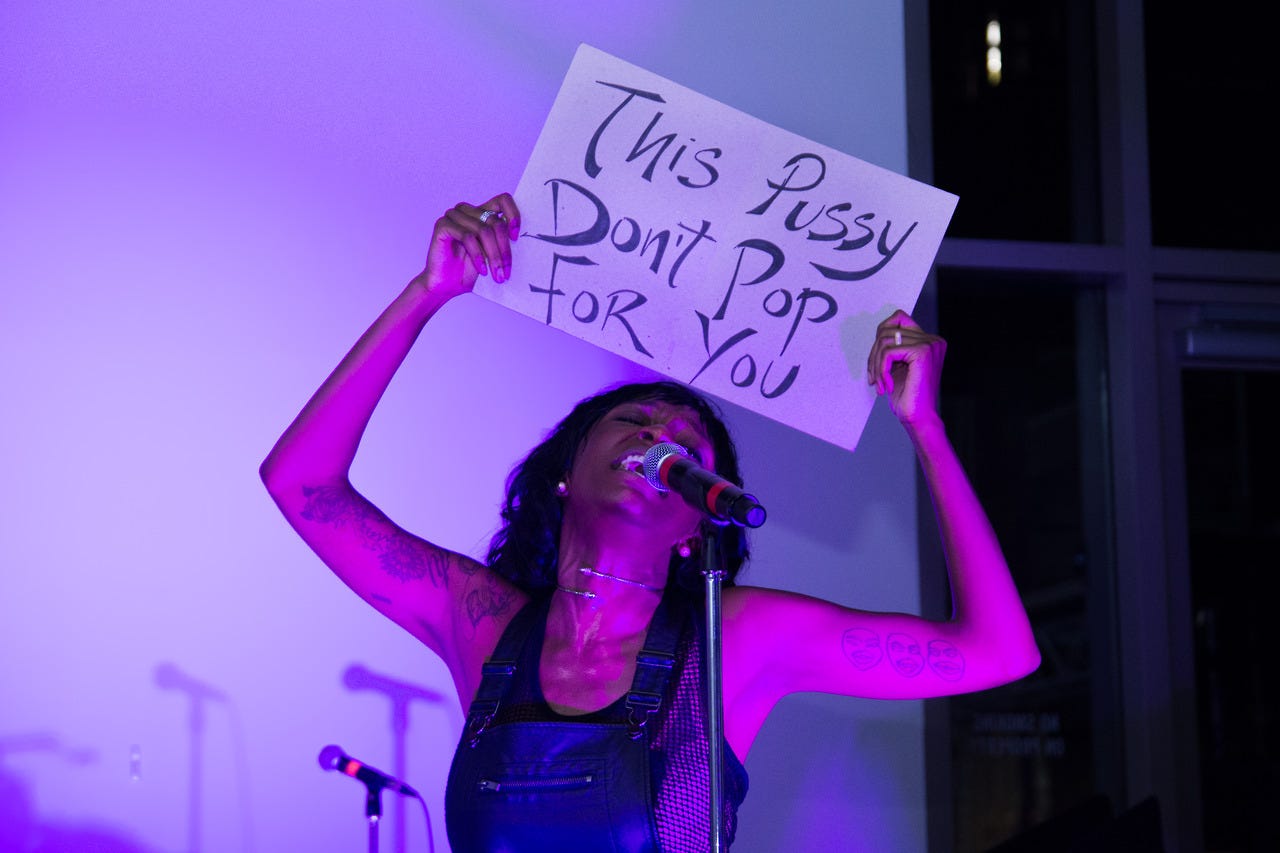
Image: “This Pussy Don’t Pop For You” — Photo by Sarah Bader
The Line That Lives Rent-Free in My Head
I first heard Junglepussy say “this pussy don’t pop for you,” to feel that personally attacked. Not because it was aimed at me. But because something in the bluntness of it the sheer, unbothered declarative energy of it made me realise how rarely we hear women just not performing. Not softening. Not explaining. Not saying “I’m just not ready” or “it’s not you, it’s timing” or offering twelve contextual footnotes about their emotional availability.
Just: no. Not for you. Moving on.
That lyric is doing more cultural work than most think-pieces published this decade.
We Live in the Age of Compulsory Availability
Let’s be honest about what 2020s culture actually rewards in women being desired and being accessible. Not just sexually, emotionally, aesthetically, digitally. The ideal modern woman is perpetually available to be looked at, responded to, rated, and consumed.
She posts. She responds within the hour. She is warm and relatable and a little vulnerable but not too broken. She is sexy but not threatening. She says yes to things with grace and declines with an explanation that still centres the other person’s feelings.
She performs.
And what Junglepussy did what that lyric does is refuse the performance entirely. It doesn’t explain. It doesn’t apologise. It doesn’t say “maybe later” or “let’s see where this goes.” It just announces a fact this is not available to you. That’s it. Conversation over.
In a culture that has made female availability its baseline expectation, that is genuinely radical.
Entitlement Has a Very Specific Smell
The lyric isn’t about all men or all situations. It’s about a particular dynamic that anyone who has ever been a woman (or been perceived as one) will recognise immediately, the person who treats your body, your attention, your warmth, as something already owed to them. Something they’re just waiting to collect.
It’s the guy who is confused, actually confused when you don’t want to sleep with him after he was nice to you all evening. As if kindness were a layaway plan for sex.
It’s the partner who frames your refusal as coldness, as punishment, as proof that you don’t really love them.
It’s the broader cultural script that reads a woman’s “no” as a negotiating position rather than an answer.
“This pussy don’t pop for you” cuts through all of it in six words. It doesn’t engage with the entitlement. It doesn’t try to educate it or manage it. It simply doesn’t recognise it as having any authority.
That is, genuinely, a vibe we could all stand to develop.
Refusal as Identity. Which Is Both Cool and a Little Concerning
Here’s where I get complicated, because this is a complicated thing. There is something genuinely powerful about refusal becoming a cultural language. About women turning “no” into a posture, a caption, a whole aesthetic. About making boundaries not just something you practice privately but something you perform publicly with wit and swagger.
“Not for you” as a way of life. There are worse philosophies.
But there is also something worth sitting with, we live in an era where having a personality means having a brand, and refusing to be available has become its own form of performance. The person who very loudly does not pop for anyone has sometimes just swapped one kind of performance for another.
Real refusal, the unglamorous kind, is quiet. It’s the text you don’t answer. The date you don’t go on. The relationship you leave before it becomes a story. It doesn’t need a caption.
The viral slogan version of refusal is still, at some level, directed at an audience. And sometimes that audience is the person being refused, which means the refusal is still, weirdly, for them.
I am not saying this to undercut the lyric or the energy. I’m saying it because I think the most interesting thing about this cultural moment is that we’ve gotten very good at performing autonomy, and we’re still figuring out what actually having it feels like.
The Sex Strike: When Refusal Goes Political
There is a longer, thornier tradition sitting underneath “this pussy don’t pop for you” and it is worth naming because it makes some feminists deeply uncomfortable.
The sex strike. From Lysistrata, where Aristophanes imagined women withholding sex to end a war in 411 BC, to Leymah Gbowee’s real, documented use of it in Liberia in 2003 to pressure men toward peace negotiations, to the more recent calls after Roe v. Wade was overturned, “if we can’t control our bodies, neither can you” the idea keeps returning.
Every time it does, feminism has a minor civil war about it. The critique from the left is sharp and not wrong a sex strike implicitly frames sex as a resource women manage and men consume, which is exactly the transactional logic most feminists want to dismantle. And rightly so.
It suggests that the point of refusal is leverage, not liberation that the “no” is still oriented toward men, still defined by their reaction to it. “This pussy don’t pop for you” sits in interesting tension with all of this. On the surface it sounds like the same move, withholding as power. But the energy is different. A strike is collective and strategic. It has demands. It expects a response. What Junglepussy is doing is closer to indifference, not “I’m refusing until you change” but “you were never getting this in the first place.” One is a negotiation. The other is a closed door that was never yours to open. And that distinction matters, because the most radical version of sexual autonomy isn’t managed access. It’s the total removal of the expectation that access was ever on the table.
What It Would Mean to Actually Not Pop
Actual autonomy over your body, your desire, your availability, it’s less dramatic than the slogans suggest.
It’s knowing what you want without needing to justify it. It’s saying no without an explanation and not feeling guilty for approximately three days afterward. It’s not performing your disinterest for social media approval. It’s not needing the other person to understand your refusal for it to be valid. It’s not even really about saying no. It’s about the fact that your yes is entirely yours to give, not theirs to expect.
Which is a thing that sounds obvious and is, in practice, genuinely hard to embody in a culture that still treats women’s availability as a default setting that has to be actively switched off.
So Yes, It’s a Movement Sort Of
Is “this pussy don’t pop for you” a movement? Not in any organised sense. There is no manifesto. There are no meetings. No one is handing out pamphlets.
But as a cultural stance, as a shorthand for refusing entitlement, rejecting performative availability, and treating desire as something earned rather than owed, it is doing real cultural work.
It arrived at a specific moment when consent discourse had become somewhat sanitised into HR-friendly language, and someone just said the loud, vulgar, funny, honest version out loud over a beat, and everyone who heard it thought: yes. That is exactly what I meant. That’s what good art does. It says the thing that was true before it was said.
The Takeaway (If You Need One)
We are living through a slow, loud, messy renegotiation of what women owe people who want them. Sexually, emotionally, aesthetically, digitally.
The answer, increasingly, is, nothing that isn’t freely given. That’s not radical feminism. That’s just basic accounting. Junglepussy just said it better.
The Career Ms 💋
This post was written by someone who has definitely over-explained a “no” at least fifteen times.
메타데이터
- post_id
- 6263da2a7d53
- slug
- this-pussy-dont-pop-for-you-6263da2a7d53
- url
- https://medium.com/sensual-enchantment/this-pussy-dont-pop-for-you-6263da2a7d53
- canonical_url
- https://medium.com/sensual-enchantment/this-pussy-dont-pop-for-you-6263da2a7d53
- author_url
- https://medium.com/@thecareerms
- status
- ok
- fetched_at
- 2026-07-09 05:26:43