How Lebanon’s Language is Mapping a New World Order
France has always enjoyed a special relationship with Lebanon. From the proclamation of Greater Lebanon by General Henri Gouraud in 1920 to…
How Lebanon’s Language is Mapping a New World Order
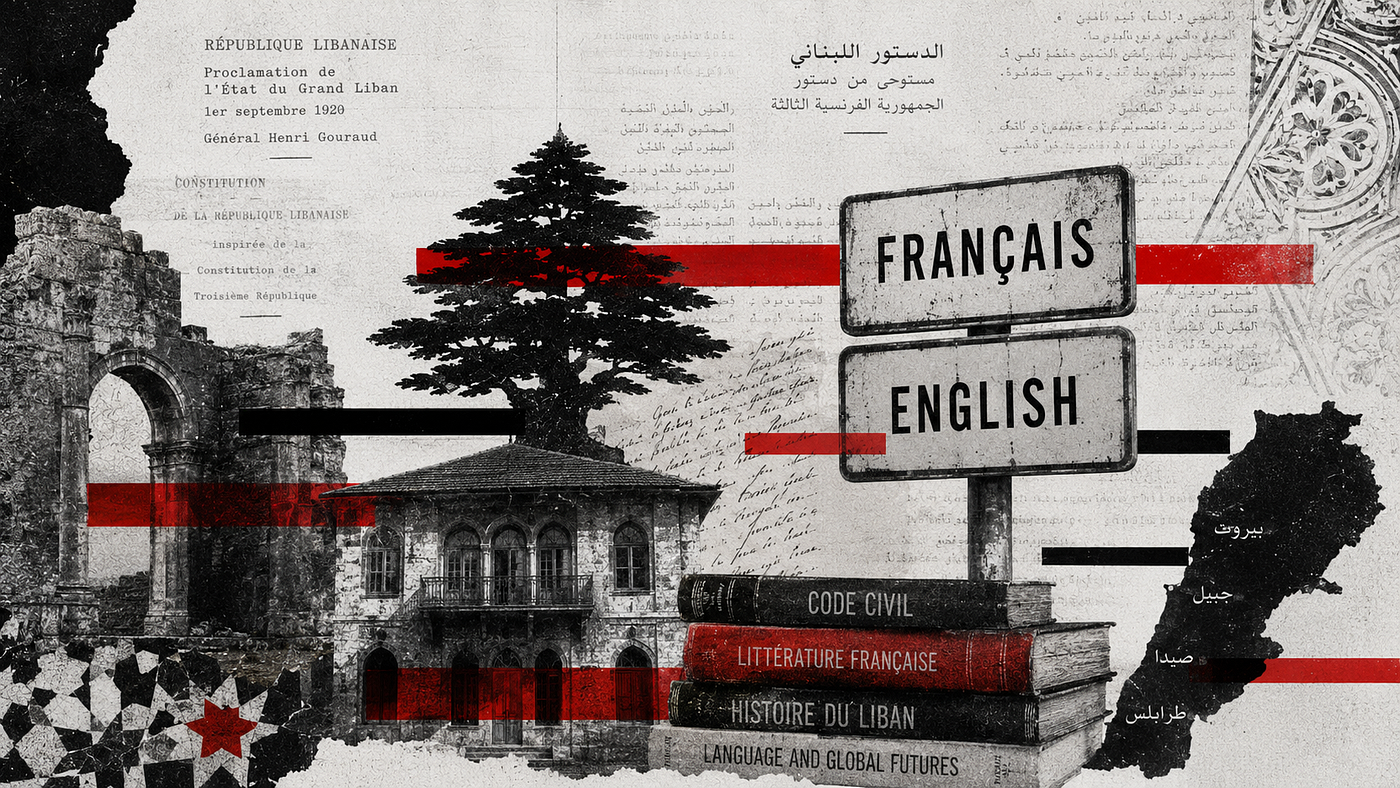
France has always enjoyed a special relationship with Lebanon. From the proclamation of Greater Lebanon by General Henri Gouraud in 1920 to the French inspiration behind Lebanon’s constitution, French influence has shaped not only the country’s political institutions but also its cultural identity. Lebanon became one of world’s leading Francophone countries outside Europe, where French was long associated with the educated elite, prestigious schools and universities, and even everyday life. A century later, however, Lebanon’s cultural identity is gradually shifting, in parallel with broader geopolitical transformation. Universities once known for their Francophone identity are expanding English-language programs, while young Lebanese are choosing English not only as a second language, but as the language of professional opportunity and international mobility.
The evolution raises a broader question: is Lebanon’s changing linguistic landscape also reflects a shift in political influence?
One institution that illustrates this transition is the Holy Spirit University of Kaslik (USEK). Although its name remains French, the university gradually adopted English as the primary language of instruction for most academic programs.
“We have preserved the French language and Francophone culture, while also opening ourselves extensively to American culture. Today, most of our academic programs here are taught in English,” says Fr. Georges Hobeika, Honorary President of USEK.
Hobeika insists that the university has not abandoned its Francophone roots.
“We grew up immersed in the French language, and it has played a significant role in Lebanon,” he says, describing French as part of the country’s “intellectual and cultural subconscious”. He also notes that even universities in France increasingly offer programs in English to attract international students and respond to global academic competition.
The trend reflects broader changes across Lebanese society. English has become the preferred language for many young people seeking careers in multinational companies, technology, finance, journalism and international organizations. Schools and universities increasingly adapt their programs to these demands, making English not only a language of communication but also one of economic mobility.
While economic and educational factors largely explain this evolution, it also coincides with changing diplomatic realities.
For decades France occupied a unique position in Lebanon’s political affairs, maintaining close historical ties and playing a central mediating role during periods of crisis. More recently, however, the United States has assumed greater prominence in several diplomatic initiatives involving Lebanon, including negotiations related to regional security. At the same time, France has sought to preserve its influence through its role within the ceasefire monitoring mechanism after the 2024 Lebanon-Israel war, its longstanding contribution to the United Nations Interim Force in Lebanon (UNIFIL), and its continued support for the Lebanese Armed Forces.
Yet France’s position also faces new challenges. Discussions surrounding the future of UNIFIL, where France has long been one of the largest troop contributor and serves as the penholder for UN Security Council Resolution 1701, could reshape one of its principal channels of influence in Lebanon. Meanwhile, American military and diplomatic engagement continues to expand, reinforcing Washington’s role as Lebanon’s most influential international partner.
Language alone cannot explain geopolitical change, nor does geopolitics alone determine which language students choose to learn. Economic opportunity, globalization, and educational reform all play decisive roles. Nevertheless, language often reflects where societies perceive opportunity, influence and the future.
In Lebanon, the gradual shift from French towards English tells a story that extends beyond vocabulary. It reflects a country adapting to a changing international order, where classrooms, just like diplomacy, reveal how influence evolves over time.
메타데이터
- post_id
- 628b14a200f1
- slug
- how-lebanons-language-is-mapping-a-new-world-order-628b14a200f1
- url
- https://medium.com/@kllyazbeck/how-lebanons-language-is-mapping-a-new-world-order-628b14a200f1
- canonical_url
- https://medium.com/@kllyazbeck/how-lebanons-language-is-mapping-a-new-world-order-628b14a200f1
- author_url
- https://medium.com/@kllyazbeck
- status
- ok
- fetched_at
- 2026-07-27 00:00:13



