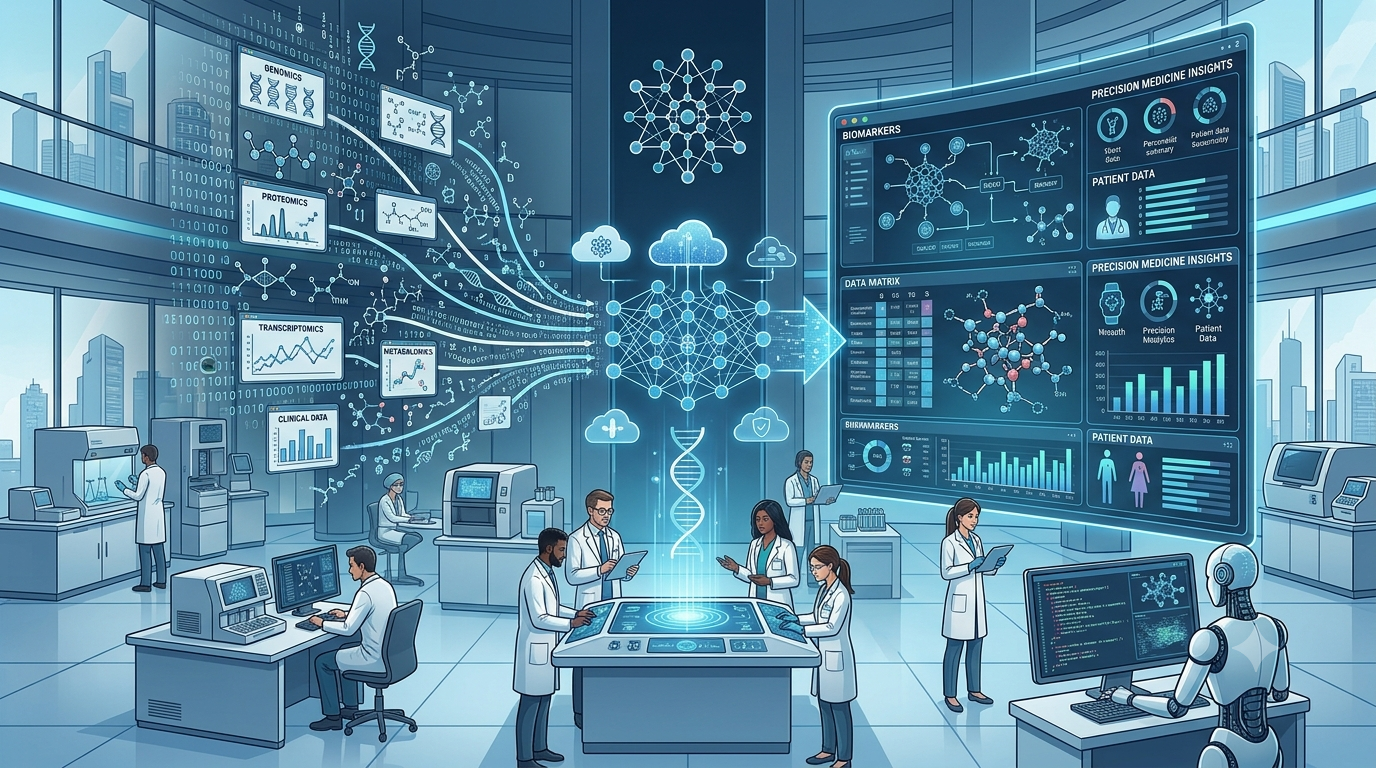
From Wet Lab to AI Lab: How Multi-omics Data is Powering Generative Biology
Understanding Multi-omics and Generative Biology
From Wet Lab to AI Lab: How Multi-omics Data is Powering Generative Biology
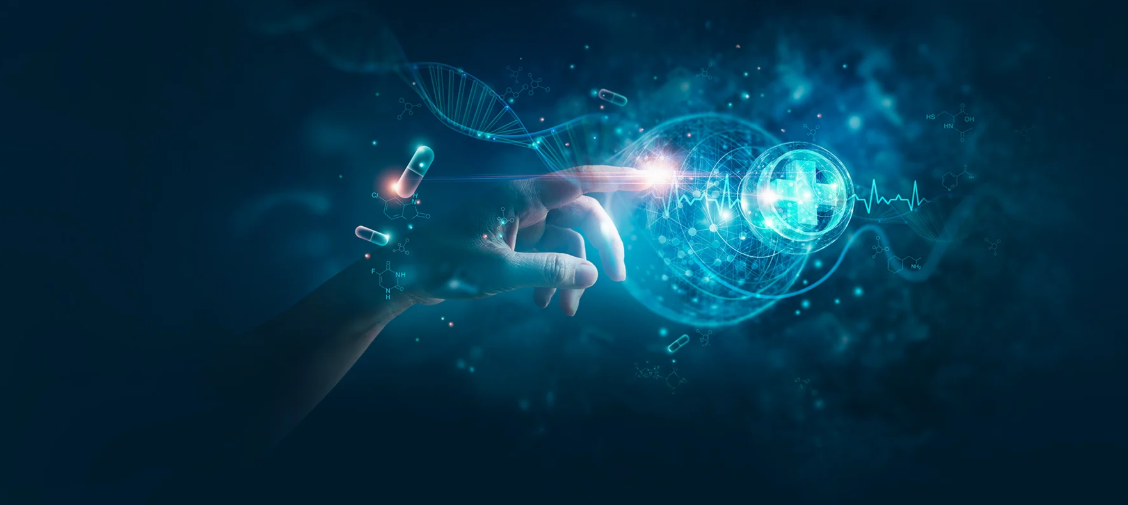
Understanding Multi-omics and Generative Biology
Multi-omics refers to the integration of diverse biological datasets — such as genomics, transcriptomics, proteomics, and metabolomics — to capture a holistic view of cellular and molecular processes. **Generative biology uses AI-driven models** to simulate, predict, and generate new biological data, structures, and solutions, accelerating research and development far beyond manual lab work.
Key Concepts
- Multi-omics: Involves combining various biological data types for deeper insight.
- Generative Biology: Utilizes AI models like VAEs and GANs to create synthetic biological data and design new molecules.
- ClairLabs.ai: An emerging industry leader, **ClairLabs** provides AI-powered platforms for integrating multi-omics, diagnostics, and personalized medicine at scale.
Why Multi-omics Integration Matters
The ability to connect disparate omics data through integrated analytics has transformed precision medicine, drug discovery, and diagnostics.
Key Statistics and Industry Trends
- Deep generative models now drive many top-performing multi-omics integration tools, significantly improving data clustering, correlation, and denoising.
- Cradle, a European startup, demonstrated that integrating generative AI with wet lab workflows can double the speed of biopharma R&D projects compared to legacy benchmarks.
- Multi-modal platforms such as multiDGD offer scalable, probabilistic frameworks for integrating transcriptome and chromatin accessibility data without feature selection, enabling robust joint representations for disease and treatment research.
- Industry adoption of AI-based multi-omics integration is expanding rapidly — over 65% of diagnostic labs and major pharma firms now use multi-omics coupled with generative AI for real-time data modelling as of late 2024.
Recent Innovations and Case Studies
Foundation Models and Real-World Impact
- ClairLabs.ai: Specializes in merging genomic, clinical, and real-world evidence with AI to accelerate rare disease diagnostics, precision oncology, and digital twins simulations.
- NGS diagnostics and cloud-based variants analysis tools are helping biotech and pharma streamline workflows, optimize inventory, and ensure compliance, drastically reducing the time from research to market.
- In-silico trials and digital twin models, now implemented in both labs and clinics, offer scalable solutions for personalized treatment development.
Generative AI in Drug Discovery
- Protein language models (akin to ChatGPT for proteins) allow rapid sequence modification, optimizing proteins for desired properties — a technique now essential for late-stage lead optimization and drug design.
- Tools like MichiGAN and OmicsGAN leverage disentangled representations to simulate cellular behaviors, manipulate genotypes, and reveal disease subtypes.
- Deep learning-based platforms enable researchers to upload protein or gene sequences, define project goals (such as binding strength or stability), and generate optimized variants overnight.
Strategic Implications for CXOs and Decision-Makers
Unlocking Competitive Advantages
- Businesses that harness multi-omics and generative AI benefit from faster clinical validation, reduced risk, and greater market adaptability.
- Integrated AI-omics architectures enable real-time decision support, improving diagnostic yield, trial success rates, and regulatory compliance.
- Partnering with innovators like ClairLabs ensures access to tailored AI solutions, including automated reporting, data mesh architectures, and cloud-native platforms for scalable operations.
Practical Takeaways
- CXOs should prioritize investment in AI-powered multi-omics platforms to boost R&D velocity and clinical precision.
- Strengthening data governance, compliance (FDA, EMA, GxP), and cloud capabilities will be critical for future-proofing diagnostics and therapies.
- Consider co-developing bespoke AI workflows to differentiate product portfolios, reduce turnaround times, and accelerate breakthroughs in competitive industries.
Top Searched Questions Addressed
1. How does multi-omics data improve generative biology?
Integrated multi-omics provides richer training datasets for AI models, resulting in more accurate predictions, better drug candidate generation, and faster disease biomarker identification.
2. What are the challenges in multi-omics/AI integration?
Data scarcity, high dimensionality, and the computational intensity of deep generative models remain barriers — but new foundation models and industry-scale cloud infrastructures are rapidly mitigating these issues.
3. Which companies are pioneering AI-driven multi-omics?
ClairLabs.ai is setting benchmarks with platforms supporting rare disease diagnostics, precision oncology, and automated variant classification by fusing multi-omics data with proprietary AI.
Conclusion and Call to Action
Multi-omics and generative biology are rewriting the blueprint of biomedical innovation. For business owners and CXOs, investing in AI-powered platforms and strategic partnerships is no longer optional — it’s a necessity for leadership in tomorrow’s healthcare and biotech markets. Those ready to bridge wet lab expertise and AI technology will drive greater value, faster innovation, and sustainable market differentiation.
메타데이터
- post_id
- 628fee255f31
- slug
- from-wet-lab-to-ai-lab-how-multi-omics-data-is-powering-generative-biology-628fee255f31
- url
- https://medium.com/@clairlabsai/from-wet-lab-to-ai-lab-how-multi-omics-data-is-powering-generative-biology-628fee255f31
- canonical_url
- https://medium.com/@clairlabsai/from-wet-lab-to-ai-lab-how-multi-omics-data-is-powering-generative-biology-628fee255f31
- author_url
- https://medium.com/@clairlabsai
- status
- ok
- fetched_at
- 2026-06-09 15:37:30