Why I Write
From digital distraction to determination discovery.
Why I Write
From digital distraction to determination discovery.
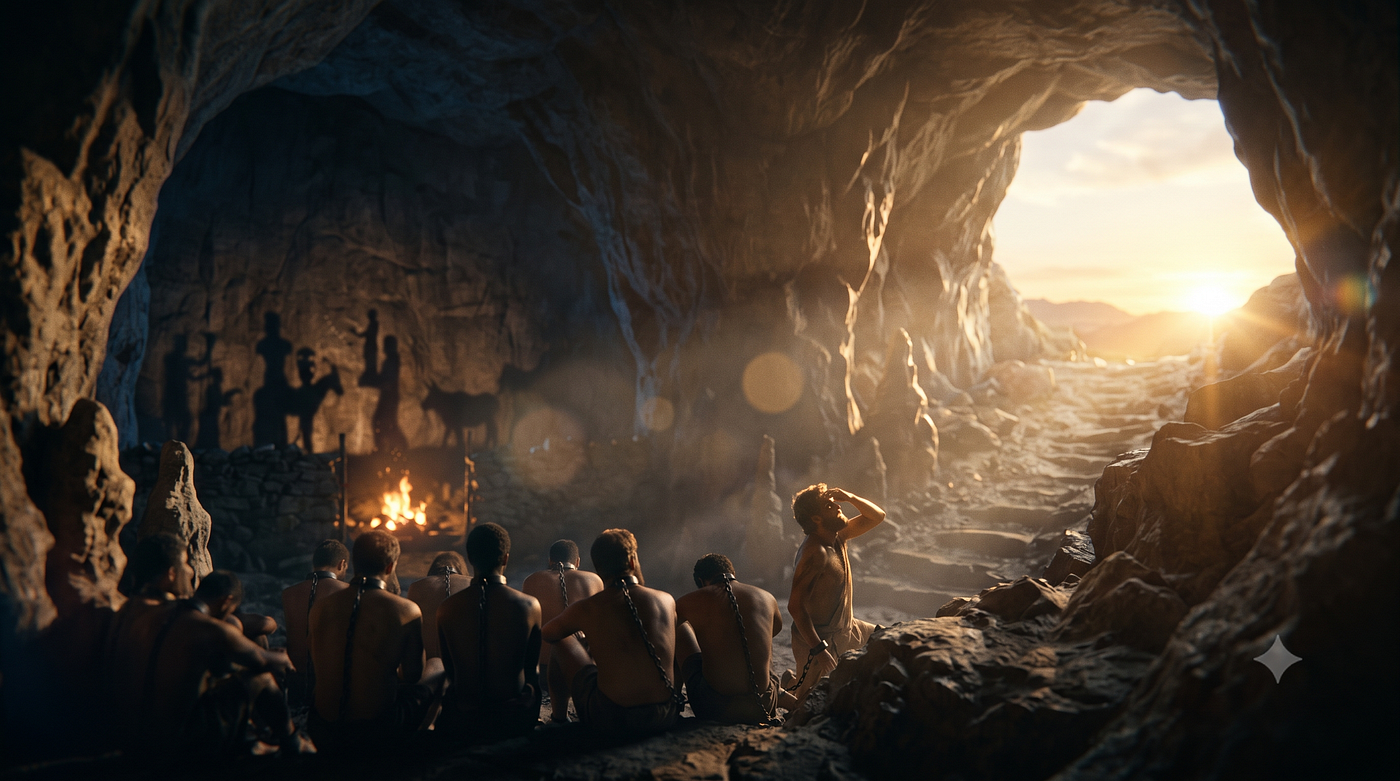
Photo by Anil Sharma on Unsplash — for Bird by Bird [2]
… The viewer of television, the listener to radio, the readers to magazines, is presented with a whole complex elements — all the way from ingenious rhetoric to carefully selected data and statistics — to make it easy for him to “make up his own mind” with minimum of difficulty and effort. But the packaging is often done so effectively that the viewer, listener, or reader does not make his own mind at all. Instead, he inserts a packaged opinion into his mind, somewhat like inserting a cassette into a cassette player. He then pushes a button and “play back” the opinion whenever it seems appropriate to do so. He has performed acceptably without have to think. [1]
My whole effort to start writing online was inspired by this paragraph from an old classic. The author continued by contrasting reading for information with reading for discovery. To discover, we need to think. New media, arriving after books, do not quite provide us with a space to think.
Somewhere along the line, I realized that reading needs an output to organize our thoughts. That output could be taking notes and then making notes, drawing a mind map, or organizing information into a personal knowledge management system. Eventually, I convinced myself that writing is the simplest form of organizing thoughts. Publishing them is just the last mile to close the loop with the world.
Where Was I All This While?
The debut of social media hit at the end of my teenage years. We were perfectly distracted by it. You could be with your friends all the time without physical boundaries. There went my time in college and early adulthood. My story was told via fleeting social media updates, where I packaged moments with images and short captions.
I stumbled onto video-sharing platforms during the solitude of the recent pandemic, needing to numb my emotions. I grew distracted by the productivity rabbit hole, but I also got back into book summaries and reading. To hold the pen again, I started analog note-taking. Sometimes even writing notes was too hard, so I started keeping a commonplace notebook: just copying the quotes I liked. Then it became a sentence in my notebook, and later an easy paragraph in my diaries. Words came back in a flow from my fingertips to the keyboard. This time, they were not fragmented words in text messages, but long paragraphs.
Why I Write
I found myself in a flow state as I wrote my personal blog. One could call that narcissism. Yet, I realized that my content evolved over time. I was much more self-absorbed in my social media captions then than I am now. I used to care how others looked at me. Then, I cared how they looked at my work. Now, I only care about the writing itself. I guess I have moved on from being self-absorbed to focusing solely on my craft.
Before I realized it, I had written 428 words of this draft.
I move on after writing. Those thoughts are out of my mind, and now I can focus on another topic. Unorganized thoughts are like slow software, bloated by extensions that keep creating cache. Writing them down is like unplugging the less important extensions and clearing the cache. Publishing literally feels like zipping a file and deploying it into the live world.
I want to write for publication. I have done private writing for nearly two years now to mend my relationship with social media. I love my privacy, but I also love for my work to be appreciated. I want to add value to the world by writing.
I want it to be a lifestyle — the infinite game in this life. I want knowledge to continue to flow through my brain and into my life.
How Should I Write?
As I was writing, I couldn’t help but wonder why artificial intelligence often puts titles over minor points and regurgitates the same ideas. It learned this as an effective communication style from human authors. It learned the presentation, but it isn’t quite able to identify whether it should present information in one way or another.
I want technology to be an asset to human civilization. I embrace artificial intelligence to help articulate my ideas from a blank page, but I love to prove that its outputs are not interesting enough on their own. The fact that it is optimized for the majority within its scope means it produces very average work. And when someone is in awe of an average outcome, they are, sad to say, aiming below average.
It is a great baseline setter to start an average draft, but definitely not the best final output.
Where I Want to Be
An index card written by Anne Lamott says:
Sam and I walked Bill and Adair up to their car after dinner. Crisp cold starry night. Bill, holding Sam, inhaled deeply. "Doesn’t it smell wonderful, Sam?" he said. Sam inhaled deeply, too, like he was smelling a delicious meal, looked off into space, and said, "It smells like moon." [2]
She then continued with:
Now that memory won’t be lost. I’m not sure if I will use it in my writing—actually, I guess I just did—but I know it won’t be lost. [2]
That is where I want to be: writing words that can illustrate a full memory.
[1] Adler, M. J., & Van Doren, C. L. (2014). How to read a book (Touchstone edition). Touchstone.
[2] Lamott, A. (2019). Bird by Bird: Some Instructions on Writing and Life (Second Anchor Books edition). Anchor Books, a division of Penguin Random House LLC.
메타데이터
- post_id
- 63118633647e
- slug
- why-i-write-63118633647e
- url
- https://medium.com/activated-thinker/why-i-write-63118633647e
- canonical_url
- https://medium.com/activated-thinker/why-i-write-63118633647e
- author_url
- https://medium.com/@abryclark
- status
- ok
- fetched_at
- 2026-07-13 23:03:49