Ukrainian Surface Drones and the Sinking of the Arctic Metagaz: Escalation in the Mediterranean
Where did they come from? Russia blames Ukrainian naval drones, and no mention of 5 naval ships hit in Novorossysk
Ukraine War
Ukrainian Surface Drones and the Sinking of the Arctic Metagaz: Escalation in the Mediterranean
Where did they come from? Russia blames Ukrainian naval drones, and no mention of 5 naval ships hit in Novorossysk
Russian shadowfleet LNG tanker Artic Metagaz before sinking off Malta. Picture: Twitter
The sinking of the Arctic Metagaz on 3 March 2026 is a significant expansion of Russia’s naval war on Ukraine, moving beyond the traditional theatre of the Black Sea.
Ukraine has been winning the naval battle, but now it extends into hitting Russia’s commercial shipping, not just in the Black Sea but now beyond that in the Mediterranean.
The incident involving the liquefied natural gas carrier, a vessel identified as part of the Russian shadow fleet, occurred in international waters southeast of Malta , near the ‘Hurd Bank’.
That area is relatively shallow and a useful anchorage for ships which are bunkering (taking on fuel) or just ‘awaiting orders’ as the maritime phrase goes. I’ve sailed through there a few times and when I lived in Malta for a couple of years there were often 15–20 ships at anchor there, some visible from ashore on a clear day. That was the last reported position of ship, moving southeast at 16.3 knots.
This event has introduced a new level of volatility to Mediterranean shipping lanes, as Moscow alleges that the attack was carried out by Ukrainian uncrewed surface vessels (USVs) launched from the Libyan coastline.
While Kyiv has maintained its customary ambiguity regarding overseas operations, the loss of a sanctioned energy asset highlights the increasing reach of asymmetric naval warfare.
Timeline of the Arctic Metagaz incident
The sequence of events began in the early hours of 3 March 2026, when the Arctic Metagaz was transiting the central Mediterranean. According to reports from the Libyan Ports and Maritime Transport Authority, the vessel experienced sudden explosions followed by a fierce blaze southeast of Malta.
Data from Flightradar24 showed a Turkish Navy ATR 72–600 maritime patrol aircraft circling the area near the last known position of the vessel, suggesting regional authorities were actively monitoring the situation. (gcaptain.com)

Turkish Navy ATR 72–600 maritime patrol aircraft circling the area. Flightradar.com
Ship-tracking data indicates that the tanker had deactivated its Automatic Identification System (AIS) before the incident, a common tactic for vessels attempting to avoid inspection while carrying sanctioned cargo.
The Armed Forces of Malta received a distress signal and initiated a search and rescue operation, deploying aircraft to locate the burning ship. Despite the severity of the fire, which eventually caused the vessel to sink, all 30 crew members — confirmed to be Russian nationals — managed to evacuate via lifeboats. They were later recovered within the Libyan search and rescue region.
Arctic Metagaz before sinking. Picture: Twitter
By the evening of 4 March, Russian officials confirmed the total loss of the vessel, which had been transporting LNG loaded at the Saam floating storage unit near Murmansk, apparently China’s Beihai Terminal. The Kremlin immediately reported the sinking as an act of international terrorism, stating that the strike was conducted by Ukrainian drones.
Ukrainian USVs: Tactical innovation in action
The alleged use of USVs in the central Mediterranean signifies a remarkable evolution in Ukrainian naval strategy. Throughout 2024 and 2025, the Security Service of Ukraine (SBU) refined the use of the Sea Baby and Magura V5 platforms to effectively neutralise the Russian Black Sea Fleet.
These vessels have evolved from simple remote-controlled explosives into sophisticated maritime tools with ranges exceeding 900 kilometres and the capacity to carry payloads of up to two tonnes and even surface to air missiles capable of downing aircraft and with at least one Russian helicopter on their scorecard.
The accusation that these assets were launched from Libya suggests a multi-stage covert logistics network capable of projecting power far from Ukrainian sovereign territory.
If the Russian accusation regarding a Libyan launch point is accurate, it would imply that Ukrainian special forces or friendly operatives have established a presence or partnerships near the North African coastline.
This would enable the deployment of USVs against the shadow fleet at various chokepoints. The technical capability to coordinate a strike in the Mediterranean requires advanced satellite communication and long-range endurance, features that have become hallmark traits of the latest generation of Ukrainian uncrewed systems.
However, while all reports (mainly originating fron the Kremlin announcement) mention a USV, there is another possibility.
A Unmanned Underwater Vehicle (UUV) — or submarine drone — could theoretically be transported and deployed from a mother ship.
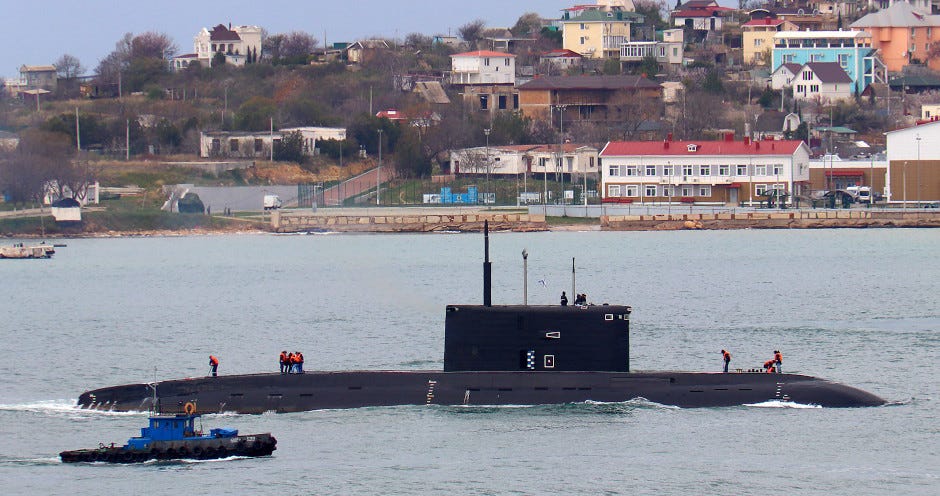
UUVs such as the Sub SeaBaby (which knocked out the Russian Kilo sub in Novorossysk) are compact enough to be transported covertly on a larger vessel — such as a commercial ship, fishing trawler, or proxy-operated “mother ship” in international waters. Release could happen via crane, ramp, or submerged launch tube, allowing the UUV to transit the final distance submerged (reducing radar/ visual detection risk).
Whichever way this happened, it will be a major concern to Russia.
And one thing we can be very sure of is that Ukraine will continue to surprise us.
Russia’s shadow fleet and sanctions evasion
The Arctic Metagaz was a critical component of the Russian effort to bypass Western energy sanctions. Formerly known as the Everest Energy, the 23-year-old vessel had been repeatedly reflagged and renamed to obscure its connection to the sanctioned Arctic LNG 2 project.
This project, majority-owned by Novatek, has faced severe limitations due to a lack of ice-class carriers which could transport LNG via the northern route through the Arctic to China.
The Arctic Metagaz, despite being a conventional vessel, was used to move gas through the Northern Sea Route and into global markets during favourable ice conditions and accompanied by an icebreaker. It has been known to engage in ship-to-ship transfers to hide the origin of its cargo.
The shadow fleet serves as a vital economic lifeline for the Russian Federation, allowing it to maintain energy revenues despite price caps and import bans.
These ships often operate with questionable insurance and minimal regulatory oversight, posing significant environmental and safety risks. By targeting such a vessel, Ukraine (unverified) aims to increase the operational costs and insurance premiums for the entire shadow network.
The loss of a single large LNG carrier is more than a financial blow; it represents a physical reduction in the logistical capacity available to Moscow to export its natural gas from the Arctic.
International law and maritime security risks
The sinking of a merchant vessel in international waters raises complex questions regarding maritime law and the rules of engagement. Russia has appealed to international bodies, describing the event as maritime piracy and a violation of the United Nations Convention on the Law of the Sea.
However, the legal status of the shadow fleet is often ambiguous. Since these vessels frequently engage in deceptive practices and support the war effort of Russia on Ukraine, they are viewed by Kyiv as legitimate military-economic targets.
This creates a legal grey area where the protection usually afforded to commercial shipping is challenged by the realities of modern hybrid warfare.
And let’s not forget that Russia attacked grain ships in the Back Sea.
Beyond the legal disputes, the incident increases the risk profile for all commercial traffic in the Mediterranean. The presence of USVs capable of high-speed attacks means that maritime security providers must now account for a threat that was previously confined to the Red Sea or the Black Sea.
There is a tangible danger of misidentification, where a neutral merchant ship could be caught in the crossfire of this expanding conflict. Besides that, the environmental impact of such a sinking, particularly involving a tanker, remains a concern for Mediterranean coastal states like Malta, Italy, and Libya.
Strategic impact: war beyond the Black Sea
The emergence of naval hostilities to the Mediterranean marks a strategic shift that forces Russia to reallocate its limited naval resources.
Moscow has long relied on its base in Tartus, Syria, to project influence in the region but the Russian naval facility there has undergone a fundamental transformation following the collapse of the Bashar al-Assad regime. As of early 2026, the Russian Federation no longer possesses sovereign jurisdiction over the port, nor does it maintain a permanent combat fleet there.
This expansion of the frontline serves to demonstrate that no Russian asset is truly beyond the reach of Ukrainian reach, provided there is a coastline from which to launch uncrewed systems.
Clearly, there is also the possibility that the USVs were launched from another ship in the area. Drones launched from, say, the Libyan coast would have to be transported there from Ukraine. Or built in North Africa.
Those are tantalising prospects.
This Arctic Metagaz operation also reflects a broader trend of internationalisation in the conflict.
With Ukraine establishing drone production hubs across Europe and seeking to disrupt Russian revenue streams globally, the war is increasingly being fought through economic and technological attrition.
The destruction of the Arctic Metagaz sends a clear signal to the operators of the shadow fleet and their international partners that the risks of facilitating Russian energy exports are rising.
As the central Mediterranean becomes a contested space, the traditional security architecture of the region must adapt to the reality of low-cost, high-impact uncrewed naval warfare.
Ukraine continues to extend the definition of modern warfare.
[embed]
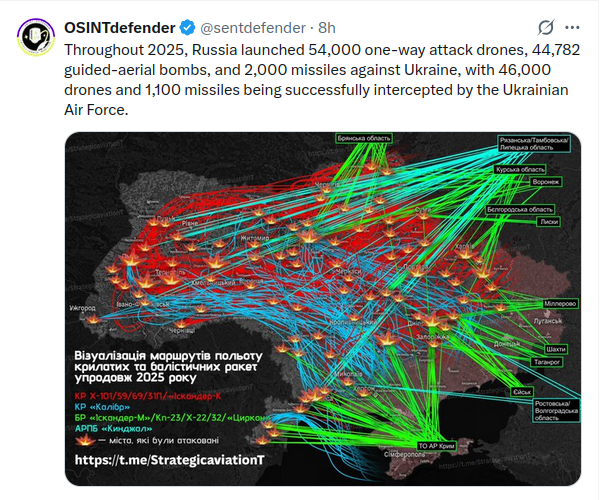
There is so much news to report on right now I’m having to merge stories. Here’s another maritime story relating to Russia’s failing war on Ukraine, mostly in pictures.
It’s about a massive 200 drone Ukrainian attack on the port of Novorossysk in the first week of March. Ukraine continues to wreck Russia’s Black Sea Fleet:
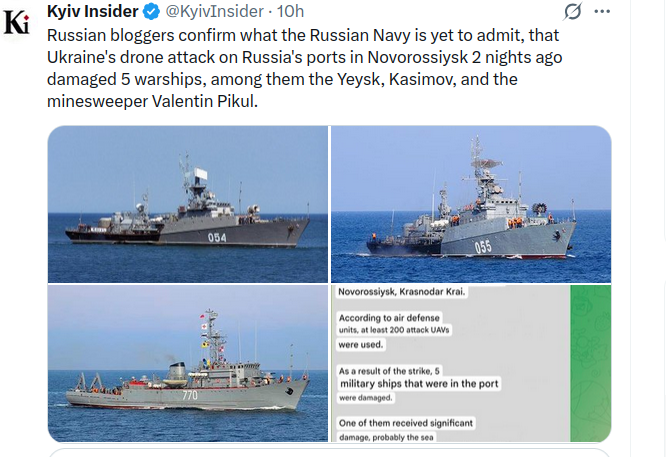
Telegram
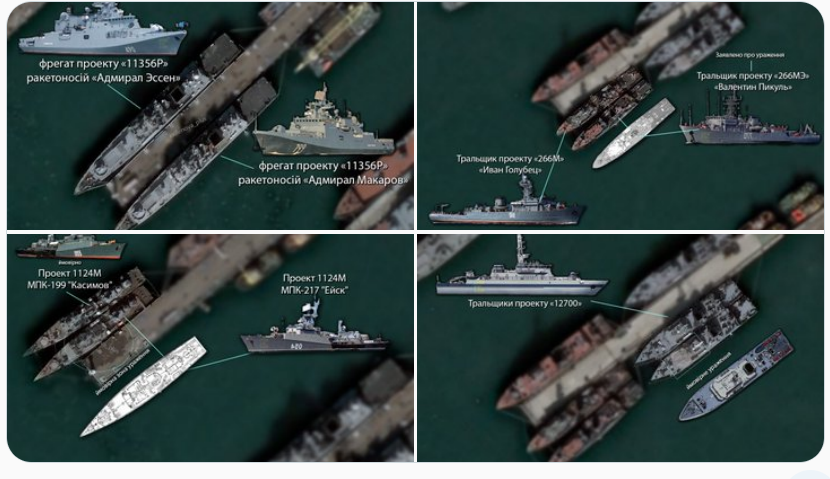
Satellite imagery analysis by CyberBoroshno and Exilenova om Twitter
Update (20 March 2026)
The Arctic Metagaz is still afloat near Malta with some cargo intact.

Arctic Metagaz, in international waters in the Mediterranean Sea between Malta and the Italian islands of Lampedusa and Linosa. Handout picture released on March 13, 2026. Italian Marina Militare/Handout
She is still carrying around 900 tonnes of diesel fuel and much of her original cargo of 60,000 tonnes of liquefied natural gas still in tanks. Precise figures are hard to come by, but the ship is certainly a floating bomb.
Italy’s Civil Protection Agency and other reports confirm the vessel has drifted back into Libyan search-and-rescue (SAR) waters / jurisdiction zone.
[embed]
메타데이터
- post_id
- 63412ff4dba7
- slug
- ukrainian-surface-drones-and-the-sinking-of-the-arctic-metagaz-escalation-in-the-mediterranean-63412ff4dba7
- url
- https://medium.com/the-dock-on-the-bay/ukrainian-surface-drones-and-the-sinking-of-the-arctic-metagaz-escalation-in-the-mediterranean-63412ff4dba7
- canonical_url
- https://medium.com/the-dock-on-the-bay/ukrainian-surface-drones-and-the-sinking-of-the-arctic-metagaz-escalation-in-the-mediterranean-63412ff4dba7
- author_url
- https://medium.com/@james-marinero
- status
- ok
- fetched_at
- 2026-06-21 07:44:09