Bridging the Border: The Complexity of Serving Panama Divorce Documents Internationally
The dissolution of a marriage is a complex legal journey that involves emotional, financial, and procedural hurdles. In Panama, divorce is…
Bridging the Border: The Complexity of Serving Panama Divorce Documents Internationally
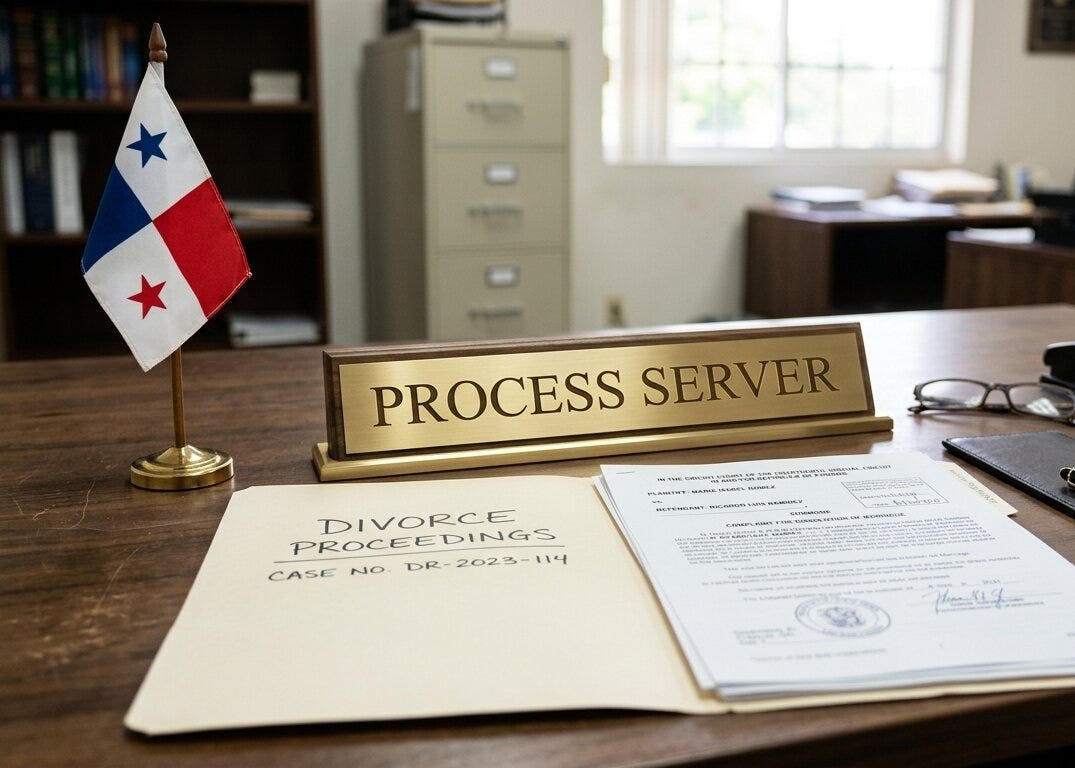
Explore the critical role of professional process servers in Panama’s legal system and how their expertise in navigating local and international service of process ensures the validity and success of divorce proceedings.
The dissolution of a marriage is a complex legal journey that involves emotional, financial, and procedural hurdles. In Panama, divorce is defined as the formal legal termination of a marital union, a process governed strictly by the Family Code (Código de la Familia). Unlike a simple agreement to part ways, a judicial decree is required to legally end the obligations of marriage, distribute assets, and determine custody or alimony. For a court to have the authority to make these life-altering decisions, it must first establish jurisdiction over both parties. This is where the concept of **Service of Process Panama** becomes the cornerstone of the entire litigation.
The foundation of any legal action in Panama rests on the principle of due process. This principle dictates that every individual has the right to be informed when a legal action is taken against them, allowing them the opportunity to present a defense. Without formal notification, a court cannot proceed, and any judgment rendered could be declared null and void. Ensuring that a spouse is properly notified of a pending case is the primary responsibility of professional legal couriers, often referred to as process servers. These professionals act as the bridge between the judicial system and the respondent, ensuring that the wheels of justice turn fairly and transparently.
The Integral Function of Process Servers in Panama Divorce Cases
A process server is a specialized professional tasked with delivering legal documents to a party involved in a court case. While their primary job might seem straightforward — delivering papers — the reality is much more nuanced. In the context of **Service of Process Panama**, these individuals must adhere to specific statutory requirements to ensure the court recognizes the delivery as valid. They are essentially officers of the court’s intent, providing a verifiable link that proves the respondent has been reached.
The Legal Necessity of Formal Notification
Under Panamanian law, proper notification is not merely a courtesy; it is a jurisdictional requirement. If a petitioner filed for divorce but failed to serve the respondent according to the rules set forth in the Judicial Code, the case would effectively stall. The court requires “Notificación Personal” (Personal Notification) for the initial complaint. Professional servers ensure that this notification is handled with precision, preventing the respondent from later claiming they had no knowledge of the proceedings. By utilizing professional **Service of Process Panama**, legal firms protect the integrity of the litigation from the very beginning.
Distinguishing Local and Cross-Border Responsibilities
The responsibilities of a process server vary significantly depending on whether the respondent is located within Panama or resides in another country. In domestic cases, the server must navigate local neighborhoods, office buildings, and residential complexes to find the individual. In international divorce cases, the complexity increases exponentially. The server must coordinate between the requirements of the Panamanian court and the local laws of the country where the respondent lives. This requires a deep understanding of international legal etiquette and the specific procedural standards that allow a foreign court to recognize the service as legitimate.
Vital Paperwork in a Panamanian Divorce Action
When initiating a divorce, several critical documents must be handled through **Service of Process Panama**. These documents outline the claims being made and the specific relief being sought from the court.
The Divorce Petition (Demanda de Divorcio)
The petition is the foundational document. It outlines the grounds for divorce — whether it be mutual consent, prolonged separation, or specific fault-based reasons like infidelity or abandonment. **Serving divorce documents in Panama** begins with this petition, as it informs the respondent of the legal basis for the split.
The Summons (Emplazamiento)
The summons is the official order from the court commanding the respondent to answer the petition within a specific timeframe. This document is crucial because it sets the clock for the entire case. If the summons is not delivered correctly, the legal timeline cannot begin, and the petitioner remains in legal limbo.
Financial Affidavits and Support Claims
In many cases, the petition for divorce is accompanied by claims for alimony (pensión alimenticia) and the division of marital property. Serving divorce documents in Panama regarding financial disclosures ensures that the respondent is aware of the financial demands being made. This is essential for ensuring that child support or spousal maintenance is addressed early in the proceedings.
The Importance of Accuracy in Serving divorce documents in Panama
Every document served must be an exact copy of what was filed in court. Any discrepancy between the filed documents and the served documents can lead to a motion to quash service, which forces the petitioner to start the process over. Professional process servers double-check the case numbers, names, and court seals to ensure that **Service of Process Panama** is executed flawlessly.
Obstacles Encountered During the Notification Process
The path to successful **Service of Process Panama** is rarely a straight line. Process servers face a myriad of challenges that require patience, ingenuity, and a thorough understanding of human behavior.
Evasive Respondents
One of the most common difficulties is the “evasive respondent.” When a spouse does not want the divorce to proceed or wishes to delay the division of assets, they may go to great lengths to avoid being served. They might change their routine, instruct security guards to deny entry to their building, or even temporarily move to an undisclosed location.
Geographic and Logistical Hurdles
Panama presents unique logistical challenges. From the high-density “Propiedad Horizontal” (PH) skyscrapers in Panama City with strict security protocols to the remote, unmapped areas of the interior provinces, finding a respondent can be difficult. In rural areas, addresses are often descriptive rather than numerical (e.g., “the blue house next to the large mango tree”), making **Service of Process Panama** a task that requires local knowledge and persistence.
Case Study: The High-Security Obstacle
Consider a scenario where a respondent lives in a luxury high-rise in Punta Pacifica. The building has 24-hour armed security and a biometric entry system. A process server cannot simply walk to the front door. To achieve **Service of Process Panama**, the server may need to conduct surveillance to identify when the respondent leaves for work or use legal channels to compel the building administration to allow access for the delivery of judicial documents.
Case Study: The Workplace Confrontation
In another instance, a respondent may be served at their place of business. While legal, this often results in a hostile environment. The process server must remain professional and calm, ensuring the documents are handed over despite the presence of colleagues or the respondent’s attempts to create a scene. Their priority is the legal delivery of the paperwork, regardless of the emotional climate.
The Complexity of Cross-Border Legal Delivery
In our globalized world, it is common for one spouse to move out of the country before a divorce is finalized. **Serving divorce papers abroad** necessitates more than merely posting documents to a foreign address. High-quality legal translations, adherence to global treaties, and exact service protocols are essential to prevent expensive setbacks or dismissed petitions. Even a minor translation mistake can delay your litigation for several months.
When dealing with international elements, **Service of Process Panama** must be handled by experts who understand that every country has its own sovereignty regarding legal notifications. For example, some nations require service to be performed by a court official, while others allow private individuals to handle it. If the Panamanian court issues a request for international service, the documents must be translated into the official language of the destination country by a certified translator. Failure to do so often results in the foreign authority rejecting the request, leading to a significant loss of time and money.
Consequences of a Respondent’s Silence
What happens if the respondent is successfully served but chooses to ignore the documents? The legal system in Panama does not allow one party’s inaction to halt the wheels of justice indefinitely.
The Default Process (Declaratoria de Contumacia)
If a respondent fails to file an answer within the statutory period (usually between 10 to 15 business days after service), the petitioner can move for a “Declaratoria de Contumacia” or a declaration of default. This is a critical turning point in the case.
- Proof of Service: The petitioner submits the affidavit of service to the court.
- Expiration of Term: The court verifies that the legal timeframe for a response has passed.
- Motion for Default: The petitioner’s lawyer files a formal motion asking the judge to proceed without the respondent’s input.
- Judgment: If granted, the court may move forward to a hearing where only the petitioner’s evidence is considered.
The Role of Documentation in Default Judgments
The success of a default motion depends entirely on the quality of the documentation provided by the process server. The court must be 100% certain that the respondent was actually notified. This is why a detailed “Diligencia de Notificación” is required for successful **Service of Process Panama**. This document includes the date, time, physical description of the person served, and the location of service. Without this ironclad proof, a judge will be hesitant to issue a default judgment, fearing a future appeal based on a lack of notice.
Ensuring Legal Integrity Through Professional Service
In conclusion, the role of a process server in a Panama divorce case is far from clerical; it is foundational. By ensuring that **Service of Process Panama** is handled with professionalism and strict adherence to the law, these experts protect the rights of both the petitioner and the respondent. They ensure that the court’s time is not wasted on procedural errors and that the resulting divorce decree is legally sound and enforceable.
Professional process service minimizes the risk of delays, reduces the emotional stress on the parties involved, and provides the clear documentation necessary for the court to move forward. Whether the case is a straightforward mutual agreement or a highly contentious international dispute, the accuracy of the initial service determines the trajectory of the entire legal process.
Partner with Experts for International Legal Support
Navigating the intricacies of international litigation requires a partner who understands the high stakes involved in domestic and foreign legal delivery. If you are dealing with a complex divorce case that requires **Service of Process Panama** or involves parties located across borders, do not leave your case to chance.
At Stellar Konsulting, we specialize in the meticulous handling of legal documents to ensure your case remains on track. We understand that serving divorce papers abroad requires a specialized touch and a deep understanding of multi-jurisdictional requirements.
Reach Out to Our Team:
- Phone: +1 (213) 786 1161
- Website: https://stellarkonsulting.com/
- Email: operations@stellarkonsulting.com
**Contact Us Today** to ensure your legal documents are served with the precision and speed your case deserves.
**SUBMIT YOUR PROCESS SERVICE REQUEST NOW**
Disclaimer: The information provided in this article is for general informational purposes only and does not constitute legal advice. Laws and procedures regarding divorce and service of process in Panama may change, and specific cases may require the consultation of a licensed attorney in the relevant jurisdiction.
메타데이터
- post_id
- 63f6b731b180
- slug
- divorce-process-panama-63f6b731b180
- url
- https://medium.com/@internationalprocessservice/divorce-process-panama-63f6b731b180
- canonical_url
- https://medium.com/@internationalprocessservice/divorce-process-panama-63f6b731b180
- author_url
- https://medium.com/@internationalprocessservice
- status
- ok
- fetched_at
- 2026-06-09 15:37:30