The Ghosts We Bring to Work Each Day
“There’s somebody you wish to see, isn’t there?” — Mizuki Tsujimura, Lost Souls Meet Under a Full Moon
The Ghosts We Bring to Work Each Day
“There’s somebody you wish to see, isn’t there?” — Mizuki Tsujimura, Lost Souls Meet Under a Full Moon
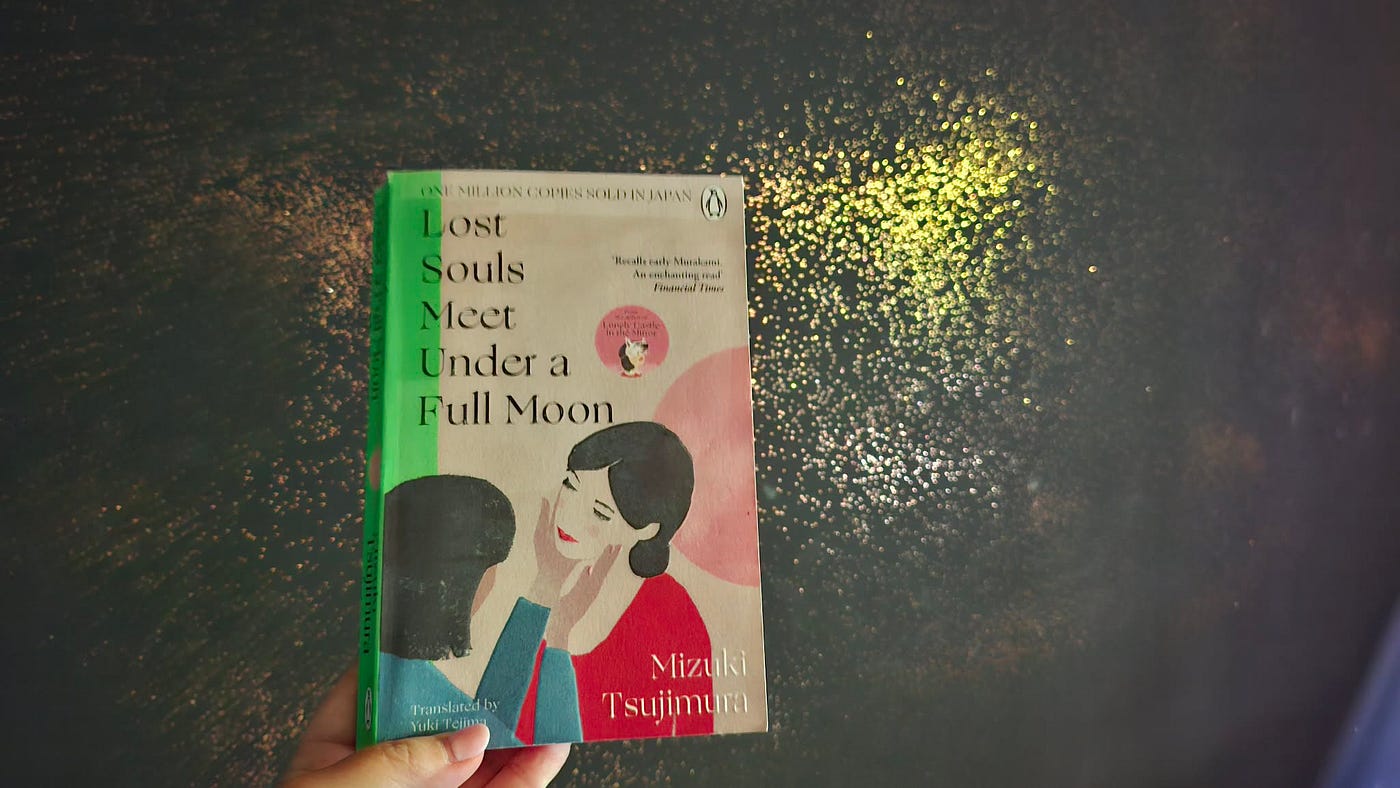
I love this book!
At first glance, this line from *Lost Souls Meet Under a Full Moon* by Mizuki Tsujimura seems to refer to another person: someone you loved and lost, someone whose presence has been swallowed by time, distance or circumstance. After a while though, the question began to mean something else entirely. What if the person we most long to see is not another person at all, but a version of ourselves?
One of the reasons this book spoke so deeply is that beneath its fantastical premise lies a question that many of us carry through life: what becomes of the futures we never get to live? Not every dream ends in failure, some are simply overtaken by other choices, responsibilities, opportunities or fears. We choose one road and, in doing so, leave countless others unexplored. Adulthood is shaped by the lives we live but also by the lives we leave behind.
Most of us can identify at least one former self we occasionally think about. The teacher we might have become. The artist we stopped nurturing. The entrepreneur whose business never moved beyond a notebook full of ideas. The writer, chef, inventor or explorer whose plans gradually folded beneath practical obligations and life’s demands.
These possibilities do not disappear entirely, they remain, ghostlike, somewhere in the background of our lives, not necessarily as regrets but perhaps more like distant relatives we rarely visit but never entirely forget. Reading Tsujimura’s novel reminded me that longing is not always directed toward the future, it often is directed toward an alternate past. These unlived possibilities accompany us into the workplace each day. Behind every job title stands a longer story woven in dreams and aspirations of childhood and youth.
Organizations tend to view people through the lens of their current role. We become job descriptions, competency frameworks, reporting lines and performance indicators. However, anyone who has managed people for long enough knows that human beings are far more complex than the boxes they occupy on an organizational chart. Organizational reality is messier. A person can love their job and still mourn another path, be successful and still wonder “what if?”, be loyal and still feel restless, be grateful and still feel unfinished.
Such contradictions are signs of being human, they do not appear in annual performance reviews but they do shape how people engage with their work. The most effective leaders learn to work within this gray zone rather than treating it as a problem to fix, they understand that employees are not static entities whose value can be fully captured by a list of tasks and deliverables. They pay attention to the moments when someone comes alive during a project. They notice dormant talents, recurring interests and unexpected enthusiasm.
Not every employee needs a radical career change, but people thrive when more of who they are is allowed to participate in what they do. This could be one of the most overlooked dimensions of leadership. We spend considerable time discussing productivity, engagement and retention, and far less time exploring aspiration. We ask people what they do. We rarely ask who they still hope to become. This is a distinction that matters.
Reflecting on Tsujimura’s novel, I thought about people who have crossed my path over the years. The ones that stand out are the ones who noticed possibilities in me that I had almost forgotten myself. A single conversation is sometimes all it takes to reconnect someone with a part of themselves that has been dormant for years. Not all unrealized dreams can or should be revived, and some roads remain unexplored for good reasons. Still, the unlived versions of ourselves continue to shape us.
And that may be precisely the purpose of these ghosts of unlived lives, to remind us that human beings are always larger than the roles they occupy. The healthiest workplaces do not require people to leave parts of themselves at the door, nor do they have to exorcise those ghosts, but can give employees the space to integrate, rediscover and occasionally reclaim them into the light.
Each week, I take a book off the page into real life, translating stories and themes into how we work, lead, grow, and connect. These are not book reviews, but reflections: part literature, part lived experience, part observations. Through my passion for literature, I explore the many dimensions of workplace communication. Perhaps you will discover a book that speaks to where you are right now.
Exploring workplace communication through the lens of great books!
메타데이터
- post_id
- 643128e6149e
- slug
- the-ghosts-we-bring-to-work-each-day-643128e6149e
- url
- https://medium.com/@jamlinda/the-ghosts-we-bring-to-work-each-day-643128e6149e
- canonical_url
- https://medium.com/@jamlinda/the-ghosts-we-bring-to-work-each-day-643128e6149e
- author_url
- https://medium.com/@jamlinda
- status
- ok
- fetched_at
- 2026-06-21 19:25:17