Remembering the Events Leading to the Battle of Stalingrad
How the Battle of Stalingrad Began in July 1945
DAY IN HISTORY-July 17, 1942
Remembering the Events Leading to the Battle of Stalingrad
How the Battle of Stalingrad Began in July 1945

The Children’s Khorovod’ (Round Dance) Fountain after the Battle of Stalingrad (public domain image from Wiki Commons)
Stalingrad was perhaps one of the most bloody battles in military history. Largely involving Soviet (Russian) and German troops, it claimed millions of lives.
The events leading to Stalingrad can be traced back to 1939. Shortly before the German invasion of Poland, the Nazi-Soviet Pact was signed, which was more of a defensive pact and promised Soviet neutrality for the German occupation of Poland. Still, it stunned the West, and Britain and France fulfilled their defensive pledges to Poland.
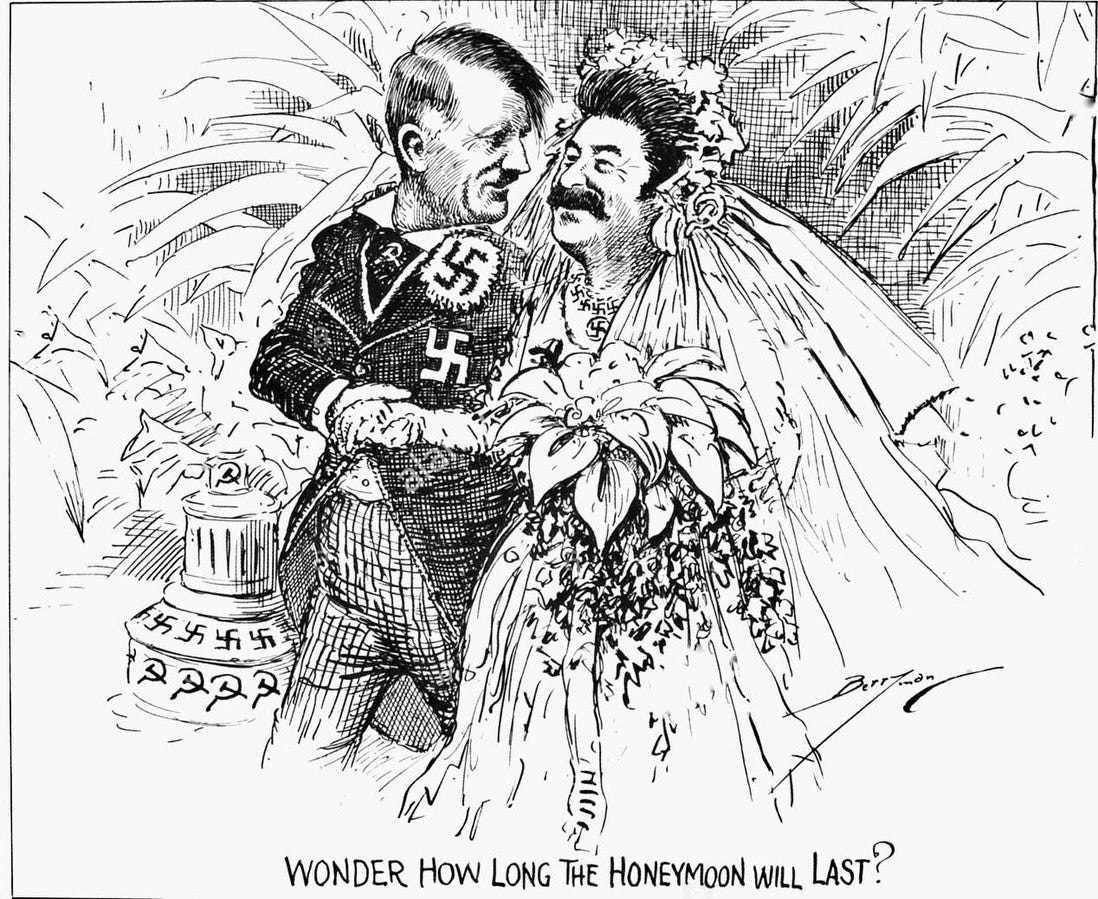
A Nazi-Soviet Pact propaganda poster (public domain image from Wiki Commons)
This left the USSR on the sidelines in 1939. However, Finland dismissed Soviet territory demands, and the Russians deployed troops to acquire strategically important territory within Finland in 1940. Russian troops were met with strong resistance from the Finnish defenders, but eventually annexed the territory.
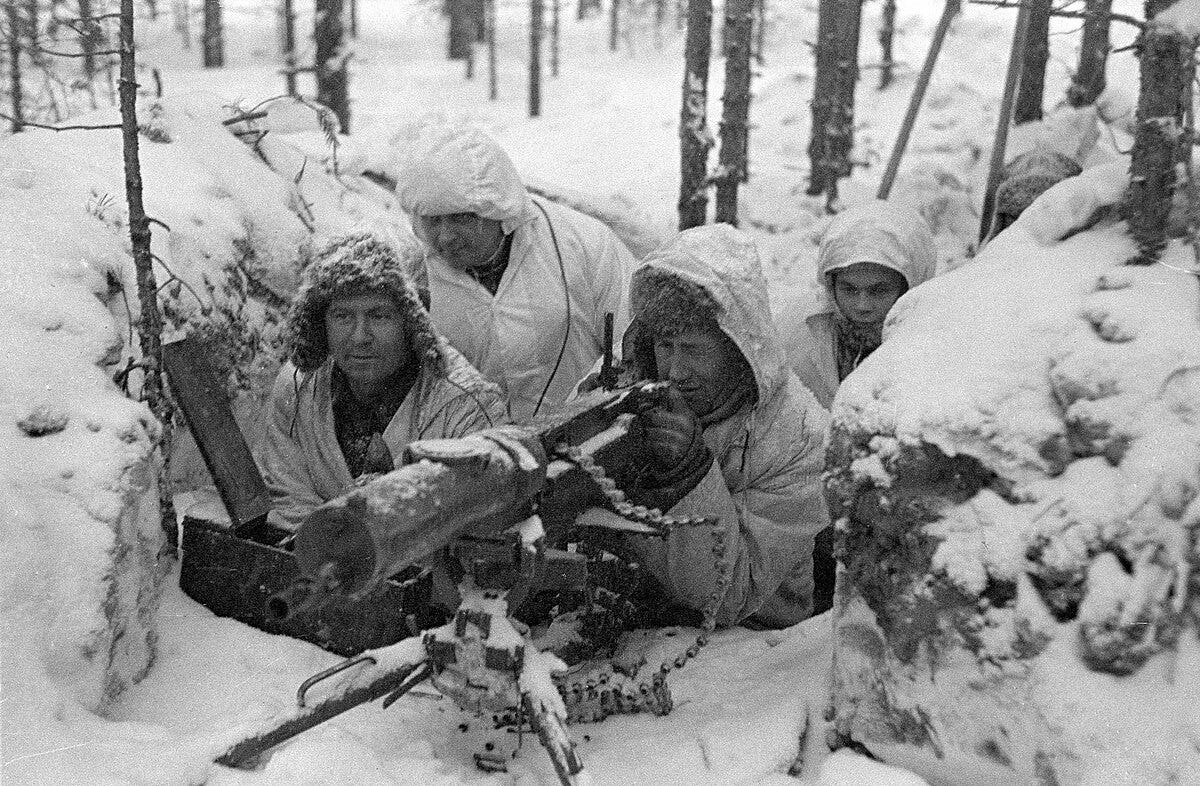
Finnish troops (public domain image from Wiki Commons)
After the invasion of Poland and a period of relative military activity, Germany embarked on a campaign in Norway. Here, they defeated the Allies and maintained their oil supplies in Scandinavia. This victory paved the way for a German offensive on France.
That subsequently came in 1940, and with the Maginot Line bypassed, German troops were able to occupy Paris and defeat France. However, the war with Britain continued in the air and in North Africa.
However, this did not deter Germany from amassing troops for the invasion of the USSR. Stalin misread that Germany would not open a second front against the USSR. In June of 1941, they duly did so when German troops invaded.
This caught the USSR by surprise, despite Anglo-American warnings of German troop movements towards Soviet territory. Cities in the east were quickly lost, and Soviet troops pushed back. By the winter of 1941, German troops had reached the outskirts of Moscow.
Fortunately, they were unable to continue in the face of severe winter weather, lack of supplies, and Russian reserves. Moscow remained, and winter troops were dispatched from eastern Russia to launch a counter-offensive, which forced the German soldiers to retreat.

Russian tanks roll around Moscow (public domain image from Wiki Commons)
With Germany on the defensive for the first time, in the spring of 1942, they regrouped to launch a counter-attack in southern Russia towards Soviet oil fields in the Caucasus region. At first, they were able to move forward, capturing southern cities and advancing towards Stalingrad.
With Stalingrad in sight, taking the city would bring them close to the Russian oil fields. The battle for the city began on July 17, 1942, and resulted in a Soviet counter-attack (encirclement), which forced the surrender of the remaining Axis armies. With the Axis armies surrendering at Stalingrad, the initiative had passed to the USSR.
Why is the Battle of Stalingrad Significant Today?
The Battle of Stalingrad was the biggest battle that won World War II in Eastern Europe. Russia’s victory in the battle forced the German army into a perpetual state of retreat from the USSR back to Berlin. Much of the city was reduced to rubble; the USSR rebuilt Stalingrad after World War II and later renamed it Volgograd.
Today, there is a huge Mamayev Kurgan memorial complex in Volgograd for the Battle of Stalingrad. That memorial includes a colossal Motherland Calls statue wielding a sword. The memorial is situated atop a large hill that was fiercely contested during the Stalingrad battle.
Those who still visit Russia in this Ukraine War era can also check out the Battle of Stalingrad Museum-Panorama in Volgograd. It remains the principal World War II site in Volgograd, which includes eight exhibition halls devoted to the Stalingrad battle. It includes a massive Defeat of Fascist Forces at Stalingrad panoramic painting and displays various military equipment.
The Battle of Stalingrad carries huge historical significance, and its memorial complex is a symbol of Russian resilience. Today, Russia continues to fight a war in Eastern Europe, but more as an invader rather than a country attempting to defend against an invasion. Thus, it is perhaps ironic that the Ukrainian forces have historically mirrored the heroic resistance of the Red Army.
Read more of my World War II Europe articles on Medium:
A Timeline of the Battle of Crete
The Aftermath of the Battle of the River Plate in World War II
[The Initial German Assault at the Battle of the Bulge](http://The Initial German Assault at the Battle of the Bulge)
Remembering the Sinking of the Tirpitz in World War II
An Analysis of the European Theater of World War II
[embed]Day in History-Guidlines Please read the guidelines and submit!aslynn-roe.medium.com
[embed]New Writers Welcome Day in History is a new publication on Medium!medium.com
메타데이터
- post_id
- 6435eb076fc8
- slug
- remembering-the-events-leading-to-the-battle-of-stalingrad-6435eb076fc8
- url
- https://medium.com/day-in-history/remembering-the-events-leading-to-the-battle-of-stalingrad-6435eb076fc8
- canonical_url
- https://medium.com/day-in-history/remembering-the-events-leading-to-the-battle-of-stalingrad-6435eb076fc8
- author_url
- https://medium.com/@mav44233
- status
- ok
- fetched_at
- 2026-07-18 11:23:00