Preface
Heads of nongovernmental organizations (NGOs) and college professors have difficulty passing up podiums and microphones. We want to tell…
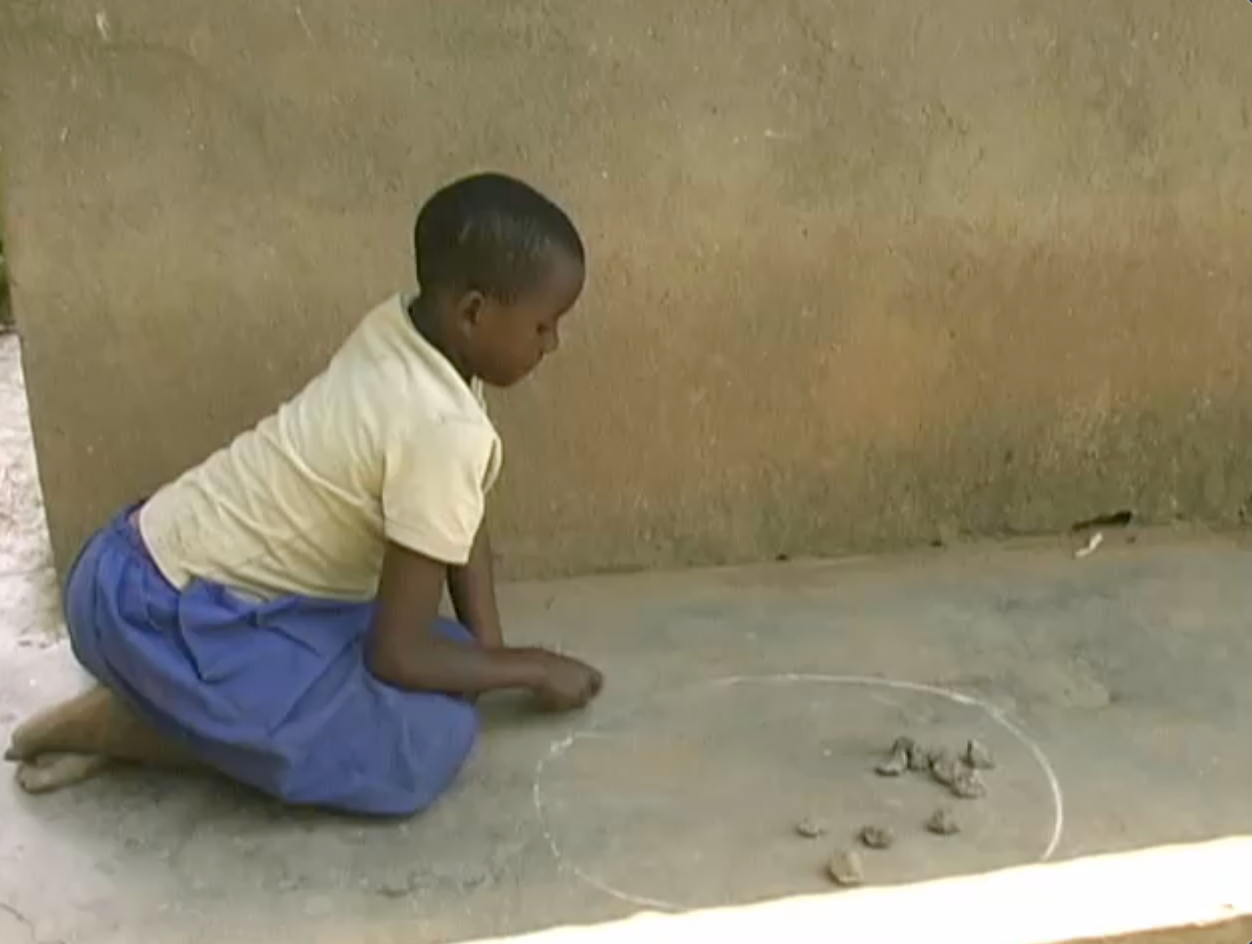
Rwandan girl playing with rocks and learning arithmetic
Preface
Heads of nongovernmental organizations (NGOs) and college professors have difficulty passing up podiums and microphones. We want to tell everyone what’s on our minds. Here’s an understatement: We have a tendency to, uh…lecture.
Not to say lectures are inherently bad. They are, after all, a time-honored and efficient message-delivery system. It’s just that they’re not always effective. Besides, the droning and sanctimony (mine included, which have a tendency to meander) can be downright taxing. When I feel a lecture coming on, I remind myself of a quip attributed loosely to Lyndon Johnson. It goes something like this: a speech is a lot like peeing down your leg; it may feel hot to you at first, but it gets cold (and old) quickly.
There are better ways to make a point: tell stories. At first, they may not be that efficient, but they can be profoundly effective. A personal, authentic story taps into our collective story. Think about stories of dreamers wrestling cynics. David versus Goliath stories. Stories about learning and earning.
A lecture is a roadmap to a destination. A story is a compass, leaving it up to you to navigate uncertain territory. A lecture may make a compelling case for a momentous social change. A story is a book of matches.
Sure, stories have their limits. Not all narrators have a reliable grasp on memory. We often hear, “If memory serves me…” But memory also fails us. A particular sequence of events may simply not add up. It may not have been raining that day. That head of state may not have said the words I thought I heard. If memories haven’t slipped one’s mind entirely, they can still be slippery. Just when you think you’ve got them firmly in hand, they tumble and bounce out of reach like marbles down a long flight of stairs. You try to gather them up, but several have a mind of their own, rolling away to join all their distant cousins at some strange réunion d’objets to which you were invited but have, alas, lost the directions.
The teachers I describe in this book have helped fill in my mental lacunae. They tell me that my recollections are “pretty accurate.” Not exactly a ringing endorsement, but, then again, Toni Morrison once described the act of remembering as “a form of willed creation.”
Sometimes, though, every detail comes rushing back. Racing through pools of rain on a pitted, unlit road in Nigeria from Port Harcourt to Calabar before the bandits take control. The arm of a mannequin propelled through a department store window during the Wenchuan earthquake. A colleague’s stoicism after having come upon the aftermath of ethnic cleansing. Those intimidating guards in President Pervez Musharraf’s office watching my every move during a series of conversations about Islam and development. That gleefully mischievous Afghan girl peeking through the iron bars at the White House fence, then turning to us to ask if she could meet the king of America.
메타데이터
- post_id
- 647b34c91fae
- slug
- preface-647b34c91fae
- url
- https://medium.com/in-the-small-places/preface-647b34c91fae
- canonical_url
- https://medium.com/in-the-small-places/preface-647b34c91fae
- author_url
- https://medium.com/@twbglobal
- status
- ok
- fetched_at
- 2026-06-21 12:17:11