Zero Waste Living: How to Reduce Waste and Live More Sustainably
Zero waste living is not about producing absolutely no rubbish or throwing away everything you already own. It is about changing the way…
Zero Waste Living: How to Reduce Waste and Live More Sustainably
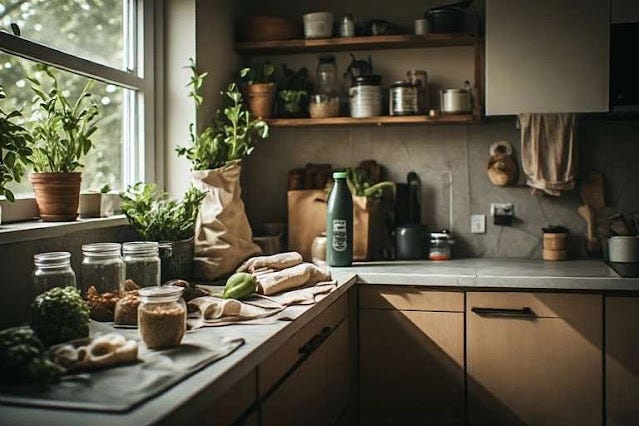
Zero waste living is not about producing absolutely no rubbish or throwing away everything you already own. It is about changing the way you consume so that fewer unnecessary products and materials become waste in the first place.
For a beginner, the most effective approach is to start small, understand where your household waste comes from, and gradually build habits that are realistic for your lifestyle.
You do not need an expensive collection of bamboo products, a perfectly organized pantry, or a completely plastic-free home to get started. In fact, replacing perfectly usable possessions can create more waste rather than less.
A better approach is to use what you already have, buy more intentionally, repair and reuse items whenever possible, and choose better alternatives when existing products eventually require replacing.
Whether your goal is to reduce household waste, cut down on single-use plastics, prevent food waste, save money, or develop a more sustainable lifestyle, the principles are largely the same. Prevent waste where you can, keep products in use for longer, and make disposal the last option rather than the first.
What Is Zero Waste Living?

Zero waste living is a lifestyle approach focused on preventing unnecessary waste and keeping materials in use for as long as possible.
The idea goes beyond recycling.
Recycling deals with material after you have already purchased, used, and discarded it. Zero waste asks earlier questions. Do you need the item? Can you avoid it? Can you use something you already own? Can you repair or reuse it?
That difference matters.
Imagine buying a drink in a disposable bottle every day. Recycling the bottles may recover some of the material. However, refusing unnecessary single-use bottles and carrying a reusable bottle can prevent that waste from being created in the first place.
The U.S. Environmental Protection Agency places source reduction and reuse above recycling in its waste hierarchy. In practical terms, preventing waste is preferable to dealing with it after it exists.
Zero waste living, therefore, involves several connected behaviors:
- Buying fewer unnecessary products
- Choosing durable goods
- Reusing what you already have
- Repairing damaged belongings
- Buying secondhand
- Reducing food waste
- Avoiding unnecessary packaging
- Composting suitable organic material
- Recycling materials through appropriate local programs
The approach also changes the way you think about consumption.
Instead of asking, “What sustainable product should I buy?” you might ask, “Do I need to buy anything?”
That question can save both money and resources.
Is Zero Waste Actually Possible?
For an individual household, literal zero waste can be very difficult.
Modern supply chains still rely on packaging. Some products have no practical unpackaged alternatives. Local recycling and composting systems differ. Medical, hygiene, safety, and accessibility needs can also limit the choices available to a person.
So, zero waste works better as a direction than a pass-or-fail test.
Your goal might be to cut your household trash by 10 percent this year. Later, you might reduce it further.
That is still progress.
The mistake is believing that one unavoidable piece of trash cancels every sustainable choice you made that week.
A realistic zero waste lifestyle is sustainable because it allows room for real life.
Zero Waste vs. Low Waste: What’s the Difference?
You will often see “zero waste” and “low waste” used together. These concepts intersect yet may carry distinct meanings.
Zero waste describes an ambitious goal: prevent waste and keep materials in circulation rather than sending them to disposal.
A low waste lifestyle takes a more flexible approach. Instead of worrying about whether you have reached zero, you focus on reducing the amount of waste your household creates.
For beginners, low waste living can feel more achievable.
For example, suppose your favorite food comes in packaging that you cannot avoid. You can advance without relinquishing sustenance. Instead, you could reduce other unnecessary packaging, prevent food waste, reuse containers, or choose a larger package when you know you will use it.
The distinction is useful because sustainability should work within your circumstances.
You may live in an apartment with no compost collection. Perhaps your local stores offer very few unpackaged foods. Perhaps your finances constrain you, or housemates possess different routines.
Those limitations do not make your efforts meaningless.
In fact, zero waste vs. low waste is less about choosing a label and more about choosing an approach you can maintain.
A useful mindset is:
Aim for zero. Live authentically. Keep reducing.
The 5 Rs of Zero Waste Living

One of the most useful frameworks for a zero waste lifestyle is the five Rs:
Refuse, Reduce, Reuse, Recycle, and Rot.
The order matters.
Refuse
Refusing means stopping unnecessary items before they enter your home.
This could include:
- Disposable cutlery you do not need
- Promotional products you will never use
- Unwanted flyers
- Excess packaging when another option exists
- Impulse purchases
- Free samples that do not interest you
Refusing sounds simple, but it requires a change in mindset.
Many of us accept free items because they are free. Yet an item does not become useful simply because you paid nothing for it.
If you would not buy it, you probably do not need to take it.
Refusing also applies to shopping.
Before adding something to your cart, pause. Ask what problem the product solves. Then ask whether something you already own can solve the same problem.
Reduce
Reducing means using fewer resources and buying fewer unnecessary things.
You might reduce your consumption by:
- Planning meals
- Buying fewer clothes
- Avoiding duplicate household products
- Reducing disposable products
- Choosing products that last longer
- Buying only the food you can use
- Limiting impulse purchases
Reduction often has a financial benefit, too.
If you spend less on things you do not need, you have more money available for things that genuinely matter.
Reuse
Reuse keeps products in service instead of sending them to disposal.
A glass jar can become food storage. An old towel can become a cleaning cloth. A sturdy box can become storage. Clothing can be repaired, altered, or repurposed.
However, do not turn reuse into an excuse to accumulate clutter.
You do not need a cupboard full of empty jars because they “might be useful someday.”
Keep things you have a realistic use for.
Recycle
Recycling has an important role, but it should not become the entire definition of sustainable waste management.
The recycling symbol on a package does not automatically mean that your local recycling program accepts it.
The EPA recommends checking local recycling guidance because accepted materials and collection systems vary between communities.
Therefore, learn the rules where you live.
If your recycling provider accepts a particular material, prepare it according to its instructions. If it does not, seek an appropriate alternative when one exists.
Rot
“Rot” refers to composting organic material.
Food scraps and yard waste can often be composted instead of sent to landfill, depending on the composting system.
**Home composting**, vermicomposting, and community composting are all possible approaches. The right option depends on your space, climate, local services, and the materials you have.
Remember, though, that composting should not replace food-waste prevention.
If you can eat the food, that is usually a better outcome than composting it.
How to Start Zero Waste Living
If you are wondering how to start zero waste living, resist the temptation to buy a collection of reusable products immediately.
Start with your trash.
Your waste can tell you more about your lifestyle than a generic list of zero-waste swaps.
Step 1: Audit Your Waste

For seven days, observe what your household throws away.
You can keep a simple note on your phone.
Record categories such as:
- Food waste
- Plastic packaging
- Paper
- Bathroom products
- Disposable food items
- Clothing and textiles
- Broken household goods
- Other waste
You do not need a laboratory-quality measurement.
You are seeking patterns.
Perhaps you discover that most of your trash comes from takeaway food. Maybe food waste dominates your bin. Perhaps your household uses numerous disposable cleaning products.
Once you know the biggest problem, you can work on it.
Step 2: Identify Your Biggest Waste Sources
Do not automatically start with the easiest change.
Start with a change that matters.
If food waste accounts for a large share of your household garbage, switching to bamboo toothbrushes will not address the main problem.
Instead, improve meal planning, food storage, shopping habits, and leftover use.
If packaging dominates your trash, focus on purchasing decisions.
This is how a waste audit turns into a practical plan.
Step 3: Start With One Change
Pick one behavior that feels manageable.
For example:
Problem: You buy bottled water every day.
Change: Carry a reusable bottle.
Or:
Problem: Fresh produce regularly spoils.
Change: Plan meals around food that needs to be used first.
Or:
Problem: You constantly buy inexpensive clothing.
Change: Wait before buying and consider secondhand options.
The best change is not necessarily the most impressive one.
It is the one you will still be doing six months from now.
Step 4: Use What You Already Own
This is one of the most overlooked zero waste ideas.
You do not become more sustainable by throwing away perfectly functional possessions.
If you already own plastic containers, use them.
If you have reusable bags, use them.
If your towels work, keep them.
If your furniture is functional, maintain it.
Replacing a useful product simply because a new version has better environmental marketing can create another purchase that requires materials, manufacturing, packaging, and transportation.
Zero waste living should reduce unnecessary consumption, not create a new category of shopping.
Step 5: Build Sustainable Habits
Once one habit becomes automatic, add another.
A practical decision hierarchy looks like this:
Use what you have → repair → reuse → borrow → buy secondhand → buy new.
You will not follow that order in every situation. Safety, hygiene, accessibility, cost, and practicality all matter.
Still, it is a useful starting point.
Your 8-Week Zero-Waste Starter Plan
If you want a clear answer to how to start living zero waste, use a gradual plan.
Week 1: Observe
Track what you throw away.
Do not judge yourself yet.
Your job is to gather information.
Week 2: Refuse
Choose one unnecessary disposable or promotional item you regularly accept.
Start saying no.
Week 3: Reuse
Find three items in your home that you can reuse instead of replacing.
Week 4: Reduce Food Waste
Check your refrigerator before shopping. Plan meals around food that needs to be used. Freeze suitable foods before they spoil.
The EPA recommends planning meals, shopping with a list, storing food properly, and using leftovers as practical ways to prevent wasted food at home.
Week 5: Improve Shopping
Before each non-essential purchase, wait.
Ask whether you need it, whether you already own something similar, and whether you could buy it secondhand.
Week 6: Repair
Choose one damaged item.
See whether you can repair it yourself or find someone who can.
Week 7: Learn Local Recycling Rules
Find your local recycling provider.
Write down what it accepts.
Keep the information somewhere accessible.
Week 8: Explore Composting
If you have access to composting, investigate how it works.
If you live in an apartment, search for community or municipal options.
At the end of eight weeks, review what worked.
Keep the habits that fit your lifestyle. Modify the ones that do not.
That is a sustainable system.
Zero Waste Living at Home
A zero waste home does not need to look like a showroom filled with matching bamboo, glass, and stainless-steel products.
It should work.
The best sustainable home is one where people use what they own, buy thoughtfully, maintain their belongings, and prevent unnecessary waste.

The kitchen is often the best place to begin.
Food creates a special type of waste problem because throwing food away also wastes the resources that went into producing, processing, transporting, storing, and preparing it.
The EPA estimates that a significant share of the U.S. food supply goes uneaten, making food-waste prevention an important household opportunity.
Start with shopping.
Before leaving for the store, check your refrigerator, freezer, and pantry.
Then create meals around what you already have.
You can also:
- Freeze food before it spoils
- Store produce appropriately
- Use leftovers
- Cook realistic portions
- Buy quantities you can finish
- Keep frequently forgotten foods visible
- Compost suitable scraps
Packaging matters, too.
Choose less packaging when practical. However, do not buy a giant bulk package simply because it has less packaging if half of the food will go uneaten.
The most sustainable choice depends on the whole situation.
Zero Waste Bathroom
Bathrooms produce packaging from shampoo, soap, toothpaste, skincare, cleaning products, and other personal-care items.
You can reduce waste without replacing everything.
First, finish what you already have.
Then consider alternatives as products run out.
Depending on your needs, you might choose refillable products, concentrated formulas, bar products, or packaging that can be recycled locally.
However, do not buy something solely because it is labeled zero waste.
A product that sits unused in your bathroom is not helping.
Zero Waste Cleaning
Cleaning can generate a steady stream of disposable packaging and wipes.
A simpler approach is to use durable cleaning tools.
Reusable cloths can replace many disposable wipes. Concentrated products can sometimes reduce packaging. Refill systems may help where they are genuinely available and practical.
You can also avoid owning ten specialized products when one suitable cleaner can handle several jobs.
Always follow product labels and safety instructions.
In particular, never mix household cleaning chemicals unless the manufacturer specifically confirms that the combination is safe.
Zero Waste Laundry
The most effective zero-waste laundry habit may be surprisingly simple:
Make your clothes last longer.
Wash items according to their actual needs. Repair small damage before it becomes a bigger problem. Store clothes properly. Avoid buying replacements simply because a trend changed.
When clothing eventually reaches the end of its useful life, look for appropriate reuse or textile-recycling options in your area.
Zero Waste Home Office
A lower-waste home office can start with what is already on your desk.
Use stationery until it runs out. Print only when necessary. Reuse paper where appropriate. Maintain electronics rather than replacing them simply because a newer model exists.
Digital storage can reduce some paper use. However, digital products also require energy and physical infrastructure.
The goal is not to make every choice “green.”
It is to avoid unnecessary consumption.
Zero Waste Shopping

Shopping decisions determine much of what enters your home.
That makes zero waste shopping less about finding the perfect store and more about becoming a better consumer.
Buy Less
The simplest shopping strategy is also the most powerful:
Do not buy what you do not need.
Before purchasing something, ask:
- What problem does this solve?
- Do I already own something similar?
- How often will I use it?
- Can I borrow it?
- Can I buy it secondhand?
- Will I still want it next month?
These questions are particularly useful for impulse purchases.
Buy Durable Products
When you need something new, think beyond the purchase price.
Consider how long the product might last.
A cheap product that breaks quickly may create repeated purchases. A more durable product may cost more initially but remain useful for much longer.
Look for repairability, replacement parts, build quality, and realistic longevity.
Shop Secondhand
Secondhand shopping keeps existing products in use.
Depending on the item, you might buy used:
- Clothing
- Furniture
- Books
- Tools
- Kitchenware
- Home decor
- Bicycles
- Some electronics
Inspect products carefully and consider safety requirements before buying used equipment.
Avoid Excess Packaging
Packaging is not automatically bad. It can protect products, extend shelf life, and reduce damage.
The problem is unnecessary packaging.
When two similar products meet the same need, choosing the option with less packaging can reduce waste.
Still, do not ignore food waste or product longevity simply to avoid one piece of packaging.
Buy in Bulk Only When It Makes Sense
Bulk shopping can reduce packaging per unit.
It can also encourage overbuying.
If a large package costs less but you cannot use it before it expires, the financial and environmental benefits disappear.
Buy according to your actual consumption.
Zero Waste Products You Don’t Actually Need
One of the strangest parts of modern zero-waste culture is the idea that you need to buy your way into sustainability.
You do not.
You might see beautifully arranged kitchens filled with matching containers, reusable bags, bamboo accessories, refill bottles, and specialized storage systems.
They can look appealing.
But your household does not need to look like a zero-waste advertisement.
Before purchasing a new sustainable product, look around your home.
Do you already own something that performs the same job?
If yes, use it.
You may already have:
- **Plastic food containers**
- Glass jars
- Cloth towels
- Shopping bags
- Reusable bottles
- Mugs
- Cutlery
- Storage boxes
Use those items until they no longer serve you.
This approach also addresses an important criticism of zero waste culture: sustainability can become another reason to consume.
Polly Barks has similarly emphasized starting with existing belongings rather than assuming sustainable living requires expensive products.
The better question is not:
“What zero-waste product should I buy?”
Ask:
“What waste problem am I trying to solve?”
Then solve that problem with the fewest new resources possible.
Zero Waste Living on a Budget
A zero waste lifestyle on a budget can actually make financial sense.
Waste often represents money that has already been spent.
Food thrown away is money wasted. Clothing purchased and rarely worn is money wasted. Cheap items that break quickly can become expensive over time.
Use What You Have
Start with your existing belongings.
This costs nothing.
Repair
A small repair can extend the life of clothing, furniture, tools, or household items.
Learn simple repairs where practical. For more complicated items, consider local repair services.
Borrow
You do not need to own everything you occasionally use.
Borrow tools, equipment, books, or other suitable items from friends, family, libraries, community groups, or tool-sharing programs.
Buy Secondhand
Secondhand shopping can lower the purchase price while extending the life of an existing product.
Focus on quality rather than buying simply because something is cheap.
Buy New Only When Necessary
When you need something new, slow down.
A useful sequence is:
Need it?
Then:
Already own it?
Then:
Can I repair something?
Then:
Can I borrow it?
Then:
Can I find it secondhand?
Only after those questions should you decide what new product to purchase.
This approach makes zero waste living on a budget much more realistic.
How to Reduce Food Waste
If you want practical ways to reduce waste, start with food.
Food waste is different from many other household waste streams because the waste does not begin when you throw food away.
It begins when resources are used to produce food that nobody eventually eats.
The EPA recommends preventing wasted food through better planning, storage, and use of food at home.
Shop With a Plan
Look at what you already have.
Then plan meals.
A shopping list reduces impulse purchases and helps you buy realistic quantities.
Learn Your Household’s Consumption
If your family consistently eats three servings of vegetables but you buy enough for seven, the problem is not your compost bin.
It is your purchasing pattern.
Buy what you can use.
Use Food Before It Becomes Waste
Create a “use first” area in your refrigerator.
Place food that needs attention there.
This simple visual reminder can prevent forgotten ingredients.
Store Food Properly
Different foods have different storage requirements.
Learn which foods benefit from refrigeration, which need ventilation, and which can be frozen.
Make Leftovers Useful
Leftovers do not have to mean eating the same meal three nights in a row.
Use them as ingredients.
Cooked vegetables can become part of an omelet or soup. Leftover grains can become another meal. Extra ingredients can often be incorporated into the next day’s cooking.
Compost What You Cannot Prevent.
If food cannot be eaten or otherwise used, composting can be a useful next step where available.
But remember the order:
Prevent first. Compost second.
Composting as Part of Zero Waste Living
Composting turns suitable organic material into a useful soil amendment.
For households with outdoor space, backyard composting can be an option. Worm composting can work in smaller spaces. Community programs can provide another solution for people who live in apartments or lack suitable outdoor conditions.
A basic compost system needs appropriate organic materials, moisture, oxygen, and a suitable balance of materials.
Common compost ingredients include plant-based food scraps, leaves, and other appropriate organic material.
However, composting rules vary.
A product labeled “compostable” may require a commercial composting facility rather than a backyard pile.
Therefore, always check the instructions for your composting system.
If your city offers a food-scrap collection, follow its accepted-material list.
Composting can reduce the amount of organic waste sent to disposal. More importantly, it gives households another option for managing material that cannot be avoided.
Zero Waste Living in an Apartment
Small homes create a different set of challenges.
You may have no garden. Storage may be limited. Your building may control waste collection. You might not have room for multiple recycling or compost containers.
That does not mean you cannot practice zero waste living.
In fact, limited space can encourage better purchasing habits.
Prevent waste before it enters your apartment
A product you never buy does not require storage.
Use compact reusable systems
You do not need a pantry filled with matching containers.
Use practical storage you already have.
Explore community composting
If you cannot compost at home, look for local services.
Learn your building’s recycling system
Apartment recycling rules may differ from those of a single-family home.
Reduce clutter
Every unnecessary purchase eventually becomes something you need to store, donate, sell, recycle, or discard.
A smaller home makes that cycle easier to notice.
Zero Waste Living With a Family
A family cannot always operate like one person following a carefully controlled routine.
Children have preferences. Partners may disagree. Busy schedules create convenience pressures. School, work, travel, and social activities introduce waste you cannot completely control.
So, focus on systems instead of perfection.
Keep reusable bags somewhere convenient.
Make leftovers easy to see.
Create a simple place for recycling.
Teach children to avoid unnecessary waste without making them feel guilty when they make mistakes.
Most importantly, make sustainable choices convenient.
If a reusable bottle is difficult to find every morning, someone will eventually grab a disposable one.
If the recycling instructions are confusing, people may guess.
Good household systems remove friction.
You do not need everyone to follow every zero-waste habit.
A family that reduces unnecessary waste consistently is making meaningful progress.
What If Your Local Area Doesn’t Recycle Everything?
This is especially important for anyone searching for zero waste living in the United States.
Recycling is not one universal system.
Different communities accept different materials. Collection methods vary. Some materials require special drop-off locations.
Therefore, never assume that a recycling symbol guarantees local acceptance.
Check your local waste authority.
Look for its:
- Accepted-material list
- Collection schedule
- Preparation instructions
- Special drop-off information
- Hazardous waste guidance
- Electronics recycling guidance
The EPA also advises consumers to check local programs rather than relying solely on packaging labels.
This matters because placing the wrong materials into a recycling bin can contaminate a recycling stream.
When a material is not accepted, do not automatically throw it away without investigating.
Some communities have separate programs for batteries, electronics, textiles, chemicals, and other difficult materials.
However, do not drive for hours to recycle a minor item if the environmental and financial cost of the trip outweighs the benefit.
Again, context matters.
Common Zero-Waste Mistakes
Even good intentions can create poor results.
Here are some common mistakes to avoid.
Trying to Change Everything at Once
A complete lifestyle overhaul sounds exciting.
It can also become exhausting.
Choose a few changes and allow them to become habits.
Buying Too Many Sustainable Products
A new product cannot solve excessive consumption by itself.
Use what you own first.
Focusing Only on Recycling
Recycling matters, but source reduction and reuse come earlier in the waste hierarchy.
Throwing Away Useful Things
Do not create waste in the name of avoiding waste.
If an item still works, continue using it.
Chasing Perfection
The pressure to produce literally zero waste can make sustainable living feel impossible.
A practical low-waste approach may be more sustainable for your life.
Recent zero-waste commentary has highlighted this problem. One account from The Earthling Co. describes how strict zero-waste habits became stressful and eventually led the writer toward a more flexible low-waste approach.
Ignoring Food Waste
Packaging gets a lot of attention.
Food waste deserves just as much.
Buying Bulk Food You Cannot Finish.
Less packaging does not help if half the food ends up spoiled.
Assuming “Compostable” Means “Backyard Compostable”
Always check the requirements of your composting system.
Comparing Your Household With Someone Else’s
Your circumstances are different.
The goal is improvement, not competition.
30 Easy Zero-Waste Habits to Start Today
You do not need to adopt all 30.
Choose three that fit your life.
- Carry a reusable water bottle.
- Keep reusable shopping bags where you will remember them.
- Plan meals before grocery shopping.
- Check your refrigerator before buying food.
- Use leftovers before preparing another meal.
- Freeze suitable food before it spoils.
- Buy realistic quantities of fresh produce.
- Repair clothing instead of immediately replacing it.
- Consider secondhand goods before buying new.
- Borrow rarely used tools.
- Refuse promotional items you do not need.
- Avoid impulse purchases.
- Reuse containers you already own.
- Use washable clothes for suitable cleaning tasks.
- Finish personal-care products before replacing them.
- Avoid buying duplicate household products.
- Learn your local recycling rules.
- Keep recycling instructions somewhere accessible.
- Compost suitable organic waste when practical.
- Buy durable products.
- Look for repairable products.
- Reuse paper where appropriate.
- Reduce unnecessary printing.
- Maintain appliances to extend their useful life.
- Donate usable belongings responsibly.
- Swap clothing with friends or family.
- Buy only the amount of bulk food you can use.
- Keep a "use first" section in your refrigerator.
- Carry reusable utensils when they genuinely fit your routine.
- Focus on progress instead of perfection.
The strongest zero waste habits are not necessarily the most impressive.
They are the ones you can repeat without constantly thinking about them.
How Zero Waste Fits Into Sustainable Living
Zero waste is important, but it is only one part of sustainable living.
You can reduce your household trash while still wasting energy, buying excessive clothing, wasting water, or replacing electronics unnecessarily.
A broader sustainable lifestyle considers the resources behind everyday decisions.
That might include:
- Reducing household waste
- Preventing food waste
- Conserving water
- Using energy efficiently
- Buying fewer unnecessary products
- Repairing belongings
- Choosing secondhand goods
- Considering transportation choices
- Supporting durable products
- Caring for local environments and communities
The point is not to make every decision perfect.
Instead, think about where your choices have the greatest practical impact.
For one household, reducing food waste may be the biggest opportunity.
For another, buying fewer clothes may matter more.
For someone else, repairing furniture or reducing disposable packaging may be the easiest place to start.
That is why sustainable living should remain flexible.
Frequently Asked Questions About Zero Waste Living
What is zero waste living?
Zero waste living is a lifestyle that aims to reduce the amount of waste sent to landfills by preventing waste, reducing consumption, reusing products, repairing items, composting organic waste, and recycling what cannot be reused. It focuses on changing everyday consumption habits so fewer resources become waste in the first place.
How do I start zero waste living?
Start zero waste living by making small, manageable changes to your everyday habits rather than trying to eliminate all waste at once. Begin by identifying your biggest sources of household waste, then focus on buying only what you need, refusing unnecessary single-use items, reusing what you already own, and gradually adopting habits such as composting.
What are the 5 Rs of zero waste?
The 5 Rs of zero waste are Refuse, Reduce, Reuse, Recycle, and Rot. Refuse things you do not need, reduce what you consume, reuse and repair items whenever possible, recycle materials that cannot be reused, and rot or compost suitable food scraps and other organic waste. The order emphasizes waste prevention before disposal.
How can I reduce waste at home?
You can reduce waste at home by avoiding single-use products, buying only what you need, reusing and repurposing household items, repairing things before replacing them, planning meals to prevent food waste, composting organic scraps, and recycling correctly. Start with the types of waste your household produces most often and tackle those first.
Is zero waste actually possible?
Achieving literally zero waste is difficult for most people because some waste is unavoidable, but you can substantially reduce the amount of waste you create. A practical zero-waste lifestyle focuses on minimizing unnecessary waste, keeping products in use longer, and finding better ways to manage unavoidable materials rather than expecting a completely waste-free household.
What is the difference between zero waste and low waste?
Zero waste aims to eliminate or minimize waste as much as reasonably possible, while low waste focuses on reducing waste through practical lifestyle changes. Low waste can be a more flexible approach for people who cannot eliminate certain materials because of cost, availability, health, location, or existing infrastructure.
How can I live zero waste on a budget?
You can live zero waste on a budget by buying less, using what you already have, repairing items, shopping secondhand, borrowing things you rarely use, and planning meals to reduce food waste. You do not need to purchase a complete set of expensive zero-waste products; reducing consumption is often one of the simplest ways to save both money and resources.
What are the easiest zero waste habits to start with?
Some of the easiest zero-waste habits are carrying a reusable water bottle, using reusable shopping bags and food containers, refusing unnecessary single-use items, buying only what you need, and reducing food waste. Start with one or two habits that are easy to maintain, then add more as they become part of your routine.
Does zero waste mean I cannot buy anything new?
No, zero waste does not mean you have to stop buying new products. It means becoming more intentional about consumption. Before purchasing something, consider whether you can use, repair, repurpose, borrow, or buy it secondhand. When a new purchase is necessary, prioritize products that are durable, reusable, and likely to remain useful for a long time.
What should I do with food scraps?
Food scraps can often be composted instead of being thrown into the trash. Depending on where you live, options include backyard composting, worm composting, community composting, or a municipal organics collection service. Before composting, check which food scraps and organic materials your particular composting system accepts.
Is recycling part of zero waste living?
Yes, recycling is part of zero waste living, but it comes after waste prevention, reduction, and reuse. Recycle materials that you cannot reasonably refuse, reduce, reuse, or repair, and follow your local recycling rules because accepted materials differ between communities. Recycling should complement waste reduction rather than replace it.
What is the biggest mistake beginners make when trying to live zero waste?
One of the biggest zero-waste mistakes is replacing usable household items with new products simply because they are marketed as sustainable. A better approach is to use what you already own, identify where most of your waste comes from, and make targeted changes. Starting gradually also makes zero waste habits easier to maintain over time.
Why is it important to reduce waste?
Reducing waste helps conserve resources, prevent unnecessary consumption, decrease the amount of material sent to disposal facilities, and keep useful products and materials in circulation longer. Waste reduction also encourages more thoughtful purchasing because preventing waste generally starts before a product enters your home.
Can zero waste living save money?
Yes, zero waste living can save money when it focuses on buying less and making better use of what you already own. Repairing items, shopping secondhand, planning meals, avoiding disposable products, borrowing instead of buying, and choosing durable goods can reduce unnecessary spending while also reducing household waste.
What should I do first when starting a zero-waste lifestyle?
The best first step is to conduct a household waste audit and identify what you throw away most frequently. Once you know your biggest sources of waste, choose one area to improve instead of attempting a complete lifestyle change. This makes it easier to build practical zero-waste habits that last.
Conclusion: Start With Less, Not More

The easiest way to make zero waste living complicated is to treat it as a shopping list.
You do not need to replace your kitchen with glass containers. You do not need a new wardrobe. You do not need every reusable product advertised online.
Start somewhere else.
Look at what you already own.
Look at what you throw away.
Then look for the connection between the two.
Maybe your household wastes too much food. Perhaps you buy more clothes than you wear. Maybe disposable drinks are filling your trash. You might discover that your biggest problem is simply buying things you do not need.
Once you know the problem, make one change.
Then make another.
Use what you have. Repair what you can. Reuse things that still have value. Buy secondhand when appropriate. Purchase new products when you genuinely need them. Compost when practical. Learn your local recycling rules.
Most importantly, do not turn sustainability into another form of consumption.
Zero waste living is not about owning the perfect collection of eco-friendly products. It is about creating less **unnecessary waste** and making better use of the resources already around you.
You do not have to become perfect.
You only have to start.
The next time you are about to buy something, throw something away, or order something disposable, pause for a moment and ask:
Can I avoid this waste in the first place?
That question is where a more sustainable lifestyle begins.
메타데이터
- post_id
- 649dff74feb8
- slug
- zero-waste-living-649dff74feb8
- url
- https://medium.com/@stephenmccoy99/zero-waste-living-649dff74feb8
- canonical_url
- https://medium.com/@stephenmccoy99/zero-waste-living-649dff74feb8
- author_url
- https://medium.com/@stephenmccoy99
- status
- ok
- fetched_at
- 2026-08-21 15:42:48