A Little Jazz Then…And Now
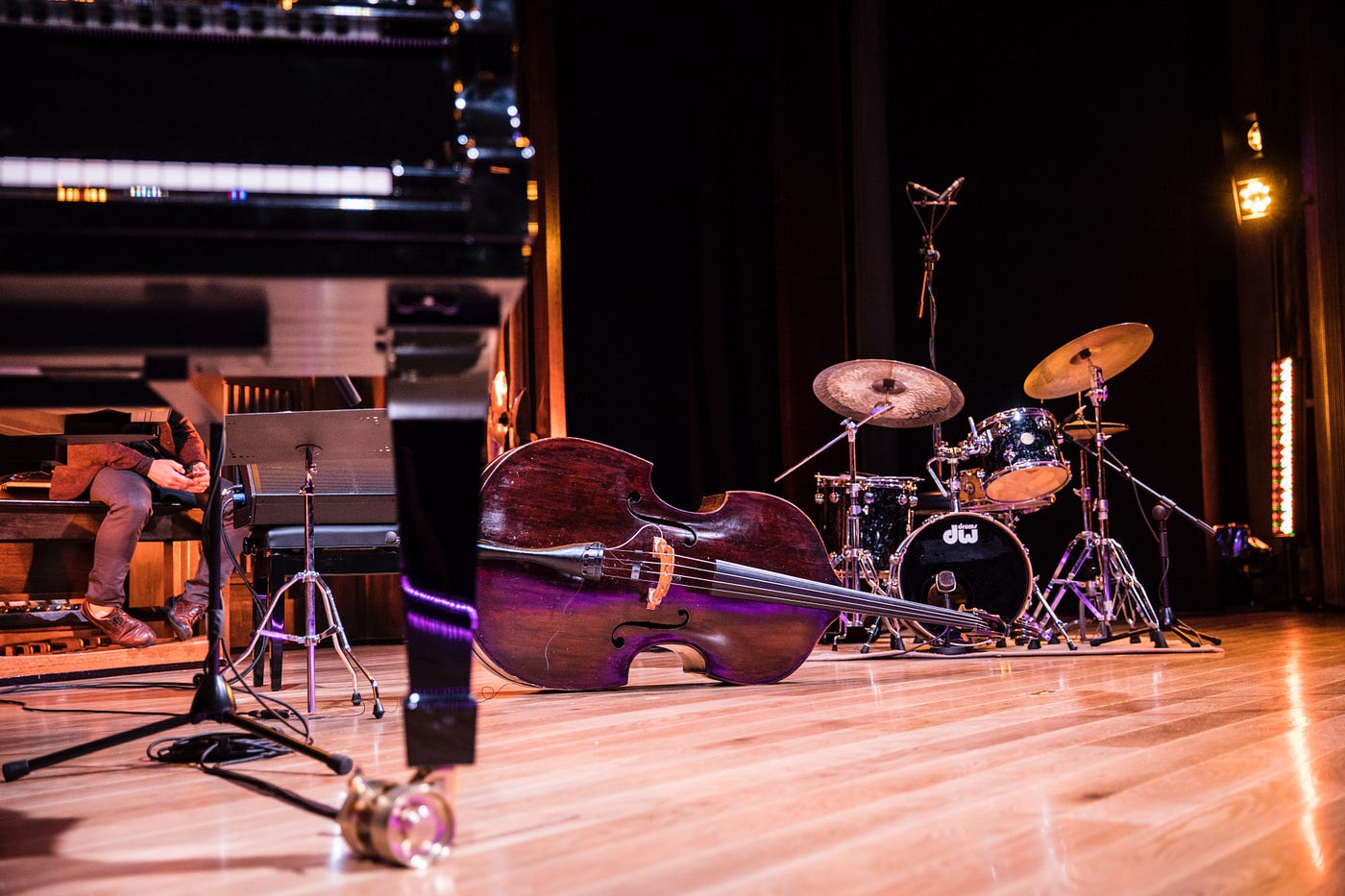
Photo by Gabriel Barletta on Unsplash
A Little Jazz Then…And Now

Photo by Gabriel Barletta on Unsplash
Monk.; Thelonious Monk Quartet; Columbia Records; Catalogue # 88697957682-4; Recorded 03/09/1964; 10/06/1964–10/08/1964; Time: 01:08:39; Release Date: 01/25/1965
Musicians: Thelonious Monk (piano), Charlie Rouse (tenor sax), Larry Gales (bass), Ben Riley (drums)
Track 1: Liza (All The Clouds’ll Roll Away) (George Gershwin, Gus Kahn, Ira Gershwin, 1929); This chart starts with a ‘call and response’ between Monk and Charlie Rouse’s tenor saxophone. The rhythm section of Gales and Riley is subdued but provides a firm foundation for the tune to develop. Rouse breaks into a swinging sax solo at the 00:00:37 mark, with Monk making his melodic contribution just over a minute later. Rouse returns for another fill before returning to the melody. There is nothing timid about this chart. It swings from the first note.
Track 2: April In Paris (Take 6) (E.Y. ‘Yip’ Harburg, Vernon Duke, 1932); The song was composed for the Broadway musical Walk A Little Faster. Monk’s solo piano introduction reflects a sensitivity and respect for the composition. At 00:01:50, Charlie Rouse and the rest of the quartet join him in a bluesy rendition of the classic chart. Monk provides a responsive and supportive melodic support throughout the effort. His solo at 00:04:38 is classic Monk, with his classic phrasing, complete with starts, stops, discordance, and unpredictability, all present in this musical detour to 00:06:07, where Rouse redirects the melody back on course. There are numerous transitions in this eight-minute track, but none are rushed. The interpretation is unique.
Track 3: Children’s Song (That Old Man) (Public Domain / Thelonious Monk, 1964); This song is listed in the public domain, originating in England in the late-nineteenth, or early twentieth century. According to the notes available, Monk was able to claim the rights due to his new interpretation of the folk song.
Monk, Gales, and Riley provide the initial rhythm, with Rouse opening with the familiar melody. Monk’s piano provides harmonic support over a subdued bass and drums accompaniment. At 00:02:15, Monk’s solo takes the melody into uncharted territory, only occasionally rejoining it. At 00:04:07, Monk and Rouse firmly return to the original melody. It’s a unique and imaginative interpretation of the song.
Track 4: I Love You (Sweetheart Of All My Dreams) (Art Fitch, Kay Fitch, Bert Lowe, 1926); Monk’s discordant piano intro struggles into a loose melody at 00:01:36 continues until 00:05:12, when he finally settles into a mostly recognizable rendition of the jazz standard. The 3:39 in between is a melodic, harmonic, and rhythmic adventure, vintage Monk. His trademark use of discordance and asymmetric phrasing slowly diminish until the chart’s conclusion.
The description above is not meant to be derogatory. His imagination was able to reorganize the musical chaos he’d consciously created for several minutes, casually returning to the original melody.
Track 5: Just You, Just Me (Jesse Greer, Raymond Klages, 1929); A brief piano introduction leads into a gentle swing tune with Larry Gales and Ben Riley providing the rhythmic foundation for Charlie Rouse’s excellent tenor sax lead. Monk provides well-conceived call and response fills as well as a tasteful solo. This track is a perfect example of how a jazz quartet should sound.
Track 6: Pannonica (Re-take 2) (Thelonious Monk, 1956); Monk’s piano dominates the rhythm over the bass and drums. Rouse’s bluesy melody floats over the piano effortlessly. The dynamics are different because there’s no conflict, the piano and tenor sax complement each other. Nothing feels or sounds forced, which is noteworthy considering Monk’s unconventional phrasing.
This composition was written in honor of Baroness Kathleen Annie Pannonica ‘Nica’ de Koenigswarter, who was a British- born writer, photographer, bebop patron, and a member of the Rothschild family. She used her considerable influence and resources through the ‘50’s and ‘60’s to promote jazz and give jazz musicians a sense of community, unity, and legitimacy. While her efforts were focused on jazz musicians in general, she developed a closer bond with Monk and his family which lasted even after his death.
Track 7: Teo (Thelonious Monk, 1964 (?); The chart starts with Monk and Rouse playing in unison until Charlie takes the lead. Monk provides him with solid rhythmic support over the bass and drums. Both sax and piano solos are tasteful and well executed, with Monk playing within the confines of the arrangement.
This track was written in honor of Teo Macero, a versatile musician and producer for Columbia Records, joining them in 1957. He was known for producing groundbreaking jazz releases for Dave Brubeck, Miles Davis, and Charles Mingus among others. He also produced over a hundred classical albums for the Columbia label. His discography is both impressive and legendary, his work as a musician and producer continuing after leaving Columbia Records in 1975.
Track 8: April In Paris (Take 1); (E.Y. ‘Yip’ Harburg, Vernon Duke, 1932); Monk’s classical training shows in the long introduction to this chart. At 00:01:39, Charlie Rouse brings in the rest of the quartet in a tasteful blues rendition of this standard. Both the piano and tenor sax solos are well done. In a quartet format, it’s very easy for one of the musicians to overplay. There’s a balance throughout this recording that enhances the finished product.
Track 9: Pannonica (Take 2) (Thelonious Monk, 1956); This take was recorded in 1963, with John Ore on bass and Frankie Dunlop on drums. The feel is a bit different from Track 5 due to the personnel changes.
Track 10: Medley: Just You, Just Me (Jesse Greer, Raymond Klages, 1929) / Liza (All The Clouds’ll Roll Away) (George Gershwin, Gus Kahn, Ira Gershwin, 1929); This is a spirited medley of Tracks 5 and 1. It feels a bit more upbeat than the individual tracks. The musicianship is outstanding and the cooperative efforts only add to the appeal.
Thelonious Sphere Monk (1917–1982) was a unique talent and personality in the Jazz world. He learned to read music by watching his older sister Marion practicing the piano and could read it before he learned to play.
He was a brilliant and innovative composer. His most famous compositions include ‘Round Midnight’, ‘Straight, No Chaser’, ‘Blue Monk’, ‘Well, You Needn’t’, and ‘In Walked Bud’. His exposure to classical music through his piano teacher greatly influenced both his style and technique.
Listening closely to his music is the key to appreciating it. You may hear a melody, and by the time he arrives at the bridge, you’re wondering how, and why, the melody vanished. The key is to listen closely. The thread is always there. The musical journey is sometimes difficult to follow, but the final destination is always worth the effort.
Enjoy!
Disclaimer: The materials used in the composition and maintenance of this blog are from my personal music archives. Neither the content, nor the comments regarding the quality of the music, are influenced, supported, or compensated by any outside entity. The observations made are based solely on my experiences as a musician.
메타데이터
- post_id
- 64b8a22c9a06
- slug
- a-little-jazz-then-and-now-64b8a22c9a06
- url
- https://medium.com/@Jazzdrummer/a-little-jazz-then-and-now-64b8a22c9a06
- canonical_url
- https://medium.com/@Jazzdrummer/a-little-jazz-then-and-now-64b8a22c9a06
- author_url
- https://medium.com/@Jazzdrummer
- status
- ok
- fetched_at
- 2026-06-25 12:15:08