The $10 Million Mistake: How Smart Fine-Tuning Crushed the Brute Force Era of LLMs
What Bloomberg’s blunder can teach you about skipping the GPU arms race and still winning
The $10 Million Mistake: How Smart Fine-Tuning Crushed the Brute Force Era of LLMs
What Bloomberg’s blunder can teach you about skipping the GPU arms race and still winning
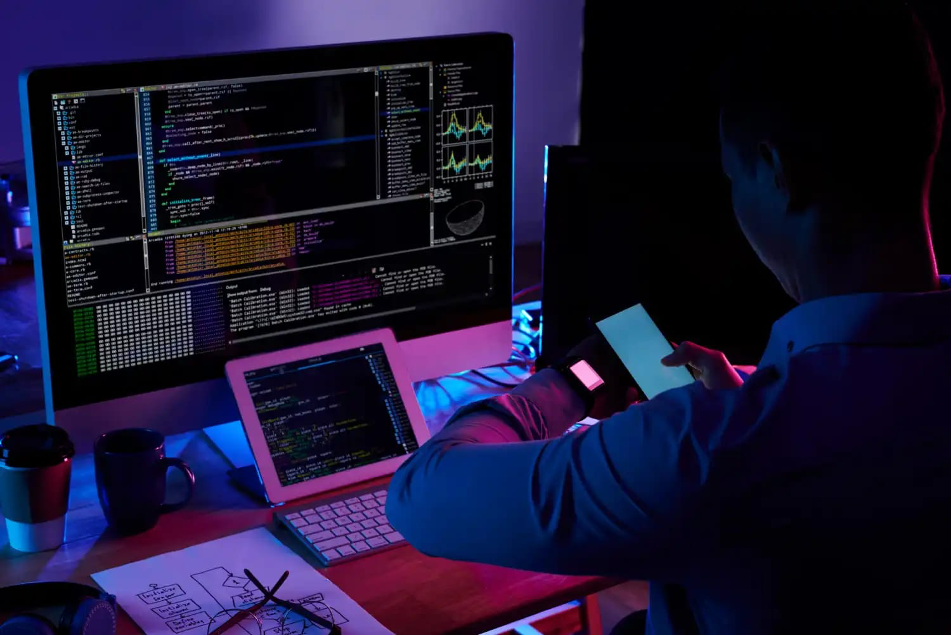
( Credit : Image created using AI )
Let’s rewind. Bloomberg threw $10 million at building a financial LLM. They called it cutting-edge. GPT-4 showed up months later and made it look like a very expensive PowerPoint.
This is not just about Bloomberg. It’s about a mindset. Big budgets. Bigger models. Maximum drama. And it’s all cracking.
Because while they trained for months, some random dev in Estonia fine-tuned a model on a laptop in his kitchen, sipping soup and humming old jazz. His model? 90% as good. Cost? $1,400.
“You don’t need to conquer the mountain if you can just build a tunnel.”
This is the quiet brilliance of PEFT: parameter-efficient fine-tuning. It’s the shortcut the big guys hate because it works too well. Welcome to the world where you don’t need a PhD or 8 A100s to get remarkable results.
What Actually Is PEFT?
Fine-tuning used to mean rewriting the entire memory of a model. PEFT? It’s like giving your LLM sticky notes instead.
You’re updating maybe 0.2% of the model. Sometimes less. That’s the cheat code.
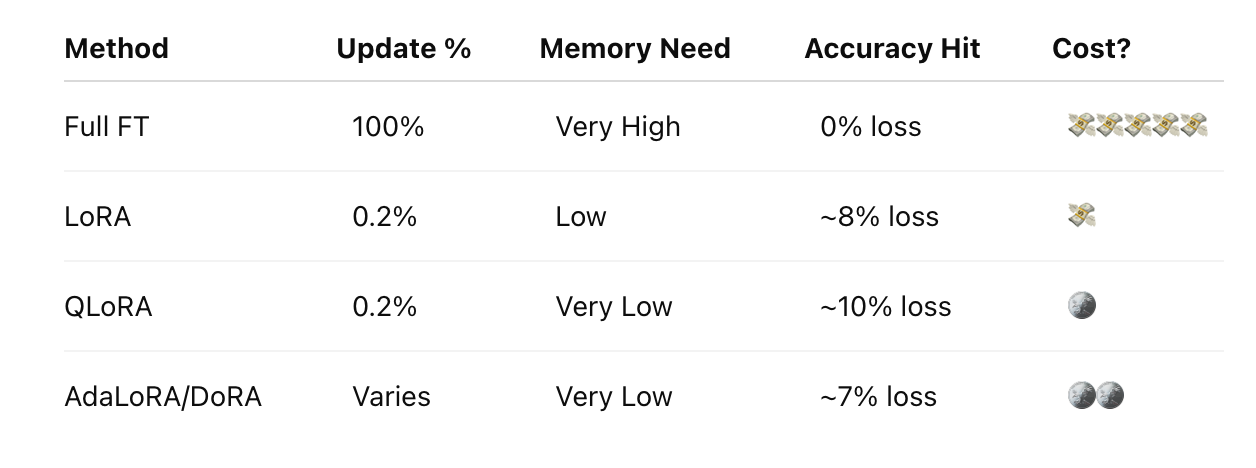
You’re trading 1–2 points of benchmark perfection for 90% savings. That’s a good deal.
LoRA and QLoRA let you fine-tune 7B models on laptops. Yes, laptops. We’ve officially left the GPU arms race. Anyone with brains and a budget can now play.

( Credit : Image created using AI )
Real Use Cases: No Theories, Just Street-Tested Results
• Med42: A small team fine-tuned a medical model that got 72% on the USMLE. Using LoRA. No giant cluster. No drama.
• QuickFix (Databricks): Bug-fix suggestion LLM fine-tuned on dev commits. Faster than GPT-4o. Half the latency. Hugely better adoption.
• LegalTech Startup: Used QLoRA and Llama 2 for clause extraction. Cost them under $5,000. Beat GPT-4 on very specific legal tasks.
• Rural India Land Records: Civic team used LoRA to extract handwritten fields. Model trained on 1,200 samples. Helped 30,000+ families.
These aren’t hypothetical. These happened.
Read this next: Grok 3, Claude 3.7 & Apple’s Siri — A New AI Race Begins
One Chunk of Code That Says It All
from peft import get_peft_model, LoraConfig
from transformers import AutoModelForCausalLM, AutoTokenizer, Trainer, TrainingArguments
model = AutoModelForCausalLM.from_pretrained("mistralai/Mistral-7B-v0.1")
tokenizer = AutoTokenizer.from_pretrained("mistralai/Mistral-7B-v0.1")config = LoraConfig(r=8, lora_alpha=16, target_modules=["q_proj", "v_proj"], lora_dropout=0.05, task_type="CAUSAL_LM")
model = get_peft_model(model, config)trainer = Trainer(
model=model,
args=TrainingArguments(output_dir="./out", per_device_train_batch_size=4, num_train_epochs=3),
train_dataset=your_custom_dataset,
tokenizer=tokenizer
)trainer.train()That’s it. The magic isn’t the code. It’s that this code works on machines you can actually afford.
Optimization Tricks That Make PEFT Sing
• Gradient checkpointing — Saves 40% RAM • Mixed precision — 3x speed boost • Dynamic rank allocation — Updates only where it matters • Attention pruning — Keeps only relevant heads
Every one of these makes it more affordable. More scalable. More deployable.
Avoiding the Fine-Tuning Faceplants
Here’s where people still mess it up:
• They train on tiny datasets without validation. Overfit city. • They reuse Wikipedia for niche tasks. Your fintech model doesn’t need “List of Gothic Cathedrals.” • They chase HuggingFace leaderboards. Real users don’t.
You don’t need perfection. You need usefulness.
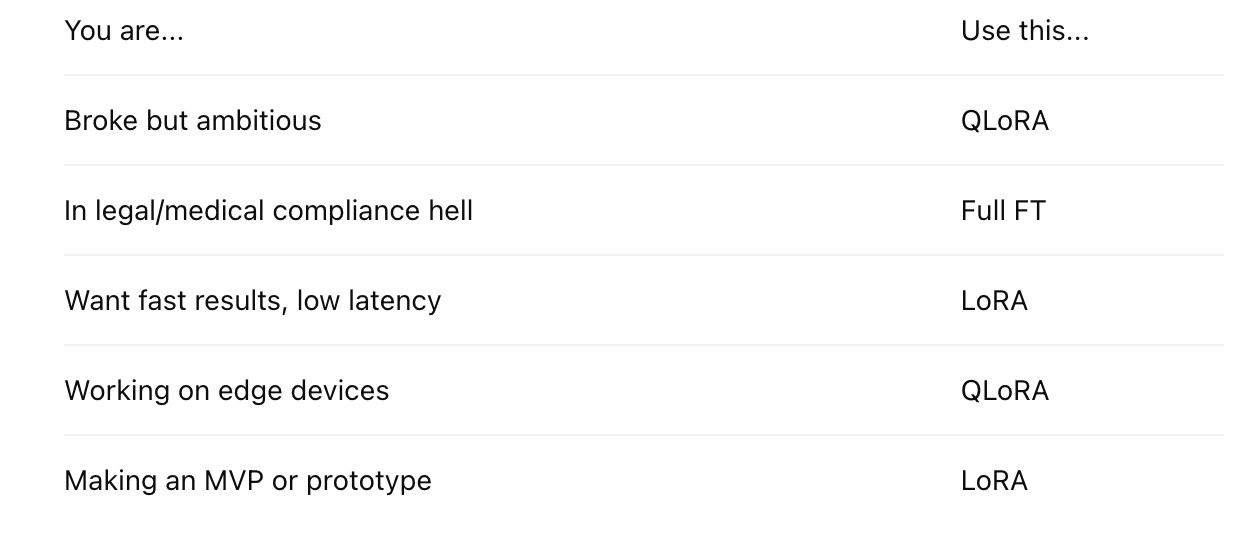
Quick Guide: Which Method Should You Choose?
You Don’t Need to Win Big — Just Win Smart
AI isn’t just for the Googles and Metas anymore. It’s for that teenager building a physics chatbot. For that civic team digitizing land rights. For the 3-person startup fine-tuning a model for HR policies.
Fine-tuning isn’t magic. It’s engineering. The Bloomberg mistake? A $10 million reminder that cleverness beats brute force.
Also Read: OpenManus — the Open Source AI That’s Challenging the Fortress
YouTube Video You’ll Love: LLM Fine-Tuning in 2025: LoRA, QLoRA, and Beyond
[embed]
메타데이터
- post_id
- 64dd48d604bb
- slug
- the-10-million-mistake-how-smart-fine-tuning-crushed-the-brute-force-era-of-llms-64dd48d604bb
- url
- https://medium.com/readers-club/the-10-million-mistake-how-smart-fine-tuning-crushed-the-brute-force-era-of-llms-64dd48d604bb
- canonical_url
- https://medium.com/readers-club/the-10-million-mistake-how-smart-fine-tuning-crushed-the-brute-force-era-of-llms-64dd48d604bb
- author_url
- https://medium.com/@rogt.x1997
- status
- ok
- fetched_at
- 2026-07-29 22:20:06