Global Laminated Busbar Market Trends Fueling Industry Expansion
What Is Driving the Laminated Busbar Market Growth Globally?
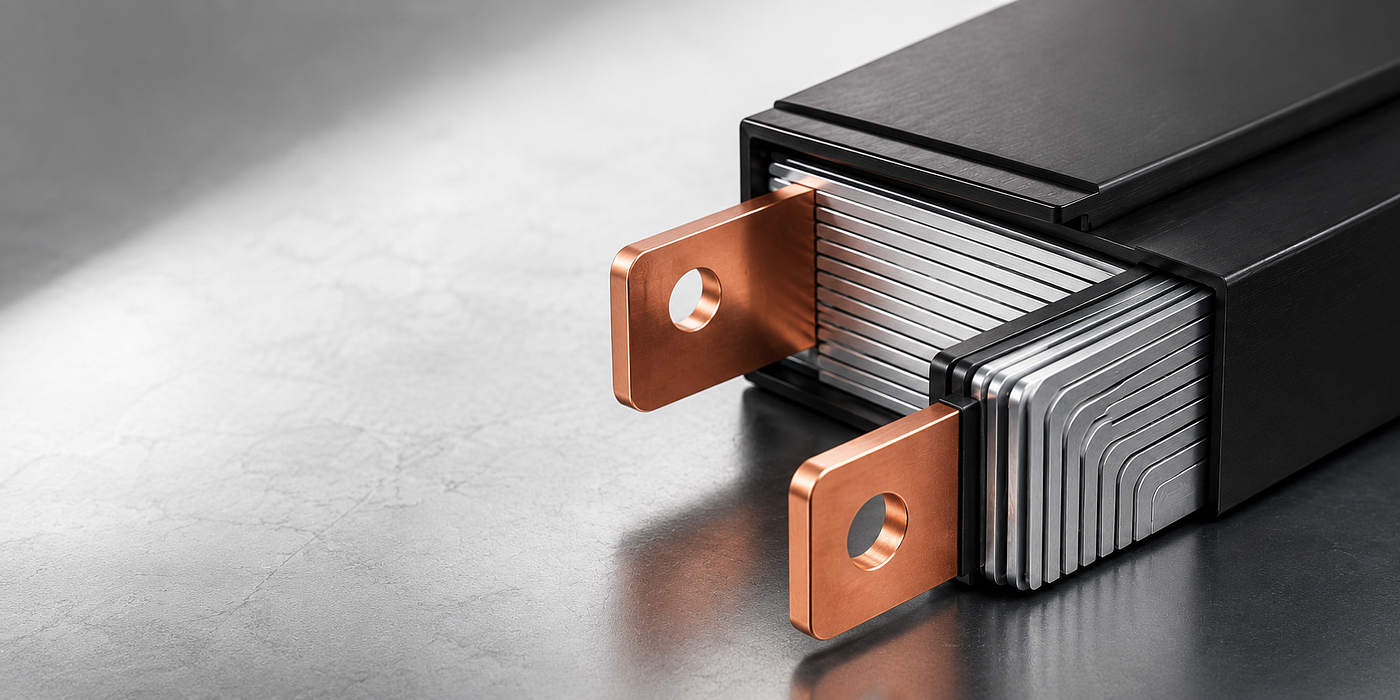
Most people have never heard of a laminated busbar. But the next time you charge an electric vehicle, pull power from a solar inverter, or spin up a server rack running an AI workload, one of these compact, layered conductors is doing the work that keeps high current moving where it needs to go and it is doing so reliably, with minimal heat loss, in far less space than conventional wiring allows.
According to SDKI Analytics, the global laminated busbar market was valued at USD 850 million in 2024 and is projected to reach USD 1.81 billion by 2035, growing at a CAGR of 6.6% through the forecast period. That is not explosive growth. But the structural forces behind it are more durable than the headline number suggests.
Three Industrial Transitions Are Converging on One Component
The laminated busbar does one thing well, that it routes high current through a thermally stable, low-inductance pathway in a compact form. That turns out to be precisely what three of the most capital-intensive industrial transitions of this decade require simultaneously.

The most prominent market driver for laminated busbars market is the growing demand for electric vehicles. For instance, Japan’s Ministry of Economy, Trade and Industry (METI) has mandated that 100% of new passenger vehicle sales be electrified vehicles by 2035. Europe and North America are pursuing comparable timelines. Meanwhile, China has already amassed the largest EV share globally.
Each EV battery pack and inverter assembly depends on laminated busbars for current distribution, and as vehicle architectures shift toward higher-voltage 800V platforms, the thermal and inductance demands on those busbars tighten considerably. According to SDKI Analytics, the automotive and EV segment is growing at 7.5% CAGR globally, making it the fastest subsegment in the market.
The second vector is **renewable energy**. The IEA’s World Energy Investment 2025 report confirms that global clean energy investment, spanning renewables, grids, storage, and electrification, is on course to hit USD 2.2 trillion in 2025, more than double the USD 1.1 trillion flowing into fossil fuels. Every solar inverter and wind turbine converter in that buildout relies on busbars to manage power conversion. SDKI Analytics data places copper as the dominant conductor material, holding approximately 70.2% of global laminated busbar market share, driven by its superior conductivity and thermal performance in demanding renewable and industrial applications.
Industrial automation is the third driver, and the one least discussed in market commentary. As factories deploy advanced robotics and Industry 4.0 systems, inverter and converter-intensive equipment becomes the norm on the factory floor. Europe is the primary geography here, with the industrial automation segment projected at a 6.8% CAGR, led by Germany’s high density of robotics deployment and ongoing capital expenditure into smart manufacturing systems.

Analyzing the Japan Laminated Busbar Market
Japan’s laminated busbar market is growing at a CAGR of 7.7%, above the global average, driven by the convergence of industrial automation, EV electrification, and renewable energy integration. METI’s Green Growth Strategy, which targets 100% electrified vehicle sales by 2035 and has doubled the national EV charging infrastructure target to 300,000 ports by 2030, is creating a durable pull on EV-grade power components, of which laminated busbars are a foundational element.

The more consequential story, however, is on the supply side. Japan is investing aggressively in next-generation power semiconductors, such as **silicon carbide (SiC)** modules, wide-bandgap devices that generate precisely the high-frequency switching environments where laminated busbars outperform all conventional alternatives. As Japan’s semiconductor and automotive industries deepen their integration, the busbar supply chain becomes a quiet bottleneck. Japan reshores chip production and scales EV output, but continues to rely on a concentrated set of component suppliers for the precision laminated interconnects those systems require.
Tokyo and Osaka are the two prefectures leading domestic market development, at CAGRs of 7.5% and 7.0% respectively, driven by EV adoption infrastructure, smart grid demonstration projects, and the high density of manufacturing clusters in each region.
Analyst Insight: Mapping the Opportunities?
SDKI Analytics’ report on the **Laminated Busbar market** identifies the utilities end-use segment as the largest, holding approximately 45.6% of global market share through 2035. The segment’s growth is underwritten by grid modernization, renewable integration, along with the large-scale infrastructure projects where laminated busbars reduce system inductance and support high-current distribution at scale.
For Japan-based suppliers and manufacturers, three revenue windows stand out from the SDKI report. The EV manufacturing supply chain presents the highest competitive intensity but the clearest demand signal, as Japanese OEMs tighten specifications for thermal management in battery and powertrain assemblies. Meanwhile, Japan’s manufacturing clusters accelerate the factory electrification process as the industrial automation solutions offer medium competition with strong domestic demand. Renewable energy integration, that of solar and wind, rounds out the opportunity set, requiring flexible, thermally stable busbars suited to distributed energy systems.
Material innovation is an emerging differentiator. Aluminum laminated busbars are gaining traction in weight-sensitive EV and renewable energy applications. For suppliers able to offer hybrid conductor architectures, such as aluminum for weight reduction, copper for conductivity-critical junctions, the product differentiation window is opening.
메타데이터
- post_id
- 64fc1e7cd89f
- slug
- global-laminated-busbar-market-trends-fueling-industry-expansion-64fc1e7cd89f
- url
- https://medium.com/@sdki-analytics/global-laminated-busbar-market-trends-fueling-industry-expansion-64fc1e7cd89f
- canonical_url
- https://medium.com/@sdki-analytics/global-laminated-busbar-market-trends-fueling-industry-expansion-64fc1e7cd89f
- author_url
- https://medium.com/@sdki-analytics
- status
- ok
- fetched_at
- 2026-06-09 15:37:30




