Lenten Reflections: Faith amidst Heartbreak
Lent is over. And as we’re going through the Octave of Easter, it seems appropriate to reflect on what this time has been for me and where…
Lenten Reflections: Faith amidst Heartbreak
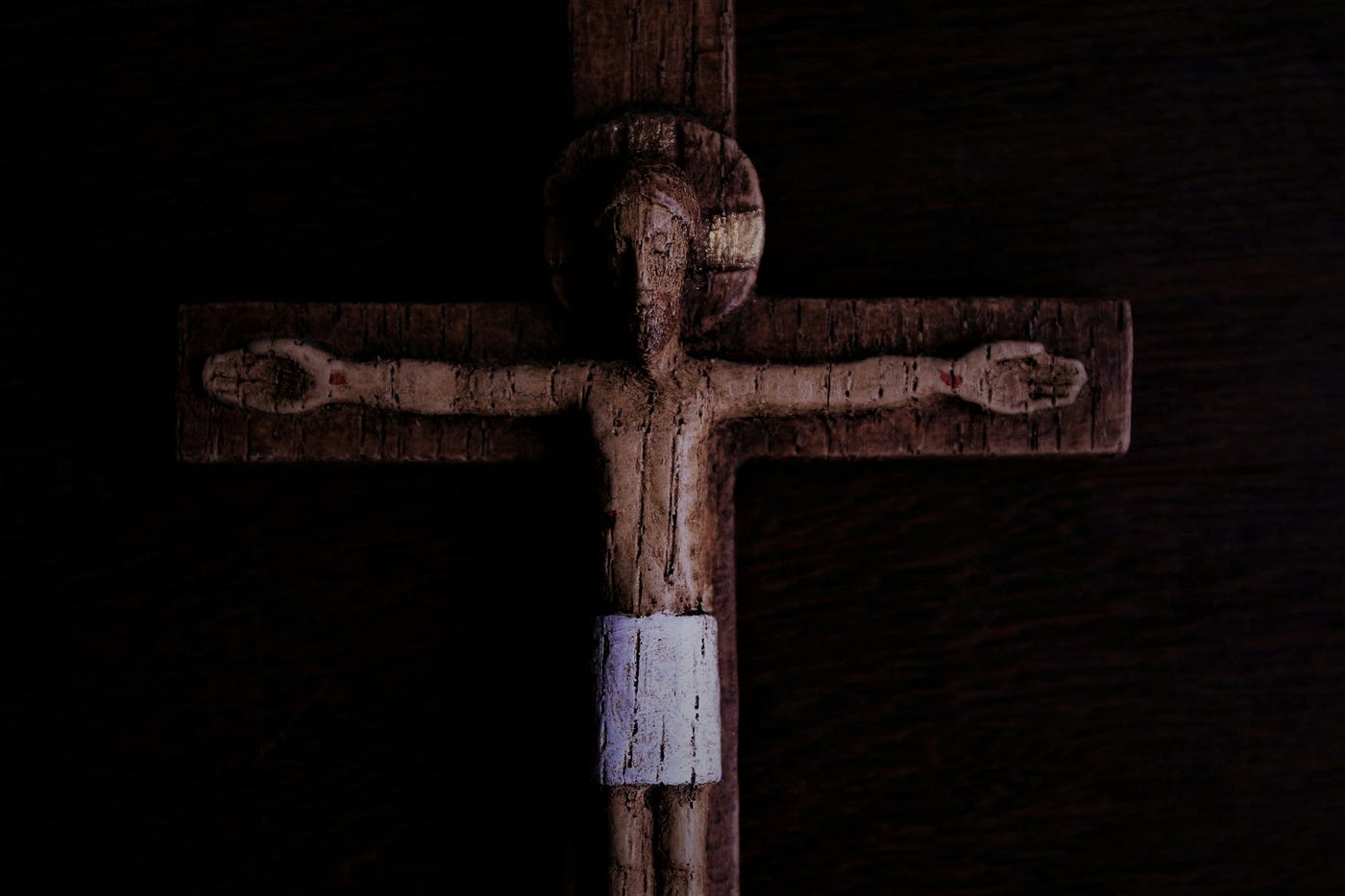
Photo by Rui Silva sj- Unsplash
Lent is over. And as we’re going through the Octave of Easter, it seems appropriate to reflect on what this time has been for me and where I believe the Spirit led me. As I have embraced the contemplative nature of my personality, times such as Advent or Lent have become my favorite. I love that it allows me to pause, reflect, look around, and also within. So, I approached this time with genuine excitement. Unfortunately for me, on Ash Wednesday, I was hit with devastating news from back home. My father “informed” me that yet another conflict had erupted between him and my mother; I was blind sided.
It’s not the conflict itself that upset me. In reality, my parents’ marriage has been struggling for years. It’s the fact that I was being dragged into it once again, despite having expressed multiple times that I didn’t want to — a confrontation with the complete denial of my well-being, which completely turned me upside down. Before I knew it, I was curling up on the couch, in a fetal position, dealing with a mixture of rage, sadness, disgust, and hopelessness. A poisonous cocktail that led me into a deep, dark hole: the familiar arms of depression.
Here I was, emotionally ambushed by whom I thought should protect me. Here I was, falling right into the valley of the shadow of death. Divine order didn’t waste any time in subjecting me to tribulations, and the irony is not lost on me that sh*t started on day one of Lent. Wasn’t I excited? I guess God matched my energy. However, we clearly had different agendas. This was not what I had hoped for. It’s as if I were shooting for the stars but fell completely on my face — forced to confront a wound I would have rather avoided and drink from a cup that tasted like vinegar.
Above All
A few years ago, during confession, a priest asked me, “What’s the first commandment”? I quickly replied, “You shall love the Lord, your God, with all your heart, with all your soul, and with all your mind” — To which, amused and seemingly unsurprised, he objected: “No! The first commandment begins with: Hear!” — Indeed, it says:
Hear, O Israel! The Lord our God is Lord alone!
The Jews refer to this affirmation as “Chemaʿ Yisrā’El”, Chema, which means: Hear or Listen. That exchange taught me something valuable, a lesson that I have tried to practice ever since… Listening indeed is a discipline. It requires self-control and, most importantly, humility.
To listen properly, one must die a little to oneself and make room. It’s a “school” of acceptance, surrender, and, ultimately, connection…
We listen to people we care about or trust; it’s an act of love, of respect. It shows that we value someone or something beyond ourselves, such as friendship, community, growth, or wisdom.
The first commandment teaches that the prerequisite for entering into a covenant with God is, first, to acknowledge that He alone is God. It reveals to us that we, humans, are not the be-all and end-all of everything, which, in an era of “main character syndrome” and unashamed narcissism, can either be terribly confusing or absolutely unthinkable.
It’s a call to shift our minds and hearts from the false gods we worship — including ourselves — and surrender to the True higher power.
As a (recovering) perfectionist and someone whose identity was built around being the golden child, this hits painfully close to home. Lately, I have realized how inhumane many of the standards and expectations I thought I should uphold were.
Son of Man
For most of my formative years, I didn’t believe I had the right to fail, falter, or waver in any way. I was also made to fulfill roles, duties, and fantasies that were either misplaced, unfair, or unrealistic; even when it seemed like I was good at them. It’s worth saying that when I first saw “Lois & Clark, The New Adventures of Superman” as a child, I almost had a revelation!
Me too, I would become Superman when I grew up! Ain’t that something? I literally begged and prayed God to make it true. But as the bible says:
“When I was a child, I used to talk as a child, think as a child, reason as a child; when I became a man, I put aside childish things.” (1 Cor 13,11)
At some point, repeated cycles of burnout and depression would force me to concede to the truth: I am just a man. Not of steel, but flesh and bones, a son of Adam, not Krypton. I had to surrender to having a body, a soul, and limited mental and emotional capacities; understand that I wasn’t just a brain, but a full-fledged human. One that, I guess, needs love, attention, care, despite how hard I resist it.
The family drama that rocked my world yet again was another reminder of how much I care, of how sensitive I am, despite all my efforts to numb myself or escape my feelings. But as I learned in therapy and mental health classes, those are defense mechanisms, survival strategies. Unfortunately, those devices took a life of their own.
Shaky Grounds
To cope with complex trauma, I subconsciously dissociated from a whole range of emotions and developed a conflicting relationship with attachment or care; wanting and fearing it simultaneously. Because I didn’t know any other way, I have learned not to judge myself for it. However, I still get caught up in anger, blame, and resentment at the circumstances or people whom I believe caused so much of that tension. An emotional pattern that this season of Lent encouraged me to investigate.
Have you heard of “the Five Whys”? It’s a method aimed at uncovering the root causes of an issue by repeatedly asking “why” after each answer. The point is that some phenomena have deeper origins or explanations than they appear on the surface.
What I’ve found after reflecting on my internal struggles has been confounding sometimes, but mostly fascinating! Underneath the rage I often feel, I have found not only a low tolerance for mistreatment or injustice, but also a visceral need to have my feelings or experience validated. It’s a big trigger for me! One that leads me to feel as though my being itself was denied!
It sends me over the edge, and depending on whom I experience it from, I can either shut down or become severely depressed. With my parents, it leads to levels of despair that make me lose the will to live. Whenever I’m hit with their blindness, I think to myself: “I might as well end here”; It’s that serious.
The Promised Land
When God calls Abraham, the Patriarch of the three monotheist religions, He instructs:
“Go forth from your land, your relatives, and from your father’s house to a land that I will show you .” (Gen 12,1)
I have a very deep connection to that text; one can easily see why. Growing up, the only scriptures I remember addressing parents were either *“Honor your father and mother”*(Ex 20,12) — which most people understand as: “your parents are always right”, or: “That is why a man leaves his father and mother and clings to his wife.”(Gen 2,24)
But to Abraham, God implicitly says: go for yourself! Not a wife, whom he already had, or riches, which I believe he also had, but for a new land, a new life, and a descendant of his own.
The journey of Abraham is one I have found great comfort in. One who tells me that God is an ally. Not only to people who need to emancipate themselves from unhealthy family dynamics, but to all who thirst for Life. A sacred text that, among many others, has given me solace.
I may not always feel or see any life or future beyond my current circumstances, but as long as I know that God is on my side, I can breathe and, by faith, immediately access a supernatural landscape. It’s called hope!
The Works of God
Another text that stood out to me was from the Gospel of John (chapter 9), on the fourth Sunday of Lent, which is called the Sunday of “Laetare”, which means joy! In it, Jesus heals a man born blind. A man whose handicap had Jesus’s disciple ask, “Rabbi, who sinned, this man or his parents, that he was born blind?” To which Jesus answered,
“Neither he nor his parents sinned; it is so that the works of God might be made visible through him.”
I gasped! The day before, some friends and I had a passionate exchange on the doctrine of original sin. One that had us explore questions of culpability and the transmission of said sin! It’s as if Jesus himself came and ended the debate.
As I question my story, the circumstances, afflictions, or people that I didn’t or couldn’t choose, I too, look up to the sky and wonder why? Like Jesus contemporaries, I often wonder if I’ve not fallen victim to some curse, or why I’m paying for things that are beyond my control…
But Jesus challenges me to consider a new understanding and a reframing, one that shifts from the need to find culprits to Faith in a greater design, the “Works of God”.
The following Sunday, still in the Gospel of John (Chapter 11), Jesus argues something similar when he is told that Lazarus, “the one he loves”, is sick! He answers: “This illness is not to end in death, but is for the glory of God. After waiting a couple of days, he tells his disciple something even more astonishing:
“Lazarus has died. And I am glad for you that I was not there, that you may believe…”
At Last…
I know this story, I’ve heard it many times. But I don’t remember being as shocked by how far Jesus was willing to go, so the people believe. Was the people’s worth letting his best friend die? That Sunday, the priest told us that God wanted to establish a friendship with his people, which I was moved by, but also a little weary of. Like St. Theresa of Avila, I felt like saying, “If this is how you treat your friends, no wonder you have so few.”
The mystery of evil and the unavoidable reality of suffering pose a great challenge to my faith; it always has. It’s hard to reconcile the notion of a loving God with it. That tension calls for a stronger faith than what I believe I have. However, I find strength and confidence in God’s Mercy, Grace, and Unconditional Love. A Love that does not wait for me to be perfect or successful. A love that sees worth, dignity, value, and beauty in me, where I can only see mistakes.
A love that stays, forgives, and prevails over the forces of shame, guilt, and self-hatred. A love that makes me rise, hope, take my mat, and move forward.
메타데이터
- post_id
- 650df81ddd1a
- slug
- lenten-reflections-faith-amidst-heartbreak-650df81ddd1a
- url
- https://medium.com/@ulrichaymar/lenten-reflections-faith-amidst-heartbreak-650df81ddd1a
- canonical_url
- https://medium.com/@ulrichaymar/lenten-reflections-faith-amidst-heartbreak-650df81ddd1a
- author_url
- https://medium.com/@ulrichaymar
- status
- ok
- fetched_at
- 2026-06-20 20:29:01