Understanding Quantum Computing Through Feynman’s Mirror Experiment
Hello, Medium community. I am Hyunjoo Lee, Founder and CEO of VENETA Reserve.
Understanding Quantum Computing Through Feynman’s Mirror Experiment
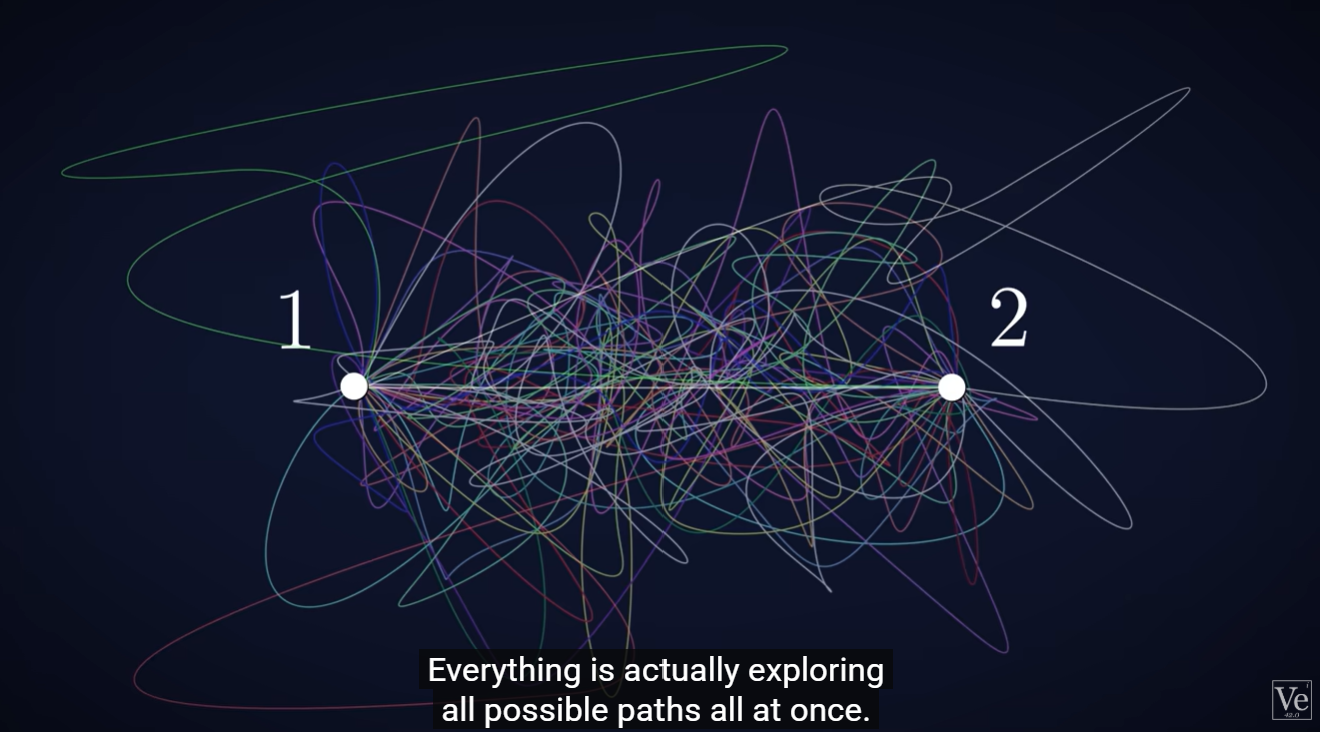
(Something Strange Happens When You Trust Quantum Mechanics, Veritasium)
Hello, Medium community. I am Hyunjoo Lee, Founder and CEO of VENETA Reserve.
About a year ago, I stumbled upon a YouTube video discussing Richard Feynman’s lectures on Quantum Electrodynamics (QED). It was a Veritasium video explaining the bizarre nature of quantum mechanics(Something Strange Happens When You Trust Quantum Mechanics, Veritasium, https://www.youtube.com/watch?v=qJZ1Ez28C-A). As I watched it, a vague concept that had been lingering in my mind suddenly cleared up like lifting fog. I literally thought to myself, “Ah, so this is how a quantum computer actually finds the correct answer!”
We often misunderstand quantum computers as simply being “supercomputers that are hundreds of millions of times faster than existing ones.” However, the two systems are fundamentally different universes — from their philosophy of handling data to their physical mechanisms.
Today, I want to use Feynman’s famous ‘Mirror Experiment’ to intuitively explain exactly how a quantum computer performs its calculations.
1. 1981 MIT: Feynman’s Great Question
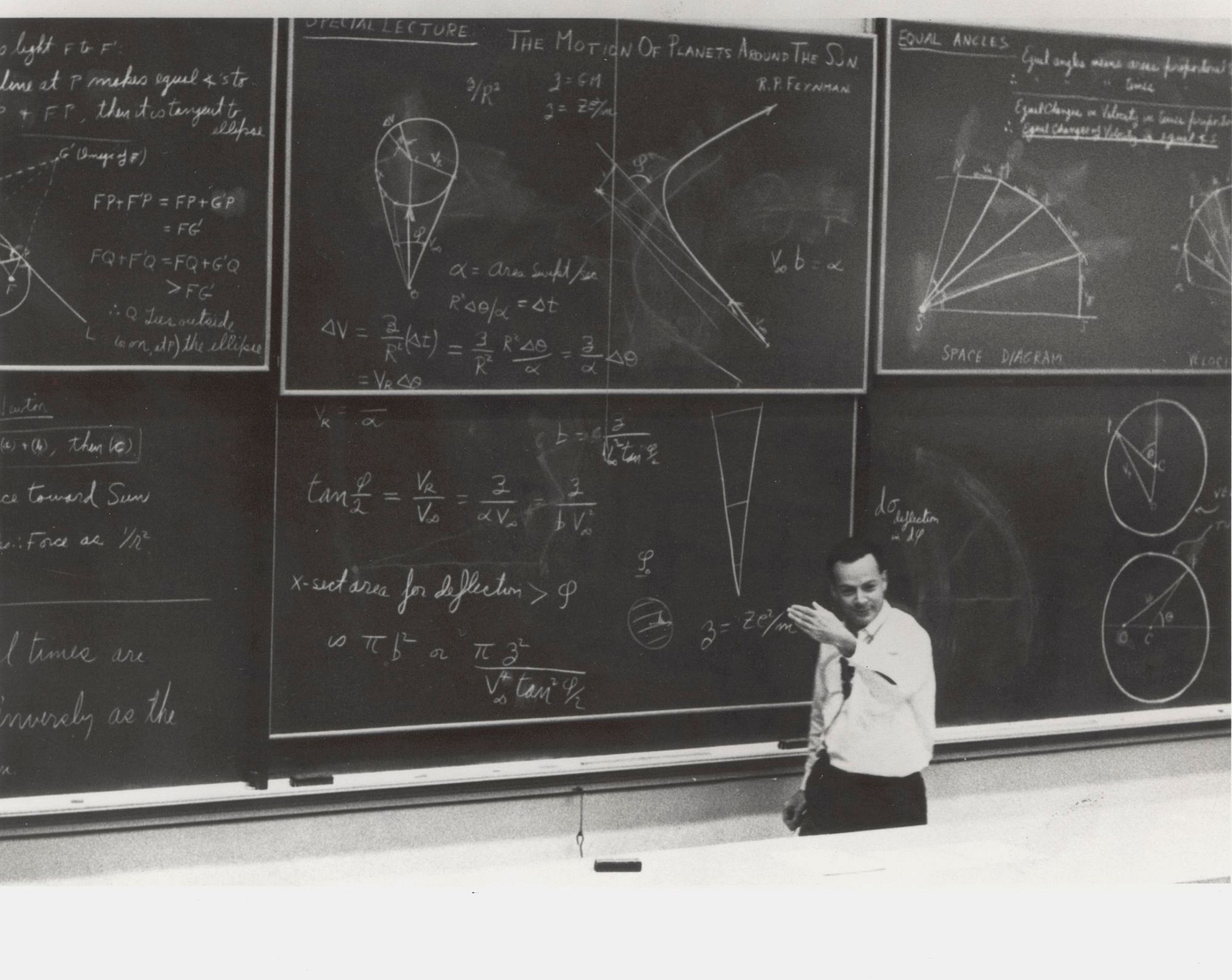
The origin of this story dates back to 1981. At a computing conference co-hosted by MIT and IBM, Nobel Laureate Richard Feynman posed a profound and unconventional thought:
“Nature isn’t classical, dammit, and if you want to make a simulation of nature, you’d better make it quantum mechanical.”
At the time, classical computers (the architecture we all use today) were undergoing tremendous advancements. But Feynman clearly saw their limits. Classical computers process data sequentially using deterministic bits of 0s and 1s. With this method, when simulating the complex superposition and entanglement among electrons, photons, and molecules, the required memory and computation time grow exponentially with each additional variable. The resource consumption becomes so extreme that calculation essentially becomes impossible.
So, he thought: “If nature follows the rules of quantum mechanics anyway, why not build a computer that operates on the principles of quantum mechanics?” This was the grand inception of the quantum computer.
2. Light Actually Travels All Paths: Feynman’s Mirror Experiment
So, what exactly are these ‘rules of quantum mechanics’ that govern nature? The ‘Mirror Reflection Experiment’ from Feynman’s QED lectures illustrates this secret most visually.

In high school physics, we learn that “when light reflects off a mirror, the angle of incidence equals the angle of reflection.” We imagine light leaving a source, bouncing off the exact ‘center’ of the mirror, and entering our eyes in the shortest possible path. However, Feynman shatters this classical common sense.
According to Feynman, light actually travels through “every possible path on the mirror” simultaneously — not just the center, but the far left edge, the far right edge, and everywhere in between.
What is truly astonishing comes next. For every hypothetical path the light takes, there is a rotating ‘arrow’ (Phase), much like the hand of a clock.
- For the longer, outer paths near the mirror’s edges, the travel times vary wildly. When they arrive, their arrows point in completely different directions. Because of this, they cancel each other out. (Destructive Interference)
- On the other hand, for the paths near the center of the mirror where the travel time is the shortest, the arrival times are nearly identical, causing their arrows to point in the same direction. These merge and amplify each other. (Constructive Interference)
Ultimately, because the light spreading across countless paths cancels out its own ‘wrong answers’ and amplifies only the ‘right answers,’ it appears to our observing eyes that the light traveled via a single, shortest path.
3. The Quantum Computing Mechanism: “Not Computing, But Interfering”
If you understand Feynman’s mirror experiment, you have essentially grasped 100% of how a quantum computer calculates. A quantum computer is simply a machine that artificially controls this very ‘phenomenon of nature.’
If a classical computer navigates a maze by exploring one path at a time and turning back at dead ends, a quantum computer uses the Superposition of qubits to pour water into every single path of the maze simultaneously.
But merely exploring all paths at once isn’t the end of the story. How do you find the ‘correct path’ among all that poured water? This is where the true value of quantum algorithms (like Grover’s Algorithm) shines.
The essence of quantum programming is manipulating Feynman’s ‘arrows’ across infinite possibilities:
- Canceling the Wrong Answers: We flip the phases (arrows) of the paths holding the results we don’t want (the wrong answers) so they collide and vanish into zero. (Destructive Interference)
- Amplifying the Right Answer: We align the phases of the target data we want to find, maximizing its probability. (Constructive Interference)
When you finally measure the qubits at the end of the operation, just as Feynman’s light smoothly converges at the center of the mirror, a single, highly amplified ‘optimal answer’ pops out due to the interference effect. It is the magic of quantum computation: collapsing an operation that would take tens of thousands of years into a single moment to reveal the truth.
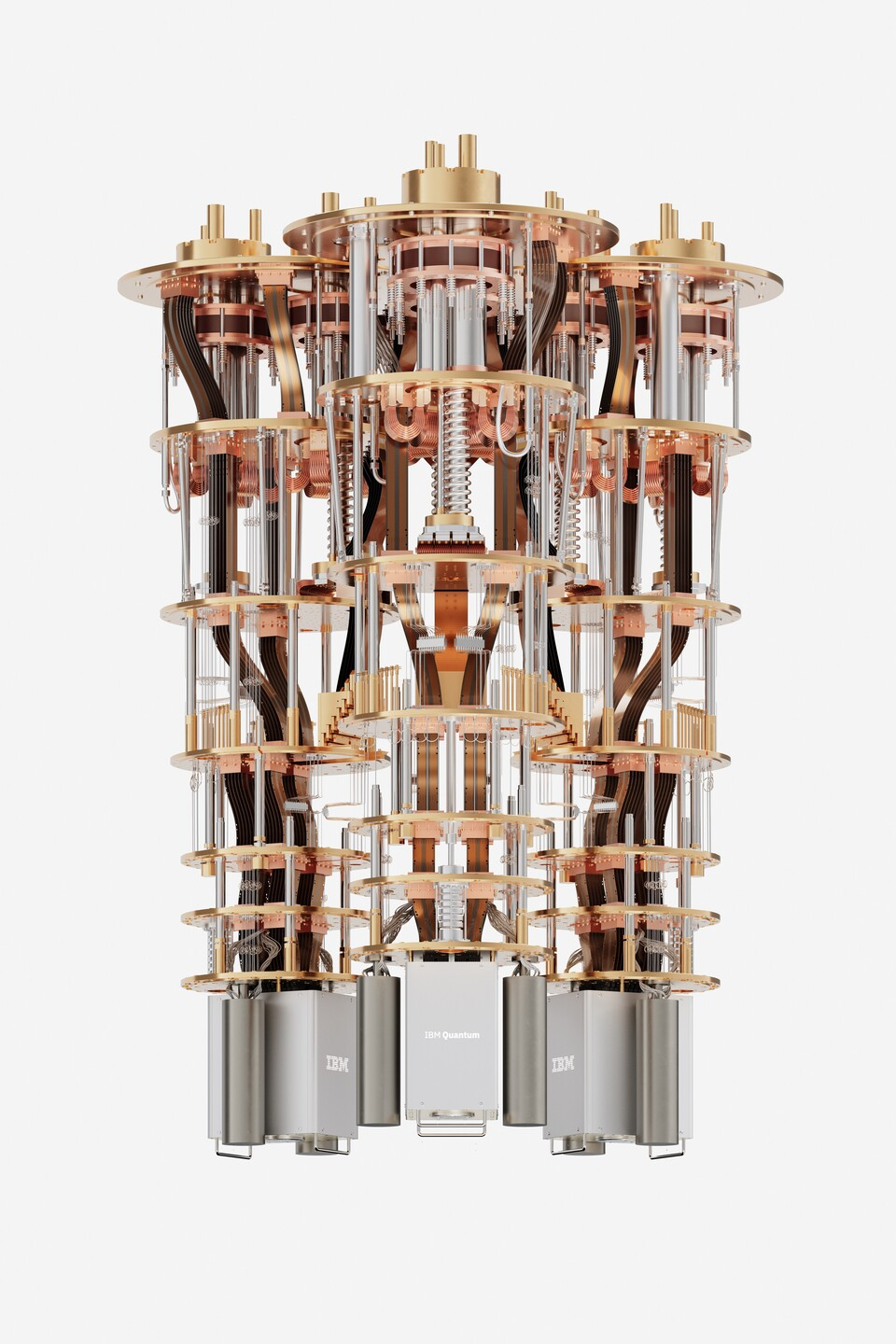
(IBM Quantum System 2)
Closing Thoughts: From the Era of Flowcharts to the Era of Circuits
I often tell my colleagues, “Classical computing is a Flowchart, while quantum computing is a Circuit.”
Classical programming is a recipe that dictates the logical sequence in which data should flow over pre-laid hardware. Quantum programming, however, is the physical control realm of shooting microwaves and lasers at actual physical particles (qubits) to cause wave interference — essentially building the railroad tracks in real-time.
This massive paradigm shift, which started in Feynman’s imagination in 1981, is now approaching reality in the form of large-scale, fault-tolerant quantum computers like IBM’s Starling (targeted for 2029). As I build VENETA Reserve, I spend my nights constantly contemplating how enterprise security (Post-Quantum Cryptography) and data provisioning infrastructure must prepare for this colossal tidal wave.
I invite you to join me in imagining the future unlocked by the quantum computer — the most marvelous calculating machine ever modeled after nature itself.
June 23, 2026, from the office
Hyunjoo Lee
Founder & CEO, VENETA Reserve
a UWS Company | IYF Group
메타데이터
- post_id
- 6521b41ee13b
- slug
- understanding-quantum-computing-through-feynmans-mirror-experiment-6521b41ee13b
- url
- https://medium.com/@hyunide/understanding-quantum-computing-through-feynmans-mirror-experiment-6521b41ee13b
- canonical_url
- https://medium.com/@hyunide/understanding-quantum-computing-through-feynmans-mirror-experiment-6521b41ee13b
- author_url
- https://medium.com/@hyunide
- status
- ok
- fetched_at
- 2026-07-13 06:45:54