When the World Treats Africa as the Cheap Market
“A look into how global brands sell Africa short - and how our silence keeps the system alive.”
When the World Treats Africa as the Cheap Market: How Multinational Corporations Tailor Inferior Products for Africa — and Why We Deserve Better

It begins with something as ordinary as laundry soap. A mother in Lagos stands before a supermarket shelf, eyes scanning a parade of detergent packs — all bursting with color and confidence. She chooses one she recognizes, its glossy packaging promising “whiter whites” and “a fresh scent that lasts.” It’s the same global brand she’s seen advertised in commercials across continents, so she trusts it. Yet what she doesn’t know is that the detergent she just picked up is not the same as the one sold in London or Paris. Her version foams less, fades fabrics faster, and leaves behind a faint chemical smell that lingers in the air. None of this is accidental. It is, quite literally, by design.
Across Africa, millions of consumers unknowingly purchase lower-quality versions of products made by the same multinational corporations they admire from afar. Soaps that irritate the skin, electronics that malfunction within months, medicines that are less potent than their Western counterparts, and breakfast cereals that are laced with higher sugar and fewer nutrients — these are not occasional flukes but deliberate corporate adjustments justified under the comforting phrase, “adapting to local tastes.” Yet one must ask: what if what’s really being adapted isn’t the taste but the tolerance — the quiet acceptance of less, the normalization of mediocrity?
Multinational corporations adore Africa’s growth story. They see a young population, expanding cities, digital connectivity, and a consumer base that’s growing faster than anywhere else in the world. Reports by consulting giants like the Boston Consulting Group have called Africa “one of the most promising consumer markets globally.” But behind such optimism lies a revealing contradiction: these same companies often thrive in Africa not by upholding the same quality they provide elsewhere, but by cutting corners — hiding behind terms like “affordability,” “accessibility,” or “infrastructure realities.” What those euphemisms mean in real terms is lower costs, lower standards, and, inevitably, lower quality.
Africa’s issue isn’t that it’s poor. It’s that global business treats poverty as its defining identity. A company that sells rich, creamy yogurt in France might water it down in Kenya. A soft drink manufacturer that boasts about reducing sugar in Western markets for “health reasons” may flood Nigerian stores with bottles that contain far more sugar than those sold in Europe. A trusted baby lotion brand might use ingredients banned in other continents because the local regulatory bodies here don’t have the tools or authority to test every shipment. Boardrooms in New York, Amsterdam, or Zurich may describe this as “market segmentation,” but in truth, it’s moral segmentation — a profit-driven calculation of who deserves excellence and who does not.
The effects of this quiet discrimination show up not only in our homes but in our hospitals, our communities, and our collective health. A 2024 report on food systems in Ghana found that multinational processed foods high in sugar, salt, and unhealthy fats have become everyday staples in urban households, leading to a troubling rise in obesity and diet-related illnesses. Between 1998 and 2019, the rate of overweight adults in Ghana climbed to 43.3% among women and 23.9% among men. In Nigeria, the National Agency for Food and Drug Administration and Control has repeatedly sounded alarms over the flood of substandard and falsified medicines, many imported through global supply chains. In 2025 alone, more than 100 medications were declared substandard by Indian authorities and subsequently flagged in Nigeria. And in 2024, Johnson & Johnson’s cough syrup was recalled in six African nations after reports of toxic contamination — a reminder that even the world’s most recognizable brands can fail spectacularly when oversight is weak.
These are not coincidences; they are symptoms of a structural problem. Africa has become the world’s regulatory loophole — a region where the safety nets are thin and accountability is negotiable. Companies justify this with another familiar refrain: that they are “customizing products for local preferences.” But this argument collapses under scrutiny. When a beverage company says it adds more sugar “to match local tastes,” it really means it’s selling more sugar because it’s cheaper and addictive. When a skincare brand removes certain high-grade ingredients “to meet affordability,” it is quietly declaring that African skin does not merit the same protection as Western skin.
Africans are not genetically predisposed to low quality. What has been mistaken for preference is, in truth, a learned adaptation to scarcity. Years of economic hardship and weak consumer protections have trained people to settle for less, to buy what’s available rather than what’s best. And when people stop demanding more, corporations interpret their silence as approval.
At the heart of this problem lies governance — or, more precisely, the lack of it. Regulatory bodies like the Standards Organisation of Nigeria or the South African Bureau of Standards operate under chronic financial constraints, political interference, and limited capacity. Enforcement is inconsistent, and penalties are often laughably small. In South Africa, the National Consumer Commission reported 20 product recalls in just the first quarter of 2024 — a promising step toward accountability. Yet in most parts of Africa, such recalls rarely make the news, and when they do, they are quietly brushed aside.
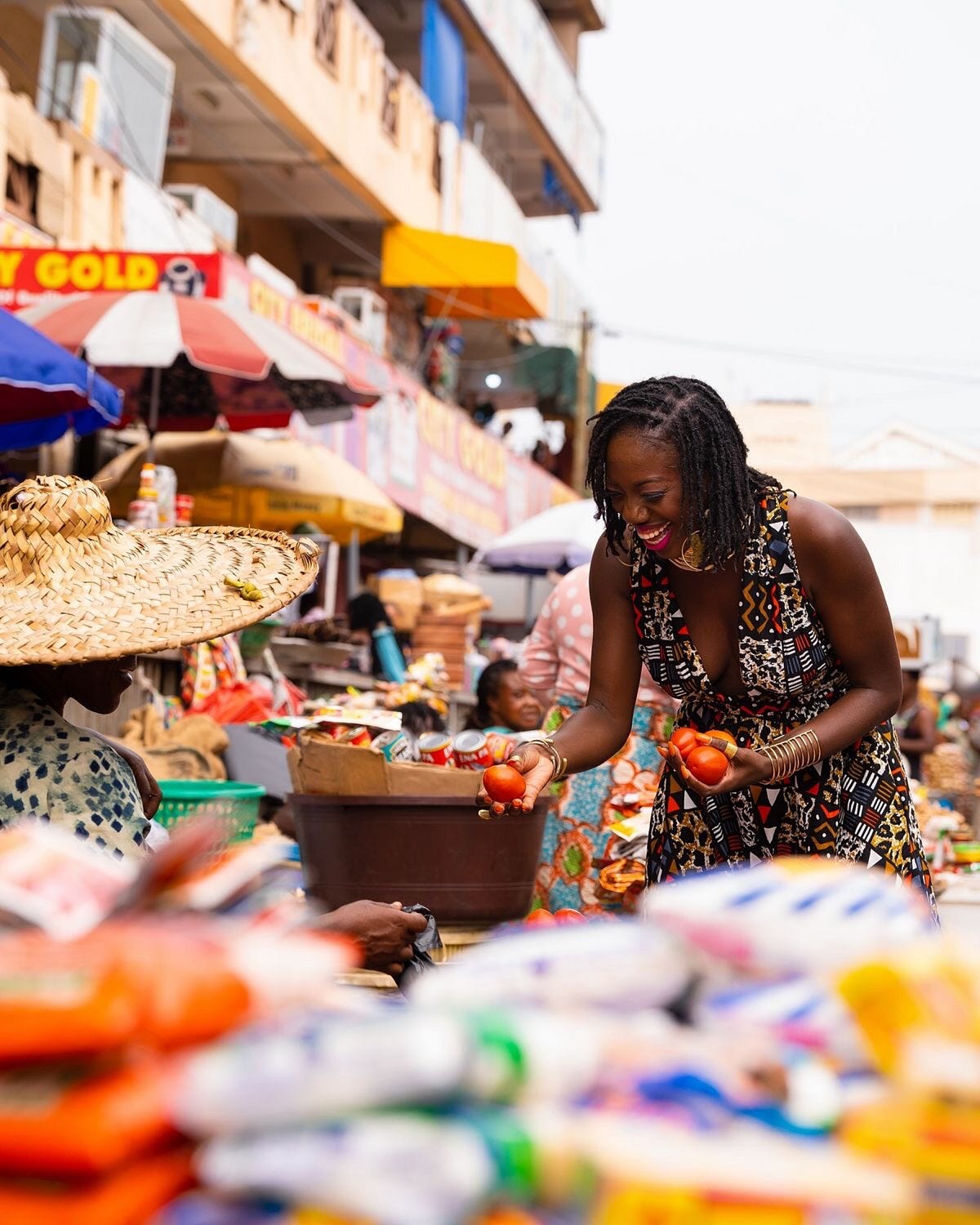
Meanwhile, multinational corporations wield immense leverage. They provide jobs, pay taxes, and often contribute to national revenue in ways governments can’t easily ignore. As a result, when safety violations arise, officials tread carefully. Few want to be seen as “anti-investment,” so silence becomes the default response. But that silence is costly. It signals to citizens that profit ranks above protection, to corporations that Africa is a playground rather than a partnership, and to the next generation that excellence is optional. It teaches us, implicitly, to be grateful for whatever we are given — even when it harms us.
Religion and culture, two of Africa’s strongest social forces, also play unintentional roles in sustaining this imbalance. In many communities, imported products are seen as inherently superior, carrying almost a spiritual aura of quality. “If it’s foreign, it must be good,” people say. Pastors bless bottled water, families buy imported baby food because they trust it more than local alternatives, and consumers instinctively equate Western packaging with reliability. This mindset, a lingering echo of colonial influence, reinforces the very system that exploits it. Faith is not the problem; misplaced faith is. When we trust divine protection to shield us from bad products instead of demanding systems that ensure safety, we replace justice with blind hope. True faith should see the pursuit of excellence — in governance, in products, in standards — as a moral duty, not rebellion.
A single global brand might sell three different versions of the same product: one for Western markets, manufactured to strict safety standards; one for Asia, adjusted moderately; and one for Africa, made to the bare minimum specifications. A 2021 European Commission report confirmed that even within the European Union, some companies had been caught selling lower-quality products in Eastern Europe compared to Western Europe. If such practices exist inside the EU, with its tight oversight and consumer awareness, one can only imagine what happens across continents where accountability barely exists. The same brand that upholds full transparency elsewhere might alter ingredients or skip safety certifications entirely in Africa — yet it will still use the same logo, slogan, and promise. The deception is seamless, wrapped neatly in the language of global branding.
Why does this persist? Because mediocrity is profitable. Producing substandard goods cuts costs, speeds up distribution, and widens profit margins. And African consumers, with limited choices and minimal regulatory protection, keep buying. It’s a cycle that feeds itself — a cycle of compromise. But beyond the economics lies something deeper: the psychology of low expectations. When generations grow up surrounded by products that fail early, food that harms health, or systems that never demand better, the very idea of excellence begins to feel foreign. Mediocrity becomes normal. And when mediocrity feels normal, accountability dies quietly. Chinua Achebe once wrote,* *“The trouble with Nigeria is simply and squarely a failure of leadership.” **That failure seeps beyond politics into how we consume, how we regulate, and how we define dignity itself.
The consequences are everywhere. The rise of processed food in African cities correlates directly with surging lifestyle diseases — obesity, diabetes, heart problems — as documented in the Globalization and Health Journal in 2024. The World Health Organization estimates that over 42% of counterfeit or substandard medicines worldwide are found in Africa. And according to a 2023 report by the Alliance for Product Quality in Africa, a large share of imported consumer goods fail to meet even the most basic international standards. Each of these numbers tells the same story: the world quietly assumes that Africa will always accept less.
Yet, it doesn’t have to be this way. Change begins when consumers ask questions, when we check labels, share experiences, and use social media to hold brands accountable. A single viral story can often pressure a corporation faster than a government investigation. Supporting local manufacturers who prioritize quality, rewarding African excellence where it exists, and rejecting brands that exploit double standards are small but powerful acts of defiance. Civil society, faith leaders, and media voices must also see this as a moral issue. Product safety isn’t just about health — it’s about dignity, fairness, and respect. And governments must rise to their duty: funding and empowering regulatory agencies, enforcing recalls, and naming violators publicly. The rule should be simple — the same brand, the same standard, everywhere.
Excellence is not a Western concept; it’s a human one. It transforms a “cheap market” into a respected one. It turns passive consumers into active citizens. The journey toward dignity begins with expectation — with the belief that African lives deserve the same quality, safety, and respect as any others. The shift must move from gratitude to demand, from survival to standards, from accepting to insisting. When we finally start saying, “If it’s not good enough for London, it’s not good enough for Lagos,” we reclaim the power to define our worth.

Picture again the mother in Lagos, standing before the shelf of bright detergent packs. She deserves better — not because of pity, but because excellence is her right. Her child deserves medicine that heals, not harms; her family deserves food that nourishes, not poisons. Africa deserves excellence, not as charity, but as a basic moral standard. Until we start demanding it loudly, persistently, and relentlessly, the world will continue to sell us its leftovers wrapped in clever marketing. But the day we decide to say “no more,” the narrative changes. The day Africa demands equality in quality, the so-called “cheap market” becomes something else entirely — a proud market, a just market, and a market that finally commands respect.
메타데이터
- post_id
- 6530f4029366
- slug
- when-the-world-treats-africa-as-the-cheap-market-6530f4029366
- url
- https://medium.com/@blessingobinyan15/when-the-world-treats-africa-as-the-cheap-market-6530f4029366
- canonical_url
- https://medium.com/@blessingobinyan15/when-the-world-treats-africa-as-the-cheap-market-6530f4029366
- author_url
- https://medium.com/@blessingobinyan15
- status
- ok
- fetched_at
- 2026-07-20 21:45:43



