How AI and Automation Are Transforming Prop Trading Businesses
The proprietary trading industry is undergoing a major transformation.
How AI and Automation Are Transforming Prop Trading Businesses
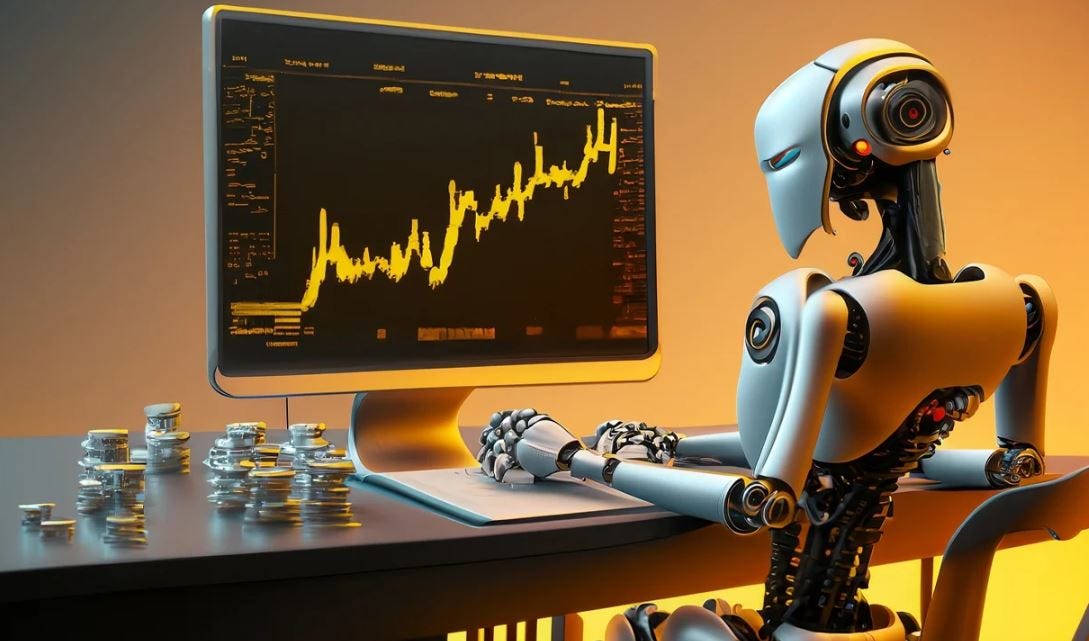
The proprietary trading industry is undergoing a major transformation.
A few years ago, most prop trading firms relied heavily on manual operations. Risk monitoring was handled by teams staring at dashboards for hours, trader evaluations were reviewed manually, and operational workflows required significant human involvement. Scaling such a business was difficult because growth meant hiring more analysts, support staff, compliance teams, and operational managers.
Today, that model is rapidly changing.
Artificial intelligence and automation are redefining how modern prop trading businesses operate, scale, and compete. What was once considered a traditional trading business is now evolving into a technology-first fintech ecosystem powered by intelligent infrastructure, predictive analytics, automated workflows, and real-time decision-making systems.
This shift is not simply about reducing manual work. It is about creating scalable, data-driven businesses capable of handling thousands of traders globally while maintaining operational efficiency, platform stability, and user trust.
For founders and entrepreneurs planning to **launch a prop trading platform**, understanding this transformation has become essential.
The Shift From Manual Operations to Intelligent Infrastructure
The early generation of prop trading firms operated with a relatively simple structure. Businesses could manually manage trader evaluations, review account activities, and oversee platform operations without major technological complexity.
However, the rise of funded trading programs dramatically changed the scale of the industry.
Modern prop firms now manage massive trading communities spread across multiple countries, time zones, and trading platforms. Thousands of traders may participate in evaluation challenges simultaneously while executing high-frequency trading activities in real time.
As operational complexity increased, manual processes became inefficient.
This is where automation began reshaping the industry.
Today’s successful prop trading businesses are increasingly built around intelligent infrastructure capable of automating critical operational tasks. Instead of relying on human intervention for every process, platforms now use AI-driven systems to monitor risk exposure, detect suspicious activities, process trader evaluations, and optimize platform performance continuously.
The result is a business model that scales more efficiently while maintaining greater operational consistency.
Why AI Has Become a Core Part of Modern Prop Trading
Artificial intelligence is no longer viewed as an experimental technology in the trading industry. It has become a foundational layer that directly impacts profitability, scalability, and platform performance.
One of the biggest reasons AI adoption is accelerating is the sheer volume of data generated by modern trading platforms. Every trade, account action, login attempt, behavioral pattern, and risk event produces data that can be analyzed in real time.
Human teams simply cannot process this level of information effectively at scale.
AI systems, however, can continuously analyze large datasets, identify patterns, and make operational decisions faster than traditional workflows ever could. This enables prop firms to operate with significantly greater efficiency while improving trader experiences and reducing operational risks.
More importantly, AI allows businesses to scale without increasing operational costs at the same pace as user growth. Instead of building large operational teams, companies can automate repetitive and data-intensive workflows through intelligent systems.
That changes the economics of running a prop trading business entirely.
Risk Management Is Becoming Predictive Instead of Reactive
Risk management has always been one of the most critical aspects of running a prop trading firm. A weak risk management system can quickly destabilize the entire business.
Traditionally, firms relied on analysts and monitoring teams to review account activities, identify rule violations, and react to suspicious trading behavior. While this approach worked at smaller scales, it became increasingly difficult as trading volumes and user numbers expanded.
AI-powered risk engines are now transforming this process.
Modern systems can monitor trader behavior in real time while continuously analyzing factors such as drawdowns, leverage exposure, trading frequency, abnormal behavioral patterns, and rule compliance. Instead of waiting for a problem to occur, AI models can identify early warning signs before significant damage happens.
This predictive approach is becoming one of the strongest competitive advantages for advanced prop trading platforms.
Rather than operating reactively, firms can proactively reduce risks, improve platform stability, and maintain better control over operational exposure.
Automation Is Streamlining Trader Evaluations
One of the most operationally demanding aspects of running a prop trading business is managing trader evaluations.
In the past, evaluation systems often involved considerable manual oversight. Teams had to review trader performance, verify compliance with challenge rules, calculate drawdowns, and confirm account eligibility manually.
As the industry scaled, this approach became unsustainable.
Automation has fundamentally changed how trader evaluations are handled. Modern prop trading platforms can now track challenge progress automatically while monitoring rule compliance in real time. Profit targets, maximum losses, daily drawdowns, and account conditions are calculated instantly through automated systems.
This creates a significantly smoother experience for both businesses and traders.
For traders, automated evaluations provide transparency and faster outcomes. For businesses, automation reduces operational bottlenecks while ensuring consistency across the platform.
Most importantly, it enables firms to scale evaluation programs globally without building large administrative teams.
Fraud Detection Is Becoming More Sophisticated
As the prop trading industry grows, fraudulent activities are also becoming increasingly advanced.
Modern platforms face challenges ranging from multi-account abuse and account sharing to bot manipulation and coordinated trading strategies designed to exploit platform rules.
Traditional fraud monitoring methods are often too slow to detect these activities efficiently.
AI-driven surveillance systems are now playing a major role in protecting prop trading ecosystems. These systems continuously analyze trading behaviors, account relationships, device patterns, IP inconsistencies, and behavioral anomalies to identify suspicious activities before they escalate.
Unlike static monitoring systems, AI models improve over time by learning from platform data and evolving fraud patterns.
This continuous learning capability is becoming extremely valuable for prop trading businesses operating at scale. As platforms expand globally, intelligent fraud detection becomes critical not only for protecting revenue but also for maintaining trust among legitimate traders.
Customer Experience Is Also Being Automated
Automation is not only improving backend operations. It is also transforming the trader experience itself.
Modern traders expect fast onboarding, instant responses, seamless dashboards, and frictionless interactions. Businesses that fail to deliver smooth user experiences often struggle with retention and long-term growth.
AI-powered support systems are helping prop firms address these expectations more effectively.
Many platforms now use intelligent chat systems, automated onboarding workflows, and AI-driven knowledge systems capable of handling large volumes of trader inquiries without requiring constant human involvement.
This significantly improves operational efficiency while allowing businesses to provide faster support experiences around the clock.
In many cases, automation resolves common issues before support teams even become involved, reducing both response times and operational costs.
Personalization Is Becoming a Competitive Advantage
The prop trading industry is becoming increasingly competitive, and traders are no longer satisfied with generic platform experiences.
AI and machine learning are enabling firms to create more personalized ecosystems by analyzing trader behaviors, performance trends, and engagement patterns.
Modern platforms can now provide customized dashboards, adaptive challenge recommendations, behavioral analytics, and tailored performance insights based on individual trading activity.
This level of personalization improves trader engagement while helping businesses build stronger long-term relationships with users.
In many ways, prop trading platforms are beginning to adopt strategies similar to modern SaaS and fintech companies, where user experience optimization becomes a core growth driver.
Infrastructure Is Quietly Becoming the Biggest Differentiator
Many people entering the prop trading industry assume marketing is the primary factor behind successful growth.
While branding and community building remain important, the real long-term differentiator is increasingly becoming infrastructure.
The strongest platforms today are investing heavily in automation architecture, real-time analytics, scalable cloud systems, intelligent risk management, and operational efficiency.
Traders naturally gravitate toward platforms that feel stable, transparent, fast, and technologically advanced.
A strong technological foundation directly impacts user trust, platform retention, operational scalability, and overall business performance.
In many cases, infrastructure quality becomes more important than aggressive marketing campaigns.
Why Many Startups Are Exploring Ready-Made Trading Infrastructure
Building an advanced prop trading ecosystem entirely from scratch requires enormous technical resources.
Developing evaluation systems, trader dashboards, payment infrastructures, risk engines, automation frameworks, analytics systems, and security layers can take years of development and substantial investment.
This is one of the main reasons many entrepreneurs are now exploring ready-made infrastructure models to accelerate market entry.
Rather than spending years building backend architecture, businesses can focus on branding, community growth, user acquisition, and scaling operations.
This approach allows startups to reduce technical complexity while launching with enterprise-grade systems already optimized for scalability and automation.
For many founders, speed-to-market is becoming a major strategic advantage in an increasingly competitive industry.
The Growing Importance of White Label Prop Trading Solutions
As AI and automation become essential components of modern trading platforms, **white label prop trading solutions** are becoming increasingly attractive for startups and fintech entrepreneurs.
Modern white label ecosystems are no longer limited to basic platform templates. Many now include advanced automation systems, integrated risk management tools, trader analytics, CRM infrastructure, payment integrations, and scalable cloud architecture.
This allows businesses to launch sophisticated trading platforms without managing the massive technical burden of building everything internally.
For founders, the advantages extend beyond development speed.
Using a ready-made infrastructure model can significantly reduce operational risk, lower development costs, simplify platform management, and accelerate scalability. Businesses can focus more heavily on user acquisition, branding, partnerships, and community growth while leveraging existing technology ecosystems built specifically for the prop trading industry.
In a market increasingly driven by intelligent automation and operational efficiency, infrastructure readiness is becoming one of the biggest competitive advantages a business can have.
The Future of AI in Prop Trading
The next generation of prop trading businesses will likely become even more dependent on artificial intelligence.
Future platforms may use predictive trader scoring systems, adaptive risk models, automated compliance frameworks, AI-generated trading insights, and fully autonomous operational workflows capable of handling large-scale trading ecosystems with minimal manual involvement.
As competition increases, firms that fail to adopt intelligent infrastructure may struggle to scale efficiently or maintain operational stability.
The industry is moving toward a future where technology is not simply supporting the business model.
It is becoming the business model itself.
Final Thoughts
AI and automation are fundamentally reshaping the prop trading industry.
What was once a manually intensive financial business is rapidly evolving into a technology-driven ecosystem powered by intelligent infrastructure, predictive analytics, real-time monitoring, and automated operational systems.
For entrepreneurs planning to enter the industry, this shift creates enormous opportunities.
The businesses most likely to succeed in the coming years will not simply be the ones with the biggest marketing budgets or the most aggressive promotions. They will be the platforms capable of scaling intelligently, managing risks efficiently, automating operations effectively, and delivering seamless trader experiences at a global level.
Whether businesses choose to build their infrastructure from scratch or leverage advanced white label ecosystems, one reality is becoming increasingly clear:
Technology is now the foundation that defines the future of prop trading businesses.
메타데이터
- post_id
- 65367920d88b
- slug
- how-ai-are-transforming-prop-trading-businesses-65367920d88b
- url
- https://medium.datadriveninvestor.com/how-ai-are-transforming-prop-trading-businesses-65367920d88b
- canonical_url
- https://medium.datadriveninvestor.com/how-ai-are-transforming-prop-trading-businesses-65367920d88b
- author_url
- https://medium.com/@oliviajohnson89
- status
- ok
- fetched_at
- 2026-06-28 14:26:31