The Quiet Room
The meter cannot measure intent
Fiction- Short Story
The Quiet Room
The meter cannot measure intent

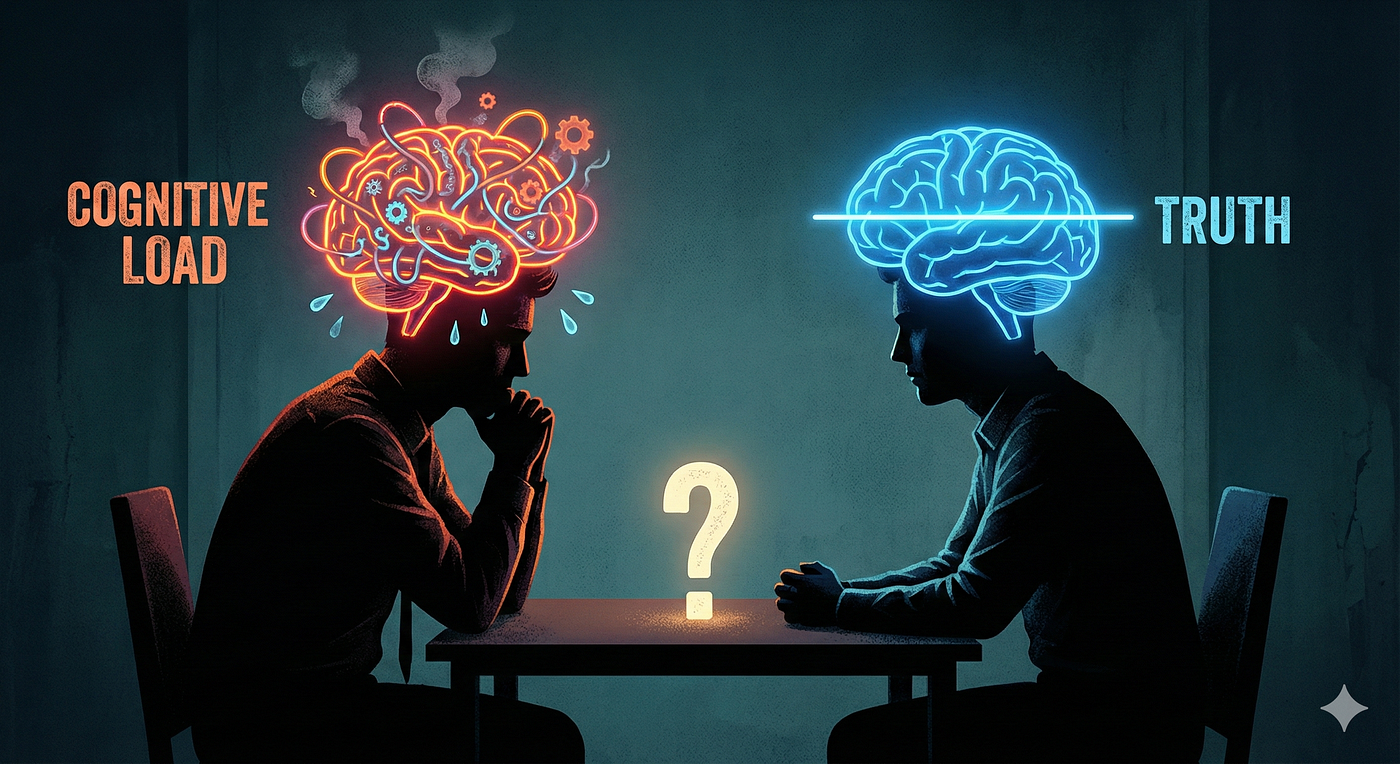
Image by freepik on Magnific
The first space Eliana cannot stop noticing is the elevator.
It is a Tuesday, which means nothing. The cab smells of the orange cleaner they use on the steel, and under that, faintly, of the people who rode it before her. She has stood in this elevator perhaps four hundred times. Today she hears the hum.
Not the motor. The motor is a different frequency, higher, mechanical, honest. This is lower. It sits under the floor and comes up through the soles of her shoes and settles somewhere behind her sternum, and she knows it because she built it, or something like it, eighteen months ago, in a beige room two floors down.
The doors open on the lobby. A man in a good coat steps in, nods at her, taps the button for forty-one. He does not hear it. She watches his shoulders. By the time the doors close he is checking his phone, and his face does the thing she has measured, the small downward settling at the mouth, the slackening that reads on the instruments as a four-point drop. Comfort goods. Higher impulse spending. She used to call it a result.
She gets off at thirty-nine and the hum stops and she stands in the corridor for a moment, breathing, and decides she imagined it.
She is good at deciding things.
Sandoval Resonance occupies floors thirty-nine through forty-three of a building that has no name on it, only a number, and the number is wrong, off by one from the building beside it, which everyone agrees is a clerical error and nobody fixes. The firm does not advertise. The firm helps others advertise, which is a distinction Eliana has stopped trying to explain at dinner parties, partly because she no longer goes to them.
Her title is Senior Analyst, Ambient. There are three people above her and an indeterminate number below, indeterminate because the org chart is a living document and the living document is mostly dead.
She is thirty-four.
She has a window that looks at another window.
The work is this. Stores want people to buy. People buy more when they feel a certain way, and the way is not happy. Happy people are sufficient unto themselves. The buying feeling is a small ache, a sense that something is missing and might be purchased, and Sandoval found, years before Eliana arrived, that the ache could be encouraged.
Lighting helped. Scent helped. The sequence of songs helped, the gap between songs helped, the temperature two degrees below comfort helped. These were known. These were boring. These were in every mall in the country and had been since before she was born.
What Eliana did, eighteen months ago, was different, and she is not entirely sure she did it.
The project had a name that was a joke nobody found funny. The Quiet Room. The brief was to find the floor of the thing, the part below the lights and the scent and the songs, the part you could not point to because it had no surface. Subsonic. Below hearing. A pressure rather than a sound.
She read everything, which was the problem, because most of it lived on forums now, next to the chemtrails and the frequencies that cured cancer and the frequencies that caused it. She would follow a paper to its source and the source was a video and the video cited a paper and the paper did not exist. The summaries, written by no one, cited each other in circles. She got good at the moment the ground went soft under a claim, the moment the citations started eating their own tails, and she got good at it because she had to, because the alternative was believing things, and believing things was how you ended up on the forums.
But some of it was real. Some of it she tested herself, in the beige room, with a speaker the size of a refrigerator and a grid of volunteers who were paid in vouchers and did not know what they were volunteering for. She moved the frequency down by quarters of a hertz. She watched the instruments.
At one number, one specific number she wrote on the back of something and slid into a drawer and later, looking, could not find, the line on the screen moved. She has wondered since whether she lost the paper or unlost it, whether some part of her tidied it away on purpose, the way you put a knife where you will not reach for it.
The volunteers reported nothing. They felt nothing. Asked how they were, they said fine, a little tired, was the room always this cold. And they spent. In the mock store at the end of the corridor, with its mock shelves and its real card readers, they spent eleven percent more, and they spent it on the soft things, the candles and the blankets and the snacks that taste like being eight years old.
Eleven percent is a number that ends careers and starts them. She wrote the report. She did not write down the frequency, because by then she could not find it, and because some animal part of her did not want to. She told herself the project had stalled. The instruments were noisy. The grid was small. Correlation, she wrote, requires replication, and she did not replicate, and the project was shelved, and she was promoted, and that was eighteen months ago, and now she is standing in an elevator hearing a hum that may or may not be there.
She tells Petrov about the elevator because Petrov is the only person at Sandoval she trusts, and she trusts him the way you trust a wall, for being there and being hard.
He runs the instruments. He is sixty, maybe, with a face like a closed door and hands that are gentle with equipment and clumsy with everything else. He has worked at three firms like Sandoval and considers them all the same firm. He drinks tea that smells of nothing and keeps a photograph of a dog on his desk and has never, in four years, mentioned the dog.
“There is no emitter in the elevator,” he says. He does not look up from the board he is soldering. “I would know. I commission everything in this building. The elevator is an elevator.”
“I felt it.”
“You felt the cable. They are old cables. The whole building shakes if you stand still long enough.” He sets down the iron. “What did you eat today.”
“That is not relevant.”
“It is the most relevant question there is. You look like someone who has not eaten.” He pushes a tin across the desk. Inside are biscuits, the cheap kind, the kind that taste of being eight years old, and she notices that she notices this, and she takes one anyway. “There is no emitter in the elevator, Mara. There is no emitter anywhere I did not put one. I would hear it. This is my whole life, hearing things that are not supposed to be there.”
“What if someone put one in without telling you.”
He looks at her then. It is not a comfortable look. “Then I would find it,” he says, “because that is my job, and I am good at my job, and I have not found it, which means it is not there. Eat the biscuit.”
She eats the biscuit. On the way out she stands still in the corridor and listens, and the building does not shake, and she cannot tell if that proves him right or proves her madness, and she decides it proves him right, the way she decides everything, fast and clean and final.
The trouble with hearing it once is that you cannot stop.
The bank is the worst. She is there about a hold on a transfer, ten minutes of business that takes an hour, and she sits in the carpeted hush of the waiting area and the hush is not neutral. The chairs face slightly away from each other. The music is below conversation and above silence. And under all of it, when the air handling cycles down between gusts, the pressure, the low settling weight, and the faces around her are doing the thing she measures for a living, the small downward settling at the mouth, the four-point drop.
Or they are bored. People look like that when they are bored. People have looked like that in waiting rooms since there were waiting rooms.
She cannot tell. That is the new condition of her life. She cannot tell the difference between a thing that is being done to people and a thing that is simply true about people, that they are tired, that they are a little sad, that they want something they cannot name and would buy it if they could.
The teller calls her number. The hold is released. She does not remember walking home.
There is a man she sees sometimes, named David, who does something with logistics that she has never understood and has stopped asking about. He is kind in the way of someone who has decided to be kind, deliberately, as a policy, and she finds this restful and also slightly chilling, the way a thermostat is restful.
They have dinner. He has chosen the restaurant, a good one, the kind with low light and lower music, and she sits down and immediately she is listening, head tilted, the way a dog listens, and David asks what is wrong and she says nothing, the music, is the music bothering you, and he says what music, and he cannot hear it either, the low part, the part under the part, and she puts down her fork.
“Do you ever feel,” she says, “that the room is doing something to you.”
“All the time.” He smiles. “That is the point of a nice room. It is doing relaxation to me. It is working.” He says this lightly, and it is the worst thing anyone has said to her in months, because he is right, that is the point, that has always been the point, the room is always doing something, the only question is whether someone meant it, and the question of whether someone meant it is the question of whether she is losing her mind, and she cannot ask David that question because David is a thermostat and would try to fix it.
“Forget it,” she says. “Long week.”
He reaches across and puts his hand on hers. His hand is warm and dry and means well. Behind it, under the table, through her chair, she can feel the hum. Or she can feel the subway. The subway runs four blocks from here. She knows this. She looked it up later, at home, at two in the morning, the subway map overlaid on the restaurant, and the line ran close but not under, close but not under, and she lay awake deciding it was the subway.
The competitor is called Helmsworth and it is bigger than Sandoval and worse, in the specific way that bigger things are worse, by having more places to hide the rot. Mara knows people who went to Helmsworth. They came back changed or did not come back. The pay is better. The work is the same work with more zeros.
She hears about the rally the way you hear about weather, ambient, secondhand, from a man at the coffee machine whose name she has never learned. Helmsworth has a new contract. Political. There is going to be an event, a rally, in the convention center across the river, for a candidate whose name is the kind of name that is everywhere and means nothing, a smooth name, a name like a stone worn round. And Helmsworth is doing the room.
“Doing the room how,” Mara says.
The man shrugs. “Ambient. Like always. Lights, sound, the works. They do the big ones now. Saves on actual policy.” He laughs at his own joke. The joke is not funny because it is true, and she has learned that the things that are not funny because they are true are the only jokes anyone tells anymore, that the whole culture has become a man laughing at the coffee machine because the alternative is worse.
“The works,” she says.
“The works.”
She goes back to her desk and does not work.
The works. She thinks about the floor of the thing, the part below the lights and the scent and the songs, the part she found or did not find eighteen months ago in a beige room, and she thinks about a convention center full of people who came to feel something, who came specifically to be moved, who would stand shoulder to shoulder in a space someone else had tuned, and she thinks: nobody can hear it. Everybody votes with their cortisol.
And then she thinks: or it is a rally, and rallies have always done this, with flags and music and a crowd, and the crowd is the emitter, the crowd has always been the emitter, and you do not need a refrigerator-sized speaker to make a thousand frightened people frightened together, you need only put them in a room and tell them what to fear, and people have been doing that since before there were rooms.
She cannot tell. She cannot tell which it is. And the not telling has become a pressure of its own, low, below hearing, a weight behind the sternum, and she presses the heel of her hand against her chest and tells herself it is heartburn.
She goes to see Petrov again. He is feeding the soldering iron, which is what he calls cleaning it, and he does not look up.
“The Helmsworth rally,” she says. “Are they using subsonic.”
“How would I know. They are Helmsworth. I do not work for Helmsworth.”
“You know everyone who does.”
He is quiet for a while. The iron hisses. “I know a man there,” he says finally. “He commissions. Like me.” Another silence. “I asked him once, after your project, the Quiet Room. I asked him whether anyone had cracked the floor of it. The real subsonic. The part below the part.”
Eliana’s mouth is dry. “And.”
“And he laughed at me.” Petrov sets down the iron. “He said there is no floor. He said it is a story we tell to scare ourselves and to bill clients. He said you can drop a tone as low as you like and all you get is a fan that needs balancing and a room full of people who would have bought the candle anyway. He said the human animal does not need a secret frequency. The human animal is already afraid. You only have to remind it.” He looks at her, and his closed-door face opens, just slightly, just enough to be terrible. “He was convincing, Eliana. He is a good man and he was convincing. And I have thought about it every day since, because I cannot tell if he was telling me the truth or telling me the thing Helmsworth pays him to tell me. And neither can you. That is the trap. That is how it works whether or not it works. You understand?”
She understands. She wishes she did not.
“Do not go to the rally,” Petrov says.
She had not said she was going to the rally. She had not, until that moment, decided she was going to the rally. She decides it now, in the way you decide a thing you have already done, and she says nothing, and Petrov looks at her and picks the iron back up, because he knows her, because he has worked at three firms like this one and considers them all the same firm, and he knows that telling someone not to go is the surest way of sending them.
She gets a credential because getting credentials is the easiest thing in her world. She is press, for an afternoon, for a publication that exists the way the building’s number exists, off by one, a clerical truth. She wears a coat with a deep pocket and in the pocket is a meter, Petrov’s meter, which she took from the lab without asking and which he let her take by not noticing, which is its own kind of asking and answering.
The meter measures pressure. Below hearing. If there is a floor to the thing, the meter will find it. If there is no floor, the meter will say so, and she can stop, she can give David her hand back, she can ride the elevator without listening, she can be a person again instead of an instrument.
That is the plan. The plan has the shape of every plan she has ever trusted, which is to say it promises an answer.
The convention center is a cathedral built by and for people who did not believe in anything. The ceiling is far away and full of catwalks and the catwalks are full of lights and somewhere up there, if it exists, is the thing, the floor of the thing, the part below the part. Eliana comes in with the press and the press is herded to a riser at the side, and from the riser she can see the whole floor filling, slowly, the way a tide does, with people.
The people are not what she expected. She expected monsters. She has spent eighteen months building the monster in her head, the engineered crowd, the cortisol electorate, and here is the crowd and it is full of faces, ordinary faces, a woman helping an older woman to a seat, a man with a child on his shoulders, two teenagers laughing at something on a phone.
They came here to feel something together. There is nothing wrong with that. It is the oldest thing there is, to want to feel something together, in a room, with flags. She feels it herself, standing on the riser, the pull of the crowd, the way a thousand people breathing become one breathing thing, and she has to remind herself that this is what she came to measure, that the pull is the question and not the answer.
She takes out the meter. She holds it low, in the pocket, screen up, and she looks down into the pocket the way you check a phone, and the screen is alive with numbers, and the numbers are noise. Of course they are noise. A convention center is the loudest quiet place on earth. The air handling alone is a roar below hearing. She cannot read a floor under this. She would need the beige room, the controlled grid, the one specific number she wrote down and lost. Here there is only the great pressure of the world, which has always been here, which is the subway and the cables and the fans that need balancing and the thousand people breathing, and somewhere in it, maybe, the thing. Or not the thing. She cannot tell. The meter cannot tell. The meter is just a more honest version of her own confusion, a confusion with a screen.
The lights begin to lower. Not all at once. By quarters. She knows this move. She invented a cousin of this move. The room is being brought down, gently, the way you bring down a child for sleep, and the crowd’s noise drops with the light, and the drop feels like reverence and is indistinguishable from reverence and may in fact be reverence, manufactured or genuine, she cannot tell, she cannot tell, and the not telling rises in her like water.
And under it. Or not under it. As the air handling cycles down between gusts, in the gap, the way it cycled down in the bank, the way it cycled down in the restaurant. The pressure. The low settling weight behind the sternum. The hum that is the motor or is not the motor, that is the subway or is not the subway, that is the floor of the thing or is the oldest thing there is, a thousand frightened hopeful people in a dark room waiting to be told what to feel.
She looks at the meter. The number in the gap is lower than the numbers around it. Measurably lower. A real trough, in the real gap, at a real frequency, and her thumb is on the screen and she could save it, she could capture it, she could have the thing she came for, the answer, the proof, the one specific number, here, now, in her hand.
And she understands, with the meter trembling in her pocket and the lights going down by quarters and the crowd becoming one breathing thing, that the number will not tell her what she needs to know. If the trough is real, it proves only that there is a trough. It does not prove that the trough is doing anything, or that anyone meant it, or that the woman helping the older woman to her seat is being moved by a machine and not by the thing that has always moved people in dark rooms with flags.
The meter cannot measure intent.
She has spent her whole life deciding things, and she is good at deciding things, and she has finally found the thing that cannot be decided, only believed or not believed, and the believing or not believing is the whole of it, is everything, is the trap that works whether or not it works.
The candidate’s name is announced. The crowd makes the sound a crowd makes. It is the most frightening sound she has ever heard and it is the sound of people being glad and she cannot tell the difference and she will never be able to tell the difference and that, she understands, is the thing she actually found in the beige room eighteen months ago. Not a frequency. The end of being able to tell.
She takes her thumb off the screen.
She knows what she is giving up. Not the proof. The proof was never going to come. What she is giving up is the version of herself who walks out of here certain, the analyst who saved the number and took it somewhere and was believed, who turned out to have been right all along and not unwell. That woman needed the trough. Eliana leaves her in the hall. It is the most expensive thing she has ever not done, and no one will ever know she did it, which is the cost, which is the whole cost.
She puts the meter back in her pocket, the number unsaved, the trough unrecorded, the proof she came for left in the air where she cannot use it. And she turns, and she pushes back along the press riser, past the cameras, past the man who waves a credential at her and the woman who says you cannot leave once it starts, and she leaves, before it starts, out through the doors and into the grey afternoon, where the river smells of the river and the traffic is only traffic.
Behind her, muffled by the doors, the crowd makes its sound again, bigger now, a roar that comes up through the pavement and the soles of her shoes and settles behind her sternum. She stands on the steps and feels it. It could be the crowd. It could be the trains. It could be the floor of the thing, finally, fully, a thousand people tuned to the one specific number she wrote down and lost.
She does not know. She is never going to know. The not knowing settles into her like a pressure she will carry now, below hearing, the rest of her life, into every elevator and bank and restaurant and dark room with flags, the weight behind the sternum that is either the world being done to her or the world simply being the world.
She presses the heel of her hand against her chest.
She tells herself it is the trains. She has decided it is the trains. She is still, she tells herself, good at deciding things, and she walks home deciding it, the whole way, over and over, the way you press a bruise to check that it still hurts.
메타데이터
- post_id
- 656452304ca7
- slug
- the-quiet-room-656452304ca7
- url
- https://medium.com/the-springboard/the-quiet-room-656452304ca7
- canonical_url
- https://medium.com/the-springboard/the-quiet-room-656452304ca7
- author_url
- https://medium.com/@nrw.scribe
- status
- ok
- fetched_at
- 2026-07-22 13:10:46