Horse Down Emergency
A horse lying down is not necessarily experiencing an emergency because horses naturally lie down during rest, particularly during REM…
Horse Down Emergency
A horse lying down is not necessarily experiencing an emergency because horses naturally lie down during rest, particularly during REM sleep. However, recumbency becomes problematic when a horse is unable to stand, makes repeated unsuccessful attempts to stand, stays down for an abnormally long time, or exhibits symptoms of pain, weakness, trauma, or irregular breathing. Colic, musculoskeletal injuries, neurological problems, severe weakness, laminitis, and exertional rhabdomyolysis are some of the ailments that might cause a horse to become recumbent. Therefore, before attempting any assistance, it is important to evaluate the horse’s ability to stand normally, its behaviour, and the circumstances surrounding the accident.
Ensuring the safety of the horse and others nearby should be the top priority while dealing with a downed horse. Even when a horse seems weak, it may abruptly roll, kick, or move erratically if it is in agony. People should avoid standing between the horse and a wall and stay away from there horse’s legs. Important details including the length of the horse’s recumbency, the last time it was seen standing, recent exercise or transportation, prior illness, and attempts to stand should be noted while the horse is monitored from a secure position. An equine veterinarian should be notified right away if the horse is unable to stand or exhibits symptoms of a serious disease or injury.
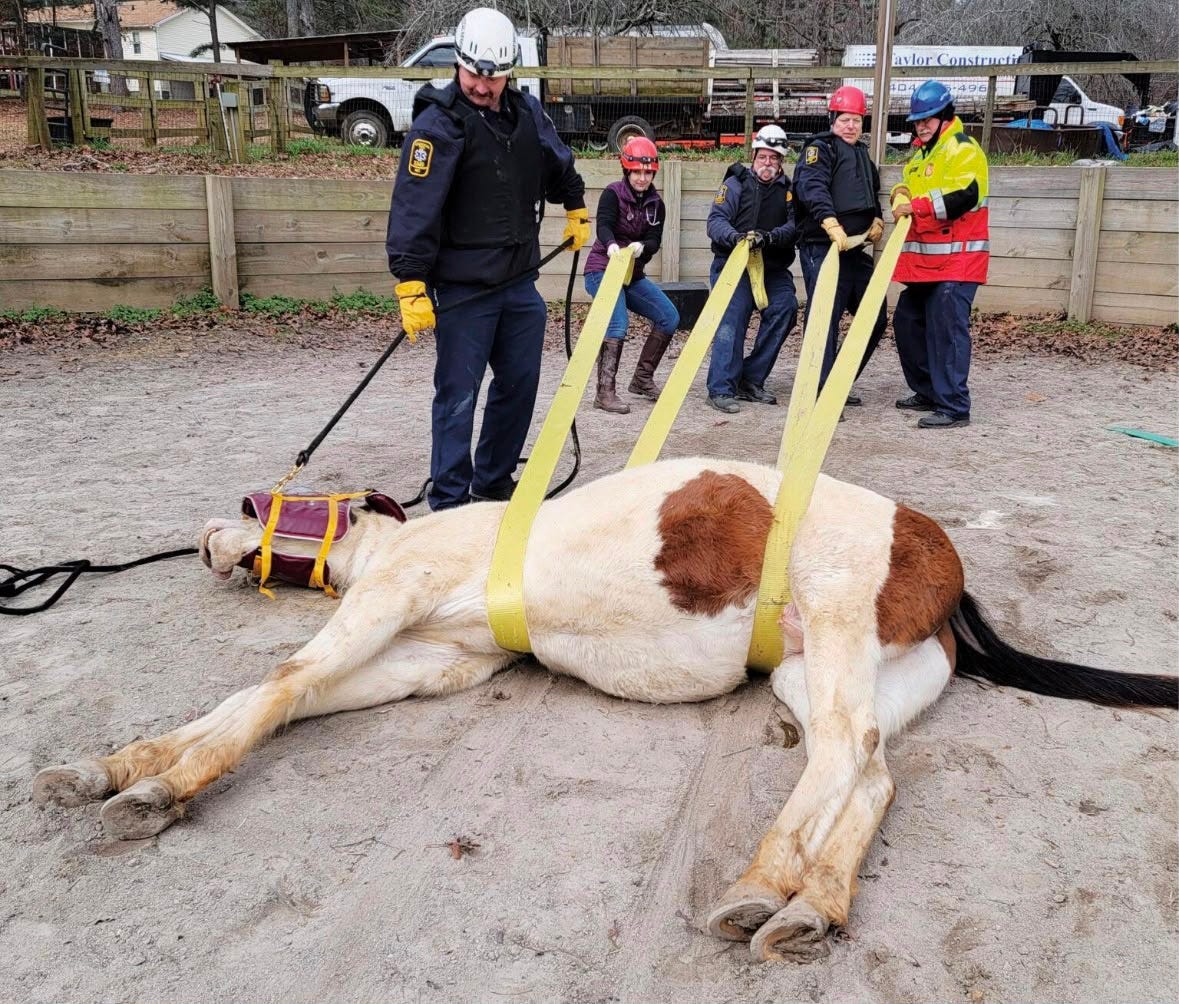
Because the horse’s heavy body weight constantly presses on muscles, nerves, and other soft tissues, prolonged recumbency may result in secondary consequences. Reduced blood flow may cause tissue necrosis, nerve damage, and muscle damage, which could make the horse even less able to stand. Additionally, a horse may become cast, which means it is confined to a wall or other structure and is unable to move. Repeatedly struggling in this circumstance can make you more tired and raise your risk of getting hurt. Therefore, tugging the horse by its head, neck, or limbs is not the best way to try rescue. To safely reposition or move the horse, appropriate rescue techniques call for qualified persons and the right tools.
The management of a horse-down emergency should focus on identifying the underlying cause, preventing further injury, and safely returning the horse to a standing position when appropriate. Basic clinical observations, such as heart rate, respiratory rate, temperature, mucous membrane appearance, level of consciousness, limb position, and indicators of pain, can give the veterinarian important information if it is safe to do so. Before the horse’s condition and surroundings have been evaluated, it should not be made to stand, especially if there is a suspicion of trauma, fracture, neurological disease, or extreme weakness. A controlled rescue strategy and early veterinarian care can lower the chance of further harm and increase the likelihood of a full recovery.
Madigan, J., Costa, L., Nieves, S., Horgan, M., et al. (2019a). Evaluation of a Simplified Loops System for Emergency Rescue Lifting of the Stranded or Recumbent Horse. Animals, 9(8), 511.
메타데이터
- post_id
- 6586aedfa71d
- slug
- horse-down-emergency-6586aedfa71d
- url
- https://medium.com/@airlanggaequineclub.fkhunair/horse-down-emergency-6586aedfa71d
- canonical_url
- https://medium.com/@airlanggaequineclub.fkhunair/horse-down-emergency-6586aedfa71d
- author_url
- https://medium.com/@airlanggaequineclub.fkhunair
- status
- ok
- fetched_at
- 2026-08-15 05:52:07