CRISPR: The Complete Guide to Genome Editing and the Future of Genetic Medicine
Home CRISPR: The Complete Guide to Genome Editing and the Future of Genetic Medicine
CRISPR: The Complete Guide to Genome Editing and the Future of Genetic Medicine
Home CRISPR: The Complete Guide to Genome Editing and the Future of Genetic Medicine
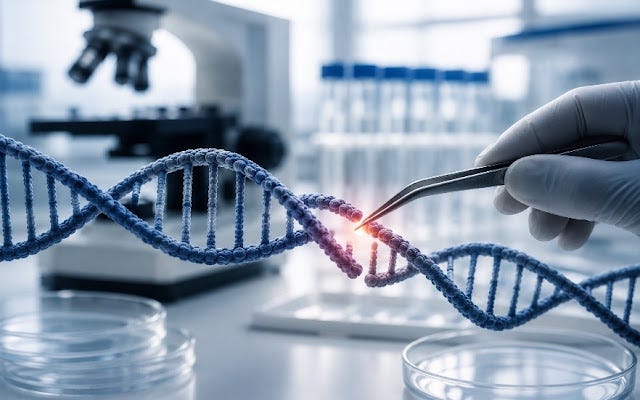
CRISPR has become the most useful tool in modern genetic engineering and is capable of editing almost any gene in almost any organism in a quick and inexpensive way, which is what no previous method could do. It has revolutionized biomedical research, agriculture, diagnostics, and medicine over the past decade. More recent developments like base editors, prime editors, and RNA-targeting systems can now enable changes that are much more specific, such as replacing a single letter of the DNA without cutting the genome. In fact, artificial intelligence has also been brought into the mix, and it is used to create more effective guide molecules, and to predict the effects of an edit before it’s put into the laboratory.
Read More: In-Vivo CAR-T Cell Therapy: A Game-Changing Approach in Cancer Immunotherapy
CRISPR is not a finished technology, though. As CRISPR-based treatments move to real patients, questions surrounding the use of these technologies remain to be solved, including questions of safety, unintended edits, ethics, and fair access. This guide provides an overview of what CRISPR is, how it works, areas in which it is currently being applied and future challenges.

How CRISPR works as a natural bacterial immune system against viral infection
It is important to distinguish two terms which are frequently used interchangeably:
CRISPR’s story spans nearly four decades moving from an unexplained biological curiosity to a Nobel Prize winning technology:
- In 2012, it was found that Cas9 could be engineered to use a custom guide RNA (sgRNA) to cut virtually any DNA sequence, making an immune system defense mechanism into a genome editing platform.
- 2020: Emmanuelle Charpentier and Jennifer Doudna win the Nobel Prize in Chemistry for developing CRISPR-Cas9 as a programmable editing tool.

The three core components of the CRISPR-Cas9 system: Cas9 protein, guide RNA, and target DNA
The Cas9 protein is the central enzyme responsible for cutting DNA. Often described as molecular scissors, is an endonuclease enzyme that can induce a double strand break at a precise site in the genome. However, Cas9 cannot locate its target on its own. Instead, it relies on a guide to direct it to the correct DNA sequence. After binding to the target, Cas9 makes a very specific cut, enabling the cell’s own DNA repair system to modify the genome.
Read More: Remarkable Breakthrough: Man Unexpectedly Cured of HIV After Stem Cell Transplant
- Trans-activating CRISPR RNA (tracrRNA): Binds to the crRNA and activates Cas9.
- For ease of the lab application, these two RNAs were merged into a single molecule called the single-guide RNA (sgRNA) which carries out both functions and simplifies the system’s design and use.
- Protospacer Adjacent Motif: The PAM is a short DNA sequence located immediately next to the target site. Cas9 must first recognize the PAM before it can bind to the DNA and initiate cleavage. For the commonly used Streptococcus pyogenes Cas9 (SpCas9), the PAM sequence is typically 5′-NGG-3′, where N can represent any nucleotide. Even if the guide RNA is a perfect match to the target sequence, without an appropriate PAM, Cas9 will not be able to bind or cut the DNA. This requirement makes targets more specific and assists the bacteria to know the foreign DNA from their genome.
Once Cas9 encounters a PAM sequence, it temporarily unwinds the DNA. When the adjacent DNA sequence is completely complementary to the guide RNA, Cas9 conformationally changes and activates its nuclease domains. The verification process helps to minimize unwanted DNA cutting.
The cell repairs the break with one of two pathways, and which pathway is taken determines the outcome of the editing.
- Non-Homologous End Joining (NHEJ): NHEJ is the cell’s fast, “just glue it back together” repair option. It is not template-based and therefore prone to errors. It frequently leaves small insertions or deletions (known as indels) at the cut site. Scientists make use of this to intentionally disable genes and observe their functions.
- Homology-Directed Repair (HDR): HDR is the precise option which leverages a provided DNA template to repair the break in the exact way it was intended, allowing scientists to fix a mutation or introduce new DNA. The problem is that HDR only is efficient in limited stages of cell division, and this is a major challenge in precision editing today.
Read More: Editing the Future: The CRISPR Revolution in Modern Medicine
Researchers tilt HDR the other way with inhibitors of NHEJ components, molecules that increase the amount of repair protein RAD51, and engineered Cas9 fusions that bring repair machinery to the cut site.

After CRISPR-Cas9 cuts DNA, the cell repairs it via NHEJ (gene knockout) or HDR (precise gene correction)
Researchers have also created CRISPR activation (CRISPRa) and CRISPR interference (CRISPRi) systems. Both use a catalytically inactive Cas9 protein (dCas9) that binds DNA without cutting it.
- CRISPRa increases gene expression by recruiting transcriptional activators.
- CRISPRi is a method that prevents the expression of genes by blocking transcription or by bringing in inhibitory proteins.
Although CRISPR is best known for genome editing, it is also transforming disease diagnosis. CRISPR proteins including Cas12 and Cas13 are able to precisely target the specific DNA or RNA sequence, making the development of rapid and sensitive diagnostic platforms like SHERLOCK and DETECTR possible. The tests are fast, inexpensive and do not require a lot of laboratory material, and have a great value in detecting infectious diseases, mutations associated with cancer, inherited disorders, and other biomarkers employed in precision medicine .
Read More: The Google of DNA: A New Search Engine for the Genetic World
- : Getting the editing machinery safely into the right cells and tissues remains one of the toughest unsolved problems, especially for organs beyond the liver and blood.
- Immune reactions: Cas9 is a bacterial protein, so the human immune system can identify it as a foreign invader. The effectiveness of therapy is hindered in some individuals by pre-existing antibodies and reactive cells of the immune system. Engineering less-recognizable Cas variants and using short-lived delivery methods are current solutions.

AI and advanced lab technology are shaping the next generation of CRISPR-based genetic medicine
- Safer and more precise therapies: CRISPR advances are bringing genome editing to a more precise and safer level.
- Next-generation editing tools: Advances such as base editing and prime editing have the potential to fix disease-causing mutations with increased accuracy.
- AI-powered genome editing: AI technologies are being used to optimize guide RNAs and to predict off-target effects and enhance genome editing efficiency.
- Personalized medicine: CRISPR will be vital for the advancement of personalized treatments based on a person’s genetic code.
- Expanded medical applications: Future advances may improve treatments for genetic disorders, cancer, infectious diseases, and support regenerative medicine.
- A promising future:Despite the challenges of technical and ethical issues, CRISPR is poised to play a significant role in the future of healthcare and precision medicine.
Originally published at https://stemepedia.blogspot.com.
메타데이터
- post_id
- 65c19d12d128
- slug
- crispr-the-complete-guide-to-genome-editing-and-the-future-of-genetic-medicine-65c19d12d128
- url
- https://medium.com/@akrrdr/crispr-the-complete-guide-to-genome-editing-and-the-future-of-genetic-medicine-65c19d12d128
- canonical_url
- https://medium.com/@akrrdr/crispr-the-complete-guide-to-genome-editing-and-the-future-of-genetic-medicine-65c19d12d128
- author_url
- https://medium.com/@akrrdr
- status
- ok
- fetched_at
- 2026-08-19 16:19:04