Personality Tests — Uncomfortable Truths
“Always be a first-rate version of yourself, instead of a second-rate version of somebody else.” — Judy Garland.
Personality Tests — Uncomfortable Truths
Personality tests — the uncomfortable truth
“Always be a first-rate version of yourself, instead of a second-rate version of somebody else.” — Judy Garland.
In the 30 years that I have worked in the information technology sector in all kinds of roles, I have always been part of a team. But a team can be compared to a band where each member plays a specific role and contributes specialised knowledge and experience.
However, to achieve maximum results, synchronised collaboration is required where the team works as a single unit, individual weaknesses are balanced out, and everyone’s strengths are fully utilised, whether playing jazz, rock, or classical music.
“Knowing yourself is the beginning of all wisdom.” — Aristotle
The main challenge in achieving such synchronised collaboration lies not only in understanding what motivates colleagues and how they tackle challenges, but also in having a clear vision of one’s own strengths and weaknesses.
This has led to my long-standing interest in personality tests, which I have used as a tool for self-reflection and increased self-awareness. But there are many such tests out there, and it’s not always clear which of them provide real insight and practical value, and which are primarily for entertainment.
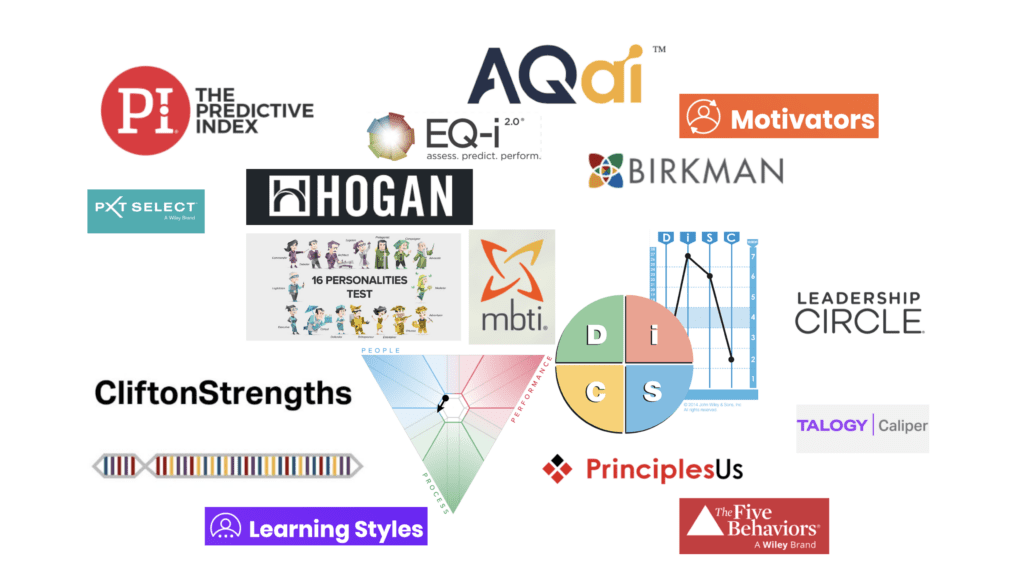
All kinds of personality tests are available
I recently attended a course where a lot of emphasis was placed on building a good team (in this case, a management team, which can be crucial for a company). There, I was introduced to a new personality test called DISC, which uses four colours and is enjoyably simple to use. It helps to see if teams are homogeneous.
- Blue — I like to define and research tasks
- Red — I like to focus on tasks and complete them
- Yellow — I like to motivate others and influence people
- Green — I like to focus on communication and how people are.
Apparently, the result of this test for me is that I’m solid blue, with a small dose of red and green, but little to no yellow.
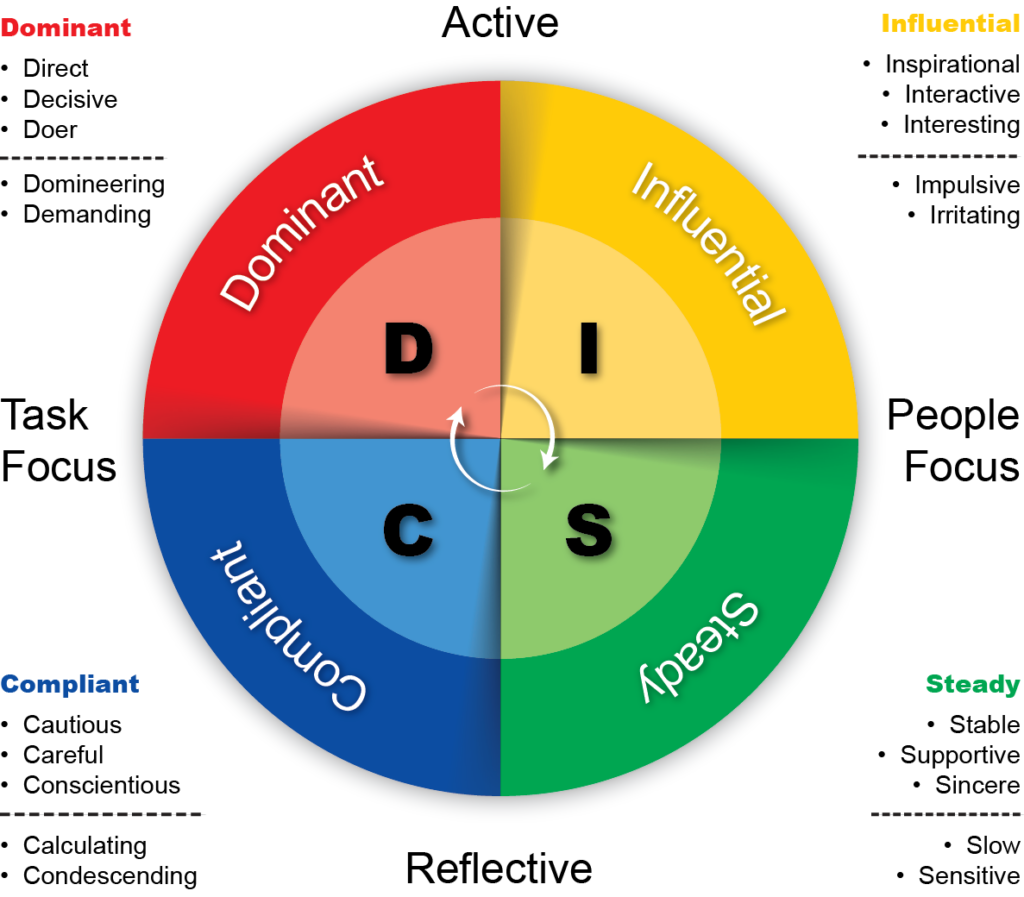
The DISC Model
The personality test that has been most useful for me in getting to know myself better is the Gallup Clifton Strengths test, as it points out various disadvantages that come with each advantage, as can be seen in the following excerpt from the top 5 results I got.
Learner
- Pros: You have a great desire to learn and want to continuously improve. The process of learning, rather than the outcome, excites you.
- Cons: You place a high value on learning and studying, and you may tend to impose this value on others. Be sure to respect others’ motivations, and resist pushing them toward learning for learning’s sake.
Ideation
- Pros: You are fascinated by ideas. You are able to find connections between seemingly disparate phenomena.
- Cons: Your limitless thoughts and ideas can sometimes overwhelm and confuse people. Consider refining your ideas and sharing only the best, so others won’t reject them simply because they cannot follow your abstract thinking.
Relator
- Pros: You enjoy close relationships with others. You find deep satisfaction in working hard with friends toachieve a goal.
- Cons: Because Relators typically do not trust others implicitly, and people have to earn your trust over time, some may think you are hard to get to know. Be aware of this perception with new people you meet, as well as with the people you see every day.
Analytical
- Pros: You search for reasons and causes. You have the ability to think about all of the factors that might affect a situation.
- Cons: Your objective and fact-based approach to decision-making may seem sceptical or critical. Keep in mind that others will have emotional, subjective and personal opinions — and that their input is just as valuable as yours is.
Intellection
- Pros: You are characterised by your intellectual activity. You are introspective and appreciate intellectual discussions.
- Cons: Because you are comfortable with silence and solitude, others might view you as isolated, disinterested or disengaged. Be prepared to tell them that solitary thinking is just your natural process and not necessarily a reflection of how much you care
Before I came across the CliftonStrengths assessment, I mostly looked at the BIG Five model, in which personality is measured based on the following 5 dimensions.
- Agreeableness (A) measures kindness, helpfulness, and willingness to cooperate.
- Conscientiousness (C) measures self-control, diligence, and attention to detail.
- Extraversion (E) measures assertiveness, energy, and social activity.
- Neuroticism (N) measures depression, irritability, and moodiness.
- Openness to Experience (O) measures creativity, curiosity, and willingness to consider new ideas.
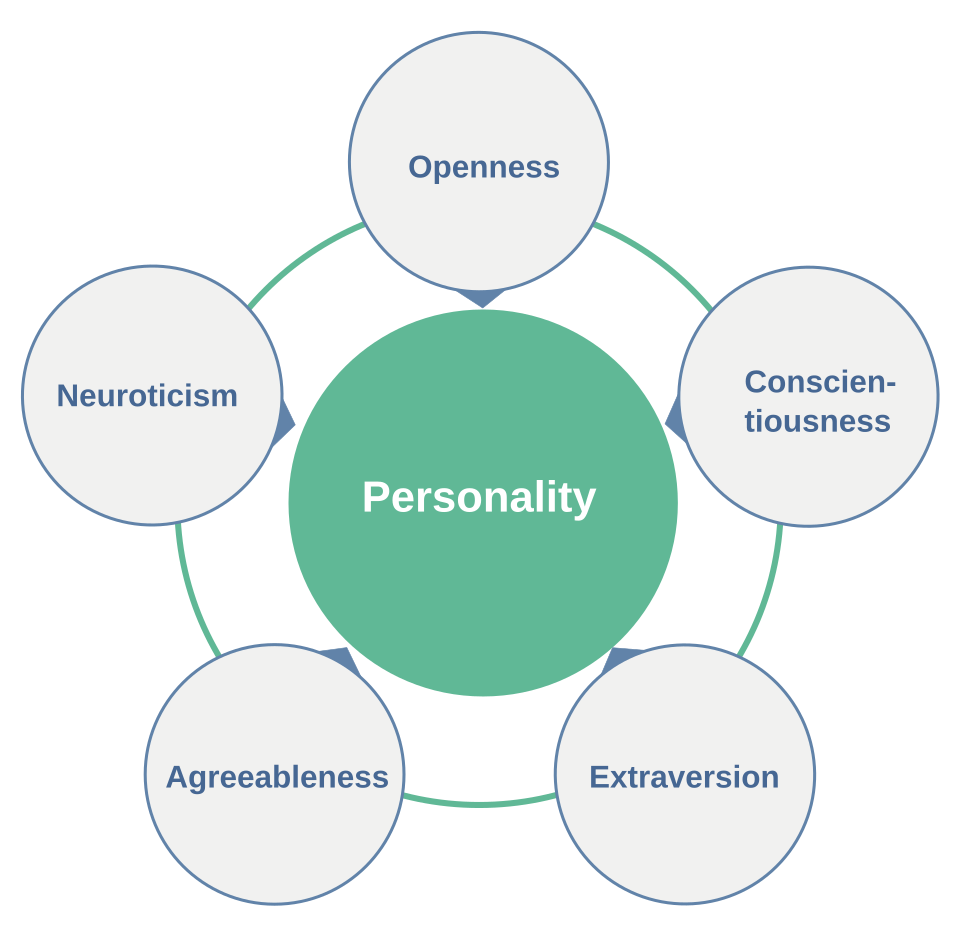
The BIG Five Model
The personality model I worked with the most before I was introduced to Clifton Strengths came from the workshop of Jordan Peterson and is called Understand Myself. It breaks down the 5 dimensions of the BIG Five model even further, providing two subcategories for each dimension.
- Agreeableness — Compassion and Politeness
- Conscientiousness — Industriousness and Orderliness
- Extraversion — Enthusiasm and Assertiveness
- Neuroticism — Withdrawal and Volatility
- Openness to Experience — Openness and Intellect
The results are largely based on a comparison with a larger population and interpretation based on that, so the results need to be examined carefully to get the most value out of them and to look at the concepts as they are defined in the literature. Below you can see the overall results I received, along with the results from each subcategory.
Agreeableness: Moderately Low — 26th percentile — You are less agreeable than 73 of 100 people.
- Compassion: Typical or Average — 42nd percentile — You are more compassionate than 42 of 100 people.
- Politeness: Low — 16th percentile — You are less polite than 83 of 100 people.
Conscientiousness: High — 88th percentile — You are more conscientious than 88 of 100 people.
- Industriousness: Typical or Average — 56th percentile — You are more industrious than 56 of 100 people.
- Orderliness: Exceptionally High — 97th percentile — You are more orderly than 97 of 100 people.
Extraversion: Moderately Low — 31st percentile — You are less extraverted than 68 of 100 people.
- Enthusiasm: Low — 21st percentile — You are less enthusiastic than 78 of 100 people.
- Assertiveness: Typical or Average — 47th percentile — You are more assertive than 47 of 100 people.
Neuroticism: Moderately High — 61st percentile — You are higher in neuroticism than 61 of 100 people.
- Withdrawal: Moderately High — 72nd percentile — You are higher in withdrawal than 72 of 100 people.
- Volatility: Typical or Average — 48th percentile — You are more volatile than 48 of 100 people.
Openness to Experience: Exceptionally High — 97th percentile — You are higher in openness to experience than 97 of 100 people.
- Intellect: Exceptionally High — 96th percentile — You are higher in intellect than 96 of 100 people.
- Openness: Very High — 93rd percentile — You are higher in openness than 93 of 100 people.
[embed]Client Challenge Edit descriptionwww.slideshare.net
I have also taken various versions of the Myers-Briggs personality tests, more for fun than for introspection, but I find the best version of them to be the Principles You personality test from Ray Dalio.
The category I most often fall into in Myers-Briggs tests is INTJ (I sometimes get INTP, so I’m dancing on some line there), which is usually defined like this.
- INTJ — Original, independent, strategic, logical, reserved, intuitive. Driven by their own original ideas to achieve improvements.
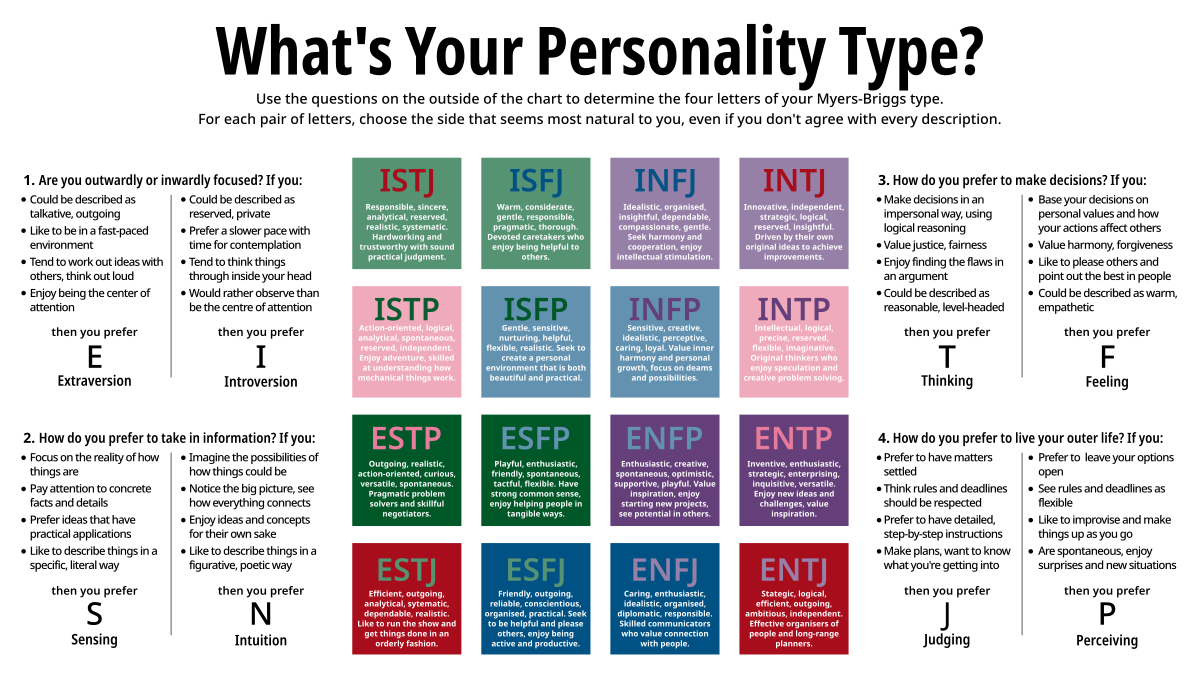
The Meyrs-Briggs 16 personas
메타데이터
- post_id
- 65dca0503dce
- slug
- personality-tests-uncomfortable-truths-65dca0503dce
- url
- https://medium.com/@reynir.gudmundsson/personality-tests-uncomfortable-truths-65dca0503dce
- canonical_url
- https://medium.com/@reynir.gudmundsson/personality-tests-uncomfortable-truths-65dca0503dce
- author_url
- https://medium.com/@reynir.gudmundsson
- status
- ok
- fetched_at
- 2026-06-09 15:37:30