💔 The Psychology of Loneliness in the Digital Generation
Why we feel alone in a world that never stops talking?
💔 The Psychology of Loneliness in the Digital Generation
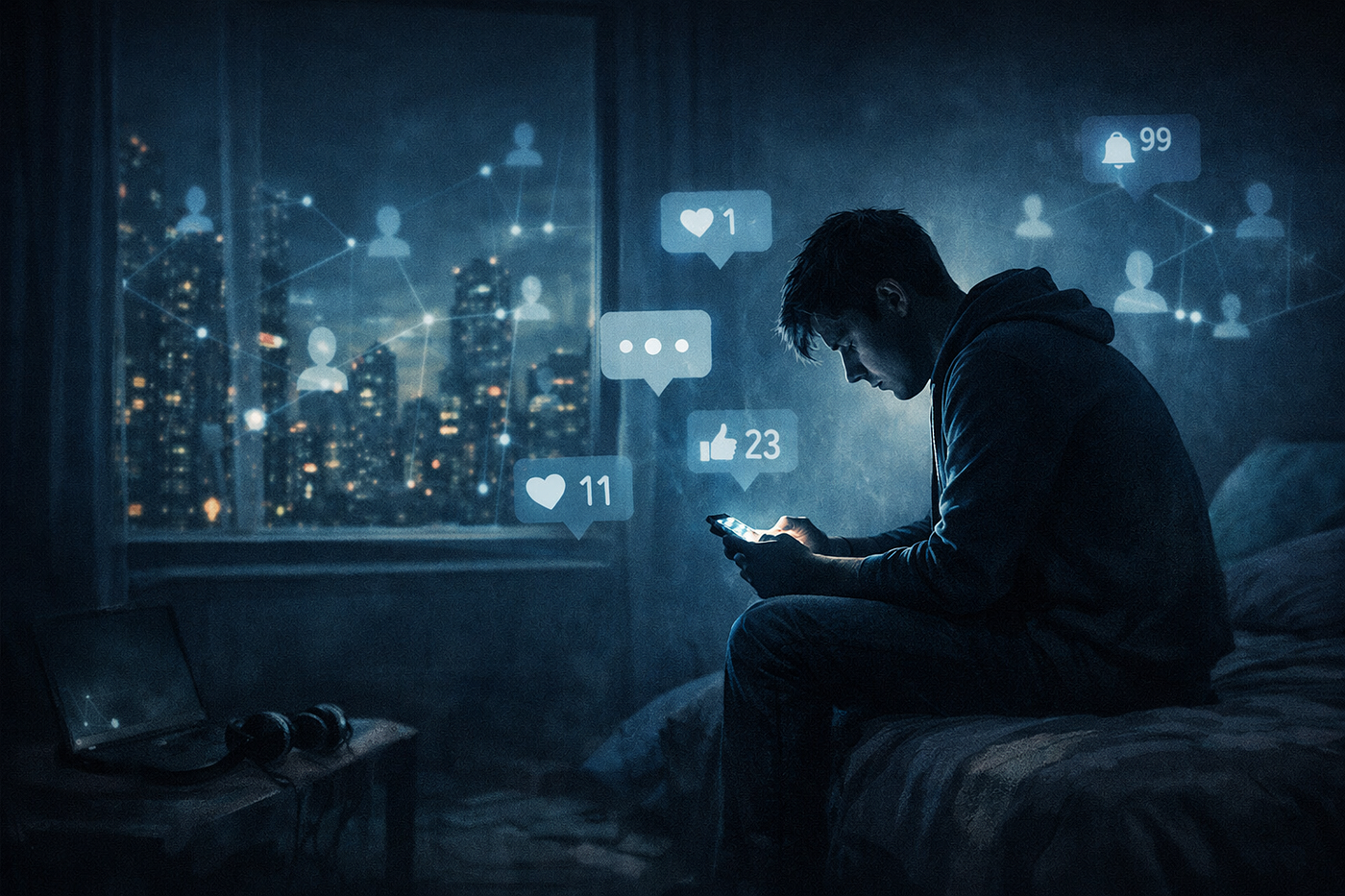
Connected to everyone. Disconnected from myself.
Why we feel alone in a world that never stops talking?
🌙 The Story — Liam’s Quiet Loneliness
Liam sat in his small apartment in Berlin, surrounded by glowing screens. His phone buzzed every few seconds — messages, likes, comments, group chats, DMs. He had more “connections” than ever before. Yet he felt a strange, heavy emptiness he couldn’t explain.
He wasn’t isolated. He wasn’t unpopular. He wasn’t disconnected.
He was lonely — in a way that didn’t look like loneliness at all.
He scrolled through Instagram, watching people laugh, travel, dance, celebrate. He replied to messages, reacted to stories, joined group calls. But none of it made him feel closer to anyone.
It was the kind of loneliness that hides behind noise. The kind that grows in crowded rooms. The kind that thrives in a world where everyone is talking, but no one is listening.
Liam wasn’t alone in his experience. He was part of a generation living through a silent psychological crisis:
Hyper‑connected.
Emotionally starved.
Digitally surrounded.
Humanly alone.
🧠 Part I — The Social Media Paradox: Connected but Unseen
Social media promised connection. But what it delivered was performance.
We don’t share to bond anymore. We share to be noticed.
Every post becomes a curated identity: the best angle, the best moment, the best version of ourselves. And the more we curate, the less we reveal.
Psychologists call this the social media paradox:
“The platforms designed to bring us closer are the same ones making us feel invisible.”
Why?
Because digital interaction gives us:
- validation without intimacy
- attention without understanding
- visibility without vulnerability
It’s connection without closeness — a simulation of belonging.
And the brain knows the difference.
💬 Part II — Weak Ties vs Deep Connection
Sociologist Mark Granovetter introduced the idea of weak ties — casual acquaintances that help spread information. They’re useful, but they don’t nourish us.
In the digital age, weak ties dominate:
- followers
- mutuals
- online friends
- group chats
- comment threads
We have hundreds of these connections. But very few deep ties — the kind that require:
- trust
- vulnerability
- shared silence
- emotional reciprocity
- time
Deep connection is slow. Digital life is fast.
Deep connection is intimate. Digital life is performative.
Deep connection is messy. Digital life is curated.
We’ve traded depth for reach, and the result is emotional starvation.
🧩 Part III — The Neuroscience of Belonging
Humans are wired for connection. Not likes. Not views. Not followers.
Connection.
The brain’s social circuitry — especially the anterior cingulate cortex and ventral striatum — lights up when we experience real belonging.
But here’s the painful truth:
Loneliness activates the same brain regions as physical pain.
MRI studies show that social exclusion triggers the same neural pathways as:
- burning your hand
- breaking a bone
- physical injury
That’s why loneliness hurts. It’s not metaphorical — it’s biological.
And chronic loneliness triggers:
- cortisol spikes
- inflammation
- sleep disruption
- weakened immunity
- accelerated aging
Your body interprets loneliness as danger. A threat to survival.
Because for most of human history, being alone meant death.
💔 Part IV — Why Loneliness Is Destroying Physical Health
Loneliness is now considered a public health epidemic. Harvard’s 85‑year longitudinal study found that quality of relationships is the strongest predictor of:
- long-term health
- emotional stability
- life satisfaction
- even lifespan
Chronic loneliness increases mortality risk by 26% — similar to smoking 15 cigarettes a day.
It affects:
- heart health (inflammation, hypertension)
- immune function (reduced antibodies)
- cognitive health (faster decline, memory issues)
- mental health (anxiety, depression, emotional numbness)
Loneliness isn’t a feeling. It’s a physiological condition.
And the digital generation is experiencing it at unprecedented levels.
🌿 Part V — Why Gen Z and Millennials Are the Loneliest Generations
Despite being the most connected generations in history, they report the highest levels of:
- emotional isolation
- social anxiety
- lack of belonging
- chronic loneliness
Why?
1️⃣ Digital communication replaced physical presence
Texting replaced talking. Scrolling replaced socializing. Notifications replaced intimacy.
2️⃣ Comparison culture destroys self-worth
Everyone else’s life looks perfect. Yours feels inadequate.
3️⃣ Constant stimulation reduces emotional depth
The brain becomes addicted to novelty — not connection.
4️⃣ Fear of vulnerability increases
When everyone is performing, authenticity feels risky.
5️⃣ Friendships became transactional
People bond over content, not shared experiences.
🌅 Part VI — The Way Back to Real Connection
Escaping digital loneliness doesn’t require deleting apps. It requires rebuilding depth.
1️⃣ Practice “Slow Communication”
Long conversations > quick replies.
Voice notes > emojis.
Calls > comments.
2️⃣ Curate Your Digital Circle
Unfollow noise. Mute performative accounts. Keep people who make you feel seen, not impressed.
3️⃣ Rebuild Physical Presence
Eye contact, shared meals, walks, touch — these activate oxytocin, the bonding hormone.
4️⃣ Embrace Vulnerability
Connection begins where perfection ends.
5️⃣ Create Belonging Rituals
Weekly dinners. Book clubs. Coffee walks. Consistency builds trust.
🌙 Final Reflection
Liam didn’t delete his apps. He didn’t disappear from social media. He simply changed the way he connected.
He stopped performing. He started sharing. He replaced noise with presence. He replaced followers with friends. He replaced scrolling with belonging.
In a world obsessed with connection, belonging is the new rebellion.
Note: This article was written through the author’s own effort and edited with the assistance of an AI tool.
메타데이터
- post_id
- 66c2e43a488b
- slug
- the-psychology-of-loneliness-in-the-digital-generation-66c2e43a488b
- url
- https://medium.com/@joondeka/the-psychology-of-loneliness-in-the-digital-generation-66c2e43a488b
- canonical_url
- https://medium.com/@joondeka/the-psychology-of-loneliness-in-the-digital-generation-66c2e43a488b
- author_url
- https://medium.com/@joondeka
- status
- ok
- fetched_at
- 2026-06-21 23:24:37




