The Design System Maturity Model: Where Is Your Team, Really?
Every DS team thinks they’re further along than they are. This model will show you exactly where you stand — and what to fix next.
The Design System Maturity Model: Where Is Your Team, Really?
Every DS team thinks they’re further along than they are. This model will show you exactly where you stand — and what to fix next.
Disclaimer: I earn a small amount when Medium members read my work, so this article is set to members-only. Not a member? You can still read the full article using my friend link.
Why Design System Maturity Matters
Most design teams believe they are more mature than they actually are. That sounds harsh, but it happens constantly across startups, agencies, and enterprise organizations alike. A team launches a component library, publishes a Figma file, writes some documentation, and suddenly declares that they “have a design system.” Technically, they are not wrong. But operationally, they are usually standing much earlier in the journey than they think.
The problem is that many organizations confuse assets with maturity. A mature design system is not simply a collection of reusable components. It is an operational ecosystem that supports scalability, governance, collaboration, contribution workflows, accessibility standards, and long-term sustainability. Without those layers, a component library is just a neatly organized folder with good intentions.
This misunderstanding creates major problems over time. Teams assume they are advanced, so they stop investing in the foundational work they still desperately need. Documentation becomes outdated. Governance never forms. Product teams fork components privately. Engineering and design drift apart. Eventually the organization experiences the same chaos the system was supposed to solve.
Maturity matters because scale changes everything. A design approach that works for five people collapses when fifty people contribute simultaneously. Product complexity increases. Business priorities shift. Teams move faster. User expectations rise. Without operational maturity, the system becomes fragile under pressure.
A maturity model helps organizations see reality more clearly. It acts like a map. Instead of asking, “Do we have a design system?” the better question becomes, “How capable, scalable, and sustainable is our system today?” That shift changes conversations dramatically because it replaces assumptions with measurable progression.
The healthiest teams are not the ones pretending to be advanced. They are the ones honest enough to identify what still needs fixing.
What Is a Design System Maturity Model?
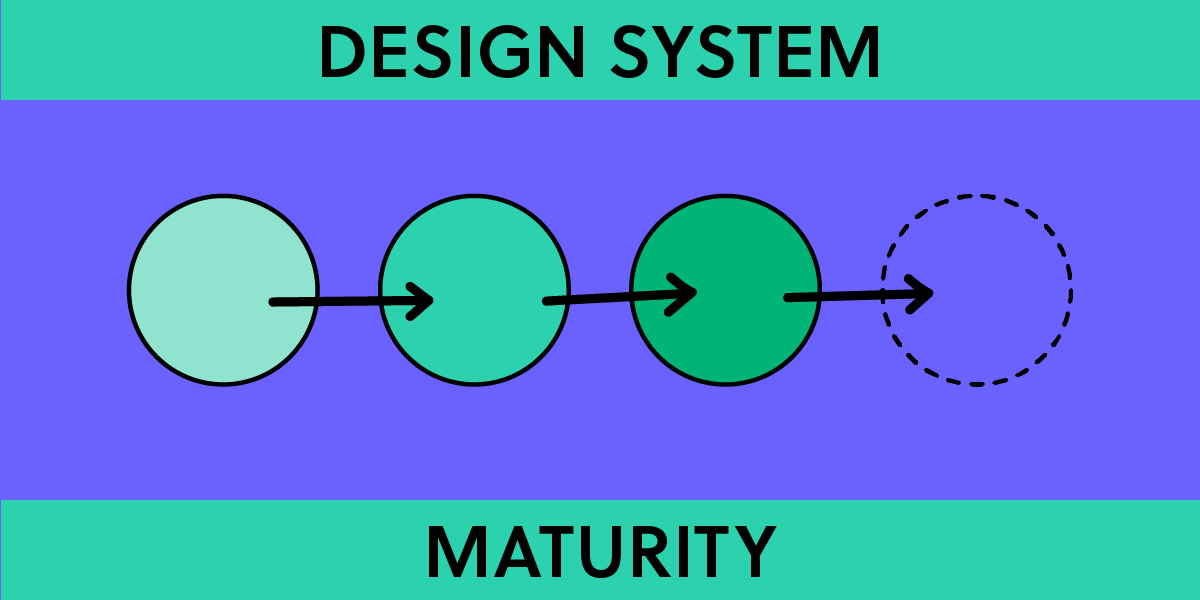
A visual representation of design system maturity — showing the evolution from early-stage foundations to scalable, future-ready systems
A design system maturity model is a framework used to evaluate how developed, scalable, and operationally healthy a design system truly is. Think of it like a growth map rather than a pass-or-fail checklist. Different teams exist at different stages depending on their processes, tooling, governance, adoption, collaboration, and long-term sustainability practices.
Many organizations wrongly assume maturity is only about visual consistency. In reality, maturity includes much broader operational capabilities. Can teams contribute safely? Is accessibility integrated into workflows? Does documentation evolve continuously? Are there governance processes? Is adoption measurable? Can the system survive organizational change? These questions matter far more than how polished the UI kit looks.
A maturity model also reveals hidden weaknesses. Some teams have excellent documentation but terrible adoption. Others have scalable engineering architecture but weak governance. Some companies maintain strong component libraries yet completely ignore contribution workflows, causing bottlenecks later. The model exposes those blind spots clearly.
This is why mature systems behave differently from early-stage systems. Early systems are reactive. Mature systems are resilient. Early systems depend heavily on individuals. Mature systems survive team turnover. Early systems focus on component output. Mature systems optimize organizational alignment and operational efficiency.
Another reason maturity models matter is prioritization. Without a clear understanding of your current stage, teams often invest in the wrong improvements. A fragmented organization might waste time debating advanced automation while basic consistency problems remain unresolved. A maturity model helps teams focus on the next logical step instead of chasing trends prematurely.
The goal is not perfection. The goal is progression with awareness.
Stage 1 — The Fragmented Phase
Every organization begins here, whether they admit it or not. The fragmented phase is the earliest stage of design system maturity, where products, teams, and workflows operate inconsistently with little shared structure. Designers create interfaces independently. Engineers build reusable code only when personally convenient. Product teams solve similar problems repeatedly without coordination.
This phase often feels fast initially because teams have complete freedom. Designers can create quickly without governance discussions. Engineers ship features without waiting for shared approvals. Startups especially thrive in this mode during early growth because speed matters more than operational consistency.
But fragmentation creates hidden costs that compound rapidly over time.
Different teams start building slightly different buttons, forms, spacing systems, and navigation patterns. Accessibility becomes inconsistent. Documentation barely exists. Customer experiences feel disconnected across products. Engineers duplicate work constantly without realizing how much effort is being wasted.
One major symptom of this phase is tribal knowledge. Important decisions live inside Slack threads, meetings, or individual memory instead of reliable systems. Another symptom is design drift. Two teams solving similar problems produce completely different experiences because no shared standards exist.
The biggest danger of staying in this phase too long is scaling failure. As organizations grow, inconsistency becomes exponentially harder to manage. Every new team adds more variation. Every new product increases complexity. Eventually delivery slows because nothing aligns cleanly anymore.
Ironically, many teams do not recognize they are still fragmented because they mistake local organization for system maturity. Having a shared Figma file does not automatically mean the organization has escaped fragmentation.
This phase is normal. Staying trapped in it for years is not.
Stage 2 — The Standardization Phase
The standardization phase begins when organizations recognize the cost of inconsistency and start building shared foundations intentionally. This is usually where the first real design system efforts emerge.
Teams create reusable components. Shared typography scales appear. Color palettes become standardized. Designers start aligning patterns across products. Engineers build reusable UI libraries instead of recreating interfaces repeatedly. Documentation begins forming, even if still incomplete.
This stage often creates excitement because organizations immediately notice efficiency gains. Designers spend less time rebuilding common elements. Engineers implement interfaces faster. Product experiences begin feeling more connected. Stakeholders see visible improvements quickly.
Yet standardization also introduces new challenges.
The moment teams share foundations, governance questions appear. Who approves changes? Which team owns components? How are accessibility standards maintained? What happens when product teams need exceptions? Organizations entering this stage often discover that shared systems create operational questions they never needed to answer before.
Another common issue is rigidity. Teams sometimes overcorrect after fragmentation by enforcing excessive consistency. Product squads feel constrained. Local innovation slows. Designers complain that the system blocks real user needs. This tension is normal because organizations are still learning how to balance structure with flexibility.
Documentation quality also becomes critical here. Without clear usage guidance, teams interpret components differently. Consistency starts drifting again despite shared assets existing technically.
The standardization phase is where organizations stop behaving like disconnected teams and start behaving like coordinated product ecosystems. It is an important leap, but maturity is still relatively early at this stage.
Most organizations celebrating their “design system success” are actually here.
Stage 3 — The Scalable System Phase
This is where design systems begin transforming from shared libraries into scalable operational platforms. Organizations entering this stage understand that components alone are not enough. Processes, governance, contribution models, and adoption strategies become equally important.
Governance structures emerge clearly during this phase. Teams define ownership responsibilities. Contribution workflows become documented. Product squads can propose improvements safely. Review systems support collaboration instead of acting purely as gatekeeping mechanisms.
Cross-functional alignment improves significantly here. Designers, engineers, product managers, accessibility specialists, and leadership begin treating the system as shared infrastructure rather than a side project owned only by design. That shift changes organizational behavior dramatically.
Adoption also becomes measurable. Mature teams track component usage, duplicate patterns, accessibility compliance, onboarding efficiency, and contribution activity. They stop relying on assumptions and start using data to guide system evolution.
Scalability becomes the defining characteristic of this phase. The system supports multiple teams, products, and workflows without collapsing under growth pressure. Local flexibility exists inside shared foundations. Product teams move quickly while maintaining organizational consistency.
This stage also introduces federated collaboration models more frequently. Instead of one central team controlling every decision, multiple teams contribute responsibly within governance frameworks. That distributed ownership helps systems scale socially as organizations expand.
Another important sign of maturity here is resilience. If one key contributor leaves the company, the system still survives because knowledge, processes, and ownership are distributed properly.
Organizations reaching this phase finally stop rebuilding their design system every few years. Instead, they start evolving it continuously.
Stage 4 — The Operational Platform Phase
At this level, the design system becomes deeply integrated into company operations. It no longer functions merely as a design initiative. It behaves like infrastructure.
Engineering pipelines integrate directly with tokens and component libraries. Documentation updates connect automatically with releases. Accessibility testing becomes embedded inside workflows. Product teams onboard faster because system foundations already exist. Governance processes operate predictably instead of reactively.
Metrics become far more advanced during this stage. Organizations measure ship speed improvements, design debt reduction, engineering efficiency, release confidence, accessibility quality, and cross-platform consistency. Stakeholders see the system not as a creative tool but as an operational advantage.
Automation also increases heavily here. Visual regression testing, token synchronization, component versioning, release management, and documentation generation reduce manual overhead significantly. Teams spend less energy maintaining consistency manually because infrastructure supports it automatically.
The system becomes trusted internally. Teams rely on it confidently because they know it is maintained, scalable, and operationally reliable. Trust is one of the strongest maturity indicators because adoption becomes voluntary rather than forced.
Another major shift happens at the leadership level. Executives begin viewing the design system as strategic infrastructure tied directly to business scalability. Funding discussions change tone because the system proves measurable operational value.
Organizations at this stage are relatively rare. Many companies aim for it, but reaching it requires long-term investment, organizational alignment, and strong governance discipline.
This is where design systems stop feeling experimental and start behaving like business-critical platforms.
Stage 5 — The Adaptive Ecosystem Phase
The final stage is not about perfection. It is about adaptability.
Adaptive ecosystems evolve continuously alongside technology, business models, and user expectations. These systems are highly resilient because they are built for change instead of stability alone.
AI-assisted workflows often appear here. Token systems adapt dynamically across brands, platforms, and contexts. Contribution pathways become increasingly decentralized yet still governed effectively. Accessibility standards evolve proactively instead of reactively. Documentation integrates directly into development and design environments intelligently.
Organizations operating at this level rarely treat the design system as “finished.” Continuous evolution becomes part of the culture. Teams expect the system to grow, adapt, and improve over time.
One defining characteristic of this phase is organizational maturity itself. Teams understand that sustainable systems require ongoing investment, collaboration, and experimentation. There is no illusion of completion.
Another important aspect is ecosystem thinking. The design system connects not just products and teams, but workflows, operations, customer experience strategies, and business scalability efforts together.
Very few organizations truly reach this level because it requires both technical sophistication and cultural alignment. But teams moving toward this stage often outperform competitors operationally because their systems support rapid adaptation without descending into chaos.
The future belongs to systems capable of evolving continuously.
Common Maturity Traps
One of the biggest traps teams fall into is overestimating progress. Publishing components feels productive, so organizations assume maturity automatically follows. But components without governance, adoption, contribution models, and operational trust create fragile systems.
Another common trap is mistaking documentation for adoption. A beautifully documented system means little if teams bypass it regularly. Real maturity shows up in usage patterns, collaboration quality, and organizational trust — not just polished websites.
Some teams also chase advanced tooling too early. AI workflows, automation pipelines, and token orchestration sound exciting, but fragmented organizations still struggling with consistency rarely benefit from premature complexity.
Maturity is not about appearing advanced. It is about solving the right problems at the right stage.
How to Move to the Next Level
Progression begins with honest assessment. Identify your current stage realistically instead of aspirationally. Then focus only on the next meaningful improvement.
Fragmented teams should prioritize consistency foundations. Standardized teams should strengthen governance and adoption. Scalable systems should improve automation and operational integration. Advanced ecosystems should optimize adaptability continuously.
Most importantly, remember that maturity is iterative. Design systems are not destinations. They are evolving operational ecosystems shaped by organizational growth itself.
FAQs
1. What is a design system maturity model?
A design system maturity model is a framework used to evaluate how scalable, sustainable, and operationally developed a design system truly is.
2. Why do teams overestimate their design system maturity?
Many teams mistake shared components or documentation for operational maturity while ignoring governance, adoption, and scalability issues.
3. What is the most common maturity stage?
Most organizations exist in the standardization phase, where shared components and basic consistency exist but governance and scalability remain immature.
4. How can teams improve maturity?
Teams improve maturity by focusing on governance, adoption, documentation, contribution workflows, scalability, and operational integration gradually over time.
5. Is design system maturity only about design quality?
No. Maturity includes collaboration, engineering integration, governance, operational workflows, sustainability, and organizational trust.
Conclusion
The design system maturity model exists because many organizations misunderstand where they truly stand. Shared components alone do not create maturity. Sustainable maturity emerges through governance, collaboration, operational integration, scalability, and continuous adaptability.
Every stage brings different strengths and different risks. Fragmented teams struggle with inconsistency. Standardized teams wrestle with governance. Scalable systems focus on resilience. Adaptive ecosystems optimize continuous evolution.
The healthiest organizations are not the ones pretending to be advanced. They are the ones honest enough to identify weaknesses clearly and improve systematically over time.
Maturity is not about perfection. It is about readiness for scale.
메타데이터
- post_id
- 66da8ed5ec85
- slug
- the-design-system-maturity-model-where-is-your-team-really-66da8ed5ec85
- url
- https://www.designsystemscollective.com/the-design-system-maturity-model-where-is-your-team-really-66da8ed5ec85
- canonical_url
- https://www.designsystemscollective.com/the-design-system-maturity-model-where-is-your-team-really-66da8ed5ec85
- author_url
- https://medium.com/@madheshp
- status
- ok
- fetched_at
- 2026-06-09 15:37:30