Calling for Accountability, Truth, and International Peace Action in Response to the January 2026…
History will not ask whether we were cautious.
Calling for Accountability, Truth, and International Peace Action in Response to the January 2026 Massacre in Iran
History will not ask whether we were cautious.
It will ask whether we were honest.
— Peggy Noonan
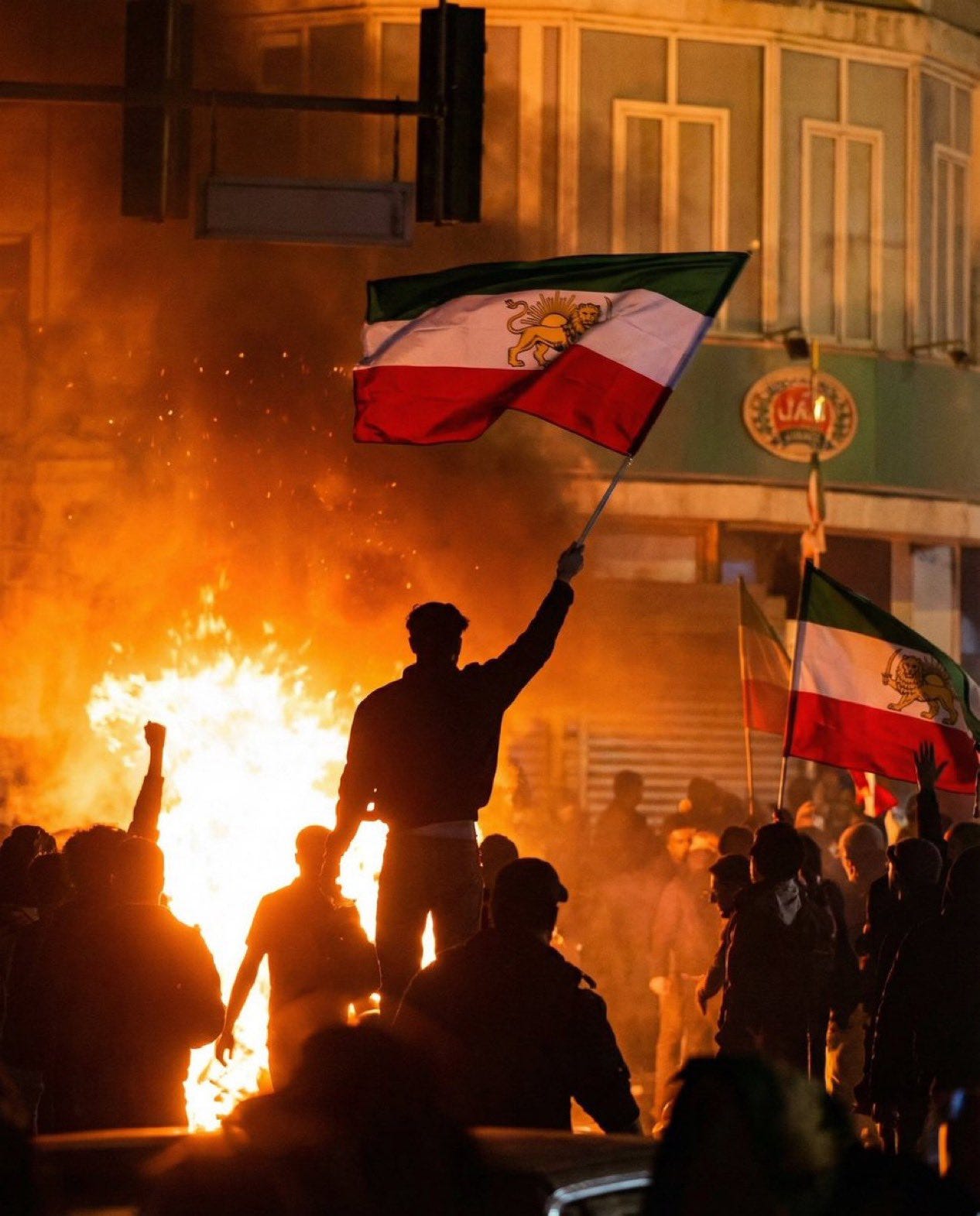
A week after a large nonviolent protest across Iran, exiled Crown Prince Reza Pahlavi asked citizens to hold demonstrations on Thursday and Friday, January 8 and 9, 2026. Millions of Iranians reportedly responded to him by chanting his name and came out across the country. It was a rare moment of collective civic action: people from diverse social, ethnic, and economic backgrounds were peacefully mobilized. They voiced their demands for political reform and the restoration of the monarchy.
Images and footage of these peaceful demonstrations circulated widely. This moment reflected a temporary reactivation of social trust and nonviolent collective action after decades of state-induced fear. That hope, however, was deliberately and violently extinguished.
Although citizen journalists broadcast early images of the demonstrations on X, the regime soon imposed a nationwide internet shutdown, severing communication channels and isolating the population. The regime, then initiated an unprecedented campaign of lethal force. Over the course of those two nights, reports indicate that the scale and intensity of violence escalated dramatically. Despite severe restrictions, fragmented footage emerged showing the bodies of children, and young people in public spaces, and at the Kahrizak Forensic Center in Tehran. Amnesty International
The extremity of these images first led some observers to question their authenticity or interpret them as a psychological strategy to instill fear. However, the scope of the violence became increasingly difficult to dismiss as international media outlets, human rights monitors, and independent investigators reported converging and alarming estimates. Credible preliminary figures indicate that casualty numbers may exceed 12,000 unarmed civilians killed by live ammunition within a matter of days. (CBSNews, IranInt)
The brutality of these images initially led some observers to suspect psychological warfare intended to terrorize the population. However, the scope of the violence became increasingly difficult to deny as international media outlets and independent sources, as well as other credible reports, indicate alarming figures: more than 12,000 unarmed civilians killed by live ammunition within two days.
Available evidence indicate that the Islamic Republic deployed the whole architecture of coercive power, including the Islamic Revolutionary Guard Corps (IRGC), the regular armed forces, and thousands of proxy militias such as Hashd al-Shaabi, reportedly brought in from Iraq. (NewsNation)This was neither crowd management nor proportional law enforcement. The pattern of violence — its scale, coordination, targeting of civilians, and suppression of information — meets widely recognized early-warning and legal indicators of crimes against humanity and mass atrocity crimes, including widespread or systematic attacks directed against a civilian population.
The social impact has been devastating. These days, it is increasingly rare to find a family in Iran that does not know at least one victim directly or indirectly. The gravity of the crime deepens further with emerging forensic evidence: among identified bodies, many showed signs of endotracheal tubes, EKG electrodes, and other hospital equipment, strongly suggesting that some victims were killed while receiving medical care. Such acts represent grave violations of international humanitarian law, medical neutrality, and fundamental human rights norms.
At present, the full scale of the violence remains unknown. Thousands are believed to be detained, communication infrastructures — including internet and landlines — remain disrupted, curfews are enforced, and information continues to be tightly controlled. Documentation efforts rely heavily on testimonies and footage coming out by those who leave the country, underscoring the urgency of evidence preservation and civilian protection.
Narrative Violence
Besides physical violence, a second and deeply corrosive harm has unfolded: systematic narrative violence. Over decades, state-aligned knowledge networks — spanning academia, policy advocacy, and media — have contributed to the normalization, minimization, or obfuscation of state repression. In time of crisis, this manifests as a recognizable pattern: the displacement of responsibility, the reframing of civilian deaths as geopolitical maneuvering, and the dilution of accountability through false equivalence. Such narratives do not merely misinform; they function as enabling conditions for impunity, undermining truth-seeking, justice, and the ethical foundations of peacebuilding.
A Call for Action
As a Rotary Peace fellow, I invite my peers, conflict analysts, human rights advocates, and peace-building institutions to name this violence accurately. History shows that silence or excessive caution in such moments does not prevent escalation; they normalize violence and enable recurrence. Unrecognized impunity not only denies justice to victims but also increases the likelihood of future cycles of violence, social fragmentation, and radicalization, undermining any prospect of sustainable peace.
The Islamic Republic, a dictatorial regime with a documented record of contributing to regional and global instability, has now demonstrated a qualitative escalation in internal repression. Yet even within its own violent trajectory, the scale and intensity of the January Massacre represent a qualitative escalation that demands urgent international attention.
I therefore urge peacebuilders, scholars, and civil society actors to:
o Publicly acknowledge and name the January 2026 events as a potential mass atrocity.
o Disseminate verified information and survivor-centered testimony, resisting unsubstantiated counter-narratives.
o Press policymakers and international institutions to activate accountability and monitoring mechanisms.
o Support independent, transparent, and impartial investigations and documentation initiatives.
o Apply comparative expertise from other atrocity contexts to evidence preservation and justice pathways.
o Center victims and survivors as primary stakeholders, rather than privileging ideological or geopolitical frames.
I believe, making peace without truth is performative. Neutrality in the face of organized slaughter is not impartiality; it is alignment with power and impunity. Sustainable peace cannot be built on denial, and reconciliation cannot begin without truth.
메타데이터
- post_id
- 67270df33e0d
- slug
- calling-for-accountability-truth-and-international-peace-action-in-response-to-the-january-2026-67270df33e0d
- url
- https://medium.com/@samira-farahani/calling-for-accountability-truth-and-international-peace-action-in-response-to-the-january-2026-67270df33e0d
- canonical_url
- https://medium.com/@samira-farahani/calling-for-accountability-truth-and-international-peace-action-in-response-to-the-january-2026-67270df33e0d
- author_url
- https://medium.com/@samira-farahani
- status
- ok
- fetched_at
- 2026-07-16 04:05:14