7 Warning Signs Your NYC Building Needs Masonry Repair Before It Gets Worse
New York City’s buildings are built to last, but they also face some of the harshest weather conditions in the country. Rain, snow…
7 Warning Signs Your NYC Building Needs Masonry Repair Before It Gets Worse
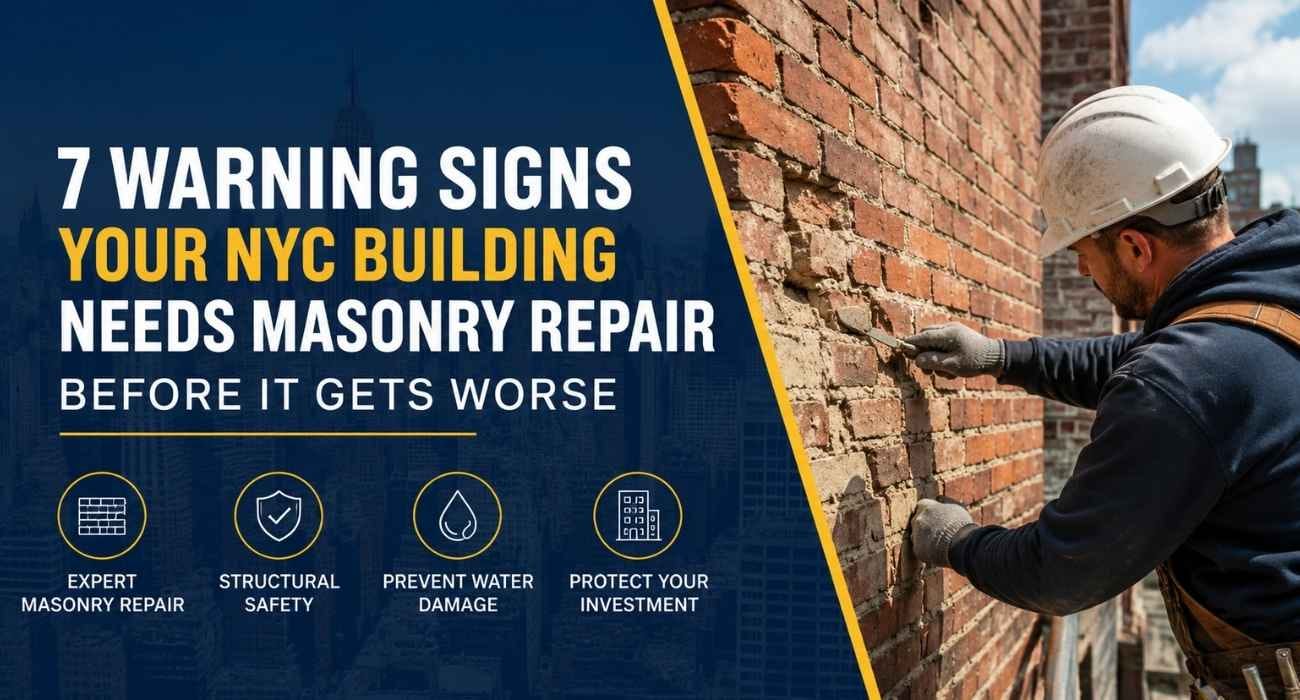
New York City’s buildings are built to last, but they also face some of the harshest weather conditions in the country. Rain, snow, freezing temperatures, heat, pollution, and constant moisture slowly wear down brick, stone, and mortar. Over time, even small signs of damage can turn into expensive structural problems if they are ignored.
Whether you own a brownstone, apartment building, commercial property, or office, recognizing the early warning signs of masonry deterioration can help you avoid costly repairs and keep your building safe.
Why Masonry Is Essential for Your Building
Masonry does more than improve a building’s appearance. It forms part of the structure, protects against the weather, improves energy efficiency, and helps maintain long-term property value.
When masonry begins to fail, water can penetrate the building envelope, leading to interior damage, mold growth, weakened walls, and expensive restoration work.
Regular inspections and timely repairs are the best way to protect your investment.
1. Cracked or Missing Mortar Joints
Mortar is the material that binds bricks and stones together. As it ages, exposure to weather and moisture causes it to weaken and deteriorate.
Signs of failing mortar include:
- Cracks between bricks
- Missing mortar joints
- Loose or crumbling mortar
- Gaps around brickwork
Damaged mortar allows water to enter the wall, increasing the risk of structural deterioration. Repointing or tuckpointing restores the joints and helps prevent further damage.
2. Cracked or Broken Bricks
Bricks are strong, but years of weather exposure and moisture can cause them to crack or break.
Common warning signs include:
- Vertical cracks
- Horizontal cracks
- Broken corners
- Chipped brick surfaces
If damaged bricks are left untreated, surrounding masonry can begin to deteriorate as well. Replacing individual bricks early helps preserve the wall’s strength and appearance.
3. White Powder on Brick Walls (Efflorescence)
A white, chalky residue on brick surfaces is known as efflorescence.
Although it may seem like a cosmetic issue, it indicates that moisture is moving through the masonry. As water evaporates, it leaves mineral salts behind on the surface.
If moisture continues to penetrate the wall, it can eventually damage mortar, bricks, insulation, and interior finishes.
4. Bulging or Leaning Walls
Brick walls should always remain straight and stable.
If you notice:
- Bulging brickwork
- Bowed walls
- Leaning sections
- Separation from nearby walls
it may indicate serious structural movement or prolonged water damage.
This type of problem should always be evaluated by an experienced masonry professional as soon as possible.
5. Spalling Bricks
Spalling occurs when the outer surface of a brick begins to peel, chip, or break away.
This usually happens when moisture enters the brick during wet weather and freezes in winter. As the ice expands, the brick surface gradually deteriorates.
Spalling not only affects the appearance of your building but also weakens the masonry system over time.
6. Water Leaks Around Masonry Walls
Many interior water leaks actually begin outside the building.
Warning signs include:
- Damp interior walls
- Water stains
- Mold growth
- Peeling paint
- Musty odors
These problems often indicate that damaged masonry or deteriorated mortar is allowing water to enter the building envelope.
Finding and repairing the source early can prevent significant structural damage.
7. Loose Bricks or Falling Masonry
Loose bricks are a serious safety concern.
Falling masonry can endanger pedestrians, tenants, employees, and neighboring properties.
In New York City, neglected exterior masonry may also result in violations or required repairs depending on the building’s condition.
Immediate repairs help restore structural stability while protecting everyone around the property.
What Causes Masonry Damage in NYC?
New York City’s climate creates constant stress on masonry buildings.
Some of the most common causes include:
- Freeze-thaw cycles
- Heavy rainfall and snow
- Water infiltration
- Poor drainage
- Building settlement
- Aging mortar
- Pollution and environmental exposure
- Lack of routine maintenance
Because these conditions occur year after year, even well-built structures eventually require masonry maintenance.
Why Regular Masonry Inspections Matter
Many masonry issues begin small and remain hidden until significant damage has already occurred.
Routine inspections can help:
- Identify cracks before they spread
- Detect moisture intrusion
- Prevent costly emergency repairs
- Improve building safety
- Extend the life of exterior walls
- Preserve property value
A professional inspection often costs far less than major structural restoration.
Common Masonry Repair Services
Professional masonry contractors provide a variety of repair solutions depending on the condition of the building.
Brick Replacement
Damaged bricks are carefully removed and replaced to restore structural strength and appearance.
Tuckpointing and Repointing
Old, deteriorated mortar is removed and replaced with new mortar to strengthen the wall and improve weather resistance.
Crack Repair
Small cracks are repaired before they expand into larger structural problems.
Lintel Repair
Rusting steel lintels above windows and doors can create cracks in surrounding brickwork. Repairing or replacing lintels helps maintain structural support.
Chimney Masonry Repair
Weather exposure gradually weakens chimney brickwork. Timely repairs improve both safety and longevity.
Parapet Wall Repair
Parapet walls receive constant exposure to wind, rain, and snow. Repairing damaged brickwork, flashing, and coping stones helps prevent water infiltration.
Masonry Repair vs. Masonry Restoration
Although these terms are often used interchangeably, they describe different types of work.
Masonry repair addresses isolated problems such as cracked mortar, damaged bricks, or small structural issues.
Masonry restoration is a more extensive process that restores larger sections of a building affected by significant deterioration. Restoration may include rebuilding walls, replacing large areas of brick, repairing structural elements, and preserving historic architectural features.
The right solution depends on the building’s condition and the extent of the damage.
Tips to Maintain Your Building’s Masonry
Preventive maintenance is one of the most effective ways to extend the life of your building.
Property owners should:
- Inspect exterior walls every year.
- Repair cracked mortar promptly.
- Keep gutters and downspouts clean.
- Ensure proper drainage around the building.
- Remove vegetation growing on brick walls.
- Address water leaks immediately.
- Schedule professional inspections after severe storms or harsh winters.
Small maintenance projects today can prevent major restoration work tomorrow.
Frequently Asked Questions
How do I know if my building needs masonry repair?
Look for cracked mortar, damaged bricks, white staining, water leaks, bulging walls, or loose masonry.
What is tuckpointing?
Tuckpointing is the process of removing deteriorated mortar and replacing it with fresh mortar to restore the strength and appearance of brickwork.
Can cracked bricks be repaired?
Minor cracks may sometimes be repaired, but severely damaged bricks are typically replaced to maintain structural integrity.
How often should masonry be inspected?
Most buildings benefit from a professional masonry inspection every one to two years, especially after severe weather.
Is masonry repair expensive?
Repair costs depend on the severity of the damage. Addressing problems early is almost always more affordable than waiting until major restoration becomes necessary.
When Should You Call a Masonry Contractor?
Contact a professional if you notice:
- Cracked or missing mortar
- Loose or falling bricks
- Bulging walls
- Water leaks through brickwork
- Spalling bricks
- Large exterior cracks
- Signs of structural movement
Prompt repairs help protect your building, improve safety, and reduce long-term maintenance costs.
Final Thoughts
Masonry damage rarely fixes itself. Small cracks, deteriorating mortar, or loose bricks may seem minor today, but they can quickly lead to water intrusion, structural deterioration, and expensive repairs if left unattended.
Regular inspections and timely maintenance are the best ways to preserve the strength, appearance, and value of your property.
If your building is showing signs of masonry deterioration, professional guidance can make all the difference. Learn more about **NuEra Contractors NYC and explore our [Masonry Contractor NYC](https://nueranyc.com/masonry-services/)** services to keep your building safe, durable, and ready for years of reliable performance.
메타데이터
- post_id
- 6800c3fe8a0e
- slug
- 7-warning-signs-your-nyc-building-needs-masonry-repair-before-it-gets-worse-6800c3fe8a0e
- url
- https://medium.com/@social.media31514/7-warning-signs-your-nyc-building-needs-masonry-repair-before-it-gets-worse-6800c3fe8a0e
- canonical_url
- https://medium.com/@social.media31514/7-warning-signs-your-nyc-building-needs-masonry-repair-before-it-gets-worse-6800c3fe8a0e
- author_url
- https://medium.com/@social.media31514
- status
- ok
- fetched_at
- 2026-08-03 08:42:30