The Blueprint for Intelligent Audit Automation in Legacy Systems
You Don’t Replace Legacy Systems. You Outgrow Their Limits
The Blueprint for Intelligent Audit Automation in Legacy Systems
You Don’t Replace Legacy Systems. You Outgrow Their Limits
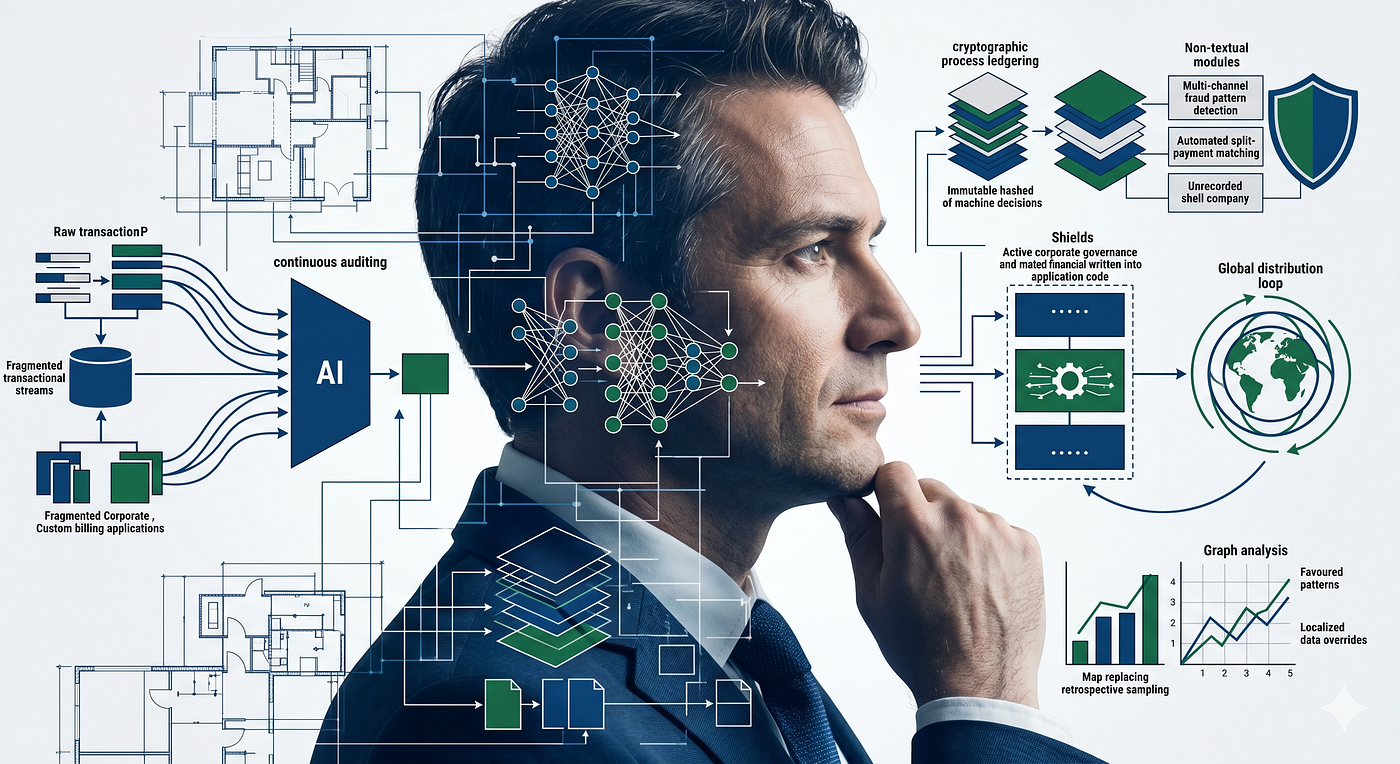
Intelligent audit automation doesn’t require tearing down legacy systems; it works by embedding adaptive audit logic directly into existing workflows, extending their visibility without disrupting operations.
It creates a continuous audit layer through structured data ingestion, real-time validation, and integrated control signals, allowing organizations to monitor activity without waiting for periodic review cycles.
I’ve watched teams delay automation for years because they assumed it meant rebuilding everything. It rarely does. Legacy systems aren’t the real constraint. The constraint is how rigidly they’re treated.
There’s a difference between replacing infrastructure and rethinking how it behaves.
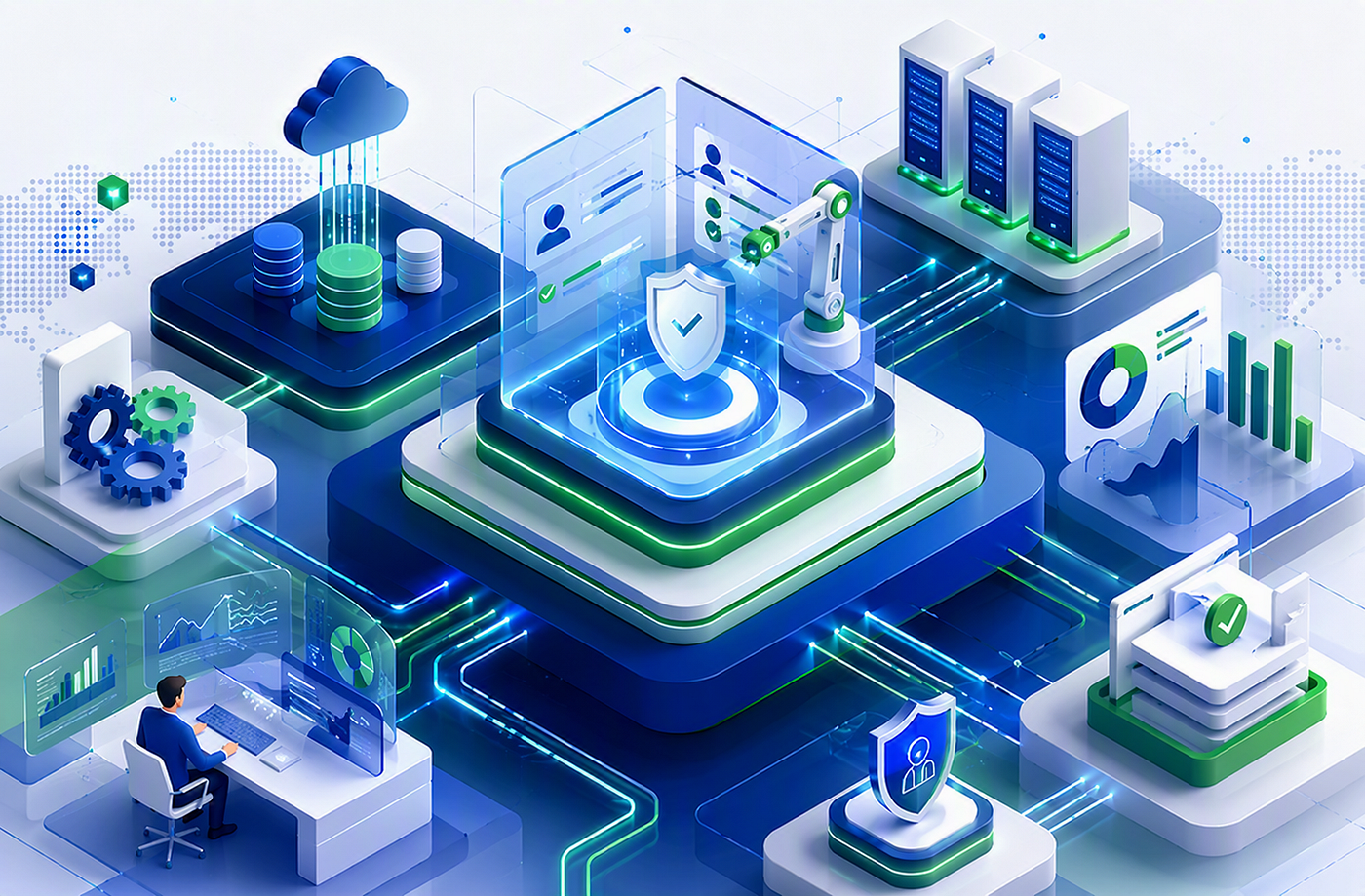
Intelligent Audit Automation
The Uncomfortable Truth About Legacy Workflows
Legacy workflows don’t usually break. They drift.
Processes accumulate exceptions. Integrations multiply. Data moves between systems in ways that were never originally planned. Over time, control points become scattered across layers that don’t align with each other.
That’s where audit complexity shows up.
Not as a single failure, but as friction. Delays in validation. Incomplete views of activity. Reconciliation cycles that take longer than they should.
I remember reviewing a workflow where the audit team had access to five different systems to verify a single process. Each system told part of the story. None told the full sequence.
That isn’t unusual. It’s common.
Automation Doesn’t Start With Code. It Starts With Flow
There’s a tendency to approach intelligent audit automation as a technical deployment. Tools, scripts, platforms.
That approach skips the most important step.
Before anything is automated, workflows need to be mapped clearly. Where data enters. Where decisions are made. Where controls are applied.
Without that clarity, automation simply replicates confusion faster.
A strong automation framework begins by identifying:
- Where delays occur between activity and validation
- Where data moves without consistent tracking
- Where decision points lack supporting evidence
These friction points define where automation should be applied.
API Data Ingestion Changes the Timing of Audit
One of the biggest shifts comes from API data ingestion.
Traditional audit systems rely on data extracts. Reports generated after transactions are complete. That creates a natural delay.
API-driven ingestion changes that timing. Data is captured at the point of activity. Not after settlement. Not at the end of the day.
This reduces the lag between execution and validation.
Instead of asking “what happened,” systems begin asking “what is happening.”
That small wording shift reflects a larger operational change.
Real-time visibility introduces new expectations. Issues are caught earlier. Responses happen faster. Audit becomes part of the flow, not a separate layer.
Integration Is Where Most Efforts Stall
Every organization talks about integration. Few realize how messy it gets.
System integration in legacy environments means dealing with variations. Different data structures, conflicting timestamps, duplicated records.
Integration isn’t just about connecting systems. It’s about aligning them.
I’ve seen projects stall because teams focused on connectivity instead of consistency. Data moved between systems, but it didn’t align. Outputs looked inconsistent. Confidence dropped.
Strong integration frameworks address:
- Standardization of key identifiers across systems
- Synchronization of time-based events
- Mapping of equivalent data fields with different formats
Without this alignment, automation produces fragmented outputs.
Secure Cloud Deployment Isn’t Just About Infrastructure
The conversation around secure cloud deployment often stays technical. Hosting environments, access controls, encryption layers.
That’s only part of it.
Cloud platforms change how audit systems scale and adapt. They allow continuous processing of data streams, flexible computation layers, and dynamic control execution.
But the real value appears in how systems respond to change.
When workflows adjust, cloud-based models can adapt quickly. New control logic can be applied without disrupting operations. Data models can be refined continuously.
This flexibility is what legacy systems struggle to offer on their own.
The Hidden Work Happens in the Data Layer
Automation frameworks are only as strong as the data they operate on.
Legacy environments rarely have clean data structures. Fields are inconsistent. Formats vary. Historical data carries anomalies.
I’ve seen automation projects that technically worked but produced unreliable insights because data alignment wasn’t addressed first.
Data preparation becomes the invisible workload behind automation.
Consistency at this layer determines whether outputs are trusted or questioned.
It also impacts scalability. As data volumes grow, inconsistencies multiply. Addressing them early prevents future complexity.
Modern IT Stack Isn’t a Replacement. It’s a Connector
There’s a misconception that adopting a modern IT stack means replacing existing systems.
That approach is rarely practical.
Modern stacks act as connectors. They sit alongside legacy systems, extracting, processing, and analyzing data without interfering with core operations.
This layered approach allows organizations to evolve gradually.
Instead of waiting for a full system overhaul, they enhance capabilities in parallel.
That parallel structure reduces risk. It also delivers value earlier.
The Role of Audit Teams Changes Quietly
Automation shifts responsibilities.
Audit teams stop spending time gathering data from multiple systems. The data arrives structured, connected, and ready for analysis.
The focus moves to interpretation.
What does this pattern mean? Why is this deviation appearing? Should this trigger action?
This shift demands a different skill set.
Analytical thinking increases in importance. Context becomes critical. Understanding system behavior takes precedence over documentation gathering.
That transition doesn’t always feel smooth. It requires adaptation.
Resistance Shows Up in Subtle Ways
People don’t always resist automation directly. Resistance appears in smaller actions.
Questions about reliability. Preference for manual validation. Hesitation to rely on automated signals.
These reactions are often tied to trust.
Building trust requires transparency.
Automation systems need to explain themselves. Why was this flagged? What data supported the decision? How was the conclusion reached?
Without this clarity, adoption remains partial.
Continuous Monitoring Feels Different Than Periodic Review
There’s a psychological shift that happens when audit moves from periodic to continuous.
In periodic models, teams prepare for review cycles. Work builds toward checkpoints.
Continuous models remove that rhythm.
Activity is monitored constantly. Signals appear in real time. Issues don’t wait for scheduled reviews.
This requires a different operating mindset.
Instead of planning around cycles, teams respond dynamically.
That change can feel unsettling initially. Over time, it becomes normal.
A Small Detail That Exposed a Larger Gap
I remember a case where a minor timestamp discrepancy appeared between two systems. The difference was small. A few seconds.
It didn’t seem important.
When analyzed across multiple transactions, the discrepancy created a pattern. Events appeared out of sequence. Control checks were applied after actions instead of before.
The issue wasn’t the timestamp itself. It was the misalignment it caused.
Fixing that alignment corrected multiple downstream inconsistencies.
That’s the kind of detail automation surfaces.
Governance Has to Evolve Alongside Automation
Automation doesn’t remove governance requirements. It increases them.
Systems need to be monitored continuously. Control logic must be validated. Updates must be tracked carefully.
Oversight shifts from manual review to system monitoring.
That requires:
- Clear ownership of automated controls
- Defined validation processes for system changes
- Ongoing review of model performance
Without governance, automation creates blind reliance.
With governance, it creates controlled efficiency.
The Trade-Off Doesn’t Disappear
Embedding intelligent automation into legacy workflows introduces complexity.
More data flows through systems. Dependencies increase. Integration points expand.
These changes create new risks.
System failures can have wider impact. Data inconsistencies propagate faster. Control logic errors affect multiple processes simultaneously.
Managing these risks requires attention.
Automation doesn’t eliminate risk. It redistributes it.
What Actually Changes Over Time
The shift toward intelligent audit automation doesn’t happen as a single event.
It builds gradually.
One workflow becomes automated. Then another. Data connections improve. Integration layers stabilize.
Over time, a different structure emerges.
Audit stops feeling like an external function. It becomes embedded within operations.
Decisions are supported by continuous signals rather than retrospective analysis.
And the most noticeable change is this.
Teams no longer ask where the data is coming from.
They focus on what it means and what to do next.
Also Read: Why Enterprises Are Adopting Continuous Data‑Driven Auditing
메타데이터
- post_id
- 686130d95617
- slug
- the-blueprint-for-intelligent-audit-automation-in-legacy-systems-686130d95617
- url
- https://medium.com/@sneha.patil2703/the-blueprint-for-intelligent-audit-automation-in-legacy-systems-686130d95617
- canonical_url
- https://medium.com/@sneha.patil2703/the-blueprint-for-intelligent-audit-automation-in-legacy-systems-686130d95617
- author_url
- https://medium.com/@sneha.patil2703
- status
- ok
- fetched_at
- 2026-07-16 05:02:48