The Strange Case of Daisy Grace: Love, Insurance, and a Locked Bedroom
In the spring of 1912, Atlanta society was shaken by one of the most sensational scandals in the city’s history. Daisy Ulrich Opie Grace —…
The Strange Case of Daisy Grace: Love, Insurance, and a Locked Bedroom
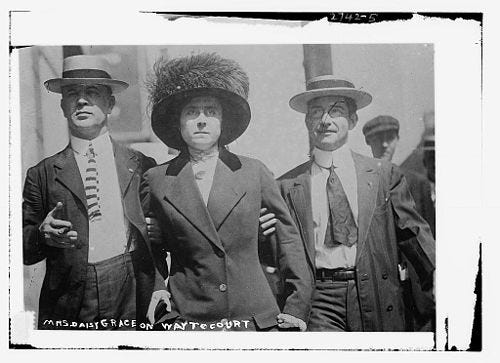
In the spring of 1912, Atlanta society was shaken by one of the most sensational scandals in the city’s history. Daisy Ulrich Opie Grace — a handsome, 32-year-old woman with a striking presence — was accused of trying to murder her husband, wealthy contractor Eugene H. Grace, only months after their wedding.
The charge was as lurid as it was divisive: that Daisy drugged her husband, shot him, and left him to die in their locked bedroom — all to profit from his life insurance policies.
The Morning of the Shooting
Eugene Grace was discovered in his bedroom with a gunshot wound to the side, still alive but in agony. The scene raised immediate suspicions: the room was locked, the telephone stuffed with cotton, and a .32-caliber revolver with one spent cartridge lay abandoned on a windowsill.
When police reached him, Eugene pointed directly at his wife. “Daisy, you are the one who shot me,” he told her in the hospital, his voice trembling under the weight of pain.
Daisy denied it instantly. She claimed she had left the house earlier that morning for a trip to Newnan, expecting Eugene to join her later. She insisted her husband must have been attacked by an intruder — blaming the shooting on a “negro” assailant, as the language of the day recorded.
A Wife Under Suspicion
The testimony of the family’s servants complicated Daisy’s story. One maid recalled being asked by Daisy to light a fire in the bedroom, where she overheard the injured Eugene groaning. Daisy dismissed his pain, telling him, “You are not sick, Gene. You are only sleeping.”
A butler testified that Daisy mentioned Eugene had wanted a doctor, but then changed his mind. Yet Eugene himself told police he had begged his wife to summon help — and she had left him suffering.
To prosecutors, these details suggested a deliberate plot: Daisy had drugged Eugene, shot him, locked the room, and tampered with the telephone to prevent rescue. Then she left the house, carefully arranging her alibi.
The Motive: Money and Control
Reuben Arnold, one of Atlanta’s most prominent attorneys, laid out the prosecution’s theory: Daisy stood to gain $30,000 (about $1 million today) in insurance. Eugene, meanwhile, had recently begun legal action to reclaim those policies from his wife’s control.
At his bedside, Eugene rewrote his will, leaving everything to his mother and cutting Daisy out completely.
The scene was set for a courtroom battle that captured headlines across the nation.
Daisy’s Defense
Daisy insisted she loved her husband “nearer than life itself” and painted a picture of domestic bliss shattered by misunderstanding. Her defense leaned on her character, her appearance, and her composure. When released on bail, she returned briefly to her home — rearranging furniture and lamenting the “vandals” who had torn things apart.
Her past added another layer: she had been widowed once before when her first husband, William Opie, a pulp manufacturer in Philadelphia, died suddenly of blood poisoning. Whispers of bad luck — or worse — clung to her name.
There was also the tragic image of her blind son, brought from his asylum to greet her during her ordeal. The child’s cry of “It’s mummy!” softened public opinion, casting Daisy as a mother as well as an accused femme fatale.
The Verdict
The trial mesmerized Atlanta. Reporters painted Daisy alternately as a calculating would-be murderess and as a wronged woman accused by a dying husband’s delirium.
In the end, the jury found her not guilty. Daisy Grace walked free.
Eugene Grace lingered for months, paralyzed and suffering, before his death. His last words to police — “Daisy shot me” — were never enough to convict her.
Legacy of a Mystery
The Daisy Grace affair remains one of Atlanta’s strangest and most debated criminal cases. Did she truly attempt to kill her husband for money and independence? Or was she the victim of circumstance, accused by a man slipping in and out of consciousness, desperate to explain his own inexplicable injury?
The answer lies buried in the contradictions: a locked room, a silenced telephone, a fading voice pointing blame, and a woman who left the courtroom smiling, her reputation forever marked by suspicion.
Closing Reflection: The Grace case still fascinates because it sits at the intersection of wealth, gender, and power in the early 20th century. Daisy became a symbol — of ambition, of scandal, of the dangerous allure of independence in an age when women’s roles were tightly policed. Whether guilty or innocent, she ensured her name would be remembered, not for her beauty or social standing, but for a crime that may or may not have been hers.
메타데이터
- post_id
- 686264c1efcf
- slug
- the-strange-case-of-daisy-grace-love-insurance-and-a-locked-bedroom-686264c1efcf
- url
- https://medium.com/@Velvetledger01/the-strange-case-of-daisy-grace-love-insurance-and-a-locked-bedroom-686264c1efcf
- canonical_url
- https://medium.com/@Velvetledger01/the-strange-case-of-daisy-grace-love-insurance-and-a-locked-bedroom-686264c1efcf
- author_url
- https://medium.com/@Velvetledger01
- status
- ok
- fetched_at
- 2026-08-06 23:40:16


