Damian McCarthy’s ‘Hokum’ and the Art of a Scare [Review & Analysis]
Damian McCarthy’s ‘Hokum’ serves as a reminder of a time when overused horror tropes were actually frightening.
‘Hokum’ and the Art of a Scare [Review & Analysis]
Damian McCarthy’s ‘Hokum’ serves as a reminder of a time when overused horror tropes were actually frightening.
Hokum (2026), Neon
As a kid, my family took a trip to Busch Gardens, where I squeezed my eyes shut and cried my way through a rollercoaster called Verbolten.
I had (and, embarrassingly, kind of still have) a deep fear of indoor rollercoasters and was tricked into believing Verbolten was solely outside, given that the final bit of track was out in the sunshine well-within my field of view before getting in line. Of course, anyone who has been on that ride would know that most of it is spent indoors, in a dark, blacklit magical forest setting that made up most of my nightmares for the better part of the month.
I had never experienced the same amount of betrayal-turned-fear, closing my eyes and physically willing something to end since then, until I saw Damian McCarthy’s Hokum.
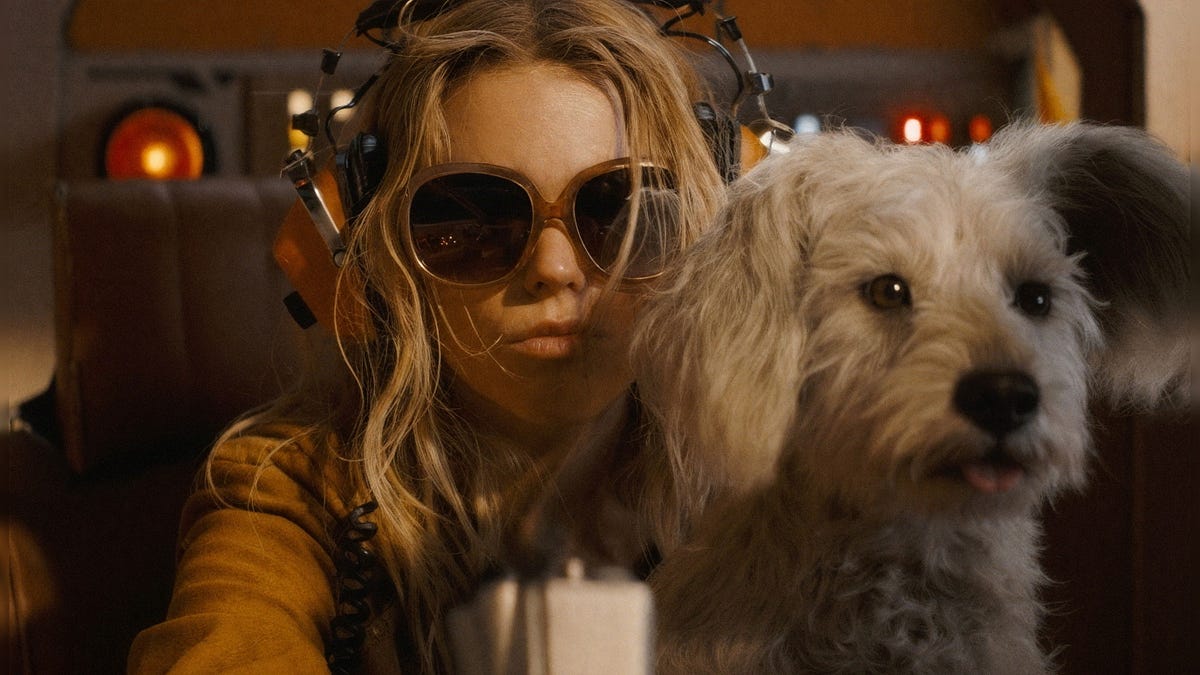
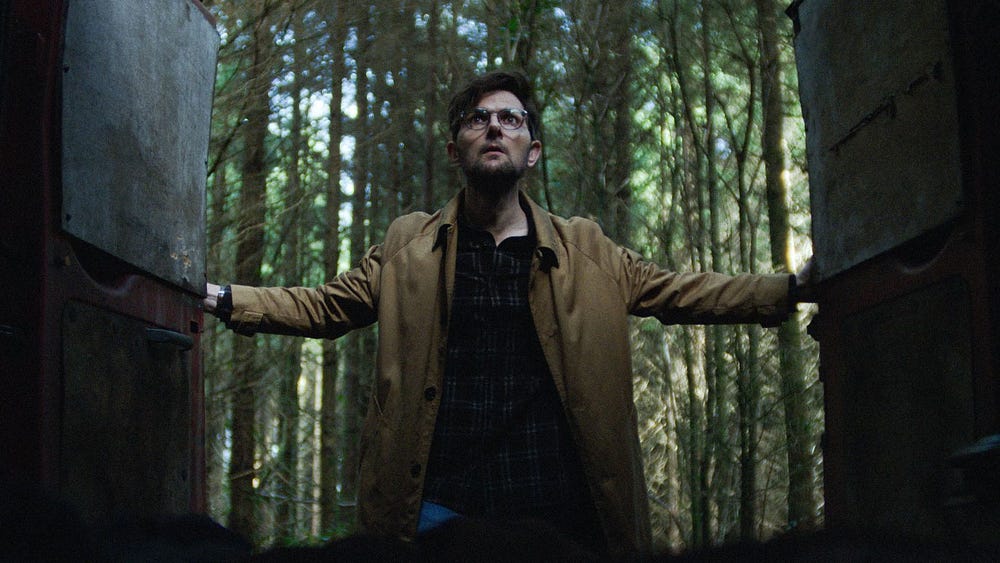
Hokum follows successful author, Ohm Bauman (Adam Scott), as he ventures to Ireland to visit his parents’ honeymoon hotel in the hopes of tying up two chapters of his life: first, spreading his parents’ ashes in one of the last places he can remember them happy, and, next, finishing off his Conquistador series with what seems to be an incredibly bleak epilogue.
Ohm is, frankly, awful to be around, cruel to strangers and fans in equal measure, aloof and altogether unlikeable to anyone who isn’t giving him something strong to drink.
After some unexpected circumstances leave him indebted to Fiona (Florence Ordesh), a member of the hotel staff, he returns to find that she has gone missing. He decides to try and find her despite the defeatist resignation of the other employees, planning to search the one room that everyone else has ignored: the Honeymoon suite, which is said to be haunted by a witch, per Fiona’s book of folklore.
What is most impressive about Hokum is that it succeeds so spectacularly despite sticking firm to old-school horror tropes and tricks.
It was hard to put a finger on what was so frightening about it once the film was over since it, for the most part, had followed along with my expectations. Jumpscares, for one, happened when I thought they would. The hotel room where Ohm spends most of the film stuck is exactly what you’d imagine it would look like: all cool light and ominous shadows and old-styled decor, a bed with a dirtied white curtain canopy. Once you get past a few initial surprises, even the story follows fairly traditional plot beats.
However, there is just something about McCarthy’s ability to craft and shoot a terrifying image that makes all of it land with so much more power than otherwise anticipated.

Hokum (2026), Neon
Jumpscares, for instance, are integral to the fabric of Hokum. The movie starts out with a typical fake-out jumpscare, where a threat appears mitigated only to pop up a moment later, typically behind the protagonist. In *The Exorcist III*, for example, you get relief from the tension with a cup of ice, only to be jumpscared by a patient popping up from the background. A room investigated seems all clear until you walk away from it.
Hokum also employs the tropey false-awakening jumpscare — where a character believes they have “woken up” from a dream or flashback only to be jumpscared before truly waking up (as exemplified in *An American Werewolf in London) — to great effect. Outside of the realm of cinematic jumpscares, it even, at times, takes inspiration from classic Internet screamers, sticking a horrifying, zoomed-in face on the screen right in the middle of a scene just like The Exorcist’s Linda Blair in [Scary Maze Game](https://en.wikipedia.org/wiki/Scary_Maze_Game)* decades ago.
Throughout the beginning of Hokum, these scares feel slightly corny or contrived, what with how random they seem — happening to characters we barely know in places where we won’t spend long — but they set the tone for what the rest of the film will use to terrify the audience through Ohm’s long night of dread.
If you have a lot of experience with horror, moments like these tend to be very predictable. A character will walk a few steps into a certain area of the frame (like the bus scene in *Final Destination), and you, as a seasoned viewer, will suddenly know that their untimely demise is but moments away. But at least in my case, seeing Hokum*’s scares coming did nothing to dull the horrible nerves and adrenaline rush with each manufactured startle.
What makes it so effective despite, on paper, appearing to be very by-the-book, is the imagery itself and how wrapped up in context it is.
When we’re jumpscared with a ghost over Ohm’s shoulder the first time we see him, it becomes clear that even though he’s not yet left for a night in a haunted hotel or picked up some cursed object, there is something haunting him. The film takes advantage of your desire for context and information to force your focused attention on the scare.
If nothing else, McCarthy is an expert at horrifying imagery. His name will inevitably stir up images of Oddity’s horrible wooden doll, or the off-putting, human-eyed rabbit toy from Caveat, and he only adds to his collection of eerie eccentricities here. These dolls and figures that are not-quite alive but also not-quite inanimate become central fixtures of his films, necessitating attention from the audience, whether you feel brave enough to look at them or not.
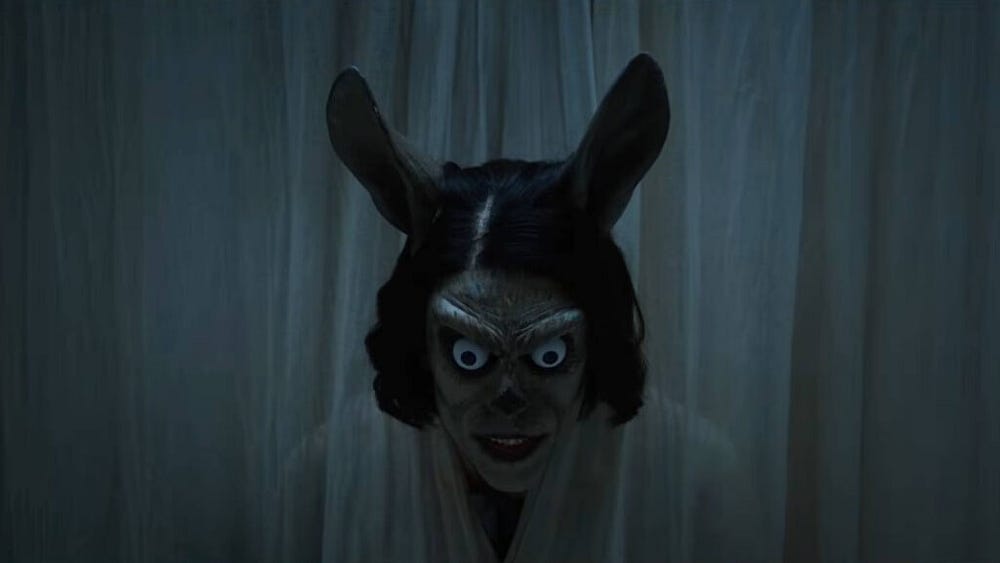
In Hokum, backstory is delivered through a humanoid creature with huge eyes and rabbit-like face paint and ears poking its head through a canopy, a violation of the world as we know it through both its uncanny appearance and its intrusion on a space of privacy and comfort.
With slow sweeping cinematography that follows Ohm’s gaze as it lays out the cramped setting, the audience is forced to sharpen their eyes and peer into darkness to make sense of the bunny-suit clad corpse Ohm has discovered (an equal but opposite approach to The Ring’s famous jumpscare) or spot the figure at the end of a vast, shadowy tunnel to even understand what it is at first. There is no option to turn away and close your eyes because to do so would be to miss the story.
Even if you did close your eyes, there wouldn’t be much relief. Made up of a near-constant wailing drenched in deep despair not unlike walking through Hell, the score works hand in hand with the visuals and editing to maintain the film’s grip on your throat, refusing to let up; when there’s silence, there’s the dread of another scare, and when there’s music, well, that’s enough to terrify all on its own.
I immediately looked up the composer when I left and was pleasantly surprised to find it was Joseph Bishara, who had previously composed the score for James Wan’s Malignant (a merge of synth and strings that I used to listen to while walking to add some thrill to my day), as well as entries in both the Insidious and Conjuring franchises.
Hokum (2026), Neon
Together, these three factors — the forced attention, where a jumpscare serves as plot progression in the same way a song in a musical drives story rather than being a random pit stop on the way; the imagery itself, playing on the uncanny valley and our evolutionary fear of corpses and “almost-humans” (beyond the simple distortion of facial features you can find in Smile); and the ghastly score, pressing the viewer into a near-constant state of dread and anxiety — come together to remind you why the jumpscare was scary enough to become a genre trope in the first place.
The whole film is drenched in trope: Ohm investigates strange noises and calls out, “hello?”, to whoever (or whatever) it was that made them. He trusts peculiar strangers. He wanders into creepy places and insists that he just must go to the off-limits, haunted areas of his hotel. When he does make a move to protect himself, he does so with a pronounced lack of urgency.
These are all tropes that would usually make me roll my eyes at a movie, but here, they work. Through a deep understanding of what makes a scare effective, McCarthy makes it feel like you’re seeing all of these things for the first time.
Hokum and many of McCarthy’s other projects are loaded with monsters that fill the screens and stick in heads (and nightmares) long after each film is over. They exist in surreal worlds with the supernatural and fantastic so baked into reality that questioning their existence and the logic that defines them seems more absurd than just accepting it.
While these worlds would be fascinating entirely on their own, what I love most about Hokum is that — in a universe of witches and ghosts and creatures and dolls — the biggest threat always seems to be the evil of man.
A witch is frightening, sure, with the way her body contorts, her shrill laugh and the swift ease with which she can chase after you even while you’re running for your life, her eyes, her teeth, but she’s limited to the magical rules that bind her; a line of chalk on the ground is more than enough to keep her at bay.
Hokum (2026), Neon
To McCarthy, what is more frightening is an entitled man wronged, desperate to maintain his illusion of a perfect life, or a household with an improperly stored gun, loaded and ready to fall into the wrong hands.
It makes for an experience that is somehow both grounded and fantastical, toeing a line between absurd and viscerally terrifying so easily that you forget all the other films that have fallen on their face in an attempt to do the same thing. Nonsensical horror protagonist stupidity is grounded in real human emotion; a pounding score is just as scary as silence; a witch isn’t as impending a threat as a slammed car door; and, most importantly, there really is a monster in the Honeymoon suite, but what’s more frightening is what the man who locked you in there will do to keep you from getting out.
Hokum reminded me of watching my first scary movie before I was someone who knew the tropes better than the back of my hand, or slipping into darkness on the rollercoaster I expected to remain in the light of day.
By and large, to watch Hokum is to fall in love with horror all over again, tropes, jumpscares, classic monsters, quintessential story beats, and all.
메타데이터
- post_id
- 686348673c8b
- slug
- damian-mccarthys-hokum-and-the-art-of-a-scare-review-analysis-686348673c8b
- url
- https://medium.com/@gretapw/damian-mccarthys-hokum-and-the-art-of-a-scare-review-analysis-686348673c8b
- canonical_url
- https://medium.com/@gretapw/damian-mccarthys-hokum-and-the-art-of-a-scare-review-analysis-686348673c8b
- author_url
- https://medium.com/@gretapw
- status
- ok
- fetched_at
- 2026-06-24 04:09:36