Why missions are better than passive ads
For a long time, the internet treated advertising as something people mostly had to receive. A person opened a feed, watched a video…
Why missions are better than passive ads
For a long time, the internet treated advertising as something people mostly had to receive. A person opened a feed, watched a video, searched for something, read an article, or used a platform, and ads appeared around that experience. The user’s role was often passive: see the message, maybe click, maybe ignore it, maybe remember it, maybe forget it. The brand paid for access to attention, and the platform controlled the relationship between the brand and the person.
That model built a huge part of the internet. But it also created a weak relationship between people and brands.
Because passive ads do not always mean real interest.
A person can see an ad without caring. A person can click without meaning much. A person can watch without remembering. A person can be counted without being truly engaged.
This is why missions are interesting.
A mission is different from a passive ad. It asks for participation. It gives the person a reason to act. It turns attention into something more active, more intentional, and more measurable. Instead of simply showing a message to someone, a mission asks: are you willing to explore, learn, try, complete, and prove real interest?
That is a much stronger signal.
Passive ads measure exposure
The old advertising model was built around exposure.
How many people saw it? How many impressions did it get? How many clicks happened? How much reach did it generate?
These numbers can be useful, but they are limited. They often show that something appeared in front of people, not that people cared deeply about it.
Exposure is not the same as interest. A view is not the same as understanding. A click is not the same as commitment. A passive impression is not the same as real participation.
That is the weakness of passive ads.
They are easy to count, but harder to trust.
A brand may know that a message was delivered, but it may still not know whether the person actually paid attention, understood the value, explored the product, or had any meaningful interest at all.
Missions create a different kind of signal.
They do not only ask whether someone was exposed to a brand. They ask whether someone took a real action.
Missions create participation
A mission changes the relationship.
The person is no longer only an audience member. They become a participant.
They may explore a brand. They may complete a task. They may learn something. They may test a product. They may answer a question. They may show interest through action.
That matters because action says more than exposure.
If someone chooses to complete a mission, that signal is stronger than simply being shown an ad. It shows that the person did not just pass by the brand. They gave time, attention, and effort.
That effort has value.
And if that value helps the brand, it should also create value for the person.
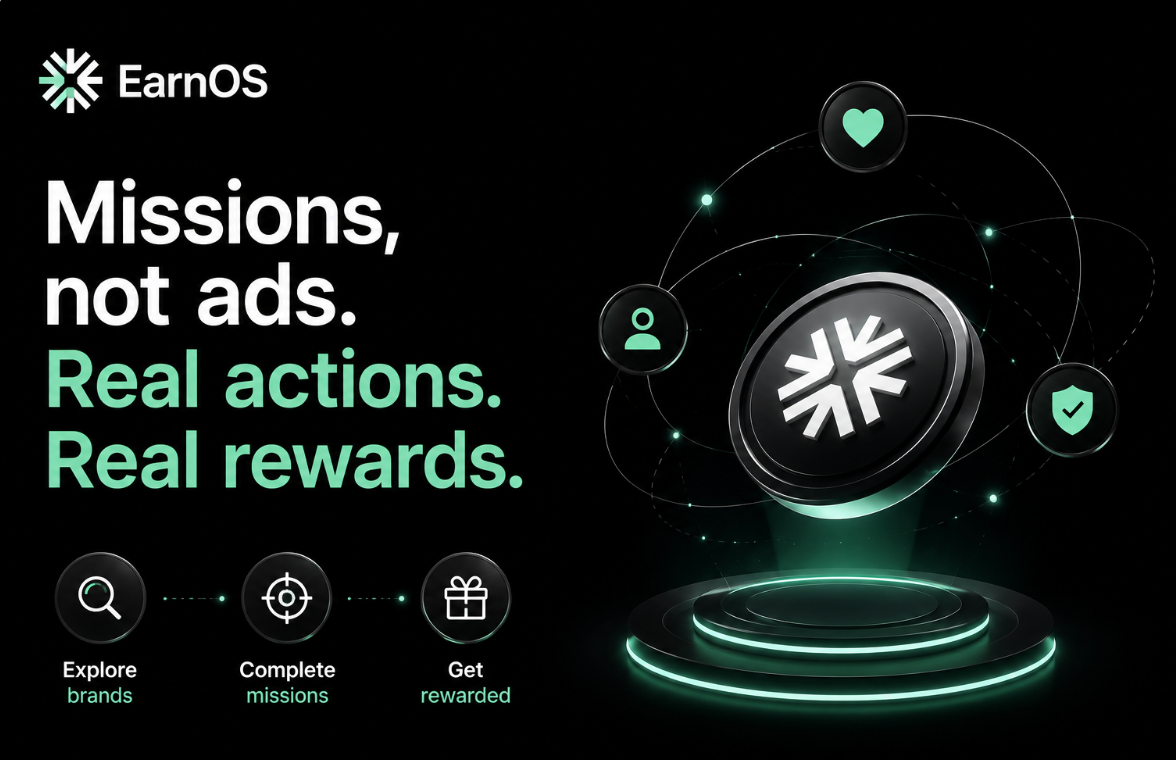
This is why the EarnOS loop is powerful:
Explore brands you love. Complete missions. Get rewarded.
It is simple, but the logic behind it is important. It moves the internet from passive attention toward rewarded participation.
Why this is better for users
For users, missions are better because they give people a more active role in the value chain.
In the old model, people gave attention and platforms monetized it. The user often received little direct value from the attention they created. They were measured, targeted, retargeted, and optimized around, but not always rewarded.
Missions change that.
They say: if your time and attention create value, you should not be invisible in that process.
That does not mean every action online should be rewarded. It means that when a person intentionally participates in a brand experience, completes a task, and creates a useful signal, the value should not flow only to the platform or advertiser.
Some of it should return to the person.
That is a healthier model.
It respects time. It respects attention. It respects participation. It treats the user less like inventory and more like an active participant.
Why this is better for brands
For brands, missions can also be much better than passive ads.
Brands do not really want empty reach. They want real interest. They want people who are willing to learn, explore, try, compare, understand, and act.
A passive ad can show a brand to someone.
A mission can show whether someone is willing to engage with it.
That is a stronger relationship.
Instead of paying only for exposure, a brand can create a structured moment of participation. It can invite people into a clearer action. It can learn who is actually interested, who is willing to spend time, and who is more than just a passive viewer.
That can make the signal cleaner.
Not perfect. But better.
Because a completed mission says more than a silent impression.
It shows intention. It shows effort. It shows that the person moved from seeing to doing.
Why verification matters
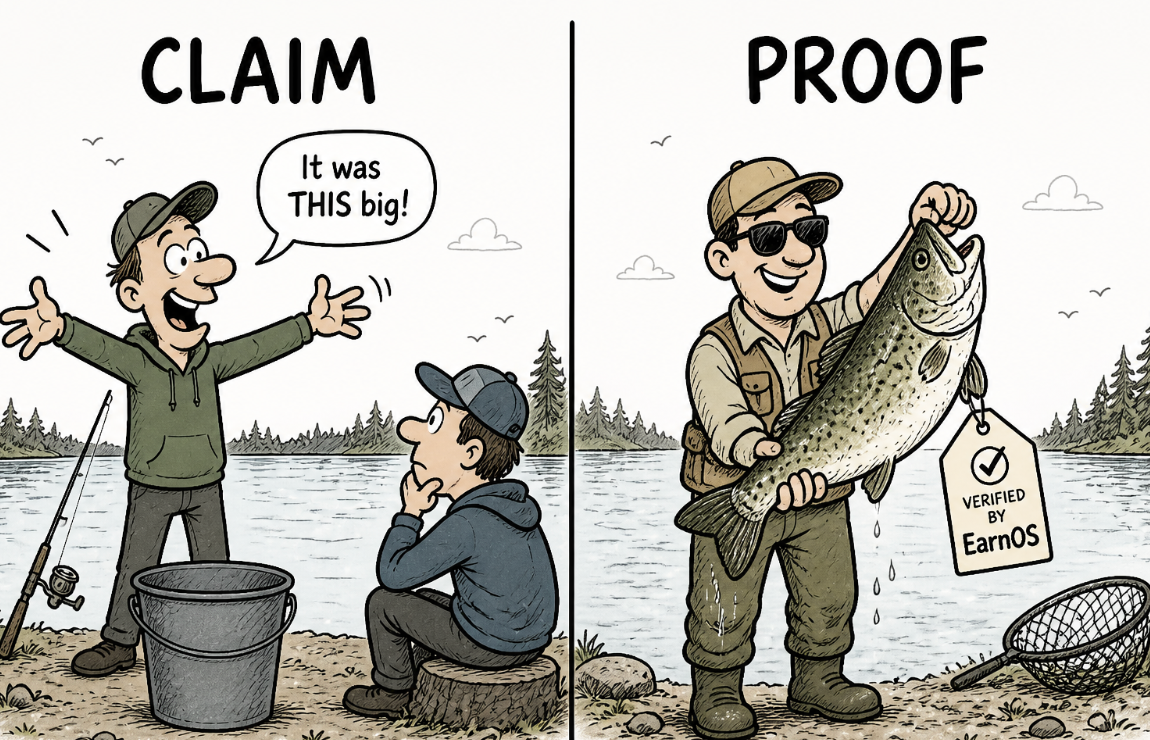
Of course, missions only matter if the participation is real.
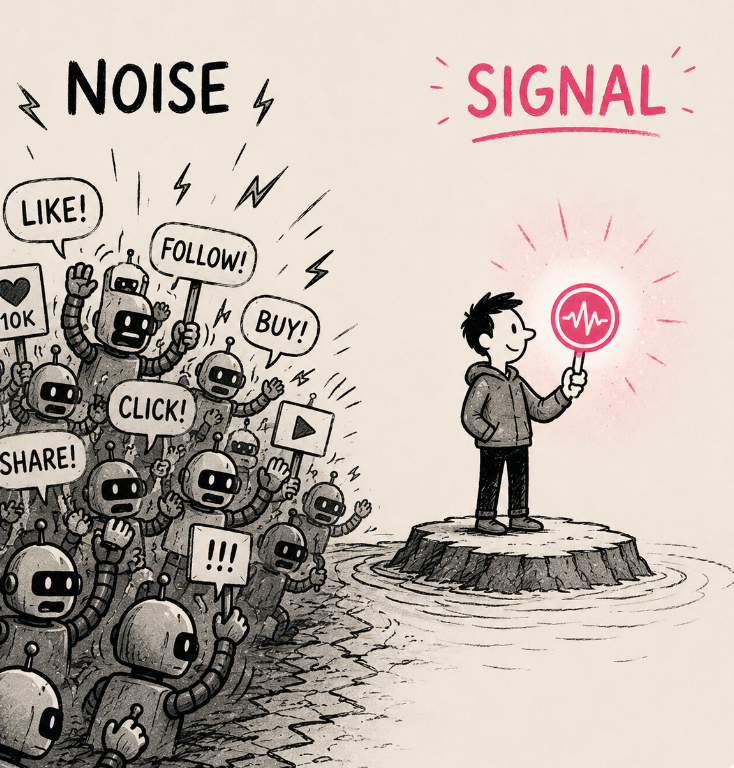
If rewards exist, fake activity will try to follow. Bots can click. Scripts can complete low-quality tasks. Fake accounts can imitate participation. Empty actions can look like engagement.
That is why missions need verification.
Without verification, missions can become just another metric to game. But with better verification, missions can become a stronger form of brand engagement.
This is where EarnOS matters.
EarnOS is not only about rewarding attention. It is also about making sure that the attention and participation being rewarded are real enough to deserve value.
That connection is important.
Rewards without verification can create noise. Verification without rewards can feel one-sided. But verified participation with rewards can create a better model.
A model where brands get stronger signals, users get recognized for real attention, and the internet moves away from passive extraction.
From attention to action
The deeper shift is from attention to action.
The old internet asked:
Did someone see this?
The next internet should ask:
Did someone choose to participate?
That is a better question.
Because participation is richer than exposure. It contains more intent. It asks more from the person. It gives the brand a clearer signal. And when it is rewarded fairly, it creates a more balanced relationship.
This does not mean passive ads will disappear. They will not.
But they are no longer enough.
The internet is too noisy. Attention is too fragmented. Signals are too easy to fake. Brands need better ways to understand real interest, and users need better ways to share in the value their attention creates.
Missions are one answer to that.
Where EarnOS fits
EarnOS fits into this shift because it turns brand engagement into something more active, measurable, and rewarding.
Instead of the old model:
brand pays → platform shows ad → user gives attention → platform captures value
EarnOS points toward a different model:
brand creates mission → user participates → action is verified → user gets rewarded
That is a much healthier loop.
It gives brands better signals. It gives users clearer value. It gives participation more meaning. It makes attention less passive and more intentional.
This is why missions matter.
They are not just another marketing format. They are a different relationship between people, brands, and attention.
Conclusion
Missions are better than passive ads because they ask for real participation, not just exposure.
Passive ads show a message. Missions create action.
Passive ads count attention. Missions can reward it.
Passive ads often leave users outside the value chain. Missions can bring users back into it.
That is exactly why EarnOS matters.
Because the next internet should not only be better at capturing attention. It should be better at recognizing, verifying, and rewarding the real people who choose to participate.
메타데이터
- post_id
- 688f4e99d27f
- slug
- why-missions-are-better-than-passive-ads-688f4e99d27f
- url
- https://medium.com/@ny_joker_eth/why-missions-are-better-than-passive-ads-688f4e99d27f
- canonical_url
- https://medium.com/@ny_joker_eth/why-missions-are-better-than-passive-ads-688f4e99d27f
- author_url
- https://medium.com/@ny_joker_eth
- status
- ok
- fetched_at
- 2026-07-10 19:40:14