Enterprise AI Loop Deployment Isn’t About Building Agents First — It’s About Designing the Work…
AI Loop Engineering
Enterprise AI Loop Deployment Isn’t About Building Agents First — It’s About Designing the Work System First
AI Loop Engineering
Disclosure: I use GPT search to collection facts. The entire article is drafted by me.
Over the past year, Agent has become the hottest keyword in enterprise AI.
Every day brings a new framework, a new Runtime, a new Workflow Engine. Someone is always publishing the latest Agent Pattern, Memory Pattern, or Multi-Agent Architecture. The market seems to have reached a consensus: if the Agent is smart enough, enterprise processes will automate themselves.
But pull the lens back to real organizations, and you see a completely different picture.
Many teams have already deployed GitHub Copilot, Cursor, Claude Code, Microsoft Copilot, and some have even started connecting Agents to ticketing systems, knowledge bases, CI/CD pipelines, or customer service flows. Yet a year later, the cases where AI has genuinely entered core business processes remain surprisingly few. More often than not, AI has improved individual efficiency — not organizational efficiency.
This gap probably signals that enterprise AI is entering a new phase.
What Enterprise AI Actually Is Right Now
Phase One focused on Model Capability: Is the model smart enough? Is the context window large enough? Has coding ability surpassed the last generation? This phase answered the question “what can AI do?”
Phase Two has begun focusing on Organizational Capability: How does AI continuously complete tasks? How does it cooperate with existing processes? How does it leave evidence, accept audits, respect permission constraints, and recover after failure? This phase asks “how does an organization make AI work?”
These are two completely different questions.
Many enterprises initially understood Agent as a smarter software component: give it a goal, hook up some APIs, configure some tools, and it automatically completes work. But as practice deepens, more and more teams are discovering that what truly constrains Agents is rarely the model itself — it’s the enterprise’s own work system.
An Agent can generate plans, but doesn’t know which goals are the real business goals.
An Agent can call tools, but doesn’t know which operations require approval.
An Agent can execute dozens of rounds of reasoning, but doesn’t know which evidence is sufficient to support a formal decision.
An Agent can automatically modify code, but doesn’t know when it should stop and wait for a human to assume final responsibility.
In other words, knowing how to reason doesn’t mean the organization knows how to bring that reasoning into production.
The Shift: From Prompt Engineering to Workflow Engineering
This change is also reflected in the migration of technical community discussions over the past year.
In 2023, most discussions centered on Prompt Engineering — how to write prompts, design roles, use Chain-of-Thought and Few-shot Learning to get better results in a single call.
In 2024, discussion shifted toward Agents: how to make models call tools, plan tasks, maintain long-term memory, and split across multiple cooperating Agents.
Entering 2025, discussion changed again. More and more people began talking about Loop Engineering, Workflow Engineering, Environment, Runtime, Observability, and Governance.
These words share one characteristic: they’re discussing not the model, but the model’s operating environment.
This shift isn’t accidental. Once enterprises actually deploy Agents, they quickly hit a real problem: Agents don’t work in a vacuum. They must enter an already-existing organizational system that already has PRDs, Issues, CI/CD, Runbooks, IAM, approval flows, SLAs, Audit Logs, and Incident Reviews.
Agents don’t replace these artifacts — they must run alongside them.
Many teams initially tried to compensate by stuffing more and more rules into the System Prompt, hoping the model could absorb the entire business in one pass. Practice has shown this approach breaks quickly. A prompt can describe context, but it cannot replace a work system. A single model call can rely on context. A continuous AI Loop running for dozens of rounds needs stable state management, permission control, evidence accumulation, and feedback mechanisms.
The Concept Map: Agent, Loop, and Workflow Are Three Different Layers
Over the past six months, Agent has become one of the most common words in the AI community. But observe closely, and you’ll notice many discussions aren’t operating at the same level.
Some people discussing “Agent” are really talking about how models call tools (Tool Use). Some discussing “Loop” care about how models continuously correct based on feedback. Others talking about “Workflow” are designing the entire organization’s task routing and approval mechanisms.
These words appear in the same articles, the same product announcements, even the same sentences. Eventually, many teams assume they’re the same thing: build an Agent, add a few Loops, and you have enterprise Workflow.
Reality is far less simple.
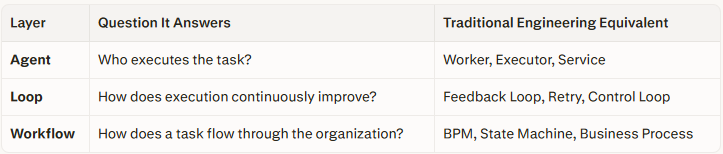
These three relate to each other but solve different problems. Mix them, and you’ll mistake organizational design problems for model capability problems.

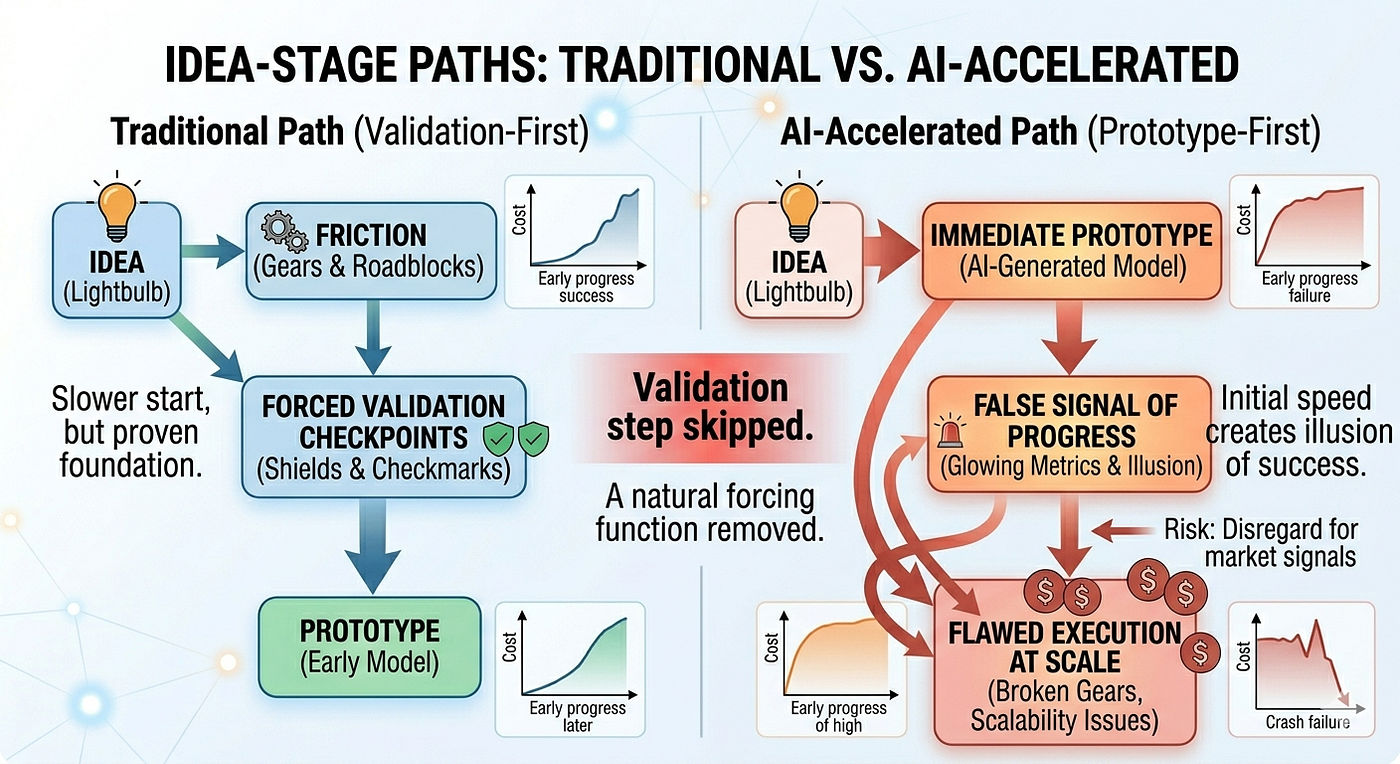
AI-Generated Image
Agent: An Executor, Not a Process
In past software systems, most executors were programs: receive input, execute logic, return result. Relatively deterministic.
Agent is different because it begins to possess a degree of autonomy. It doesn’t just execute commands — it decomposes tasks itself, decides which tools to call, judges whether to continue to the next step, adjusts strategy based on feedback, and may even modify its own execution path.
Many people see Agent as a new software abstraction. That’s not wrong, but it easily generates one misconception:
Agent is an executor, not a process.
Take a simple example. Suppose an enterprise wants to automatically complete a release check. An Agent can read the Release Note, check CI, compare configurations, summarize risks, generate a report. But it doesn’t know: who has final release authority, which risks are acceptable, which checks require security team confirmation, which exceptions need business owner approval.
These aren’t things an Agent can reason out on its own. They’re organizational rules formed over time.
An Agent can take on execution, but it cannot conjure organizational rules from nothing. Many enterprise projects that remain stuck at Demo stage aren’t failing because the Agent isn’t smart enough — they’re failing because there’s nowhere safe for it to actually work.
Loop: Not Calling the Model More Times — Building a Feedback Mechanism
Loop is the concept most discussed in the past year, and most easily misunderstood.
Many introductions reduce Loop to: “if the model doesn’t answer well, ask it again.” Strictly speaking, that’s just the simplest form of Retry.
Real Loop is closer to a Feedback Loop from Control Theory. It includes at minimum: Observe → Evaluate → Act → Verify → Adapt → Execute again.
This is the core idea behind Rahul’s twenty Loop Patterns. For example: generate code → automatically run tests → tests fail → Agent revises based on errors → test again → until exit condition is met. The whole process forms a closed loop.
What’s truly important isn’t the loop itself — it’s whether the feedback is trustworthy. If the test cases have problems, even the smartest Agent will only optimize toward the wrong goal. If the acceptance criteria are written incorrectly, the Loop will just complete the wrong task ever more efficiently.
This is no different in principle from traditional automatic control systems. No matter how excellent the controller is, if the sensor provides wrong signals, you get wrong results.
So rather than calling Loop a new AI capability, it’s more accurate to say it’s just reapplying the feedback mechanisms software engineering has understood for decades, now inside the large language model era.

AI-Generated Image
Workflow: The Real Determinant of Whether AI Can Enter Organizations
Compared to Agent and Loop, Workflow is the “least AI” word of the three. Because it doesn’t discuss the model at all — it discusses the organization.
Workflow answers: from when a task is proposed, to execution, review, delivery, and retrospective, what states does it pass through? This includes: how requirements are generated, who approves them, which actions require human confirmation, which evidence must be preserved, how failures roll back, and how accountability is tracked.
These things existed in traditional enterprises before AI ever arrived. Even without any AI, a mature software team has Issues, Sprints, PRs, CI/CD, Change Reviews, Incidents, Postmortems, Audit Logs. These artifacts collectively constitute the organization’s real Workflow.
When AI enters, they don’t disappear. They become more important.
Because the Agent needs to know: when can it continue? When must it wait? When must it return judgment to a human?
Workflow defines organizational operating rules, not model reasoning rules. Microsoft has repeatedly emphasized in its Copilot enterprise practice that what truly determines AI’s ability to land isn’t model capability — it’s how the enterprise’s existing permission system, data governance, and business processes cooperate with AI. Anthropic placed permission control, audit logs, and tool-calling boundaries at the core of Claude Code’s enterprise capabilities, not as afterthoughts.
Why Do Many Agent Demos Look Impressive But Rarely Reach Production?
Over the past year, I’ve watched a lot of Agent Demos. They’re usually smooth: one natural language instruction, dozens of automatic executions, multiple tool calls, one complete result. Demo quality is nearly impeccable.
But once they enter actual enterprises, things change immediately.
An Agent automatically modifies code — technically successful. But before going live, the enterprise’s real concerns are: Has the code been reviewed? Has security scanning passed? Do dependency licenses comply? Is the database migration rollbackable? Who approved the release? If the release fails, who’s responsible?
None of these questions are about model reasoning capability. They all belong to Workflow.
An analogy I keep coming back to: Agent is like a driver. Loop is like the vehicle’s automatic control system. Workflow is like the roads, traffic rules, and the entire city’s infrastructure. The driver can be excellent; the autonomous driving algorithm can keep learning. But without roads, traffic signals, speed limits, and accident handling mechanisms, even the smartest driver cannot make the entire traffic system run stably.
Enterprise AI is the same. Over the past two years, the entire industry placed enormous attention on cultivating a smarter “driver.” In the next few years, what truly determines whether AI can scale in enterprises may not be how much better the driver can get, but whether enterprises are willing to redesign their own “roads.”
Five Work Objects That Matter More Than Twenty Loop Patterns
Rahul’s summary of twenty Loop Patterns is valuable — it maps out the strategies an AI can use. But if you apply them directly to an enterprise, you quickly hit a wall: the Loops can get more and more complex, yet what enters the loops is always the same set of work objects.
A release check Loop needs to know the release goal. A code repair Loop needs the current state. A permission approval Loop needs to reference approval evidence. A knowledge update Loop needs to record final feedback.
In other words: Loop describes behavior; work objects carry state. Behavior can be continuously optimized. State must remain consistent.
Without stable state objects, even the most elegant Loop can only run against temporary context. Once context is lost, the model switches, or the task changes hands, the entire loop may start from scratch.
I’ve come to think of enterprise AI Loop as a set of state changes between stable work objects, not a series of continuous Prompt calls. These objects fall into five categories:
- Goal — What is the system actually optimizing? What does success look like?
- State — Where has the task progressed? Which dependencies are incomplete?
- Evidence — Why do we believe the current state holds? What’s the basis?
- Permission — Which actions can be auto-executed? Which must be authorized?
- Feedback — Which experiences are worth preserving to influence the next execution cycle?
None of these are new AI concepts. Almost all of them have counterparts in traditional software engineering: PRDs, Issues, test reports, approval flows, audit logs, incident postmortems. The real change: these objects used to primarily serve human-to-human collaboration. Now they also need to serve human-to-AI and AI-to-AI collaboration.

AI-Generated Image
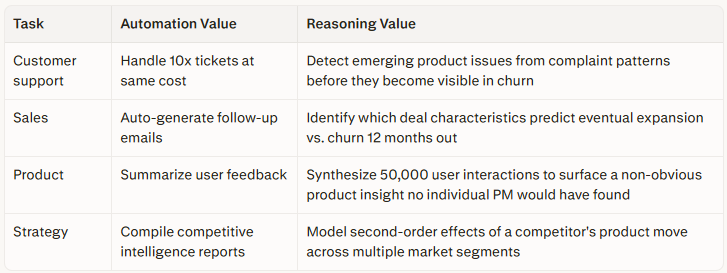
The Five Objects Map to Five Existing Engineering Assets
If you place Goal, State, Evidence, Permission, and Feedback back into traditional software engineering, they each have clear correspondences — and clear upgrade paths:

This table looks almost old-fashioned. No Multi-Agent, no Reflection, no Self-Improvement, no complex reasoning frameworks. But more and more enterprise practice demonstrates that what truly determines whether AI can enter production is often not these new capabilities — it’s whether these old objects are stable enough.
Enterprise AI infrastructure may not be a brand new system. It may be reorganizing already-existing software engineering assets into an operating environment that AI can read, execute, and audit.
A Real AI Loop in Operation: The Release Readiness Review
Rather than describing the five objects separately, let me trace them through a real task — one almost every engineering team has experienced: the pre-release check.
This task isn’t complex, yet it has almost every typical characteristic of enterprise AI: it requires reading information from multiple systems, requires judging which checks are complete, needs to generate a pending-review result, needs to preserve evidence, and ultimately still requires a human decision on whether to release.
from dataclasses import dataclass, field
from typing import Optional
from datetime import datetime
import json

@dataclass
class ReleaseLoopContract:
    """
    The five work objects as a structured release readiness contract.
    This is what the AI Loop reads, updates, and returns - not a Prompt.
    """
    # GOAL: explicit stopping criteria, not vague aspirations
    goal: dict = field(default_factory=lambda: {
        "release_candidate": "v2.4.1",
        "stopping_criteria": [
            "release_notes_generated",
            "all_critical_ci_passed",
            "db_migration_rollback_verified",
            "high_risk_configs_flagged",
            "pending_review_list_finalized"
        ]
    })

    # STATE: persistent, handoff-ready - not stored in context
    state: dict = field(default_factory=lambda: {
        "checked_modules": [],
        "pending_risks": [],
        "acknowledged_non_issues": [],
        "human_approval_received": False,
        "last_updated_by": None,
        "last_updated_at": None
    })

    # EVIDENCE: every conclusion backed by a citable artifact
    evidence: dict = field(default_factory=lambda: {
        "ci_run_url": None,
        "test_report_url": None,
        "security_scan_result": None,
        "db_migration_script_hash": None,
        "config_diff_url": None
    })

    # PERMISSION: what the Agent can do autonomously vs. must escalate
    permission: dict = field(default_factory=lambda: {
        "allowed": ["read_code", "run_tests", "generate_draft", "update_issue"],
        "requires_human_approval": ["merge", "deploy_production", "modify_db", "close_security_alert"],
        "never_allowed": ["approve_own_output", "delete_audit_log"]
    })

    # FEEDBACK: what gets preserved for the next loop iteration
    feedback: dict = field(default_factory=lambda: {
        "false_positives_this_run": [],
        "rules_to_update": [],
        "runbook_additions": [],
        "resolved_at": None
    })
    def update_state(self, module: str, executor: str):
        self.state["checked_modules"].append(module)
        self.state["last_updated_by"] = executor
        self.state["last_updated_at"] = datetime.utcnow().isoformat()
    def is_complete(self) -> bool:
        return all(
            criterion in self.state["checked_modules"]
            for criterion in self.goal["stopping_criteria"]
        )
    def to_agent_context(self) -> str:
        """Serialize the contract to structured context for the Agent."""
        return json.dumps({
            "goal": self.goal,
            "current_state": self.state,
            "available_evidence": self.evidence,
            "permission_boundaries": self.permission,
            "pending_feedback": self.feedback
        }, indent=2)
This code shows the five work objects as a single structured contract that the Agent reads at every loop iteration — not as a Prompt, but as a persistent organizational object. Notice that is_complete() implements the Goal's stopping criteria, and permission separates autonomous actions from human escalation triggers.
Step One: Define the Goal, Don’t Call the Model First. Many Agent Demos start with: “Please help me check this release.” That phrase, for a human, roughly makes sense. For an AI, it provides almost no executable information. A task must first answer: what conditions let us declare this check complete? Without a stopping condition, the Agent doesn’t optimize — it searches without bounds.
Step Two: State Is for the Next Executor, Not for the AI’s Memory. Many AI Demos store all state in context. The model knows it. The user temporarily knows it. But once the model switches, the context is truncated, the task pauses, another Agent takes over, or the next day arrives — the entire state is nearly lost. A real stable Workflow should store state in the system: in Issues, Tasks, Runs, Checkpoints, Artifacts. State solves not memory but handoff.
Step Three: In Production, Evidence Matters More Than Conclusions. An Agent saying “tests passed” is fine for a demo. Production wants to know why — CI link, logs, screenshots, test reports, performance metrics, security scans. Every conclusion should be traceable to a corresponding artifact. Don’t trust the conclusion. Trust the artifact. What AI gives is interpretation. Evidence provides proof. These are completely different layers.
Step Four: Permission Isn’t About Limiting the Agent — It’s About Expanding Where It Can Safely Work. Without permission boundaries, enterprises can only keep Agents in suggestion mode forever. With permission boundaries, Agents can genuinely take on part of the execution work. Currently, most production cases concentrate Agents in development, testing, and knowledge management — relatively lower-risk scenarios. Processes involving capital flows, production controls, or high-risk permissions almost universally retain human approval nodes.
Step Five: Valuable Loops Don’t Stop at This Task. Why did false positives occur? Which checks carry no meaning? Which rules need updating? Which anomalies can be auto-handled next time? This is Feedback — not the model receiving a new Prompt, but organizational learning. If this information enters Checklists, Runbooks, rule libraries, Skills, Workflows, then the organization itself grows. If it stays in chat history, the next Agent iteration will repeat the same mistakes.

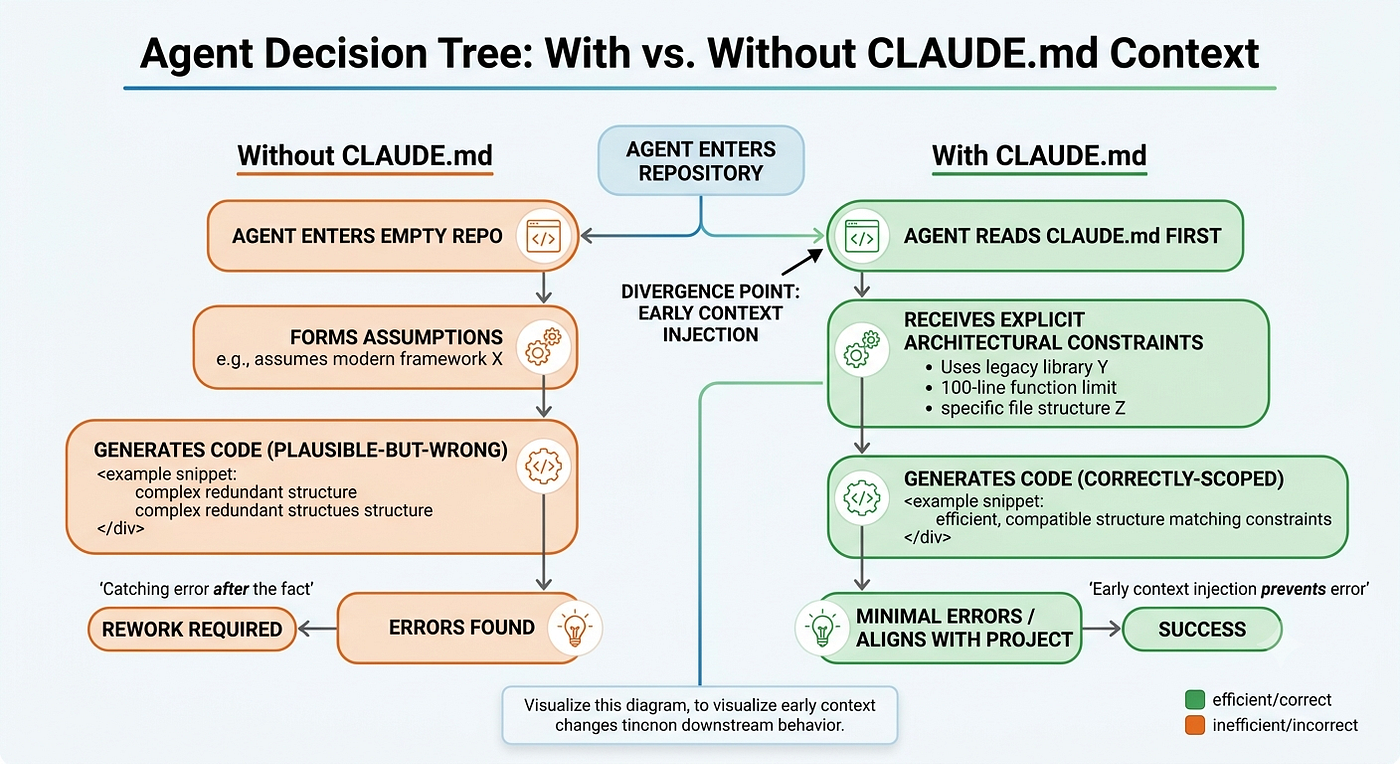
AI-Generated Image
The Misconception Most Teams Share
Here is the wrong mental model I see repeated most often:
“Our Agent keeps going wrong in the second and third iterations. The model must not be reasoning well enough.”
Maybe. But far more commonly the real problem is: the system didn’t tell the Agent which information should be inherited, which should be updated, and which must be reconfirmed.
If a task has no clear success criteria, the Agent doesn’t know when to stop.
If state isn’t recorded, it can only guess from context where it left off.
If evidence isn’t accumulated, it can’t determine which conclusions have been validated.
If permission boundaries are fuzzy, suggestions become actions.
If feedback doesn’t enter the system, every loop starts as if it’s the first time.
None of these problems are solvable by Prompt. They are all work object problems.
There’s also a subtler failure mode worth naming: the Goodhart’s Law trap. When a metric becomes a goal, it ceases to be a good metric. If an Agent optimizes CTR because that’s the measured signal, but the real business goal is long-term retention, the system will become extraordinarily efficient at pursuing the wrong objective. AI doesn’t create this problem — it accelerates it. Faster loops amplify organizational drift just as reliably as they amplify organizational alignment.
Three Feedback Loops at Three Speeds
Andrew Ng’s breakdown of software development into three feedback loops maps cleanly onto the organizational picture here:
Layer 1 — Agent Coding Loop (minutes): Agent generates code, runs tests, fixes errors, tests again. This is the layer that’s gotten the most attention because it’s immediately measurable.
Layer 2 — Developer Feedback Loop (hours to days): Developers review results, adjust requirements, modify designs, redefine the next step.
Layer 3 — Real-world Feedback Loop (weeks to months): Real users use the product, customer service receives complaints, monitoring detects anomalies, A/B tests return results, business metrics shift.
Many teams deploy Agents and immediately see value at Layer 1 — code written faster, bugs fixed faster, PRs merged faster. Yet they don’t get proportional business value growth.
The answer is increasingly obvious: organizations never optimized just by improving the fastest loop. The fastest loop handles execution. The slowest loop determines direction.
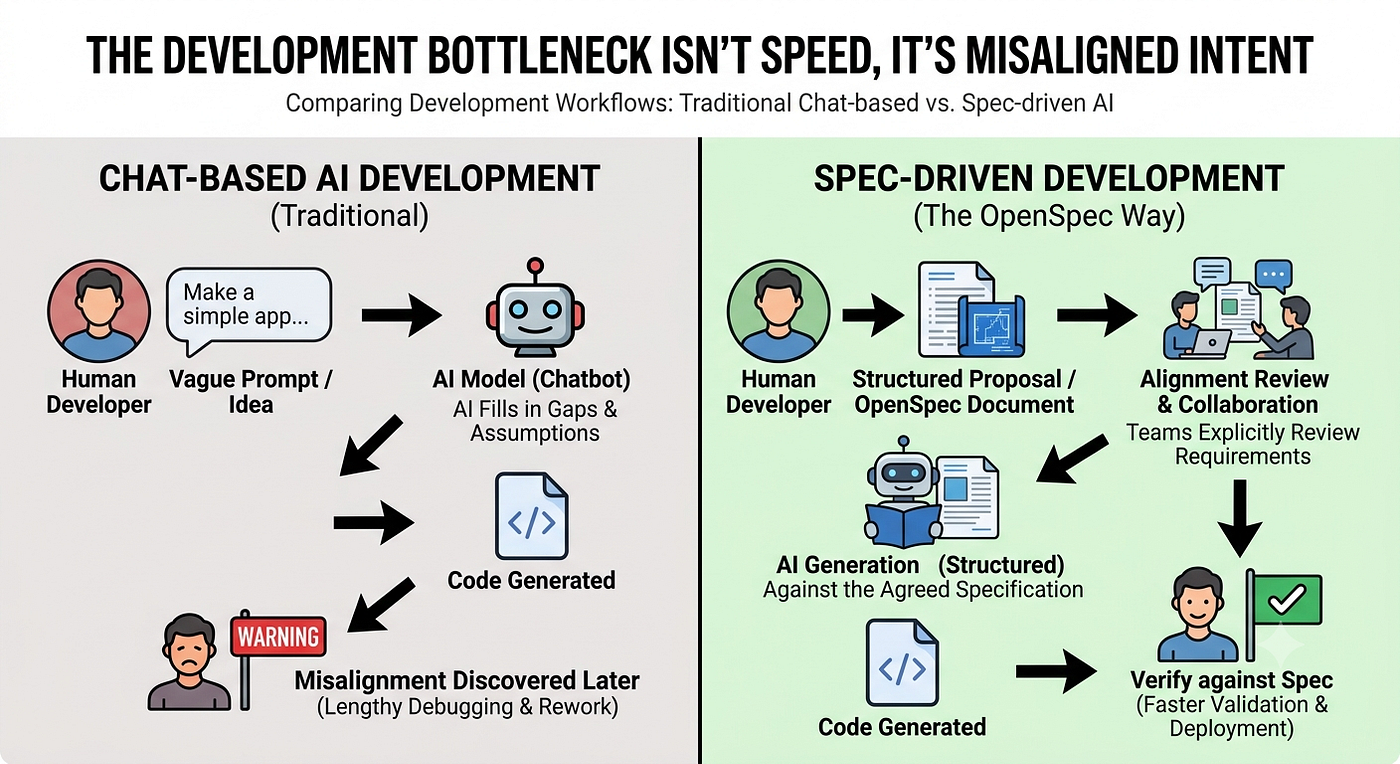
Human-in-the-Loop isn’t primarily about “correcting AI errors.” It’s about continuously recalibrating the feedback system itself. Agents can keep optimizing. What they cannot determine is when to change the goal, when to abandon a metric, when to redesign the process, when to accept short-term efficiency loss for long-term stability. These aren’t reasoning problems. They’re organizational judgments.
Research from Deloitte, Microsoft, and others repeatedly surfaces the same pattern: many enterprises have completed AI tool deployment, but the minority that have genuinely restructured business processes and built mature governance systems is small. The deployment speed of models is consistently outpacing the learning speed of organizations.

AI-Generation Image
My Judgment: Start With a Loop Card, Not a Platform
Here is where I take a position.
The standard enterprise advice — buy a platform, deploy agents at scale, then govern retroactively — is backwards. The organizations making real progress are doing something quieter and more fundamental.
Before recommending any technology, I would ask a team to write what I call a Loop Card — a single document answering exactly five questions:
- What is the task, and what does “done” mean precisely?
- Where is state stored between executions?
- Which specific artifacts must be preserved as evidence?
- Which actions require human approval before the Agent proceeds?
- What gets updated in the Runbook or rule library after this loop completes?
If these questions can be answered clearly, almost any technical approach can work. If they can’t be answered, even the most sophisticated platform will only generate more automated steps without improving organizational capability.
This isn’t conservatism. It’s the same lesson software engineering learned from objects vs. processes: processes can change, but objects are relatively stable. Organizations can change their workflows: Scrum can become Kanban, code review can add new approval nodes, CI/CD can swap tooling. But the Pull Request still exists as an object. It still has an author, a state, review comments, change history, and a final result.
The same logic applies to AI systems. Today you use Claude. Tomorrow GPT. The day after, a new Agent Runtime. But the Goal still needs to be a Goal. The Evidence still needs to be Evidence. The Permission boundaries still need to be Permission boundaries.
The correct strategy isn’t to build a system around a specific model. It’s to build interfaces around the long-lived work objects.
From One Loop to Organizational Capability
Many people expect AI to bring sweeping organizational transformation. Reality is more likely to resemble how software engineering actually developed: not a revolution, but a series of continuous evolutions.
First loop. Second loop. Third loop. More and more tasks enter the same governance framework. More evidence accumulates automatically. More experience enters Runbooks. More feedback forms new rules. Gradually, the organization develops a new way of working.
The timeline will differ substantially across organizations. Industries with higher regulatory requirements and more complex legacy systems will move noticeably slower than internet-native teams. Organizations whose processes are already highly digitized may accelerate faster into the next phase. This isn’t a reason to delay — it’s a reason to treat every loop as a verifiable, retrospectable engineering experiment, not a transformation program.
What will happen over the next few years is probably this: people will stop frequently discussing “Agent” the way we rarely discuss “microservices” or “containers” individually today. They’ll become infrastructure. The question that will actually be discussed continuously will be a different one:
How does an enterprise organize its knowledge, processes, accountability, and feedback into a work system that both humans can collaborate through and AI can execute against?
That question — not which model is smartest, not which framework is newest — is where the real leverage lives.
And perhaps that is when enterprise AI truly enters the production era.
If you’d like to show your appreciation, you can support me through:
✨ **Patreon ✨ [Ko-fi](https://ko-fi.com/jinlowmedium) ✨ [BuyMeACoffee](https://buymeacoffee.com/jinlowmedium)**
Every contribution, big or small, fuels my creativity and means the world to me. Thank you for being a part of this journey!
메타데이터
- post_id
- 6899e44f4b0a
- slug
- enterprise-ai-loop-deployment-isnt-about-building-agents-first-it-s-about-designing-the-work-6899e44f4b0a
- url
- https://medium.com/jin-system-architect/enterprise-ai-loop-deployment-isnt-about-building-agents-first-it-s-about-designing-the-work-6899e44f4b0a
- canonical_url
- https://medium.com/jin-system-architect/enterprise-ai-loop-deployment-isnt-about-building-agents-first-it-s-about-designing-the-work-6899e44f4b0a
- author_url
- https://medium.com/@jinlow
- status
- ok
- fetched_at
- 2026-07-14 14:45:02