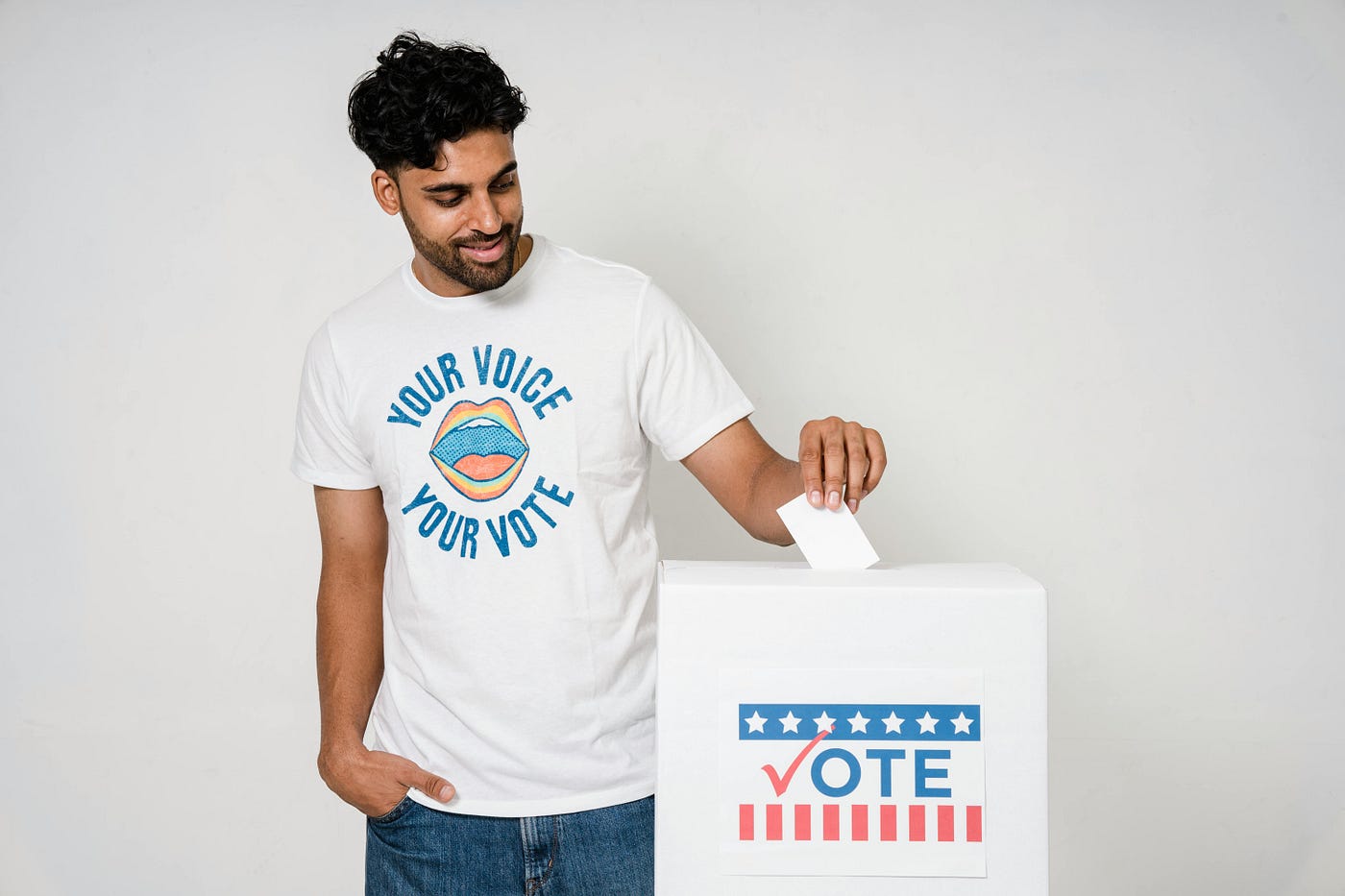
Representation in sport matters… unless you’re a woman
An opinion-based overview of diversity at the 2026 Winter Olympics
Representation in sport matters… unless you’re a woman
An opinion-based overview of diversity at the 2026 Winter Olympics

Brothers Jack and Quinn Hughes celebrating following the first Olympic gold medal win by the US men’s ice hockey team in 46 years… to the day. Photograph by: Elsa Garrison/Getty Images.
The Milano Cortina 2026 Winter Olympics have just drawn to a close, with Norway topping the overall medal table. Yet despite the Games celebrating sporting excellence across the world, the conversation surrounding them has revealed something less inspiring: when women succeed in sport, their achievements are rarely allowed to stand on their own.
The Norwegians, who remain as the most successful country ever in Winter Olympic history, beat out other strong contenders, such as the USA, the Netherlands, and Italy (who finished second, third and fourth respectively).
Norway’s success is widely attributed to their ‘grass roots’ style of embedding winter sports into every child’s life in a fun and affordable way. Unlike in countries like the UK and USA, sports are not treated as competitive until children are well into their teens.
The way that an athlete is raised seems to have a great impact on their success according to this — and also, according to US Vice President JD Vance, who believes that Olympian Eileen Gu betrayed the USA by competing for China in 2026. Gu was born and raised in the USA, yet chose to compete for China in the Olympics, leading to online backlash surrounding her decision.
Gu said that it was only framed this way because “they just hate China” — and whilst this may well be based in evidence, there could also be another reason. Because she’s a woman.
Brothers Jack and Quinn Hughes represented Team USA in the 2026 Winter Olympics, despite both having spent the majority of their childhood in Canada. Did JD Vance comment on this? No. Whilst he was busy questioning Gu’s loyalty to America, he was completely choosing to ignore the Hughes brothers’ loyalty to Canada.
This shows how female athletes often face greater scrutiny over questions of national identity and representation than their male counterparts.
This year’s Olympic coverage, by BBC Sport, received its highest ever number of viewers in the UK — reaching 83 million streams over their seventeen days of competition. More viewers, naturally, means more people taking an interest in winter sports, and visibility plays a crucial role in shaping who feels welcome in those spaces.
The Games were purposefully developed to be accessible and inclusive to all — making sure that all sorts of needs were met and catered for. This involved the addition of interpreters, priority lanes, and dedicated areas, so as to make the diverse pool of spectators feel welcomed.

Canadian Ice Hockey player Marie-Philip Poulin is one of the record number of 50 openly LGBTQ+ athletes who featured at the 2026 Winter Olympics. Picture by 2026 Getty Images.
The representation didn’t stop there though, with the 2026 Games breaking records with at least 50 publicly out LGBTQ+ athletes competing. Furthermore, to enable athletes to feel more comfortable, popular LGBTQ+ dating app Grindr announced that it would be restricting location features for users inside the Olympic Village for the third consecutive Olympics.
This inclusivity was also mirrored in the sports themselves. From figure skater Alysa Liu influencing young women, to curling seeing its quadrennial resurgence, the Olympics demonstrated how representation can inspire a new generation of athletes and fans alike.
Liu’s presence at the Games in particular highlighted how powerful visibility can be, with the American Figure Skater blowing up on social media during the games. She received much praise from fans for being unapologetically herself — showing people that it’s alright to not always fit in. She also stood up against JD Vance’s criticism of Eileen Gu, slating it as hypocritical.
Many sports became increasingly popular due to the Winter Olympics, but the one sport currently seeing the highest pique in online interest, is ice hockey (or just hockey as Americans prefer to refer to it as), and Rachel Reid’s 2019 “sexually explicit queer romance novels about hockey players” may be partly to blame.
The TV adaption of Reid’s novel Heated Rivalry first aired in November 2025, just under three months before the start of the Winter Olympics, with the show’s lead actors even acting as Olympic torchbearers. It catapulted hockey into the mainstream zeitgeist, starting many conversations about inclusivity in the sport.
And for many of these fans, the Winter Olympics was their first exposure to the intensity of real-life international hockey.
At first, American hockey players became subjects of online fan culture, with memes about defender Quinn Hughes seeing ghosts becoming so popular that he himself even referenced it in an interview. However, just as fast as they rose to popularity, they suddenly crashed back down.
The 19th February 2026 — Team USA Women’s team won the gold medal.
The 22nd February 2026 — Team USA Men’s team won the gold medal.
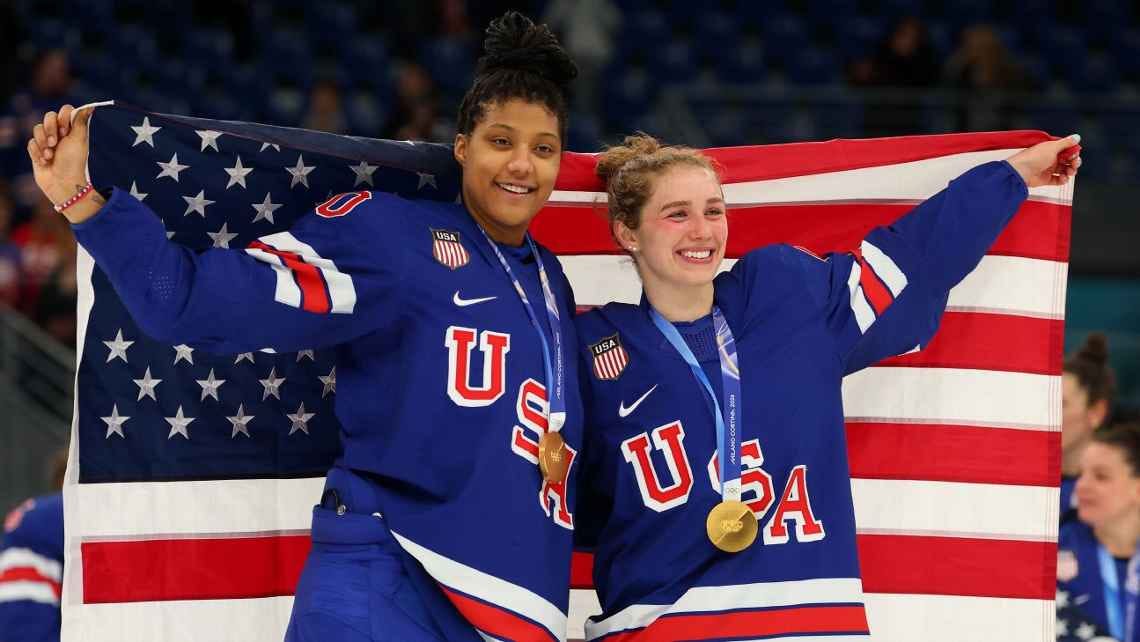
Team USA’s Laila Edwards and Caroline Harvey following the women’s team’s back-to-back Olympic gold medal win. Photograph by: Gregory Shamus/Getty Images
In an ideal world, the successes of both of these teams would’ve been celebrated in tandem, as equals. However, we very much do not live in an ideal world, and so the Women’s victory — which could very well have been one of the defining sporting stories of the Games, was not treated as such.
Instead, the US men’s team themselves told us exactly what they thought about women’s sport…. Whilst on call to none other than American president, Donald Trump. During the call, Trump told the team “I must tell you, we’re going to have to bring the women’s team”, before adding “I’d probably would be impeached”, if he failed to invite the women’s team.
These comments, understandably were met with resounding backlash online. What could, and should, have been a moment of collective national pride for Americans, instead became clouded by the political landscape of their country. In one short video, the team USA men’s hockey team, and the subsequent cultural aftershock, dwarfed the reaction to the women’s achievement.
No one was talking about the women’s win anymore, just that phone call with Trump. The success of women forgotten with the failure of men.
These events highlight an uncomfortable reality, in that even when women reach the pinnacle of sport, their victories are rarely allowed to stand alone. They are either overshadowed by men’s achievements or reframed through political or cultural debates that male athletes are rarely required to carry.
The women’s team had achieved something extraordinary, and even their own president thought it acceptable to turn it into a mere joke. Member of the USA Women’s team Hilary Knight commented that the team were “focussing on celebrating the women in our room [and] the extraordinary effort”, instead of focussing on the “distasteful joke” made by Trump, whilst online voices seemed to agree that the women’s team deserved better.
What makes this moment particularly frustrating is the wider context in which it occurred. Ice hockey has recently been experiencing a cultural shift. The popularity of Heated Rivalry introduced many new fans to a version of the sport that felt different from its traditional image. The story centres on an LGBTQ+ relationship between two rival players, and its mainstream success sparked conversations about sexuality, representation, and inclusivity in a sport that has historically struggled with those issues.

Shane Hollander (portrayed by Hudson Williams), is one half of the LGBTQ+ focal point of fictional hockey romance story, Heated Rivalry. Photograph by: Crave, via AP.
For a brief moment, it felt as though hockey was beginning to evolve. New audiences were discovering the sport through stories that challenged old stereotypes, and many fans were openly discussing how representation (whether in terms of sexuality or gender), could help reshape hockey’s culture for the better.
Yet the events following the team USA Olympic victories showed that perhaps the world isn’t quite as progressive as we’d once hoped.
Whilst the women’s team attempted to move past the controversy and focus on their achievement, the men’s team leaned into the political spectacle surrounding it. The players later attended a celebration at the White House, posing for photographs and embracing the moment that had already overshadowed the women’s gold medal.
But hey, at least they got to enjoy a cold McDonalds as thanks.
Representation in sport does matter. Seeing women succeed on the Olympic stage matters for the next generation of athletes who are watching and imagining their own futures. It matters for fans who want the sports they love to reflect the diversity of the world around them.
But representation only works if all of those achievements are afforded the same level of respect and attention as each other.
Until women’s victories can stand on their own — without being overshadowed by men or mocked by politicians, the promise of representation in sport will remain only partially fulfilled.
메타데이터
- post_id
- 689e4ed72ef6
- slug
- representation-in-sport-matters-unless-youre-a-woman-689e4ed72ef6
- url
- https://medium.com/@up939828/representation-in-sport-matters-unless-youre-a-woman-689e4ed72ef6
- canonical_url
- https://medium.com/@up939828/representation-in-sport-matters-unless-youre-a-woman-689e4ed72ef6
- author_url
- https://medium.com/@up939828
- status
- ok
- fetched_at
- 2026-07-28 18:11:31