South Korea is training half a million drone warriors. Here’s why that matters
Technological warfare has long been a matter of industrial might: the ability to produce expensive aircraft, sophisticated tanks, more…
South Korea is training half a million drone warriors. Here’s why that matters
Technological warfare has long been a matter of industrial might: the ability to produce expensive aircraft, sophisticated tanks, more precise munition and ever more centralized command systems.
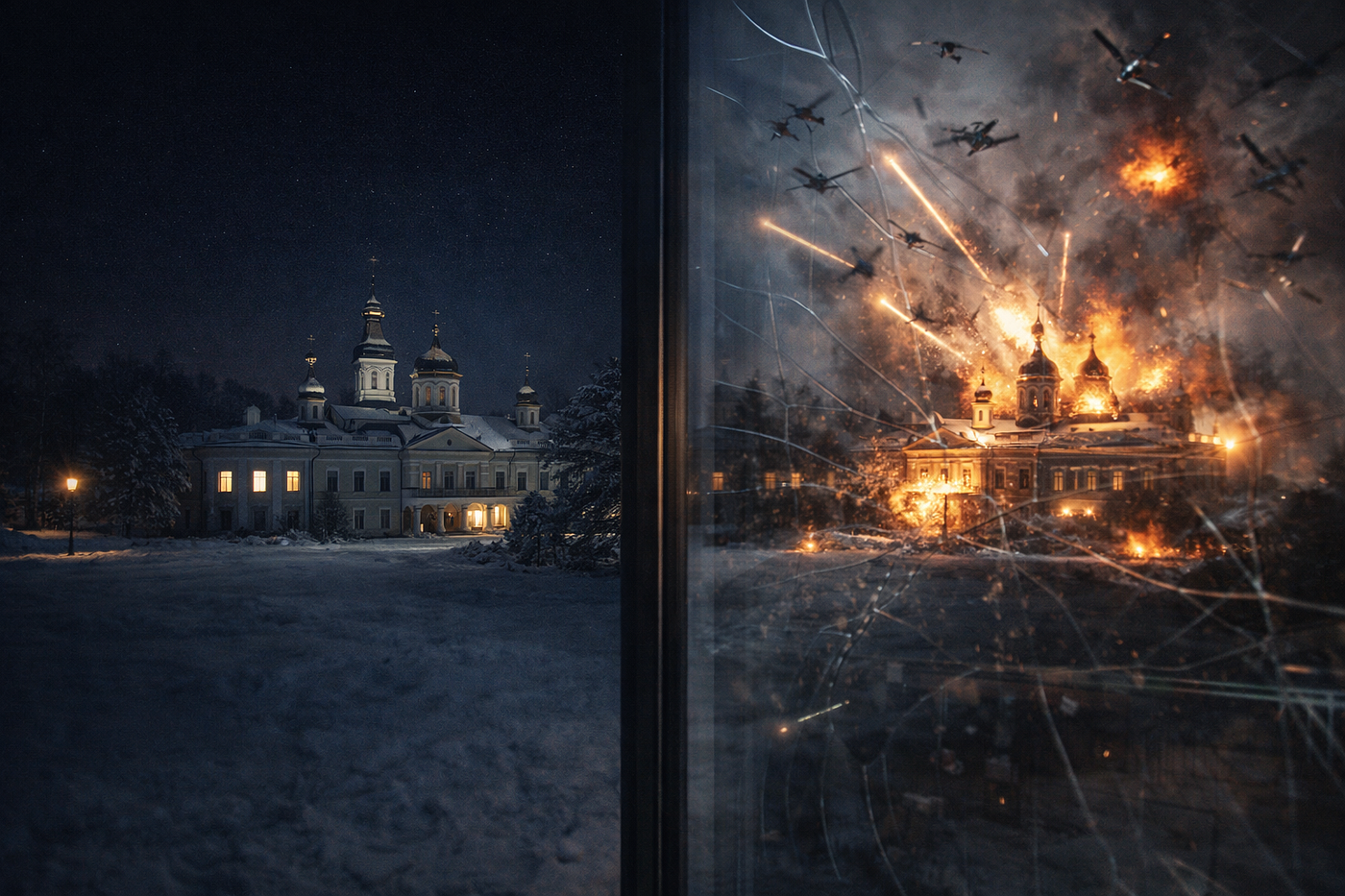
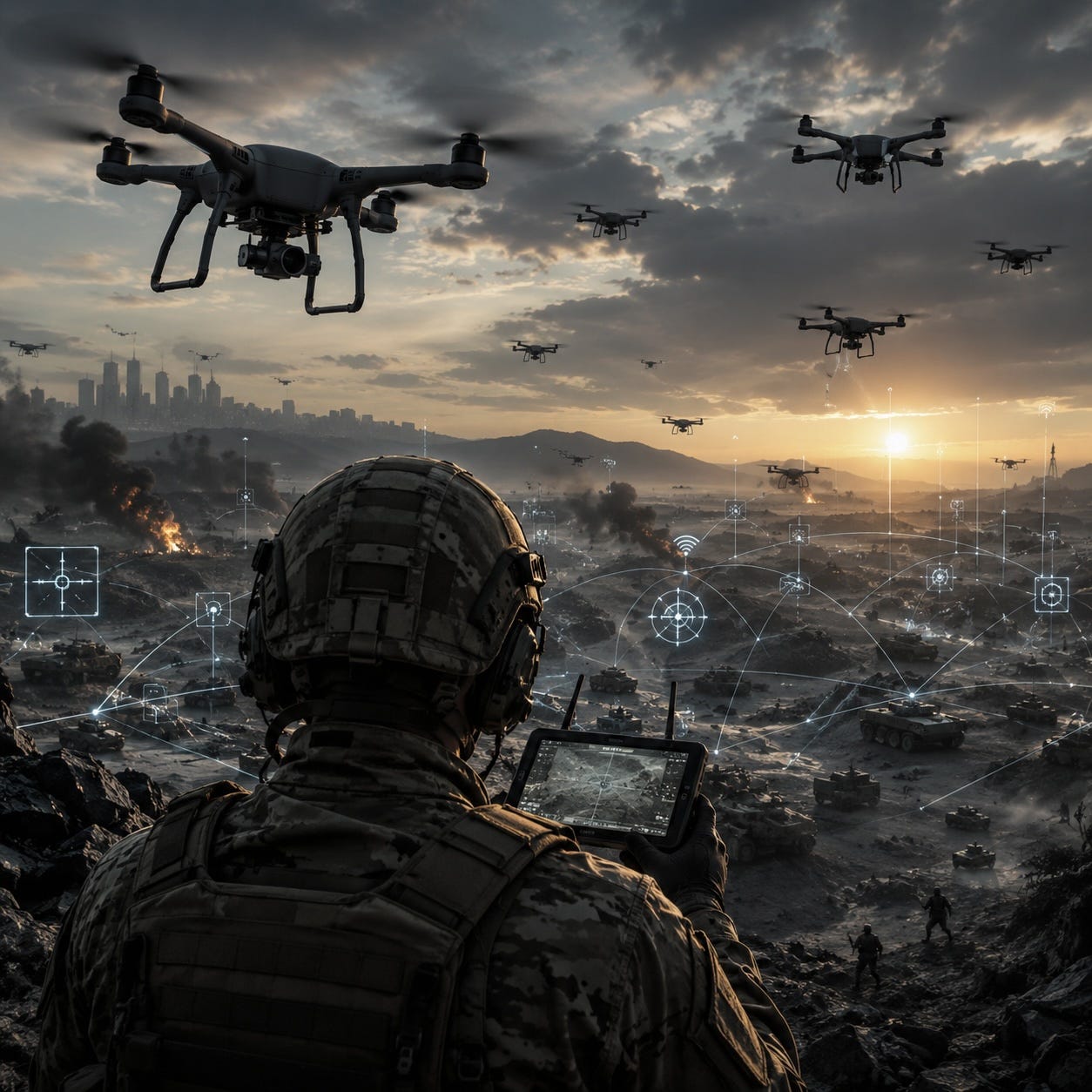
But six years of conflict in Ukraine has shown that while this is not entirely false, the war there is not being shaped solely by platforms costing hundreds of millions of dollars, but by inexpensive, replaceable devices that are updated every few weeks and operated by soldiers who, in many cases, resemble video game pilots more than traditional combatants. As I noted a year ago, the key lies not only in the drone itself, but in the combination of low cost, scale, intelligence, distributed production and accelerated learning.
South Korea has just taken a step that deserves close attention: it aims to train half-a-million “drone warriors”. The goal is not to create an elite unit, but to make drone operation a universal capability, distributed across the army, navy, air force and marines. The plan includes some 11,000 training drones by 2026, around 60,000 by 2029, more than 20,000 inexpensive and expendable drones, loitering munitions and anti-drone systems based on laser and microwaves.
South Korea’s decision cannot be understood without considering two factors. The first is North Korea, which views the conflict in Ukraine as a testing ground to which it has sent soldiers, instructors, and possibly doctrine. The second is demographics: the South Korean military has shrunk by 20% in six years, to about 450,000 personnel, while the male population of draft age is falling rapidly in a country with one of the world’s lowest fertility rates. When there is a shortage of soldiers, the temptation to replace human labor with automation ceases to be a futuristic fantasy and becomes public policy.
That said, training 500,000 people is not the same as having 500,000 operationally capable operators. The bottleneck lies not only in purchasing drones, but also in instructors, non-commissioned officers, non-Chinese components, reliable supply chains, and a doctrine able to absorb technology that changes faster than military procurement processes. Ukraine has been able to do this because it is at war, because there is extraordinary social mobilization, and because lessons learned come back from the front within a matter of days. South Korea, like any democracy at peace, has laws, ministries, certifications, budgets and bureaucracy.
Drones are rewriting the physical rules of the battlefield. In Ukraine, the kill-zone, that strip of territory where any movement exposes soldiers to detection and attack, has expanded from a few kilometers to up to 20, or even more. The concentration of sensors, FPV drones, loitering munitions, electronic warfare and fiber-optic links has turned mobility, traditionally an advantage, into a risk. The front line does not move because anything that moves can be seen.
This alters the economics of war. A cheap drone can destroy a tank, disable a piece of artillery, pursue a soldier or force a convoy to stop. The prestige of expensive systems is pitted against the brutal arithmetic of saturation. A multi-million-dollar anti-aircraft missile against a drone costing a few hundred or a few thousand dollars turns the tables in a war of attrition. Defense is no longer just about armor, but about sensors, jamming, networks, camouflage, redundancy, mass production, and the ability to iterate faster than the enemy. The concept boils down to an uncomfortable idea: drones win battles; components win wars.
Taiwan has understood this as well. Facing China, cannot compete symmetrically in terms of ships, aircraft and missiles, but it can attempt to build a distributed, inexpensive, autonomous and hard to neutralize defense. Its commitment to manufacturing its own drones, reducing dependence on China, and even supplying the United States, shows that the drone is no longer just a weapon: it is industrial policy, technological sovereignty, and geopolitical strategy condensed into a propeller, a camera, and a battery.
The worrying aspect to this is when the human operator is taken out of the loop. Recent reports describe Ukrainian tests of fully autonomous drones capable of attacking without a video link or immediate human decision-making. Although these remain relatively exceptional cases, they are an enormously dangerous moral and legal boundary. The International Committee of the Red Cross has long warned that autonomous systems can erode meaningful human control, the distinction between combatants and civilians, proportionality and accountability.
Drone warfare democratizes certain capabilities, but it does not necessarily democratize responsibility. Who is accountable for a mistaken autonomous attack? The operator who designated the target area? The programmer? The commander? The provider of the computer vision model? The state? The rules of conventional warfare have proved difficult to enforce; in algorithmic warfare, they may become meaningless.
Rather than platform-based organizations, the armies of the future will resemble ecosystems of software, inexpensive hardware, workshops, data, operators, instructors, and learning cycles. Superiority will come not only from having better weapons, but from updating faster, producing closer to the front lines, wasting less time on absurd procurements and understanding that every soldier can be fully multifunctional: a sensor node, pilot, analyst and target.
The big question is not whether drones will change warfare: they already have, and the proof is right there, at Europe’s doorstep. The question is whether our institutions, our treaties, our military doctrines, and our democracies will be able to change at the same pace — or whether we must completely rethink the design of our armies. Because if they do not, the rules of war will not be written by parliaments or international conventions, but by algorithms, makeshift workshops, and the hum of thousands of cheap machines on the battlefield.
(En español, aquí)
메타데이터
- post_id
- 69369c89c890
- slug
- south-korea-is-training-half-a-million-drone-warriors-heres-why-that-matters-69369c89c890
- url
- https://medium.com/enrique-dans/south-korea-is-training-half-a-million-drone-warriors-heres-why-that-matters-69369c89c890
- canonical_url
- https://medium.com/enrique-dans/south-korea-is-training-half-a-million-drone-warriors-heres-why-that-matters-69369c89c890
- author_url
- https://medium.com/@edans
- status
- ok
- fetched_at
- 2026-07-08 20:12:56