Academic Burnout Is Real: Signs You Shouldn’t Ignore
You used to care about your grades. Not just care; you were motivated, driven, committed to doing well. But somewhere along the way…
Academic Burnout Is Real: Signs You Shouldn’t Ignore

You used to care about your grades. Not just care; you were motivated, driven, committed to doing well. But somewhere along the way, something shifted.
Now you’re staring at assignment instructions, and the words blur together. You’re opening your course portal and feeling nothing but dread. You’re thinking about next semester, and your stomach turns.
This isn’t laziness. This isn’t a bad week. This is burnout, and it’s more serious than most people realize.
The Exhaustion That Sleep Won’t Fix
Real burnout doesn’t respond to rest. You can sleep eight hours and wake up just as tired. You can take a weekend off and return Monday feeling like you never stopped.
This is the kind of exhaustion that lives in your bones. It’s not about needing a nap; it’s about running your system so hard for so long that there’s nothing left in reserve.
You know you’re experiencing this when you can’t remember the last time you felt genuinely energized about anything. When even simple tasks feel overwhelming. When you’re physically present but mentally checked out because you simply don’t have the capacity to engage anymore.
This is your body and mind telling you that the current system isn’t sustainable. And if you ignore it long enough, the consequences go way beyond poor grades.
When You Stop Caring About Things That Matter
Here’s one of the clearest signs of burnout: you stop caring about outcomes that used to matter deeply to you.
You submit assignments knowing they’re not your best work, and you feel nothing. You get a grade back that should upset you, and you can barely summon a response. You think about your GPA dropping, and you’re too numb to react.
This emotional flatness isn’t depression, though they can overlap. It’s specific to your academic life; the part of your brain that used to generate motivation and concern about school performance has simply shut down to protect you from constant stress.
When students reach this point, they often think something’s wrong with them personally. They wonder why they can’t “just push through” like they used to. But pushing through is exactly what got them here. Your shutdown isn’t a character flaw; it’s a survival mechanism.
The Physical Symptoms You’re Ignoring
Burnout isn’t just mental and emotional. It manifests physically in ways you might be dismissing as unrelated.
You’re getting sick more often because chronic stress destroys your immune system. You’re having headaches, stomach issues, or muscle tension that won’t resolve. You’re sleeping poorly despite being exhausted. You might be eating too much or too little, using food as one of the few controllable variables in a life that feels chaotic.
Some students develop panic attacks before exams or when they think about upcoming deadlines. Others experience a constant low-grade anxiety that never quite goes away, even during moments that should be relaxing.
Your body is literally telling you that this pace, this pressure, this way of operating isn’t sustainable. And unlike your mind, which you can sometimes override, your body will eventually force the issue through illness or complete breakdown.
When Everything Feels Like Too Much
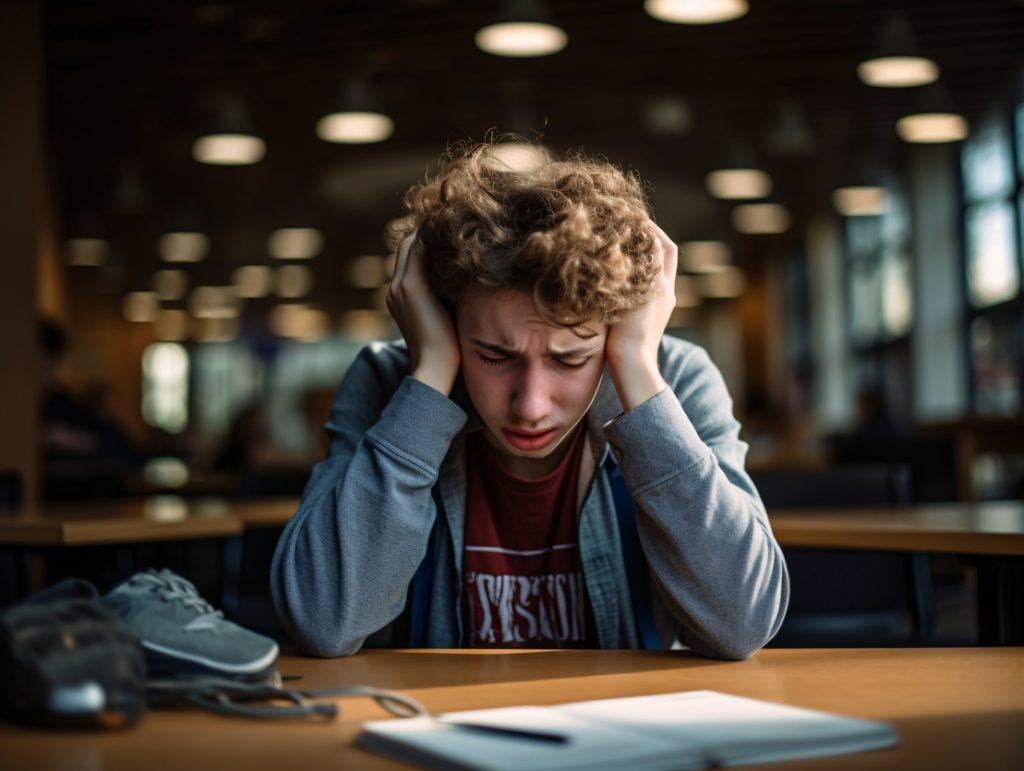
There’s a specific moment in burnout that’s terrifying: when tasks that should be simple feel insurmountably difficult.
Responding to an email takes an hour because you can’t formulate a coherent response. Reading a single chapter requires multiple attempts because you can’t concentrate. Starting an assignment feels like facing a mountain you have no energy to climb.
This isn’t about the difficulty of the work itself. It’s about operating from an empty tank. When you’re burned out, everything requires energy you don’t have. So even small tasks trigger avoidance and procrastination, which then creates more stress, which deepens the burnout.
Students caught in this cycle often think the solution is to work harder, manage time better, or develop more discipline. But that’s like telling someone with a broken leg to just walk it off. The system itself is broken. Working harder within a broken system just accelerates the breakdown.
The Isolation That Makes It Worse
Burnout tends to compound itself through isolation. You stop reaching out to friends because you’re too tired. You skip social events because you “should” be studying, even though you won’t actually study; you’ll just sit there feeling guilty.
You don’t talk about how you’re struggling because you’re embarrassed or worried about judgment. You see other students who seem to be managing fine and assume the problem is uniquely yours.
But here’s what you don’t see: those other students are also struggling. Some are hiding it like you are. Others have support systems and resources you don’t know about. Very few people are actually thriving under the current academic pressure; they’re just better at faking it.
This isolation prevents you from finding solutions. When you hire someone to take online class coursework, you’re not just delegating tasks; you’re breaking the isolation that convinces you that suffering alone is your only option.
What Actually Helps
Recovery from burnout isn’t about trying harder. It’s about fundamental change in how you’re managing your academic responsibilities.
This might mean reducing your course load, but that delays graduation and extends the time you’re paying tuition. It might mean dropping out temporarily, but that risks never returning. The real solution is finding sustainable support that lets you continue progressing without continuing to destroy yourself.
When students decide to take my class through qualified professionals, they’re not giving up — they’re preventing complete collapse. They’re recognizing that getting expert help for their most overwhelming courses creates the breathing room necessary to recover while staying on track academically.
Professional academic support doesn’t just complete assignments. It removes the constant pressure that’s causing the burnout in the first place. When you take my classes for me through master’s degree-qualified tutors, you’re creating space for your nervous system to reset, your motivation to recover, and your health to stabilize.
The Cost of Ignoring Burnout
Untreated burnout doesn’t just go away. It escalates. Students who ignore these warning signs often end up failing classes, dropping out entirely, or experiencing serious health crises that force them to withdraw from everything.
The financial cost is substantial; failed classes mean repeated tuition, and delayed graduation means extended student loan accrual. But the personal cost is even higher. Relationships suffer. Career opportunities vanish. Your sense of self and capability takes damage that’s hard to repair.
Prevention is infinitely cheaper than recovery from a complete breakdown.

Take Action Before It’s Too Late
If you’re recognizing yourself in these signs, you need to act now. Not next semester. Not after finals. Now.
Visit coursetutors.com and request a free quote for the courses that are pushing you toward burnout. Tell us which classes are consuming your mental energy and destroying your health. We’ll match you with master’s degree-qualified tutors who can do my course for me while you focus on recovering your capacity and maintaining what actually matters in your life.
Our tutors handle everything: assignments, exams, discussions, and essays. You communicate directly with your assigned expert through our secure platform, track progress in real-time, and receive guaranteed results backed by our money-back promise.
This isn’t about taking shortcuts. It’s about survival and strategic recovery. It’s about acknowledging that you can’t pour from an empty cup and that sometimes the smartest thing you can do is get qualified help before you completely break down.
Your education matters. But your health, relationships, and long-term well-being matter more. Don’t sacrifice the latter trying to preserve the former through sheer willpower that you don’t actually have.
References:
- American Psychological Association — Student Stress and Mental Health: https://www.apa.org/monitor/2017/09/numbers
- Mayo Clinic — Job Burnout: How to Spot It and Take Action: https://www.mayoclinic.org/healthy-lifestyle/adult-health/in-depth/burnout/art-20046642
메타데이터
- post_id
- 693d00a1b6c3
- slug
- academic-burnout-is-real-signs-you-shouldnt-ignore-693d00a1b6c3
- url
- https://medium.com/@coursetutorsses/academic-burnout-is-real-signs-you-shouldnt-ignore-693d00a1b6c3
- canonical_url
- https://medium.com/@coursetutorsses/academic-burnout-is-real-signs-you-shouldnt-ignore-693d00a1b6c3
- author_url
- https://medium.com/@coursetutorsses
- status
- ok
- fetched_at
- 2026-07-14 13:08:25