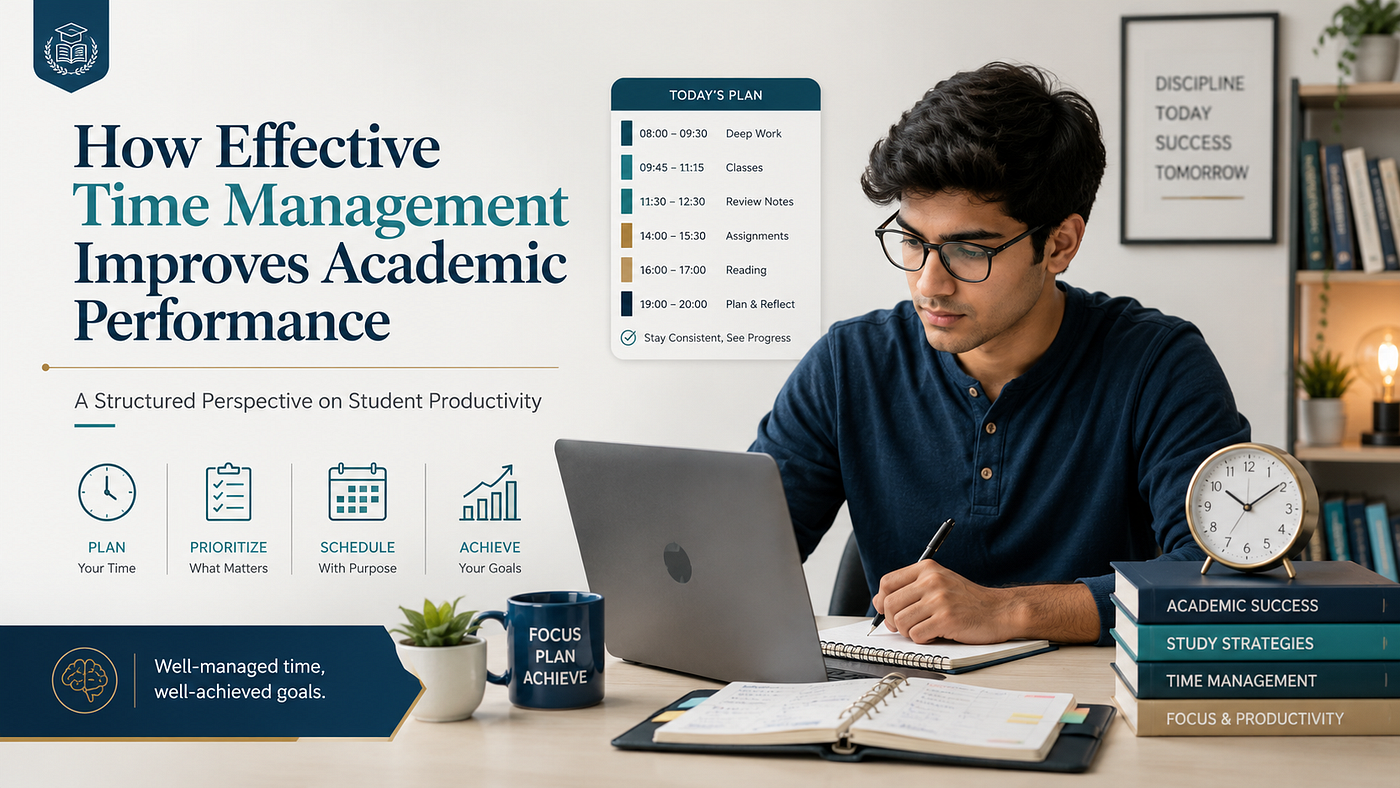
How Effective Time Management Improves Academic Performance
Introduction
How Effective Time Management Improves Academic Performance
Introduction
Throughout my work in education, tutoring, and academic consulting, I have repeatedly observed that student success depends less on natural ability and more on the quality of the process used to complete academic tasks. While many learners focus on grades as the final outcome, experienced educators often pay closer attention to planning, research, analysis, revision, and reflection. These elements consistently separate average work from outstanding work.
One of the most common misconceptions among students is that academic performance is driven primarily by intelligence. In practice, strong results usually emerge from structured habits, realistic planning, and a willingness to improve through feedback. Whether a student is preparing an essay, research paper, thesis, or dissertation, the same principle applies: quality is built gradually through deliberate effort.
In consultations with students from different disciplines, I have noticed recurring patterns. Those who begin early, organize information carefully, and maintain clear objectives tend to experience fewer difficulties later in the process. By contrast, students who postpone important tasks often face unnecessary stress, weaker arguments, and limited opportunities for revision.
Universities increasingly expect students to demonstrate critical thinking, evidence-based reasoning, and independent judgment. These expectations extend beyond simple knowledge acquisition. Students must evaluate sources, compare perspectives, and justify conclusions using credible evidence. Such requirements make academic work both challenging and valuable.
Another important factor involves communication. Even excellent ideas may lose impact if they are presented without clarity or structure. Effective academic writing requires logical progression, coherent paragraphs, and consistent support for major claims. Readers should be able to follow the argument without confusion.
Academic support can play a constructive role in this process. Guidance from instructors, mentors, editors, or consultants often helps students identify weaknesses that may not be obvious during independent work. Additional feedback frequently improves both confidence and final outcomes.
Technology has also changed how students approach academic responsibilities. Modern learners have access to extensive digital resources, organizational systems, and research databases. However, access to information alone does not guarantee success. Students must learn how to evaluate, prioritize, and apply information effectively.
Based on my professional observations, sustainable improvement occurs when students view academic development as a long-term process rather than a series of isolated assignments. Skills gained while completing one project often contribute directly to future academic and professional achievements.
Educators and institutions can support this development by encouraging transparency, structured feedback, and realistic expectations. When students understand both the purpose and the process behind academic requirements, they become more engaged and better prepared for independent work.
Ultimately, successful academic performance reflects a combination of preparation, discipline, adaptability, and support. While challenges are inevitable, students who approach their work systematically are far more likely to achieve meaningful and lasting results.
Professional Perspective
Throughout my work in education, tutoring, and academic consulting, I have repeatedly observed that student success depends less on natural ability and more on the quality of the process used to complete academic tasks. While many learners focus on grades as the final outcome, experienced educators often pay closer attention to planning, research, analysis, revision, and reflection. These elements consistently separate average work from outstanding work.
One of the most common misconceptions among students is that academic performance is driven primarily by intelligence. In practice, strong results usually emerge from structured habits, realistic planning, and a willingness to improve through feedback. Whether a student is preparing an essay, research paper, thesis, or dissertation, the same principle applies: quality is built gradually through deliberate effort.
In consultations with students from different disciplines, I have noticed recurring patterns. Those who begin early, organize information carefully, and maintain clear objectives tend to experience fewer difficulties later in the process. By contrast, students who postpone important tasks often face unnecessary stress, weaker arguments, and limited opportunities for revision.
Universities increasingly expect students to demonstrate critical thinking, evidence-based reasoning, and independent judgment. These expectations extend beyond simple knowledge acquisition. Students must evaluate sources, compare perspectives, and justify conclusions using credible evidence. Such requirements make academic work both challenging and valuable.
Another important factor involves communication. Even excellent ideas may lose impact if they are presented without clarity or structure. Effective academic writing requires logical progression, coherent paragraphs, and consistent support for major claims. Readers should be able to follow the argument without confusion.
Conclusion
The lessons discussed in this article highlight the importance of structured academic practices. Students who invest in planning, research, revision, and continuous improvement are consistently better positioned for success. From my experience, these principles remain relevant across disciplines, institutions, and levels of study.
메타데이터
- post_id
- 694bd9bda7b8
- slug
- how-effective-time-management-improves-academic-performance-694bd9bda7b8
- url
- https://medium.com/@grape.elle/how-effective-time-management-improves-academic-performance-694bd9bda7b8
- canonical_url
- https://medium.com/@grape.elle/how-effective-time-management-improves-academic-performance-694bd9bda7b8
- author_url
- https://medium.com/@grape.elle
- status
- ok
- fetched_at
- 2026-08-01 09:04:44