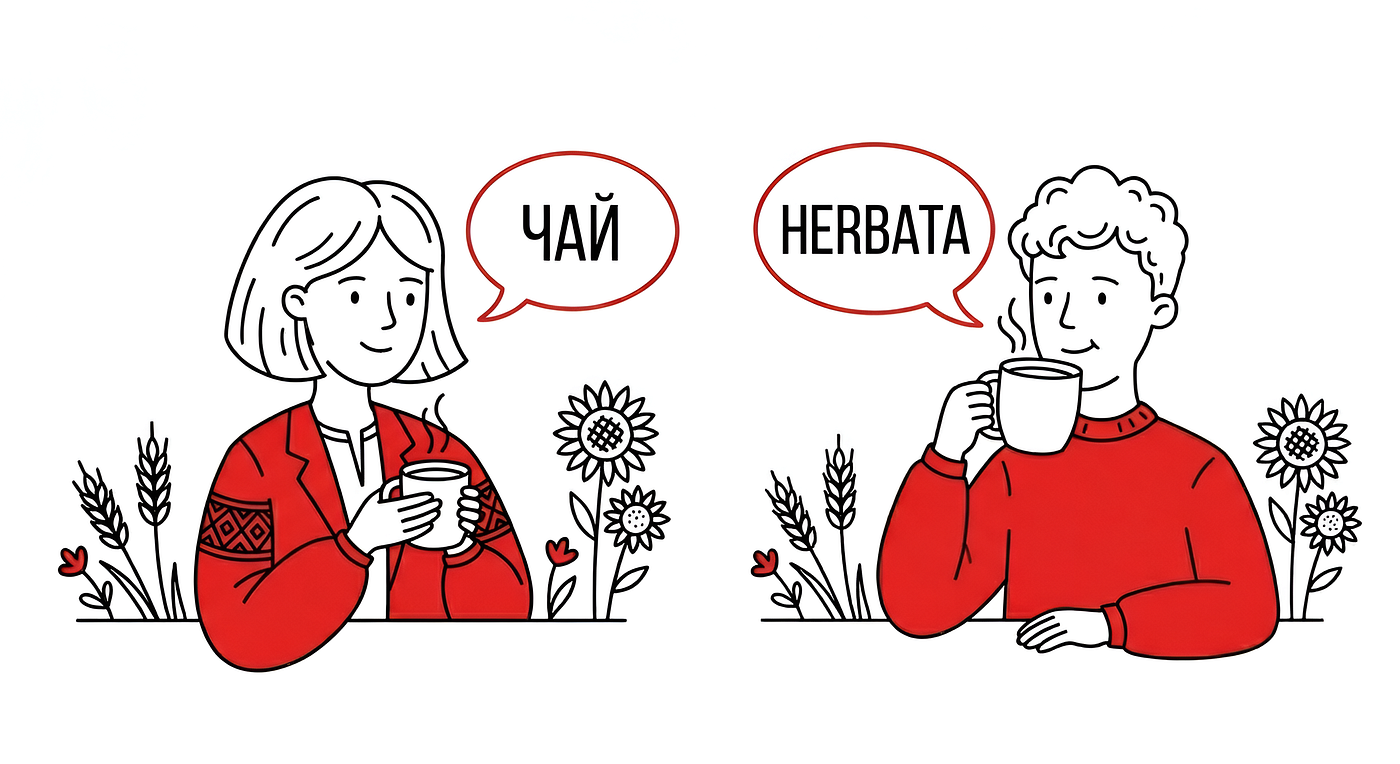
Polish-English False Friends That Can Embarrass You
Some Polish words look perfectly English until they turn an ordinary conversation into a very confusing one
Polish-English False Friends That Can Embarrass You
Some Polish words look perfectly English until they turn an ordinary conversation into a very confusing one
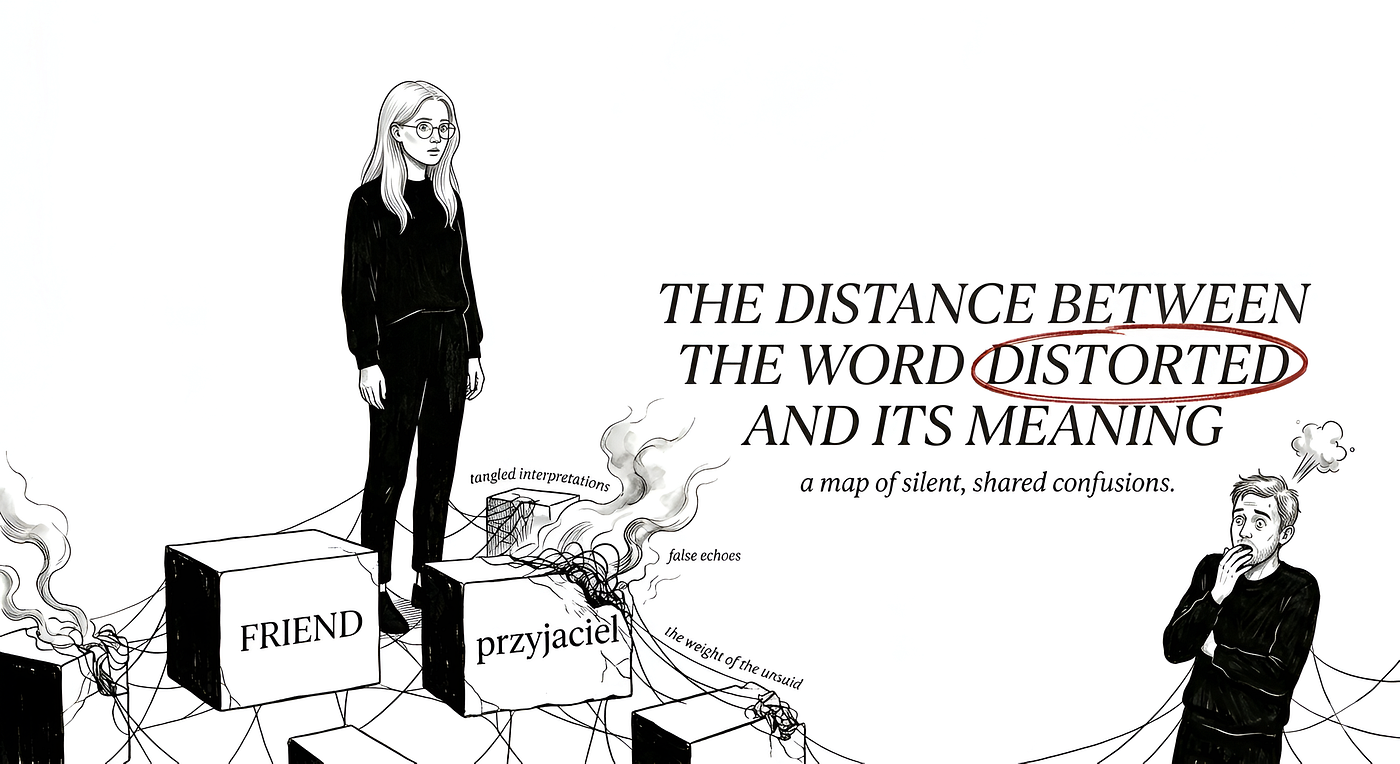
Image generated by the author with Gemini
Remember that scene in EuroTrip where everything goes wrong because of one tiny misunderstanding? Mike gets a letter from his German pen pal “Mieke” and assumes it’s from a guy — turns out Mieke is a girl, and a pretty one at that, and he’s been ignoring her messages for weeks.
We’re not talking about anything that dramatic today.
No missed romantic connections, no transatlantic disasters.
Now, let’s talk about awkward situations.
Even if you’re not learning Polish or English, don’t click away just yet. I promise there’s something useful here for you, too.
Just the everyday kind of awkward — the kind where you walk out of a pharmacy confused, accidentally insult someone’s salary, or compliment a total stranger on how good she looks for her age when she’s 43.
That’s the world of false friends. And it’s a rich one.
False friends — fałszywi przyjaciele in Polish — are words that look or sound almost identical in two languages but mean completely different things.
They exist because Polish and English have both been borrowing from Latin, French, and German for centuries.
- The shapes of words crossed paths.
- The meanings went in opposite directions and never looked back.
Why are they called false friends? Because they behave exactly like that person who smiles warmly, says “I’ve got you” — but will never tell you that your fly is open or your skirt has tucked into your tights.
A real friend would say something.
A false friend just watches it happen.
And here’s why they actually matter beyond fun trivia: false friends create genuinely awkward social situations you cannot take back, have a particular talent for showing up at the worst possible moment — a job interview, a first date, a formal email to someone important.
These are everyday words that come up at work, at the doctor, at the supermarket, and in conversations you actually care about.
Let’s talk about the kind of situations that, with a 100% success rate, produce an impressive blush of embarrassment.
Photo by tommao wang on Unsplash
Total Shame
“receipt” (English) vs. “recepta” (Polish)
You’re in Kraków.
You’ve just seen a doctor.
You walk into the pharmacy, and the pharmacist looks at you expectantly, waiting for your recepta.
You blink. That sounds exactly like “receipt.”
So he wants a receipt? What receipt? You haven’t bought anything yet — he’s supposed to be selling you something.
It’s not a scam.
- A receipt in English is the paper you get after paying, and paragon is the Polish word for that.
- Recepta in Polish means prescription — the document from your doctor.
One gets you the medicine, the other proves you already paid.
“I spent three minutes at a Warsaw pharmacy trying to explain that I didn’t have a receipt because I hadn’t bought anything yet. The pharmacist just stared at me. I still don’t know if she felt pity or contempt.” — Reddit, r/languagelearning
In English: “Can I get a **receipt **for this, please?” = proof of purchase.
In Polish: “Mam **receptę **od lekarza.” = I have a prescription from the doctor.
“pension” (English) vs. “pensja” (Polish)
- *Pension* in English means retirement income** — the money you get when you’ve stopped working.
- Pensja in Polish means salary.
Many people among us genuinely cannot tell someone’s age from a conversation, and there is nothing more awkward than trying to pay a compliment and spectacularly miscalculating.
Imagine chatting with a Polish woman at an event and asking:
“So, are you happy with your pension?”
She looks slightly confused and replies that her pensja (salary) is perfectly adequate and, in any case, none of your business.
You meant retirement income.
She heard a question about her paycheck.
Neither of you is having the conversation you think you’re having.
“I wrote in a job application that I was satisfied with my current pension. I was 26. I did not get a callback.” — Facebook group “Polacy w UK”
In English: “She’s been receiving a **pension** since she retired.”
In Polish: “Jestem zadowolona z mojej **pensji**.” = I’m happy with my salary.
“facet” (English) vs. “facet” (Polish)
Same spelling, zero overlap in meaning — genuinely one of the best traps in this whole list.
- In English, a facet is an aspect or dimension of something: “one facet of the problem.”
- In Polish, facet is casual slang for a guy, a man.
My student wrote in her Polish homework, “najciekawszy facet tej powieści to narrator.” I had to explain she’d just called the narrator “the most interesting dude of the novel.” She refused to believe me for a full minute.
In English: “There’s another **facet** to this situation we haven’t discussed.”
In Polish: “Ten **facet pracuje w banku.” = That guy **works at a bank.
“ordinary” (English) vs. “ordynarny” (Polish)
- In English, ordinary means plain, unremarkable, average, neutral, nothing more.
- In Polish, ordynarny means rude, vulgar, coarse.
These two look almost identical and describe opposite things.
This one is especially dangerous in professional contexts.
Writing that someone’s communication style was “ordinary” in job interview feedback — meaning nothing more than “standard” — while your Polish-speaking colleague reads it as a formal accusation of vulgarity.
In English: “It was just an **ordinary **Tuesday. Nothing special.”
In Polish: “Jego zachowanie było **ordynarne **i nieodpowiednie.” = His behaviour was rude and inappropriate.
“sympathy” (English) vs. “sympatia” (Polish)
- In English, sympathy means you feel sorry for someone, usually because something difficult has happened to them.
- In Polish, sympatia means you like someone — they’re warm, pleasant, enjoyable company.
Almost opposite emotional registers in nearly identical packaging, which means what sounds like a warm compliment in one language sounds like pity in the other.
In English: “I have a lot of **sympathy **for what she’s going through.”
In Polish: “Mam do niej dużą **sympatię**.” = I really like her.
“preservatives” (English) vs. “prezerwatywy” (Polish)
- Preservatives in English = food additives.
- Prezerwatywy in Polish = condoms.
We end here because we must.
“I was in a Polish supermarket and complained loudly that there were too many preservatives in the bread. An elderly woman turned around slowly and looked at me. I have never recovered.” — r/poland
In English: “This bread contains no artificial **preservatives**.”
In Polish: Czy masz przy sobie **prezerwatywy**? = Do you have any condoms with you?
So, Why Does Any of This Actually Matter?
False friends aren’t a quirk of Polish and English specifically — every language pair has them, and every learner walks into at least one of these traps sooner or later.
The whole point of knowing they exist is simple: the next time a word looks familiar, and your brain fires off that little “recognized!” signal, you pause for just one second before trusting it.
Because false friends are the ones that look exactly like something you already know. That’s the whole trick.
And if you’re honest with yourself, has something like this ever happened to you? A word you were absolutely sure about, a sentence that landed completely wrong, a moment where the other person’s face told you something had gone sideways before you even finished speaking?
If yes, you already know exactly why this list exists.
If you’ve ever found yourself in a similar situation, let me know in the comments. I’d love to read your story.
Want more content like this? I write about language learning, Polish, multilingualism, and the things no textbook bothers to warn you about. Follow along — there’s plenty more where this came from.
메타데이터
- post_id
- 697c9f4d9110
- slug
- polish-english-false-friends-that-can-embarrass-you-697c9f4d9110
- url
- https://medium.com/language-mind/polish-english-false-friends-that-can-embarrass-you-697c9f4d9110
- canonical_url
- https://medium.com/language-mind/polish-english-false-friends-that-can-embarrass-you-697c9f4d9110
- author_url
- https://medium.com/@polskizleo
- status
- ok
- fetched_at
- 2026-07-16 00:03:44