The Definitive Guide to A/B Testing for Everyone — Part 1: Introduction
Welcome to our 5-part series on A/B testing, designed for both technical and non-technical audiences. In this first part, we’ll explore…
The Definitive Guide to A/B Testing for Everyone — Part 1: Introduction
Welcome to our 5-part series on A/B testing, designed for both technical and non-technical audiences. In this first part, we’ll explore what A/B testing is, when it’s most effective, and where it can be applied in real-world scenarios. While A/B testing can get complex, this series will focus on essential concepts, practical applications, and real-world examples to help you grasp how companies use A/B testing to make data-driven decisions. We’ll also discuss methods related to A/B testing, such as multivariate testing and multi-armed bandits (in the last part of the series), each with its own strengths and limitations.
What is A/B Testing?
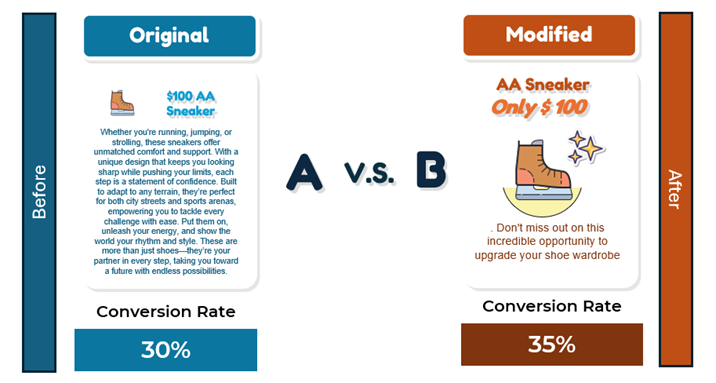
A/B testing, also known as split testing, is a method of comparing two versions of a webpage, app feature, or any other experience to see which one performs better based on a specific business goal, like conversion rate. In a typical A/B test, users are randomly assigned to either the original version (the “control”) or a modified version (the “variant”), and their behavior is measured. Statistical analysis then determines whether any differences in performance are significant or simply due to chance.
When and Where to Use A/B Testing
A/B testing is commonly used in two main scenarios:
- Testing Major Design Choices: This is useful when you want to compare vastly different design options. For example, a homepage heavy on text with calls to action could be tested against a streamlined version with bold images and fewer words. Here, the test would reveal which design drives more clicks, but it won’t isolate the impact of individual elements — it’s about testing the overall direction.

2. Testing Individual Elements: A/B testing is also effective for evaluating the impact of a single change, such as a call-to-action (CTA) button’s wording or color. For instance, a sneaker store might test whether an image of a pair of sneakers or an image of a basketball drives more clicks. In cases where only one element changes, multiple variations can be tested simultaneously (e.g., testing three CTA designs and a control). Such tests are sometimes referred to as “A/B/n” tests.

Why A/B Testing is Powerful
A/B testing is a popular method in product experimentation, especially for product managers, data scientists, and analytics teams. It allows teams to make data-backed decisions about product features and optimizations. Instead of relying on intuition or assumptions, A/B testing provides a structured way to validate changes before deploying them widely.
Let’s look at some typical scenarios:
- E-commerce: Should product listings include available sizes alongside images? Would a search bar in a prominent location increase conversions?
- UI Adjustments: Should the CTA button be centered or aligned to the left? Should it be green or blue? These questions can all be answered through testing.
In each case, A/B testing helps tie the impact of design and content choices directly to user behavior and key business metrics.

Comparing A/B Testing and Multivariate Testing
A/B testing often gets confused with Multivariate Testing (MVT). While both methods share statistical principles, they serve different purposes.

- A/B Testing focuses on testing one change or element at a time, making it simpler to design and interpret. It’s ideal when you want to understand the impact of a single change.
- Multivariate Testing explores how multiple changes interact, often by testing combinations of elements. For example, if you want to test different headlines, images, and button colors, MVT allows you to analyze which combination works best.
Multivariate testing is powerful for revealing interactions between elements, but it requires significantly more traffic to achieve reliable results.
Pros and Cons of A/B Testing and Multivariate Testing

When to Use A/B Testing: Best Use Cases

Avoid A/B Testing When:
- Traffic is Low: It may take too long to gather reliable data if you have a small audience.
- Testing Interdependent Changes: Multivariate testing or other methods are better suited when multiple interacting elements are involved.
- Long-Term Behavior is Key: A/B tests are ideal for immediate impact, not for measuring long-term effects.
Beyond Web Pages: Where Else Can You Run A/B Tests?
A/B testing isn’t limited to websites:

- Emails: Test subject lines, content, or CTAs to improve open and click-through rates.
- Mobile Apps: Experiment with layouts, features, or notification styles.
- Offline Marketing: Test direct mail or store layouts to gauge customer response.
- Product Features: Try new features in software to assess their impact on user engagement.
메타데이터
- post_id
- 698e26e77b2b
- slug
- the-definitive-guide-to-a-b-testing-for-everyone-part-1-introduction-698e26e77b2b
- url
- https://medium.com/@levi_lll/the-definitive-guide-to-a-b-testing-for-everyone-part-1-introduction-698e26e77b2b
- canonical_url
- https://medium.com/@levi_lll/the-definitive-guide-to-a-b-testing-for-everyone-part-1-introduction-698e26e77b2b
- author_url
- https://medium.com/@levi_lll
- status
- ok
- fetched_at
- 2026-06-09 15:37:30