What a Six-Week War Looks Like at Month Three
Missiles over Kuwait, a stalled $24 billion ransom, a new Fed chair walking into an inflation crisis, and a Hezbollah that wasn’t invited…
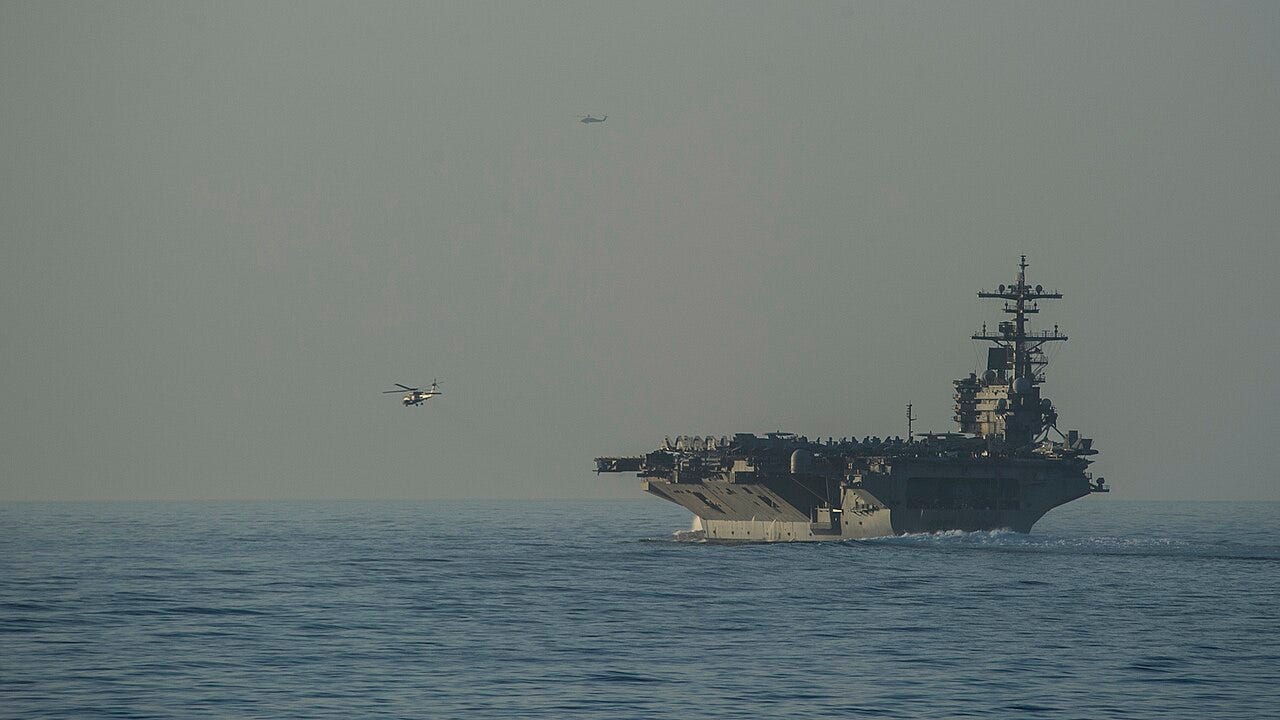
STRAIT OF HORMUZ (June 14, 2014) The aircraft carrier USS George H.W. Bush (CVN 77) transits the Strait of Hormuz with the Arleigh Burke-class guided-missile destroyer USS Truxtun (DDG 103).
What a Six-Week War Looks Like at Month Three
Missiles over Kuwait, a stalled $24 billion ransom, a new Fed chair walking into an inflation crisis, and a Hezbollah that wasn’t invited to the ceasefire it just rejected — the Iran war is no longer a campaign. It’s a condition
In the months since the United States launched its military campaign against Iran on February 28, what was once billed as a swift, decisive operation has evolved into something far more complicated: a grinding, open-ended conflict with no clear exit, a ceasefire that looks increasingly nominal, and a diplomatic impasse that has left the Trump administration caught between its maximalist ambitions and the stubborn realities on the ground.
Across the Persian Gulf, the Strait of Hormuz, Lebanon, and the corridors of global finance, the reverberations of this war are reshaping geopolitics, economics, and institutions in ways that will outlast any eventual peace deal.
President Trump told aides privately that he would only consider ending the ceasefire — formally declared in early April — if Tehran were to kill American troops.
That threshold, according to U.S. officials, reflects a deliberate calculation: the president is willing to absorb a steady stream of violent skirmishes, missile exchanges, and drone attacks rather than re-escalate into the full-scale warfare that characterized the war’s opening weeks.
His reluctance to reignite the conflict suggests he may be willing to endure smaller flare-ups for weeks or even months in order to avoid a broader Middle Eastern conflagration.
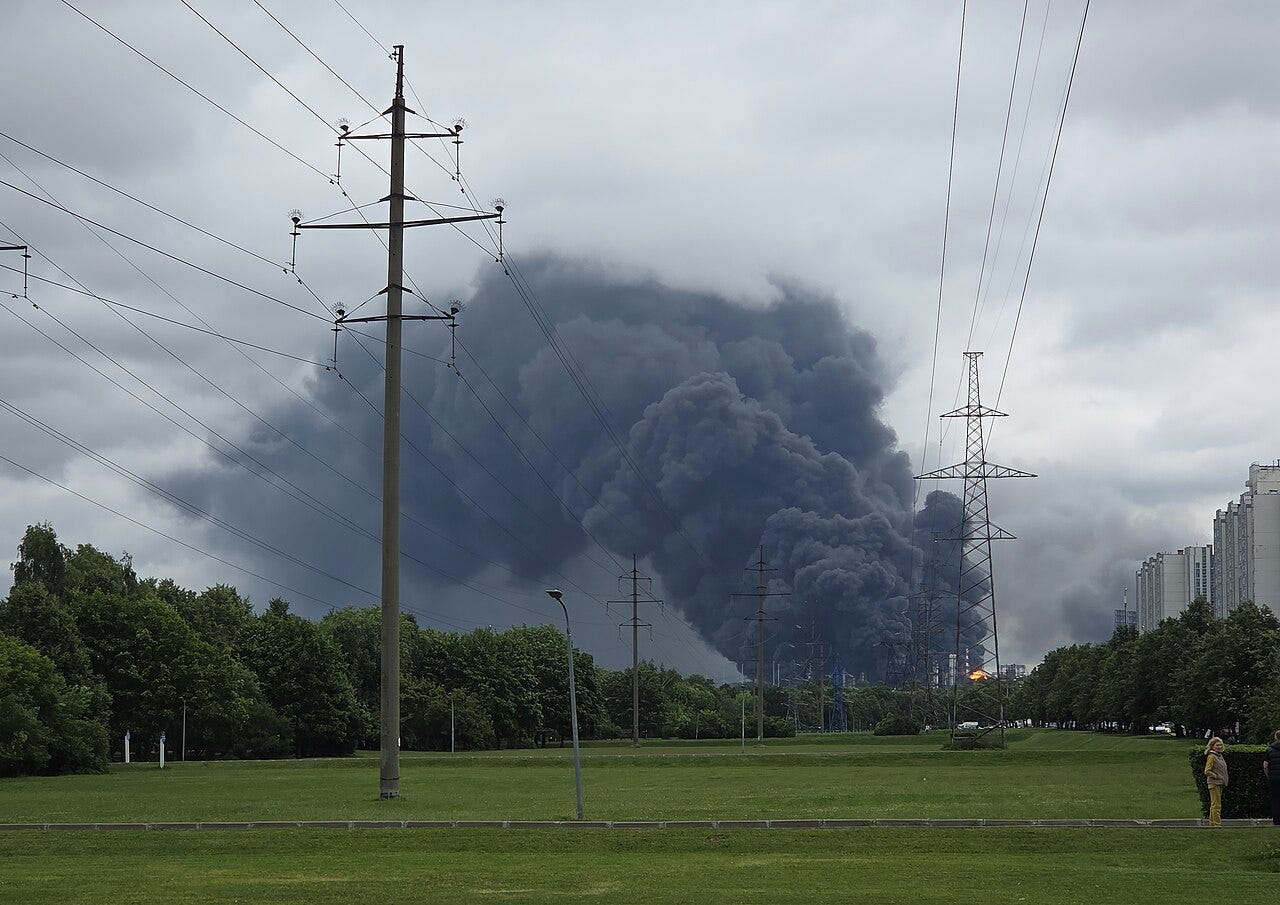
But the very definition of “ceasefire” has become strained almost to the point of absurdity. In the days surrounding early June, the U.S. and Iran engaged in some of the most intense fighting since the April pause went into effect, with Iranian forces firing missiles and drones at regional American bases and striking Kuwait’s international airport — an attack that killed one person and injured more than sixty.
U.S. forces responded with strikes near the Strait of Hormuz. Secretary of State Marco Rubio described these exchanges as purely defensive in nature, insisting they did not constitute a renewal of full-scale war. “They are happening in response to an Iranian action,” Rubio told a House hearing. “If they don’t shoot at those ships, we don’t shoot, but we have to respond.” Trump himself offered a characteristically blunt gloss on the situation: “In that part of the world, ceasefire is when you’re shooting in a more moderate manner.”
This framing, while politically convenient, does little to resolve the underlying strategic impasse. U.S. officials acknowledge that the repeated attacks have ratcheted up pressure on the president and cast serious doubt over the long-term viability of the ceasefire. Trump, for his part, has repeatedly insisted that a comprehensive end-of-war agreement is imminent — one that would reopen the Strait of Hormuz, dismantle Iran’s nuclear program, and eliminate the country’s stockpile of enriched uranium. At the same time, he has admitted he is in no rush to complete the pact, acknowledging in a New York Post interview that it was unlikely — though still possible — that the U.S. blockade of Iranian ports would last until Labor Day. The gap between Trump’s maximalist rhetoric and the diplomatic reality on the ground has become one of the defining tensions of the conflict.
For several weeks, the administration has been attempting to negotiate a “memorandum of understanding” with Iran that would define the issues for talks over a roughly sixty-day period. That effort has repeatedly stalled. Trump rejected Iran’s latest proposal in late May, telling aides that Tehran needed to make serious concessions upfront rather than over an extended timeline — and that the Islamic Republic should receive no benefits until it had done so. Iran’s position, however, is essentially the inverse: it insists it will only negotiate its nuclear program after the United States unfreezes its assets or provides some other significant financial windfall.
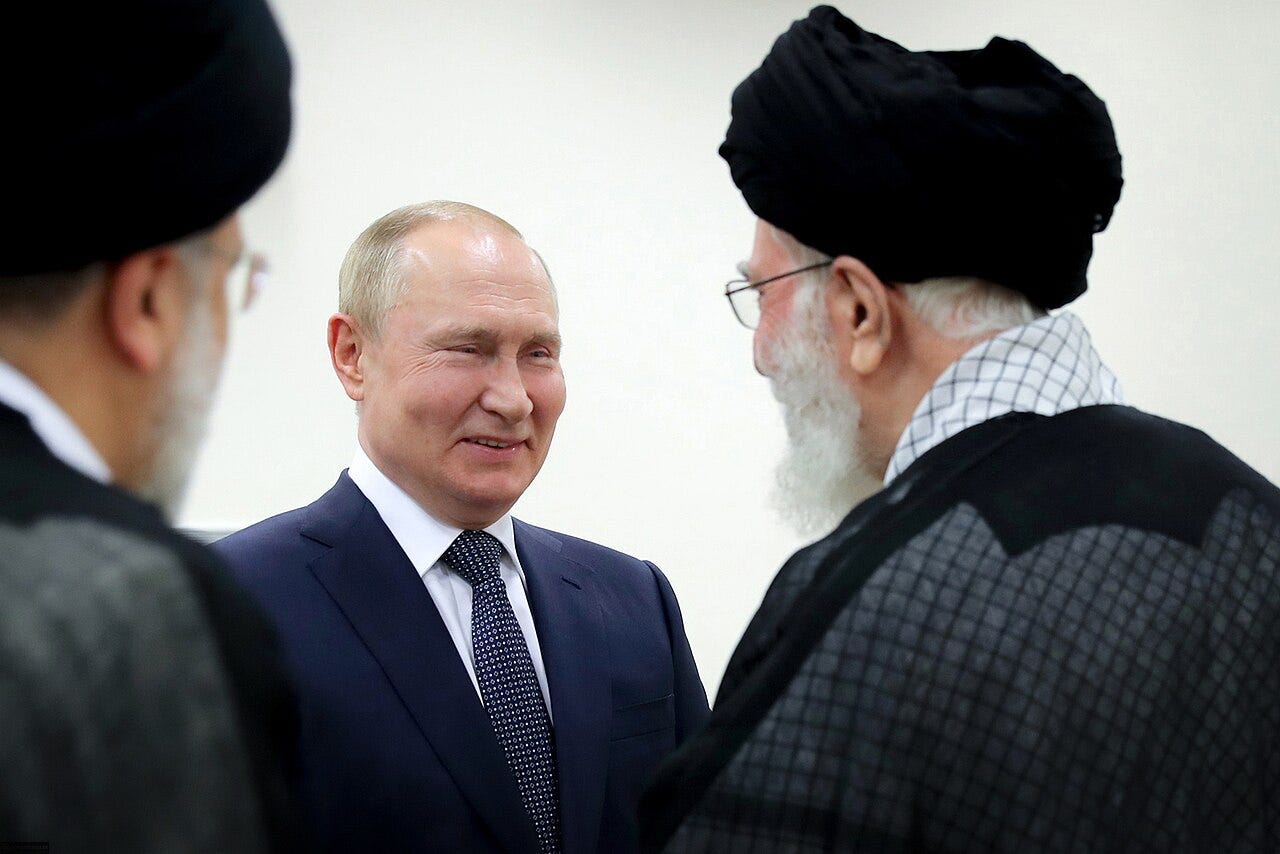
That standoff was given sharper contours by a rare interview with Mohsen Rezaei, a military adviser to Supreme Leader Ayatollah Mojtaba Khamenei and a former commander of the Islamic Revolutionary Guard Corps. Speaking to CNN from Tehran, Rezaei confirmed that the talks had reached a deadlock over the question of $24 billion in frozen Iranian assets — $12 billion to be released upon the signing of an interim agreement, and another $12 billion at a later stage. He framed the demand not as extortion but as a confidence-building measure. “If he wants to reach an agreement with Iran, this $24 billion is a test of trust that Iran wants to have with Trump,” Rezaei said. “This is our own money, not America’s money.” The implication was clear: Washington must demonstrate good faith before Tehran will move.
Rezaei also issued pointed warnings about the consequences of a return to war, suggesting Iran would expand military operations well beyond the Persian Gulf — to the Indian Ocean, the Bab al-Mandab Strait, the Red Sea, and the Mediterranean — should hostilities resume at scale. He described the Islamic Republic as prepared for even a potential U.S. ground invasion, claiming Iran’s land power was “many times greater” than its missile capabilities. And he flatly rejected the prospect of a face-to-face meeting between Supreme Leader Khamenei and President Trump, calling the idea premature and noting that it was Trump who had brought the negotiations to a standstill. This week, Trump told reporters that he and Khamenei “seem to be getting along well” and that he would be “honored” to meet him — a claim Rezaei essentially dismissed.
The question of Iran’s nuclear program remains one of the most contentious issues in the negotiations. Trump has consistently said his top priority is preventing Iran from acquiring nuclear weapons. Yet the U.N. nuclear watchdog reported in early June that Iran’s atomic program remained largely unchanged despite three months of war — a finding that undercuts the administration’s narrative of having decisively set back Tehran’s nuclear ambitions. A senior U.S. official acknowledged that the framework deal being discussed would end the war by first reopening the Strait and unwinding the blockade, with Iran pledging only vaguely to dispose of its highly enriched uranium — without committing to when or how — and without any hard pledge to suspend enrichment for years. Trump publicly suggested the administration did not even need a deal with Iran to acquire its enriched uranium, remarking cryptically that it was “entombed.” Analysts read these as signs that the administration may be quietly lowering its ambitions while maintaining maximalist rhetoric for domestic political consumption.
Complicating the picture further is the situation in Lebanon, where Iran has made a ceasefire between Israel and Hezbollah a condition for any broader peace deal with Washington. The two fronts are now inextricably linked in Tehran’s strategic calculus. Iranian Foreign Minister Abbas Araghchi said that Israeli attacks on Beirut would lead to a return to all-out war, explicitly tying the fate of the U.S.-Iran ceasefire to the conflict in Lebanon. Trump moved swiftly to intervene, angrily pressing Israeli Prime Minister Benjamin Netanyahu to call off a planned military offensive in Beirut after it threatened to derail diplomatic progress. After intensive negotiations, the Israeli and Lebanese governments agreed to renew a ceasefire — but the agreement was made contingent on a cessation of hostilities with Hezbollah, which had not been party to the talks and promptly rejected the arrangement. Hezbollah leader Naim Qassem declared that “resistance will continue,” and Israeli forces kept up their strikes in southern Lebanon, with Defense Minister Israel Katz saying his country’s troops would neither withdraw nor halt operations.
The impasse in Lebanon illustrates a fundamental structural problem with the U.S. diplomatic strategy: the web of interlinked conflicts — Iran, Lebanon, Gaza, the Strait — has created a situation in which progress on any single front is hostage to movement on all the others. Iran’s leverage derives precisely from its ability to keep multiple pressure points active simultaneously. As Steven Cook, a senior fellow at the Council on Foreign Relations, put it: “He does seem stuck. The Iranians are demonstrating that they are willing to endure pain and thus haven’t capitulated. That leaves the president in a bad situation.” Suzanne Maloney, an Iran expert and vice president at the Brookings Institution, was more pointed: “The Iran war seems to be the first mess created by the administration’s predilection for hard power, high-stakes gambits that the president can’t either ignore or extricate us from.”
The economic dimensions of the conflict are, if anything, more immediately consequential than the battlefield dynamics. The Strait of Hormuz — through which approximately one-fifth of the world’s oil and liquefied natural gas ordinarily passes — has been largely closed since the war began three months ago. The effects on global energy markets have been severe and are showing no signs of abating. Oil prices are running roughly thirty percent above their pre-war levels, keeping fuel, diesel, and fertilizer costs elevated across the world, driving inflation, disrupting supply chains, and pushing up food prices globally.
What makes the situation particularly alarming is that analysts believe the damage will persist long after any peace deal is signed. Amin Nasser, the chief executive of Saudi Aramco, told investors in May that even if the Strait reopened immediately, “the market would take months to rebalance.” If the closure continued for even a few more weeks, he warned, normalization could stretch into 2027. Shipping companies that have rerouted their vessels to avoid the Gulf are asking hard questions about whether the risk of returning is worth it. According to Neil Crosby of the commodities intelligence firm Sparta, a single attack on a ship could deter the vast majority of traffic. “Once these stocks begin to be depleted,” Crosby explained, “the only solution will be higher prices, since only with higher prices can you really start to contain demand” — a trajectory he suggested could lead to a doubling of oil prices and a global recession.
The physical damage to Gulf energy infrastructure compounds these concerns. Dozens of oil fields, pipelines, refineries, and liquefied natural gas facilities were struck during the fighting. Rystad Energy estimated the cost of repairs in April at between $25 billion and $58 billion. Qatar’s vast Ras Laffan complex — one of the world’s premier LNG hubs — was particularly hard hit, with Iranian strikes taking seventeen percent of the country’s LNG capacity offline. Qatari authorities have warned that full repairs could take three to five years. Legal complications are adding to the timeline: lawyers consulted by S&P Global Platts say LNG producers may spend years resolving disputes over undelivered contracts, with accumulated delays potentially affecting loading schedules well into 2027. Fatih Birol, the director of the International Energy Agency, warned in May that the oil market could enter a “red zone” by July or August of 2026 as strategic reserves run down.
Against this backdrop, the Federal Reserve has been thrust into a deeply uncomfortable position. Kevin Warsh — the financier and former Fed governor whom Trump nominated in January — was sworn in as the seventeenth chair of the Fed’s board of governors in a White House ceremony on a Friday in late May, taking over from Jerome Powell in the most consequential passing of the baton in decades. Warsh was sworn in by Supreme Court Justice Clarence Thomas, in the opulent East Room of the White House, before an audience that included Treasury Secretary Scott Bessent, House Speaker Mike Johnson, Senate Majority Leader John Thune, former UK Chancellor George Osborne, and former PIMCO chief Mohamed El-Erian. The ceremony was, in its own way, emblematic of the unusual political pressures the new Fed chair will face: the first chair since Alan Greenspan to be sworn in at the White House, Warsh takes the helm of an institution whose independence has been under sustained assault from the very administration that put him there.
Trump, who spent much of the past year calling his predecessor Jerome Powell a “numbskull” and a “moron” for declining to cut interest rates, struck an apparently supportive tone with Warsh. He told him to do his “own thing” as Fed chief, vowed that Warsh would have the “full support” of his administration, and insisted he wanted him to be “totally independent.” At the same time, Trump could not resist editorializing on monetary philosophy: “Unlike some of his predecessors, Kevin understands when the economy is booming, that’s a good thing. We don’t have to go crazy. Just let it boom. We want to stop inflation, but we do not want to stop greatness.”
Markets, however, are not waiting for philosophical reassurance. Wall Street is now fully pricing in a quarter-point interest rate increase by the end of 2026 — a dramatic reversal from the start of the year, when investors were expecting multiple rate cuts. The shift reflects deep investor concerns that the Iran war’s surge in energy and transportation prices will trigger a prolonged bout of high inflation. Market measures of inflation suggest investors believe the rate could reach approximately four percent within a year. Consumer price growth is already running at its highest level in three years, outstripping wage increases. The two-year Treasury yield — which moves with rate expectations — has risen to its highest level in more than a year. Warsh’s first opportunity to put his imprint on policy will come in mid-June, when he chairs the rate-setting Federal Open Market Committee for the first time. Some economists believe the pressure will be irresistible. Steven Blitz of TS Lombard argued that failing to raise rates at that first meeting — even if growth remains steady — would effectively amount to an easing of monetary policy given the rising inflation risk.
While the Fed navigates these pressures, the war has accelerated a longer-term strategic transformation in the Gulf: the rise of homegrown defense industries among the region’s petro-monarchies. For decades, the Gulf states have been among the world’s largest importers of Western arms, spending lavishly on fighter jets, frigates, and advanced weapons systems. The Iran war has hardened their determination to reduce this dependence. Saudi Arabia has set a target of sourcing half its arms budget domestically by 2030, up from a quarter today, and aims to have Saudi Arabia Military Industries in the top twenty-five defense firms globally by revenue — though the company currently produces little beyond spare parts for American fighter jets and armored vehicles. Qatar’s Barzan Holdings has similar ambitions but remains small in scale.
It is in the United Arab Emirates that the transformation is most advanced. In 2019, some twenty-five Emirati defense companies were merged into EDGE Group, a national defense champion that has since bought majority stakes in several foreign firms, entered joint ventures with Italian companies Leonardo and Fincantieri, partnered with Germany’s Rheinmetall on air defense systems, and formed a drone-making joint venture with the American defense-tech firm Anduril. In May 2026, EDGE agreed to acquire an eighty-percent stake in Costruzioni Motori Diesel, an Italian engine manufacturer. Last year its revenue topped $5 billion, with outstanding orders of approximately $8 billion bringing the total backlog to more than $20 billion. The firm exports close to three-quarters of its production to markets in Latin America, Africa, and Asia. Chief executive Hamad al-Marar expects revenue to rise by a fifth over the next two years.
The war has given EDGE’s technology something even more valuable than market share: combat validation. Iran struck the Emirates far more frequently than it struck Saudi Arabia or Qatar. According to Emirati officials, roughly eighty percent of incoming Iranian Shahed drones were neutralized by Emirati-made systems, with EDGE’s electronic warfare platforms spotting and jamming incoming missiles and drones in coordination with American anti-ballistic-missile systems. The company’s products have now been tested under real conditions of sustained attack — a credential no amount of marketing can replicate. The Strait of Hormuz blockade has, ironically, created production delays for EDGE by disrupting supply chains, but the firm’s broader strategic position has been strengthened by the conflict it was built to address. The UAE’s bet on defense self-sufficiency, once seen as ambitious to a fault, now looks farsighted.
Taken together, these interlocking developments — the stalled diplomacy, the grinding skirmishes, the energy market disruptions, the inflationary pressures, the institutional strains, and the accelerating militarization of the Gulf — paint a picture of a conflict that has long since escaped the bounds of the neat six-week operation the Trump administration promised when it launched strikes on February 28. The war has not ended; it has metastasized. And while Trump continues to insist that a deal is close, the gap between his public declarations and the private assessments of his own officials grows harder to bridge with each passing week.
The structural problem, as analysts note, is that Trump faces a genuine strategic dilemma with no obviously good resolution. If he wants to end the conflict quickly, he can — but only by accepting a vague agreement with Iran that falls well short of his stated goals: a fuzzy commitment not to develop nuclear weapons, a pledge to dispose of enriched uranium without specifying when or how, and an agreement to talk about enrichment caps in the future. Such a deal would leave Iran’s nuclear infrastructure largely intact and hand Tehran billions in unfrozen assets. Alternatively, Trump can hold out for the terms he wants — genuine dismantlement of Iran’s nuclear program, hard commitments on enrichment — but those terms are almost certainly beyond reach in any realistic timeframe, and the economic cost of maintaining the blockade will eventually become unsustainable for both sides and the global economy. So far, the president has avoided making a clear choice, oscillating between threats of further military escalation and claims that a comprehensive deal is imminent.
The human and political costs of this ambiguity are mounting. Trump faces a rare rebuke from the House of Representatives, which voted to block him from continuing the war — a largely symbolic gesture given that he is unlikely to sign the measure into law, but a signal of congressional restiveness as midterm elections approach and fuel prices remain elevated.
The Kuwaiti government is dealing with a damaged international airport and a traumatized population. Lebanon is caught between competing ceasefires that none of the key belligerents have fully honored. The Strait of Hormuz — the jugular vein of global energy — remains effectively closed, with no clear timetable for its reopening. And the Federal Reserve’s new chair must chart a monetary course through an inflationary storm not of his making, under the watchful eye of a president who has made his views on interest rates abundantly clear.
For Iran, the calculus looks different. Rezaei framed the current war as the Islamic Republic’s first genuine military victory in its forty-seven-year history — a claim that, whatever its factual merits, reflects a mood of defiant confidence within Tehran’s security establishment.
The country’s oil exports have fallen to their lowest level in six years, and its economy is under severe strain. But Iran has demonstrated a willingness to absorb that pain, and its ability to threaten multiple pressure points simultaneously — the Strait, Lebanon, regional U.S. bases, global shipping lanes — gives it considerable leverage in negotiations.
Supreme Leader Khamenei, who has not been seen in public since suffering injuries in the Israeli airstrike that killed his father on the war’s first day, declared in early June that Iran’s enemies had already been defeated on the battlefield and were seeking to sow internal divisions. Whether that is bravado or strategic communication, it signals that Tehran does not feel cornered.
What the coming weeks and months will test is whether the combination of economic pressure, diplomatic creativity, and political will on both sides can produce a workable agreement before the energy crisis enters the critical phase that analysts are forecasting.
The IEA’s warning that global oil markets could enter a “red zone” by midsummer is not an abstraction; it is a countdown. And with the Federal Reserve potentially tightening monetary policy into an energy-driven inflationary surge, the global economy faces the prospect of a stagflationary shock — high prices and slowing growth — that would far exceed the immediate consequences of the war itself.
The Strait of Hormuz has always been one of the world’s most strategically sensitive chokepoints. It has rarely been more consequential than it is now.
Sources and Further Readings
https://www.wsj.com/world/middle-east/trump-iran-ceasefire-strait-of-hormuz-14d0d265
https://www.ft.com/content/7a0b2b54-c62b-4498-8b8d-512ef7f2cb5d?syn-25a6b1a6=1
https://www.wsj.com/world/middle-east/trump-iran-ceasefire-strait-of-hormuz-14d0d265
메타데이터
- post_id
- 69a5fbd11646
- slug
- what-a-six-week-war-looks-like-at-month-three-69a5fbd11646
- url
- https://medium.com/the-geopolitics-report/what-a-six-week-war-looks-like-at-month-three-69a5fbd11646
- canonical_url
- https://medium.com/the-geopolitics-report/what-a-six-week-war-looks-like-at-month-three-69a5fbd11646
- author_url
- https://medium.com/@jens_sorensen_geopol.
- status
- ok
- fetched_at
- 2026-06-15 20:49:13