Why Data Governance in Healthcare is Critical for Patient Safety and Compliance?
Every second, healthcare systems generate more data than ever imagined, clinical notes, imaging results, wearable sensors, genomics, and…
Why Data Governance in Healthcare is Critical for Patient Safety and Compliance?
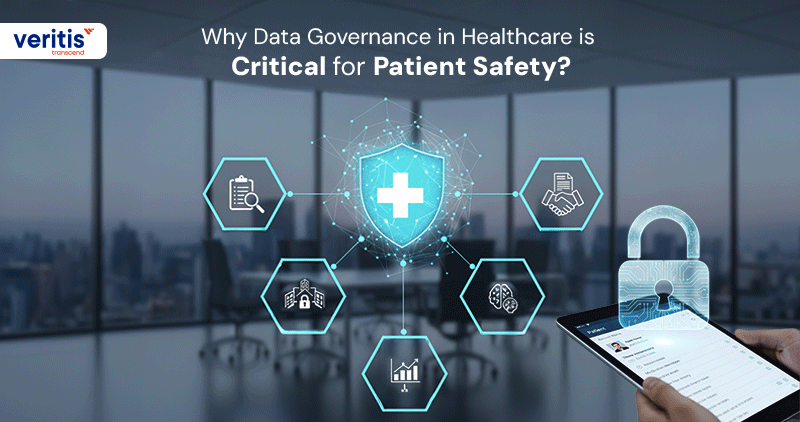
Data Governance in Healthcare
Every second, healthcare systems generate more data than ever imagined, clinical notes, imaging results, wearable sensors, genomics, and patient records flowing across dozens of platforms. Yet the question that defines modern healthcare leadership is not how much data we have, but how much of it we can trust. That’s the essence of data governance in healthcare, turning information chaos into coordinated intelligence that protects patients and drives precision care.
When patient safety depends on a single record, an incorrect data field is not a clerical error; it’s a risk event. CIOs, CTOs, and Chief Data Officers recognize that practical data governance tools and a unified data governance platform have become essential investments, critical to ensuring data integrity, compliance, and patient trust.
As healthcare organizations accelerate digital transformation, they face rising data governance challenges: fragmented systems, inconsistent standards, and ever tightening regulations. In this environment, a well structured data governance strategy defines not how data is managed, but how lives are protected. It connects the dots between technology, trust, and transparency, ensuring that every data point guiding a diagnosis is verified, secure, and aligned with ethical standards.
This is where leadership vision meets execution. Through modern data governance solutions and expert led data governance implementation, forward thinking healthcare enterprises are building patient centric ecosystems where accuracy equals safety. In the sections ahead, we’ll explore how a robust data governance process delivers measurable outcomes, why data governance in healthcare is the foundation of clinical integrity, and how strategic alignment among people, processes, and platforms defines the next era of patient care.
What is Data Governance in Healthcare?
Data governance in healthcare is the foundation that ensures data accuracy, security, and accountability across every clinical and administrative system. It defines how organizations manage, access, and protect sensitive information, including patient records and lab results, as well as billing and insurance data. A strong data governance strategy establishes clear ownership, standardized procedures, and transparent workflows that support clinical decisions and regulatory compliance.
At its core, healthcare data governance combines people, processes, and technology to create an integrated framework for managing information throughout its lifecycle. This includes defining roles for each data governance analyst, setting data quality benchmarks, and implementing reliable data governance tools and a centralized data governance platform to maintain consistency across systems.
The data governance benefits extend far beyond compliance. By enabling trustworthy, real time insights, healthcare leaders can improve patient outcomes, strengthen operational efficiency, and make data driven decisions with confidence. For organizations pursuing enterprise data governance, this approach aligns every department, from IT and security to clinical operations, around a single version of truth.
In practice, effective data governance for healthcare supports both patient data governance and patient centered data governance, ensuring that information guiding treatment is accurate, timely, and ethically used. It also addresses regulatory compliance in healthcare, protecting both the institution’s reputation and patient safety. In a world where data defines care quality, strong data governance implementation is not optional; it’s a strategic necessity for every healthcare organization.
Why is Data Governance Important in Healthcare?
In healthcare, every decision depends on the accuracy and reliability of data. Data governance in healthcare ensures that patient information is consistent, secure, and compliant with regulations. It helps organizations eliminate data silos, reduce medical errors, and strengthen patient trust.
By implementing a robust data governance strategy, healthcare providers can leverage verified data to improve clinical outcomes, streamline operations, and maintain regulatory compliance. With the right data governance tools and data governance platform, leaders can turn raw information into actionable intelligence, making care safer, faster, and more transparent.
In short, effective healthcare data governance connects technology, ethics, and accountability to protect patients and enable more intelligent decision making across the enterprise.
For more Data Governance in Healthcare Key Components, Benefits, Key Challenges, Tools https://www.veritis.com/blog/data-governance-in-healthcare/
Schedule a Call For Data Governance Services
Source: Veritis Group
메타데이터
- post_id
- 69bfc56a2c2f
- slug
- why-data-governance-in-healthcare-is-critical-for-patient-safety-and-compliance-69bfc56a2c2f
- url
- https://medium.com/@veritisgroup/why-data-governance-in-healthcare-is-critical-for-patient-safety-and-compliance-69bfc56a2c2f
- canonical_url
- https://medium.com/@veritisgroup/why-data-governance-in-healthcare-is-critical-for-patient-safety-and-compliance-69bfc56a2c2f
- author_url
- https://medium.com/@veritisgroup
- status
- ok
- fetched_at
- 2026-06-26 06:47:43