The Wisest Thinkers of All Time Were Obsessed With These 6 Habits
If you master them, you out-think 99% of people.
The Wisest Thinkers of All Time Were Obsessed With These 6 Habits
If you master them, you out-think 99% of people.
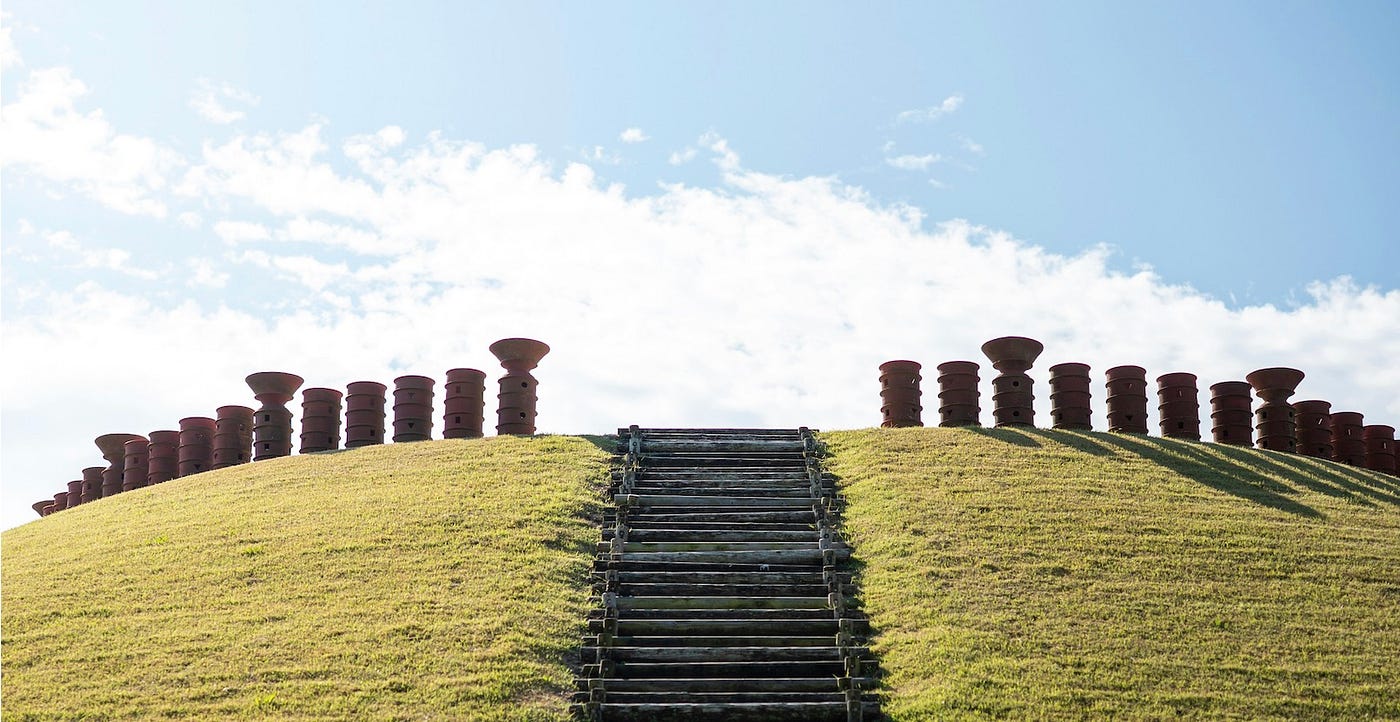
Photo by Kouji Tsuru on Unsplash
I did the hard work so you don’t have to. If you look back at the history of human thought, the truly great minds. From Socrates and Marcus Aurelius to Einstein and Richard Feynman. These thinkers were obsessed with a small set of foundational habits. They mastered the how’s of life. A small set of routines, rituals and skills that compound over time. Newton, Darwin, Montaigne, Franklin and all the thinkers you look up to repeated a set of practices. These made all the difference in their lives.
— Radical simplification (the art of the “clean slate”). The smartest people strip away the distractions until only the essential truth is obvious. There’s a term for it: first principles thinking. Where most people reason by imitation, they reduce their life problems to the most basic, undeniable truths. Then, you built their answers up from there. Socrates used to walk up to men who were sure they understood justice, or courage, or virtue. Then he’d ask one basic question after another until their confidence cracked. People hated him for it.
Richard Feynman turned invisible physics into scenes you could picture. He famously thought if you could not explain a concept to a child, you didn’t truly understand it yourself. “If you can’t explain it simply, you don’t understand it,” he said. Pick something you think you understand well. Your job. A hobby. A way of thinking. Now explain it to a curious person in the simplest way possible. You’ll notice fast which parts you truly get. And which parts you’ve just been repeating without understanding.
For every one of your hard decisions or a complex task, get back to the absolute basic facts. What do you know to be 100% true, and what are you just assuming because it is common practice?
— Aggressive intellectual humility. This is an uncomfortable trait. For most people, their ego gets in the way. The wisest thinkers were remarkably comfortable being wrong. In fact, they actively hunted for their own errors. Most people spend their lives building walls around what they know. And defending their subjective knowledge as the only truth. But the wise thinker treats their beliefs like work in progress.
They want to find the leaks so they can patch them.
Socrates famously summed up his entire philosophy in a single, powerful realisation: “I know that I know nothing.” Darwin spent over twenty years sitting with unanswered questions about species before he published his work on evolution. He allowed the not-knowing to stretch out until the evidence forced an answer. He built a system to pursue the truth. Most of us do the reverse. We remember every fact that proves us right and lose the ones that don’t. Darwin caught himself doing this and built a countermeasure. That’s discipline anyone can copy.
John Maynard Keynes was famously accused of being inconsistent. His reply has outlived most of his economic theories: “When the facts change, I change my mind. What do you do?” If you think you already know or have figured life out, your brain stops looking for better answers. You can practice this by separating your ideas from your identity. You are not your thoughts. Actively look for facts that disprove your favourite theories. It is much better to discover you were wrong than to spend your entire life defending a lie. What you don’t know is not a problem to escape.
— The power of direct observation. People are obsessed with summaries. They want the short version of books, reports and better essays. The wisest thinkers bypass the middlemen. They go straight to the source. Leonardo da Vinci visited dissecting rooms to learn anatomy. He wanted to see how muscles are attached to the bone. He wrote, “Wisdom is the daughter of experience.” Don’t miss valuable details. Make peace with the long source. Get your hands dirty. “Learning is the only thing the mind never exhausts, never fears, and never regrets,” Leonardo said. Francis Bacon, the father of the scientific method (empiricism) argued fiercely against the habit of just reading old summaries of Aristotle. He believed that if you want to know how nature works, you build an experiment and observe it yourself. Summaries sometimes give you the illusion of knowledge without the pleasure of having struggled through the idea yourself. Experience the knowledge yourself. Talk to people. Try things out. Trust what you see or experience over what you are “supposed” to see.
— Writing to think. Montaigne wrote 107 essays to catch his own thoughts. He said, “I have no more made my book than my book has made me.” The writing built his thinking. Benjamin Franklin did something similar with his daily habit. He kept a running log of thirteen virtues and marked, in ink, every day he failed at one to see the pattern. Writing turned “I should be better” into hard, trackable knowledge. You don’t need to be a philosopher to use this. You can keep a notebook. Write in public on your favourite platform. Darwin wrote that he made it a rule to write down any fact, observation, or thought that ran against his general results.
Writing is a cure for the mind. “I write entirely to find out what I’m thinking, what I’m looking at, what I see, and what it means. What I want and what I fear,” says Joan Didion. I like what Bruce Springsteen said in Born to Run, “First, you write for yourself… always, to make sense of experience and the world around you. It’s one of the ways I stay sane. Our stories, our books, our films are how we cope with the random trauma-inducing chaos of life as it plays.”
— Ruthless filtering (the discipline of subtraction). “The soul grows by subtraction, not addition,” philosopher Henry David Thoreau said. The wisest thinkers realised early on that the biggest threat to great work is an abundance of distractions. They didn’t try to do everything. They understood that saying “yes” to something minor means saying “no” to something major. Marcus Aurelius, the roman emperor and stoic philosopher, looked at his massive daily to-do list and gave himself some simple advice. “If you seek tranquillity, do less. Or (more accurately) do what’s essential… Which brings a double satisfaction: to do less, better,” he wrote. Lao Tzu, a Chinese Taoist philosopher, once said, “To attain knowledge, add things every day. To attain wisdom, remove things every day.” Subtract from your mind, thought or calendar to recover your original nature. Approach life with a renewed sense of purpose.
— Strategic isolation. You cannot think, do, or be your best self if you are always interrupted. The great minds built physical and mental spaces where they could be completely alone with their thoughts. Albert Einstein famously spent long periods walking in silence or sailing alone on a lake without a motor. He needed space for his mind to connect the dots. He observed, “The monotony and solitude of a quiet life stimulate the creative mind.” If you are always consuming other people’s ideas, you have no room to generate your own. Philosopher Alan Watts notes, “As muddy water is best cleared by leaving it alone, it could be argued that those who sit quietly and do nothing are making one of the best possible contributions to a world in turmoil.” You can’t do your best thinking in a distracted mind.
“Listen to silence. It has so much to say.” — Rumi
Periodic deliberate isolation won’t fix everything. But it can help you see what needs fixing. It’s a great path to solving problems. A little more silence, a little more clarity.
You don’t need a genius IQ to think like the wisest thinkers in history. None of these hbaits requires special talent. But they do require a habit of mind. If you can change your focus, you will get on the right path. These life habits can do wonders for your life. You can try them or add to them. As the Stoic philosopher Seneca wrote, “As long as you live, keep learning how to live.” Feynman summed up the whole spirit of it in a single quote. I think it’s the best way to end this post. He said, “The first principle is that you must not fool yourself, and you are the easiest person to fool.”You already have everything you need to practice. A notebook. A question you’ve been avoiding. And thirty minutes away from all the distractions.
메타데이터
- post_id
- 69dbf5020eb3
- slug
- the-wisest-thinkers-of-all-time-were-obsessed-with-these-6-habits-69dbf5020eb3
- url
- https://medium.com/personal-growth/the-wisest-thinkers-of-all-time-were-obsessed-with-these-6-habits-69dbf5020eb3
- canonical_url
- https://medium.com/personal-growth/the-wisest-thinkers-of-all-time-were-obsessed-with-these-6-habits-69dbf5020eb3
- author_url
- https://medium.com/@thomas-oppong
- status
- ok
- fetched_at
- 2026-07-16 06:05:14