Powder Coating vs CED vs Liquid Painting — What Actually Works in Real Industrial Use?
If you’ve ever had to choose a surface finishing process for a product, you already know this isn’t a simple “pick one and move on”…
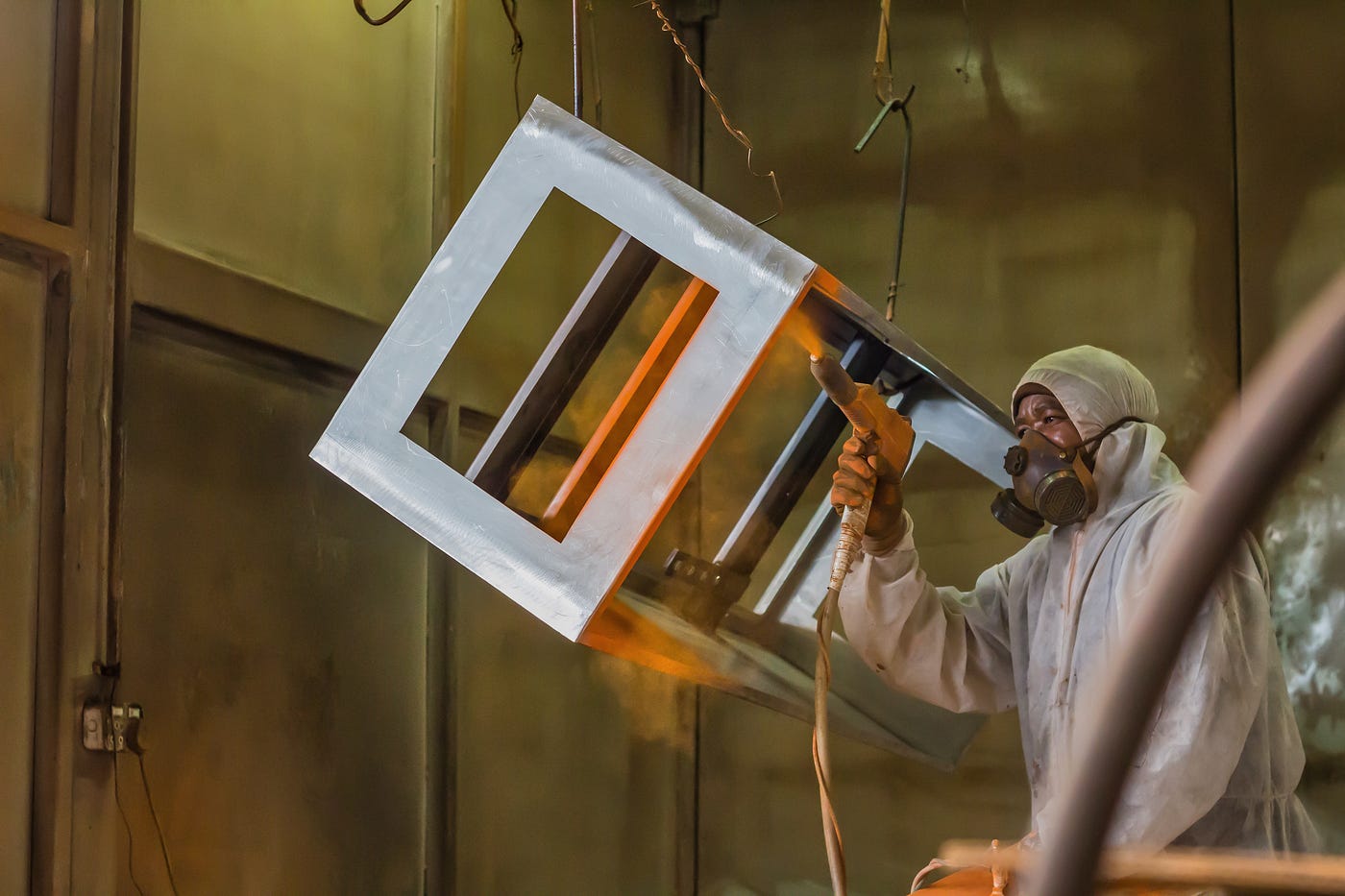
Image by Dewald Van Rensburg from Pixabay
Powder Coating vs CED vs Liquid Painting — What Actually Works in Real Industrial Use?
If you’ve ever had to choose a surface finishing process for a product, you already know this isn’t a simple “pick one and move on” decision.
On paper, powder coating, CED coating, and liquid painting all sound like they solve the same problem: protect metal and make it look good.
In reality, choosing the wrong one can quietly destroy your product over time — corrosion shows up early, finishes start failing, maintenance costs creep up, and suddenly what looked like a small decision becomes expensive.
This is especially true in industries like automotive, electrical enclosures, and heavy fabrication, where finishing isn’t cosmetic — it’s structural.
Let’s break this down properly, without the usual textbook oversimplification.
Where Most People Get It Wrong
A common mistake is comparing these three processes as if they’re interchangeable.
They’re not.
Each one was designed to solve a different kind of problem.
Liquid painting came first — flexible, simple, and adaptable.
Powder coating improved durability and environmental impact.
CED coating, on the other hand, wasn’t built for looks at all. It was built for uniform protection, especially in places you can’t even see.
Once you understand that, the differences start to make sense.
Powder Coating: Durable, Practical, and Widely Misunderstood
Powder coating is often treated as the “default good option,” and for good reason.
It creates a thick, solid layer that can take abuse — scratches, minor impacts, weather exposure. That’s why you see it everywhere from industrial panels to outdoor furniture.
But here’s the catch: powder coating only works well where it can reach.
If your component has internal cavities, sharp edges, or complex geometry, coverage becomes uneven. It’s not a flaw in the process — it’s just physics.
In real-world use, powder coating shines when:
- surfaces are accessible
- durability matters more than precision coverage
- the finish needs to last without constant maintenance
For many applications, that’s enough. But not all.
CED Coating: The One Most People Don’t Fully Understand
CED (Cathodic Electro Deposition) is one of those processes that doesn’t look impressive — until you understand what it’s doing.
Instead of spraying or manually applying coating, parts are dipped into a bath and electrically charged. The coating literally deposits itself evenly across the surface.
Not just the visible surface — every surface.
Inside edges, cavities, corners, recesses — areas where spray methods struggle or fail completely.
This is why CED is heavily used in automotive manufacturing. When a car component starts rusting, it rarely starts on the outside. It starts in hidden areas.
CED solves exactly that problem.
But it’s not meant to look pretty. On its own, it’s more of a functional, protective layer than a final finish.
Liquid Painting: Still Relevant, But Very Context-Dependent
Liquid painting often gets dismissed as “older technology,” but that’s not entirely fair.
It still has one major advantage: flexibility.
If you need very specific colors, finishes, or are working with large structures where setting up a full powder or CED system isn’t practical, liquid painting still makes sense.
The trade-off is consistency and durability.
Because it depends heavily on application conditions and operator skill, results can vary. And compared to powder or CED, it typically won’t last as long in demanding environments.
So while it’s still useful, it’s rarely the best option for high-performance industrial requirements.
What Actually Works in Practice
In real industrial scenarios, the choice is rarely “one vs the other.”
In many industrial setups, combining processes gives better results.
A common example is using CED as a base layer for corrosion protection, followed by powder coating for durability and finish.
This combination gives you:
- internal and external protection
- strong surface durability
- a clean, consistent appearance
It’s not the cheapest option upfront, but it’s often the most cost-effective over time because it reduces failures and maintenance.
So How Do You Choose?
Instead of asking “which is best,” the better question is:
What problem are you trying to prevent?
If your biggest concern is surface wear and tear, powder coating is usually enough.
If corrosion — especially hidden corrosion — is a risk, CED becomes important.
If flexibility and customization matter more than long-term durability, liquid painting still has a place.
And if the application is critical? You combine them.
A Quick Note from Industry Experience
One thing that becomes clear after working with different clients and industries is this:
Most coating failures don’t happen because the process was bad.
They happen because the process was misapplied.
Choosing the right coating isn’t about picking the “best technology.” It’s about matching the process to the actual use case.
That’s where most of the real decision-making lies.
Learn More About Industrial Coating Solutions
If you’re exploring coating options or trying to decide what works best for your application, you can find more details here:
Bisco India works across powder coating, CED coating, and other surface finishing processes, with facilities in Chennai, Mumbai, and Coimbatore.
If you found this useful, follow for more content on tech, manufacturing, and how things actually work in the real world.
메타데이터
- post_id
- 6a2df52f53fc
- slug
- powder-coating-vs-ced-vs-liquid-painting-what-actually-works-in-real-industrial-use-6a2df52f53fc
- url
- https://medium.com/@azfar.faheem/powder-coating-vs-ced-vs-liquid-painting-what-actually-works-in-real-industrial-use-6a2df52f53fc
- canonical_url
- https://medium.com/@azfar.faheem/powder-coating-vs-ced-vs-liquid-painting-what-actually-works-in-real-industrial-use-6a2df52f53fc
- author_url
- https://medium.com/@azfar.faheem
- status
- ok
- fetched_at
- 2026-06-09 15:37:30