The New AI SEO Stack: Insights, Control, and Optimization Across the Website and the Edge
Search visibility is no longer just about ranking in traditional search engines.
The New AI SEO Stack: Insights, Control, and Optimization Across the Website and the Edge
Search visibility is no longer just about ranking in traditional search engines.

As AI assistants, answer engines, and LAG-powered discovery experiences become more important, brands need to think beyond classic SEO. The question is not only whether content can be indexed. It is whether AI agents can access it, whether they should access it, and whether the digital stack can respond with the right improvements.
That is why the next SEO stack is becoming a connected system of insight, control, edge optimization, and website optimization.
AI visibility is no longer a single-tool problem
A lot of teams are starting to group everything under “AI optimization,” but in practice the market is splitting into several distinct patterns.
Some tools are built mainly for insight. They help brands understand how they appear in AI-generated answers, how often they are mentioned, whether they are cited, and where competitors may be winning attention.
Other platforms are focused on control, especially at the edge. These solutions are less about visibility reporting and more about governance. They help answer questions like: Which AI agents are crawling our properties? Which should be allowed? Which should be blocked? How do we manage that consistently across the delivery layer?
Then there is optimization, but even that now splits into two different implementation models:
- optimization applied at the edge specifically for AI agents
- optimization applied through CMS and website systems for broader, durable changes
That distinction matters because not every organization wants to redesign its website experience for all traffic just to improve AI accessibility.
The implementation patterns in the new AI SEO stack
1. Insight-only
Insight tools tell you how AI systems see your brand and content.
This could include:
- whether your brand is being mentioned in AI answers,
- whether your pages or external sources are being cited,
- where competitors are appearing more often,
- what content gaps may be limiting your visibility.
This layer is valuable because it turns AI visibility from a vague concern into something measurable.
But insight alone is not enough. A tool may tell you that your product content is not being surfaced properly in AI-generated answers, but if it cannot help you apply those changes, someone still needs to translate that into content updates, technical fixes, or publishing workflows.

2. Edge control
Control is increasingly becoming an edge problem.
AI crawlers do not all behave the same way, and not every organization wants the same access policy. Some may want broad discoverability. Others may want selective access. Some may want to block specific agents entirely. Others may want tighter governance based on traffic behavior, source, or policy.
This is where edge and CDN platforms become important.
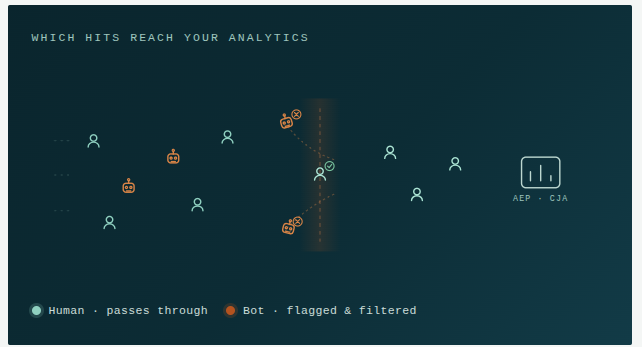
The edge is where organizations can observe AI crawl activity, distinguish it from other bot patterns, and decide what to allow, deny, rate-limit, or manage differently. In many cases, this is also where bot management and security controls start to overlap with AI strategy.
For years, crawl management was treated as a narrow technical SEO issue. Now it is becoming part of a broader governance model that includes bot control, access policies, and traffic intelligence.
In the AI era, crawl control is no longer just a technical setting. It is part of digital strategy.


3. AI-specific edge optimization
Another emerging pattern is AI-specific optimization at the edge.
In this model, the website does not need to fully replace its current rendering or publishing flow for all visitors. Instead, an edge layer detects AI agents and serves them an optimized version of the response, while normal user traffic continues through the existing website experience.
This creates a selective optimization model:
- AI agents receive cleaner, more structured, more crawl-friendly responses
- human users continue to receive the current web experience
- the edge layer becomes the place where AI-specific delivery logic is applied
This is useful when organizations want to improve how AI systems consume their content without immediately changing the full front-end or CMS implementation for everyone.
In practice, that could include:
- simplified HTML for AI agents,
- cleaner structured content,
- reduced script dependency,
- AI-specific metadata or content shaping,
- selective response transformations at the edge
This pattern sits between control and full website optimization. It is not just about blocking or allowing crawlers, and it is not necessarily about rebuilding the full website stack. It is about adapting responses specifically for AI consumers at the edge.
For many enterprise teams, this can be one of the most practical near-term approaches because it improves machine readability without requiring every visitor experience to change at the same time.

4. CMS-connected optimization
The next layer is optimization that is connected directly to website and CMS workflows.
This is where recommendations can actually be applied to websites, authoring systems, content models, or delivery infrastructure. This layer matters because insight without action creates a reporting loop, not an operating model.
Optimization may happen:
- inside a CMS,
- through website integrations,
- through publishing workflows,
- at the delivery layer,
- or through connected tools that can implement changes directly
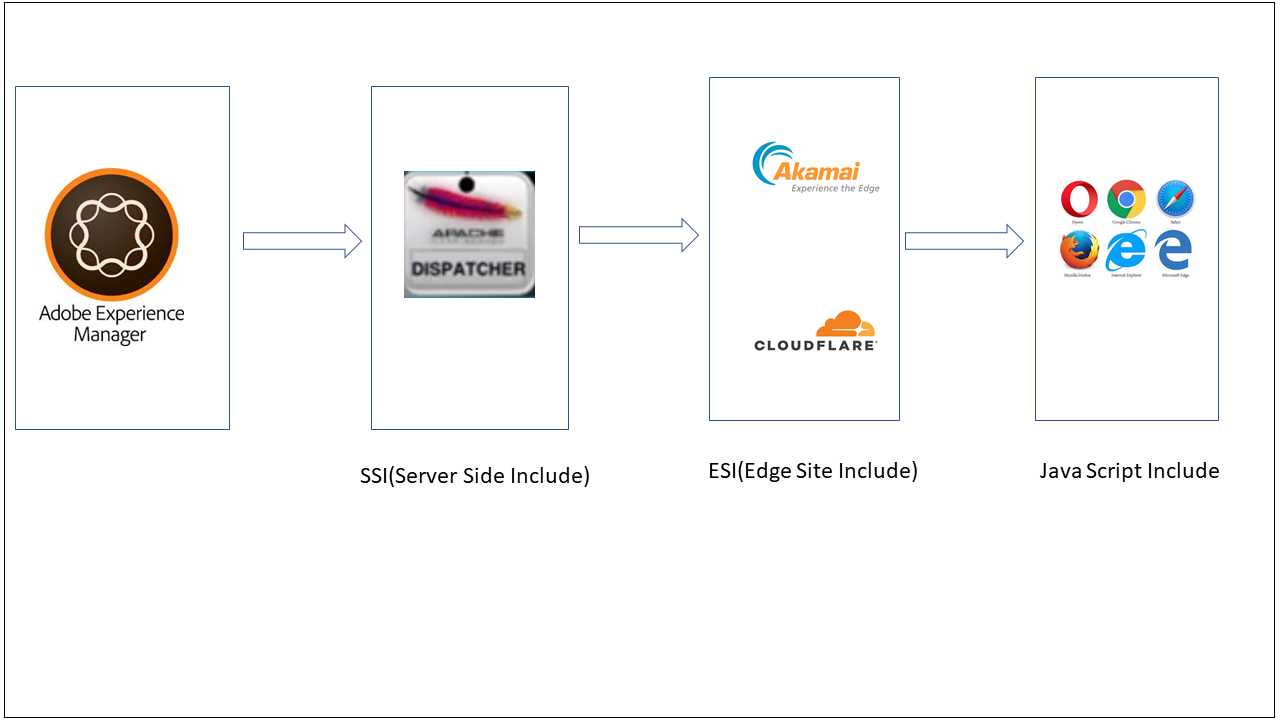
This is where platforms connected to systems like AEM become especially interesting. If a tool can move from insight to recommendation to implementation, it reduces the gap between discovery and action. Instead of creating another analytics stream for teams to review later, it becomes part of the content operations workflow.
That is a much more mature model.

5. The integrated operating model
The most effective organizations will likely not stop at one of these patterns. They will connect them.
The strongest model is a loop:
- Monitor how AI systems and agents interact with brand content
- Control which crawlers can access digital properties and under what conditions
- Optimize at the edge where AI-specific response shaping makes sense
- Apply broader improvements through CMS, website, and publishing workflows
- Measure again to see whether visibility, citation, and traffic outcomes improve
This is much stronger than treating AI search as either a pure SEO problem or a pure bot-management problem.
It is both. And increasingly, it is also a workflow problem.

But in enterprise environments, implementation is rarely just a technical step. Even when a platform can identify opportunities and push recommended changes into workflows, many organizations still require review for compliance, brand governance, accessibility, and legal or regulatory approval. In practice, the real value is often not full automation, but reducing the distance between recommendation, review, and approved execution.
Another emerging pattern is markdown-based delivery for AI agents. Edge optimization platforms, including Adobe LLM Optimizer, Cloudflare, and similar solutions, can support a simpler, more machine-readable representation of content for AI-specific traffic. That makes it possible to improve AI accessibility and parsing without requiring the full user-facing website experience to change for everyone.
Why one tool is rarely enough
The reason this space is getting more interesting is also the reason it is getting more fragmented.
A standalone AI visibility tool may give you strong reporting, but no control and no ability to implement changes.
An edge platform may give you strong crawl governance, but limited understanding of how your brand actually performs inside AI-generated answers.
An edge optimization layer may improve what AI agents receive, but still leave the main website workflow unchanged.
A CMS-connected platform may help apply improvements directly, but still depend on other systems for crawl intelligence or access policy.
That means many organizations will not solve this with one product. They will solve it with a stack.
And that stack will likely look something like this:
- an insight layer to understand AI visibility,
- a control layer at the edge to manage crawler access and policy,
- an AI-specific edge optimization layer to shape responses for AI agents,
- a website/CMS optimization layer to apply durable content and structural improvements
The winning model is not “which single platform does everything?” The winning model is “how do these layers work together?”
Where Adobe, Cloudflare, and others fit
This is also the right way to think about the current vendor landscape.
A platform like Adobe LLM Optimizer is compelling because it sits closer to the insight + optimization side of the stack, especially when connected to systems like AEM. That makes it useful not just for identifying opportunities, but for activating them in multiple ways: through edge optimization for AI-specific traffic -Optimize at Edge | Adobe LLM Optimizer, and through content workflows and implementation paths that drive broader, longer-term improvements across the website.
A platform like Cloudflare is compelling because it sits closer to the control layer, and potentially parts of the edge optimization layer, especially where delivery logic, traffic shaping, and AI-agent-specific handling can happen at the edge -AI Crawl Control | Cloudflare
Then there are other vendors that are effectively insight-only. They may be helpful for monitoring AI visibility, but they do not necessarily control access or optimize websites directly.
None of these approaches are wrong. They are just solving different parts of the same problem.
And that is the key point: the category should not be defined by one vendor or one feature. It should be defined by the operating model.
My takeaway
The next SEO stack will not be defined by rankings alone. It will be defined by whether brands can manage four things together:
- insight into how AI systems see them,
- control over which AI agents can access their content,
- edge optimization to improve what AI agents receive,
- website and CMS optimization that can apply durable improvements across digital properties
That is why AI crawl insights, crawl control, edge optimization, and website optimization should not be discussed as separate categories anymore.
They are becoming one connected discipline.
Because in the age of AI discovery, the question is no longer just:
Can search engines find my content?
It is now:
Can AI systems access it, should they access it, what version of content should they receive, and can my digital stack improve it fast enough to matter?
메타데이터
- post_id
- 6a3f8153751f
- slug
- the-new-ai-seo-stack-insights-control-and-optimization-across-the-website-and-the-edge-6a3f8153751f
- url
- https://medium.com/tech-learnings/the-new-ai-seo-stack-insights-control-and-optimization-across-the-website-and-the-edge-6a3f8153751f
- canonical_url
- https://medium.com/tech-learnings/the-new-ai-seo-stack-insights-control-and-optimization-across-the-website-and-the-edge-6a3f8153751f
- author_url
- https://medium.com/@techforum
- status
- ok
- fetched_at
- 2026-06-12 18:14:10