The Real Difference Between Payer Enrollment and Credentialing
Learn how credentialing proves you’re qualified and payer enrollment gets you paid by insurance — simple, clear steps explained.
The Real Difference Between Payer Enrollment and Credentialing
Learn how credentialing proves you’re qualified and payer enrollment gets you paid by insurance — simple, clear steps explained.
Difference Between Payer Enrollment and Credentialing
Starting a new job as a healthcare provider isn’t always as straightforward as just showing up, meeting your coworkers, and getting introduced to your first patient.
There’s a lot of important paperwork and behind-the-scenes checks that have to happen first — steps that can actually make or break how soon you can see patients and get paid for your work.
If you’ve ever been confused by the words “credentialing” and “payer enrollment,” trust me, you’re not alone.
These two steps can sound like confusing red tape, but they’re essential for making sure doctors, nurses, therapists, and all kinds of healthcare pros are qualified for their jobs and set up to get paid by insurance.
Understanding the difference between these can save clinics and providers from a lot of hassle, rejected claims, and financial headaches later.
So, what do these terms really mean, and why do you have to jump through both hoops before starting to see patients?
Let’s break it down in the simplest way possible.
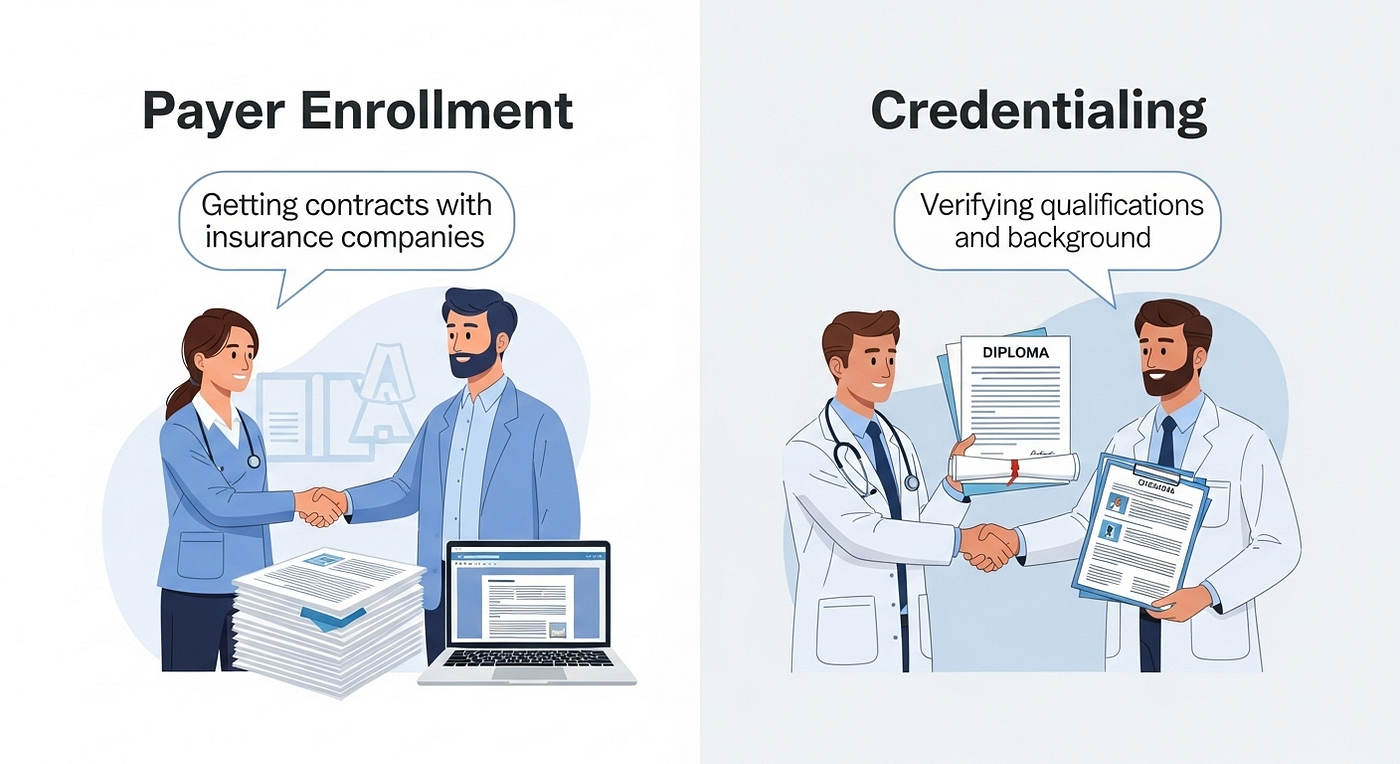
Credentialing: Proving You’re Qualified
Think of credentialing as the process where you show you’re really a pro. The hospital or clinic checks your degrees, licenses, work experience, and even your malpractice history to make sure you’re qualified to take care of patients.
This isn’t just a quick reference check — it’s a deep background scan. Hospitals and insurance networks want to feel confident that whoever treats patients knows exactly what they’re doing.
This process covers:
- Your education and training
- Professional licenses and certificates
- Previous jobs and references
- Any special skills or board certifications
- Insurance history and even a criminal background
And this isn’t something you do just once. Providers have to go through credentialing every few years to keep everything up to date. If you skip a detail or have missing paperwork, the whole thing can drag on for months.
Payer Enrollment: Getting Set to Get Paid
Once you’ve shown you’re qualified, you still have to get the green light from insurance companies, like Medicare, Medicaid, or private plans. This process is called payer enrollment.
It’s basically you (or your office) filling out piles of forms, providing your tax ID, signing contracts, and getting a special provider number.
When your enrollment is approved, you’re officially allowed to send bills to those insurers. If you aren’t enrolled, you can do the work, but you’ll end up waiting (maybe forever) to get paid.
Why Both Steps Matter
Trying to rush through or skip credentialing or enrollment creates big problems down the road.
If you see patients before you’re enrolled, insurance companies might reject all your claims — and that means zero payment.
If your credentialing falls behind or documents go out of date, you risk being dropped from insurance networks or facing audits.
The smartest clinics and providers set reminders, keep all important paperwork in one place, and start early — sometimes months before a new provider is supposed to start seeing patients.
Simple Tips to Avoid Headaches
- Keep digital copies of every document you might need — licenses, diplomas, certificates, and more.
- Don’t wait until the last minute to start credentialing or enrollment.
- Mark your calendar with renewal dates for your licenses and credentials.
- If paperwork is not your thing, it’s worth asking about professional services to handle the process for you!
Both credentialing and payer enrollment may seem like a hassle, but they protect everyone — patients, providers, and healthcare organizations.
The first step proves you’re ready to care for people safely. The second makes sure you get paid for your services.
Tackle both steps calmly, stay organized, and you’ll spend less time on paperwork and more time focusing on your patients.
For more practical tips and real-world solutions on healthcare onboarding, check out the full article on our site!
메타데이터
- post_id
- 6a6c143ed03f
- slug
- the-real-difference-between-payer-enrollment-and-credentialing-6a6c143ed03f
- url
- https://medium.com/@getcredentialingdone/the-real-difference-between-payer-enrollment-and-credentialing-6a6c143ed03f
- canonical_url
- https://medium.com/@getcredentialingdone/the-real-difference-between-payer-enrollment-and-credentialing-6a6c143ed03f
- author_url
- https://medium.com/@getcredentialingdone
- status
- ok
- fetched_at
- 2026-06-24 04:09:36