MD Explains: Is Ozempic-Driven Weight Loss Actually Healthy — or Are We Just Building a Pill to Fix…
A Board-Certified Physician Breaks Down What the Evidence Really Shows
BIOLOGY IS BIOGRAPHY — Essay 3
MD Explains: Is Ozempic-Driven Weight Loss Actually Healthy — or Are We Just Building a Pill to Fix the Pill?
A Board-Certified Physician Breaks Down What the Evidence Really Shows

The tension behind Ozempic‑driven weight loss — the promise of a powerful medication set against the deeper metabolic, behavioral, and clinical tradeoffs. Source: Concept by author created with the help of AI.
A Wegovy prescription is filled in the United States roughly every five seconds.
That number tells you how completely these drugs have won.
What it doesn’t tell you is what they’re quietly teaching us about how medicine still thinks.
This month, Stanford researchers identified a compound — MF‑300, a 15‑PGDH inhibitor — that may help preserve or rebuild muscle lost during GLP‑1 therapy. The compound is already in Phase 1 trials for age-related muscle loss, but the GLP‑1 work itself was conducted in young adult male mice, not in older or obese populations, and certainly not in postmenopausal women.
The science is real, and the intention is good.
But sit with the shape of it.
We built a drug that strips weight so fast it takes muscle with it — between roughly a quarter and nearly forty percent of total weight loss, depending on the study and population. Now we’re building a second drug to put the muscle back.
A pill to fix the pill.
I am a functional medicine physician, and I prescribe GLP‑1s. They are among the most consequential metabolic drugs of my career.
What I want to name is the reflex underneath the muscle-pill story: the assumption that the body is a set of parts to be optimized one at a time.
Lower the weight. Notice the muscle drops. Engineer a molecule for the muscle. When that creates its own downstream effect, engineer the next one.
The body doesn’t work in parts. It works as a pattern.
So is GLP‑1‑driven weight loss actually healthy?
The answer isn’t as simple as “good” or “bad.” It depends on the drug, the speed, what’s being tracked alongside the scale, and whether the hormonal context of the person taking it was ever part of the plan.
Why “Are GLP‑1s Good or Bad?” Is the Wrong Question
A drug that reliably produces 15–22% body-weight loss is not a small thing, and treating it as either a miracle or a menace misses what’s actually happening inside that number.
Dose and drug matter.
Tirzepatide and high-dose semaglutide produce more total weight loss than liraglutide, but the data also suggest they are somewhat less favorable at preserving lean mass along the way, with roughly one quarter of weight lost as lean mass in some trials.
Speed matters. Rapid weight loss of any kind draws down lean mass along with fat; these drugs simply produce that effect faster and more visibly than older, slower approaches ever did.
And baseline hormonal status may matter more than any other variable, which is the piece most coverage of this topic leaves out entirely.
A better question than “are GLP‑1s good or bad” is this: for this person, on this drug, losing weight at this rate, with what hormonal context and what support around it — and is anyone actually measuring what’s being lost?
The Menopause Ground Most Coverage Ignores
The patients most affected by GLP‑1‑related muscle loss are not the ones in the trial photographs.
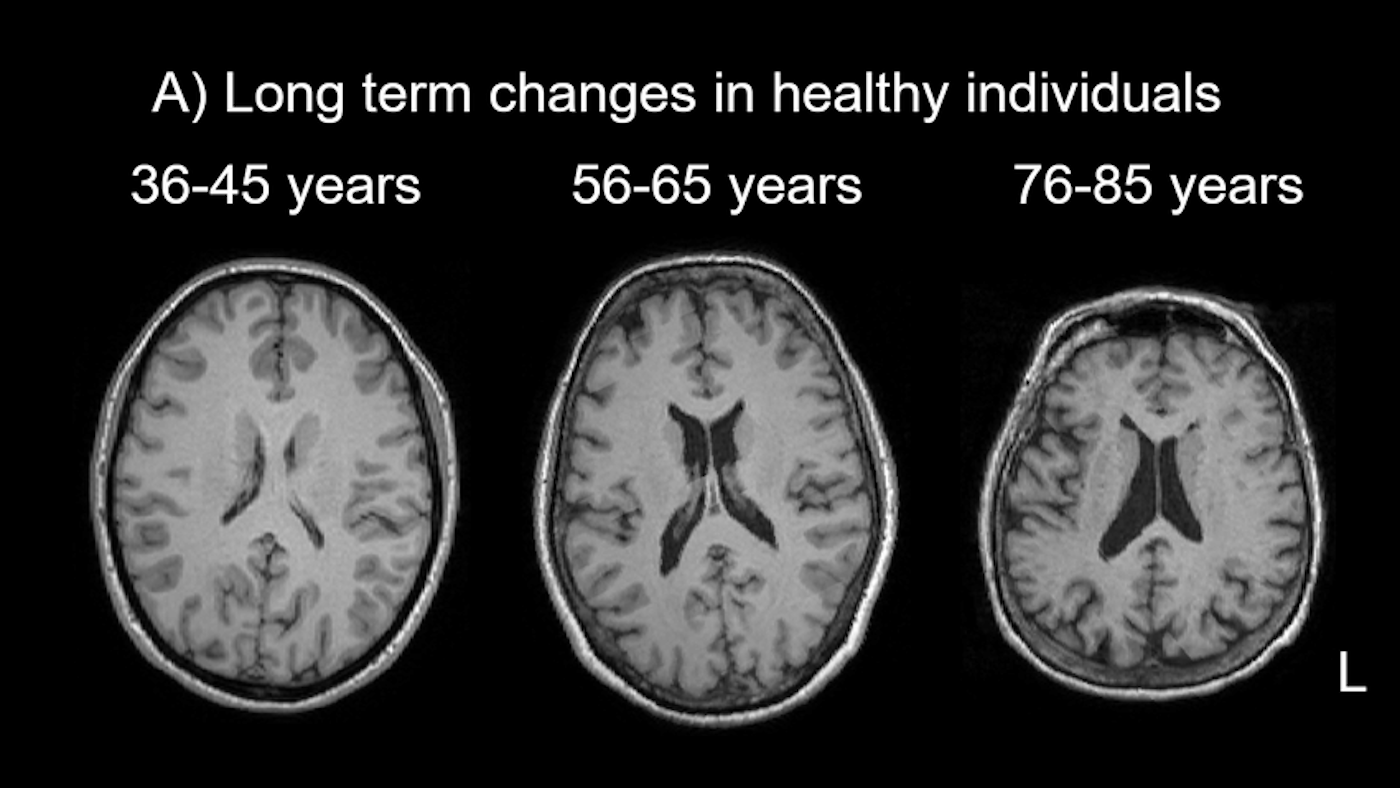
They are postmenopausal women in their fifties and sixties, who arrive already having lost 3–8% of their muscle mass per decade since their thirties. That process begins quietly long before anyone notices and accelerates measurably across the menopausal transition.
Estrogen doesn’t only regulate reproduction. It regulates muscle tissue itself, and when it drops, lean mass drops with it. Being postmenopausal is associated with nearly triple the odds of clinically defined sarcopenia compared to being premenopausal.
That’s the ground many women are already standing on before a GLP‑1 prescription is ever written.
Angela was fifty-five when she came to me asking about skin tightening. She’d lost thirty pounds in six months on tirzepatide, started at a local medical spa that never ran a single new lab before prescribing it — no hormone panel, no cortisol, no vitamin D, nothing beyond a basic panel drawn a year earlier. She didn’t want surgery.
She wanted her face back.
What she had instead was loose skin along her jaw and neck, weakness, fatigue, endurance that had quietly disappeared, and a list of complaints long enough to fill the intake form twice.
Her workup told a different story than either of us expected.
A flat cortisol curve. Testosterone barely detectable. Estrogen and progesterone both critically low. Severe vitamin D deficiency. Iron deficiency with a microcytic pattern her hemoglobin alone had never flagged, because 11 still reads as technically “fine” on a standard panel.
She didn’t need a surgeon. She needed her hormones rebuilt, an iron infusion, and a real vitamin D correction — not a scalpel for a face that was only reporting what her whole endocrine system was already doing.
Her concern about her face was real; it was also the only thing that got anyone to look under the hood.
Within weeks, she’d gained back five of the thirty pounds, started sleeping through the night, and told me: “I can finally feel like myself again.”
Nothing went wrong with the drug, in the way most people mean that. It worked exactly as designed.
What Angela’s spa never checked was the ground she was standing on before they prescribed it — a woman already compounding natural hormonal decline into a single year of pharmaceutical weight loss, with no baseline to even notice the compounding was happening.
We will never know how much of her picture was pre-existing endocrine decline and micronutrient deficiency versus GLP‑1–accelerated loss; what we do know is that nobody checked before they turned the dial.
What GLP‑1 Drugs Actually Do in Your Body
GLP‑1 receptor agonists mimic a hormone your gut already makes after eating, which signals the brain’s satiety centers, slows gastric emptying, and improves insulin secretion in response to glucose. Tirzepatide adds a second mechanism, also activating the GIP receptor, which appears to be part of why it produces greater weight loss than semaglutide alone.
The weight loss comes almost entirely from eating less.
These drugs don’t burn fat directly — they make a sustained calorie deficit far easier than willpower alone typically allows. That deficit is where the muscle question enters.
Any sustained calorie deficit forces the body to draw on stored energy, and skeletal muscle is metabolically expensive tissue the body will break down for fuel if the signals to preserve it — primarily resistance training and adequate protein — aren’t present.
Here’s a nuance most coverage misses: in several major trials I’ll discuss below, lean mass as a proportion of total body weight stayed the same or even improved, because fat fell faster than muscle, even though the absolute amount of muscle still declined. In other words, patients often look leaner by ratio while quietly losing real, measurable muscle in absolute terms.
Both things are true at once, which is exactly why a single verdict of “good” or “bad” fails here.
There’s also a hormonal layer specific to the population most affected. Estrogen supports muscle protein synthesis and modulates some of the same inflammatory pathways that drive age-related muscle loss.
A postmenopausal woman starting a GLP‑1 is not starting from the same baseline as a premenopausal woman or a man of the same age — she is layering a rapid, drug-induced catabolic period on top of a hormonal environment that was already working against her muscle mass before she ever filled the prescription.
The misconception worth correcting: these drugs don’t directly cause muscle wasting the way a catabolic illness does.
What they do is remove appetite as a natural brake on intake, at a scale most people have never experienced, which means the usual protective habits have to become deliberate instead of automatic — and for a postmenopausal woman, deliberate has to include the hormonal conversation too, not just protein and resistance training.
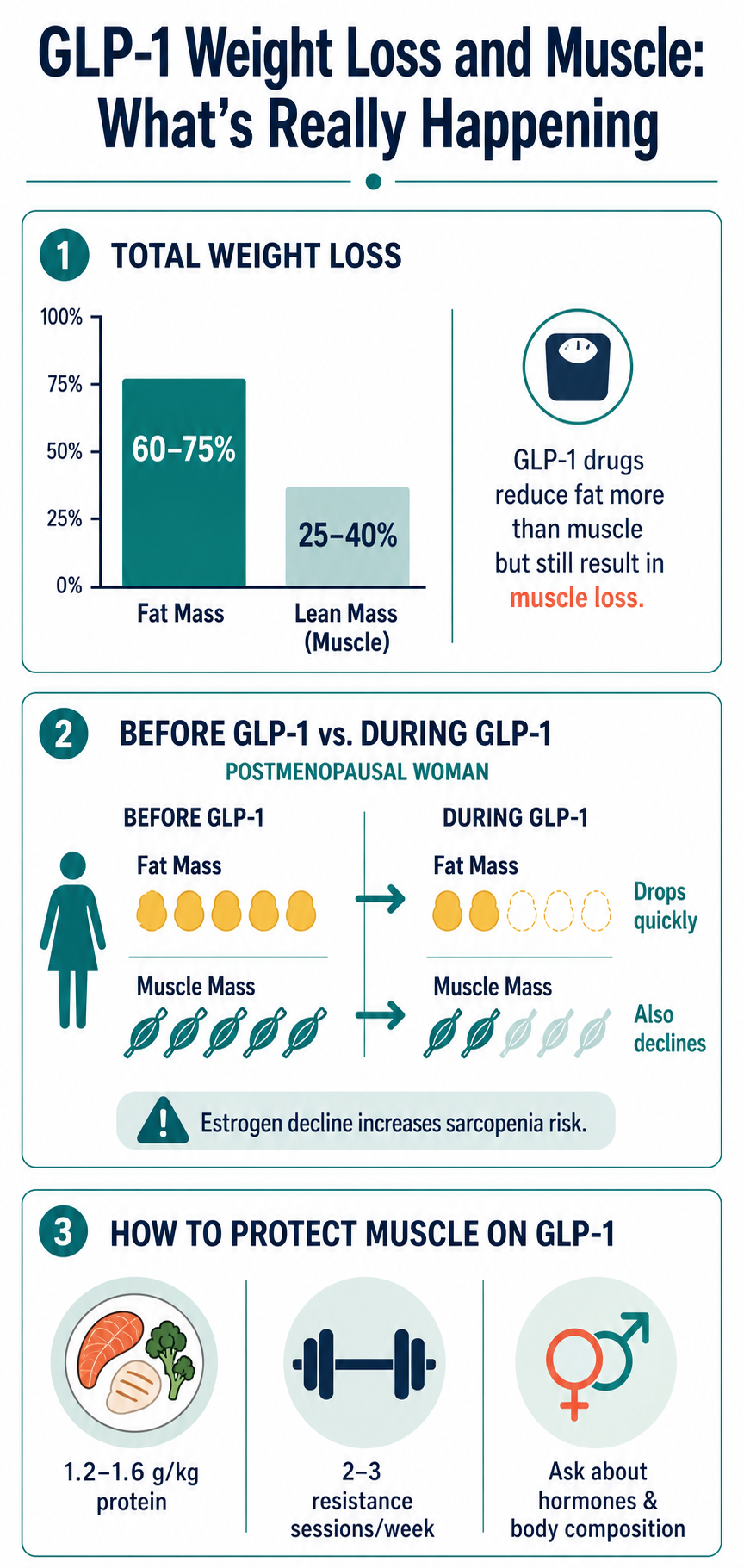
Infographic 1: How GLP-1 drugs affect fat and muscle — and what to do about it. Source: author.
What the Studies Show
The Scale of the Problem
Recent analyses pooling data from major semaglutide and tirzepatide trials estimate that lean mass accounts for roughly 25–39% of total weight lost on these drugs.
That range itself is informative — it moves with drug, dose, and population, not a fixed law of the medication.
A 2025 mini-review synthesizing GLP‑1 body composition data in older adults estimated that lean mass loss on the order of about 6.5 kilograms over roughly 70–72 weeks of treatment is comparable in magnitude to what a body typically loses across an entire decade of normal aging, based on long-term cohort studies of muscle loss with age. Compressed into a single year, that’s not a subtle effect.
That comparison comes from putting DEXA-measured lean mass changes in GLP‑1 trials next to cohort estimates of age-related muscle loss; it’s an interpretive benchmark, not a trial’s primary endpoint.
So where does that leave us?
The magnitude is real and well-documented. What’s still inconsistent across the literature is how much of that loss is preventable with the right support built in from day one — which is a very different question than whether the loss happens at all.
The Menopause-Specific Data
Research on sarcopenia and menopause has established that postmenopausal status is associated with nearly triple the odds of clinically defined sarcopenia compared to premenopausal status.
Muscle loss of 3–8% per decade, beginning as early as the thirties, accelerates measurably across the menopausal transition itself, independent of any medication.
A 2025 mini-review in the *Journal of Nutrition, Health and Aging* synthesizing body composition data from intentional weight-loss and GLP‑1 cessation studies in older adults, including postmenopausal women, found something worth sitting with: mean weight regain of 3.65 kilograms at twelve months, of which 2.52 kilograms was fat — while lean mass continued to decline by another 0.12 kilograms even after drug cessation.
These findings come from pooled small datasets rather than a single large follow-up cohort, but the pattern is consistent enough to warrant attention.
In early data, the body often doesn’t return the way it left. Fat comes back faster than muscle does.
A patient can end up at a similar weight to where she started, with materially less of the tissue that keeps her metabolically active, mobile, and resistant to falls.
The limitation here is real: the available data on GLP‑1 cessation in postmenopausal women draws from relatively small cohorts and does not yet tell us whether that pattern holds at two or five years post-cessation.
But it’s the first signal suggesting the muscle question doesn’t end when the prescription does.
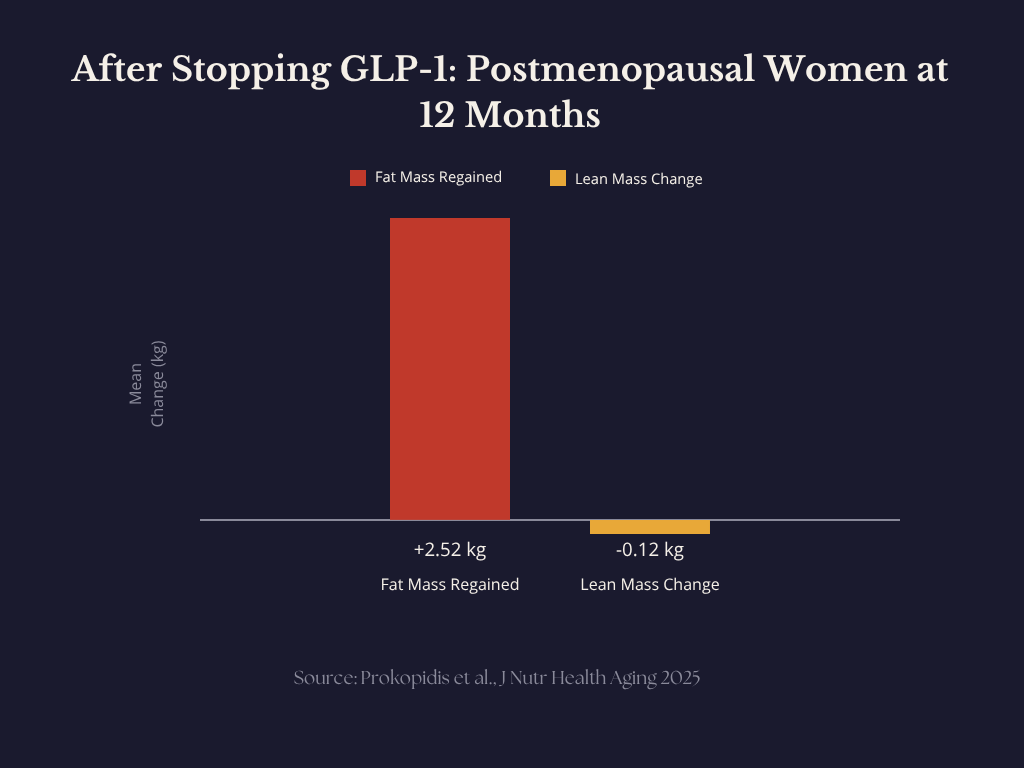
At 12 months after stopping GLP-1 therapy, postmenopausal women regained fat mass while lean mass continued to decline. Source: Prokopidis et al., J Nutr Health Aging 2025.
Short-Term Trials: What Body Composition Sub-Studies Show
The semaglutide STEP 1 body composition sub-study, using DEXA scanning in a subset of participants, found that fat mass fell substantially more than lean mass in absolute terms, with lean mass as a share of total body weight generally holding steady or increasing.
These findings are often cited as reassurance that the weight loss is “real” fat loss, not simple muscle wasting.
The tirzepatide SURMOUNT-1 body composition sub-study told a similar but somewhat less favorable story: across the trial, roughly a quarter of total weight lost was lean mass. Both trials included structured dietary and activity counseling as part of the protocol — support that isn’t guaranteed once a drug moves from a controlled study into routine prescribing.
So how do we reconcile reassuring trial data with a real-world pattern that looks more concerning?
By recognizing that the trials tested the drug plus support.
Routine prescribing often delivers the drug alone.
The Muscle Pill Itself: What It Can and Cannot Answer
The Stanford compound announced this month targets muscle preservation directly at the molecular level, and if it works as intended in humans, it will genuinely help some patients.
In mouse models, MF‑300 shortened recovery time after muscle injury and improved markers of muscle repair during GLP‑1–induced weight loss.
To be precise about what it can’t do: it treats the downstream effect of a catabolic state without addressing why that state exists for a given patient in the first place — the drug’s speed, the dose, the protein intake, the resistance-training signal, or the hormonal environment it’s landing in. And again, it was tested in young adult male mice, not in the older or female populations who carry the highest actual risk from GLP‑1-related muscle loss.
A pill can be taken in the same five seconds as the original prescription.
Resistance training, protein intake, and hormonal evaluation take months, a relationship, and a clinician with time to build them in.
The market rewards the molecule. The body rewards the practice. Neither fact tells you the molecule is wrong — only that it’s answering a narrower question than the one most patients are actually asking.
Why Studies Don’t All Agree
Several real variables explain the spread in this literature.
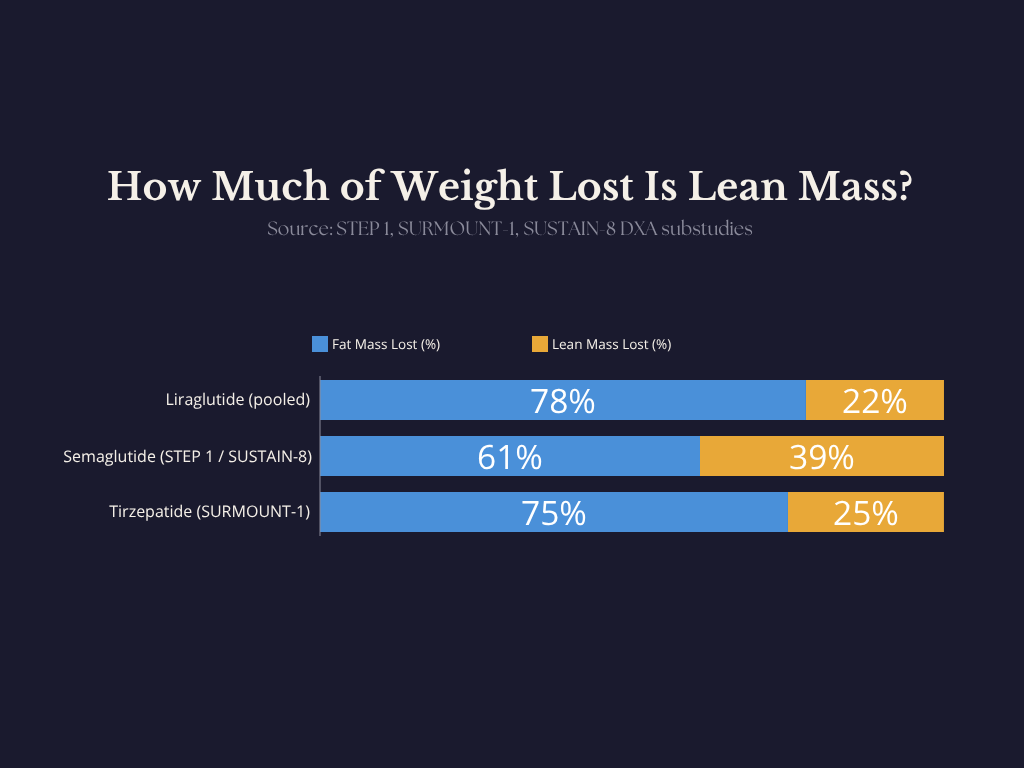
Lean mass as a percentage of total weight lost varies by GLP-1 drug. Each bar represents 100% of weight lost. Source: STEP 1, SURMOUNT-1, and SUSTAIN-8 DXA substudies.
Drug and dose differences are the clearest signal: tirzepatide and high-dose semaglutide produce the most total weight loss and, consistently, the least favorable lean-mass-to-fat-mass ratio, while agents like liraglutide produce less total weight loss with less lean-mass impact.
Trial versus real-world setting matters just as much — controlled protocols with built-in dietary counseling produce different body-composition outcomes than the same drug prescribed without that structure.
Hormonal status is the variable most studies don’t stratify for at all.
Consider the divergence: a thirty-five-year-old premenopausal woman and a sixty-two-year-old postmenopausal woman can lose an identical thirty pounds on an identical dose and land in genuinely different places, because one of them was losing muscle to hormonal change before the prescription was ever written.
Measurement differences explain a lot of the apparent disagreement. A study measuring absolute lean mass in kilograms can show a real decline at the same time a study measuring lean mass as a percentage of total body weight shows improvement, because both are true simultaneously when fat falls faster than muscle.
Neither number is wrong. They’re answering different questions.
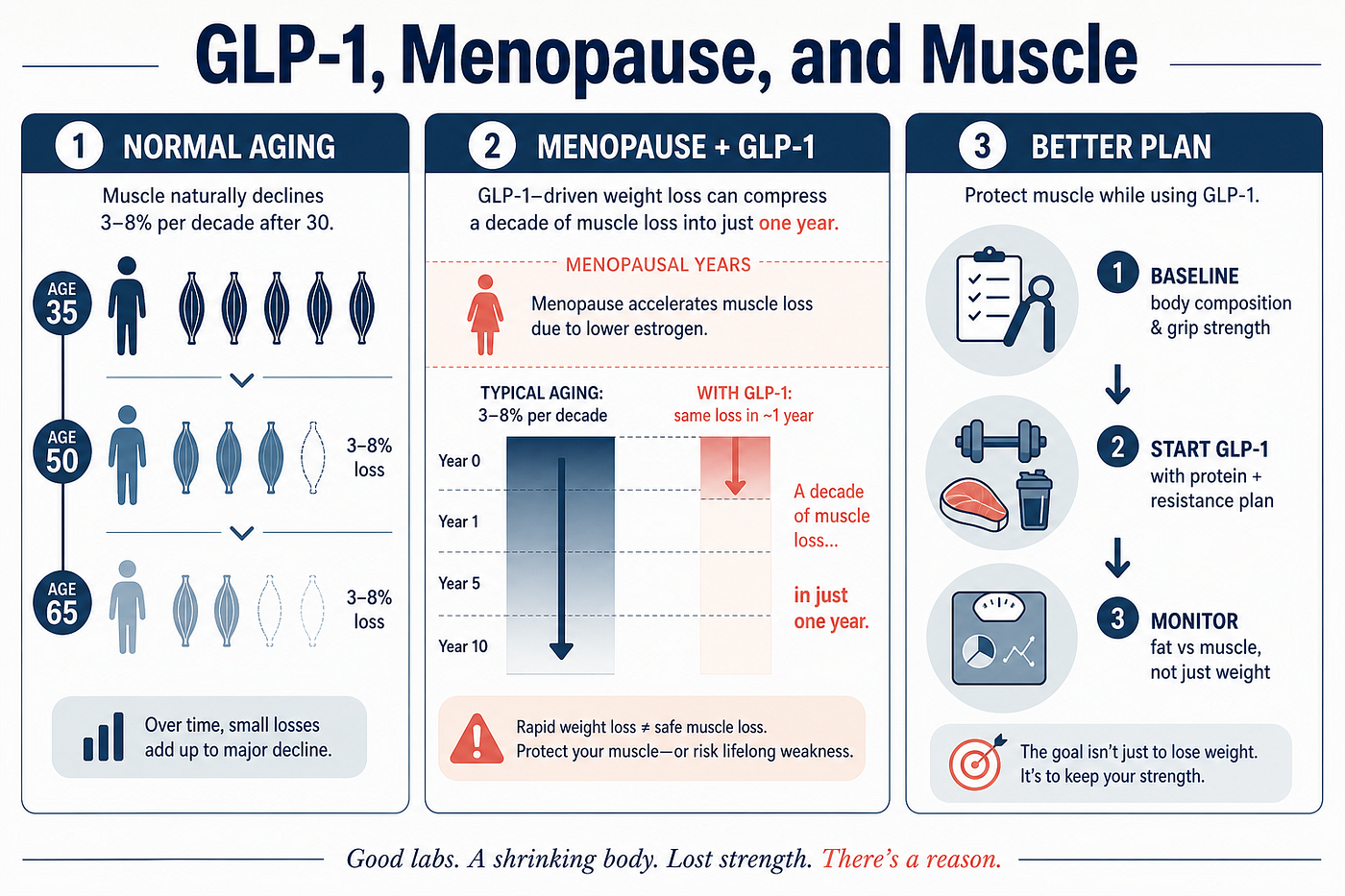
Infographic 2: How menopause and GLP-1 therapy interact, and a better clinical plan. Source: author.
Who Should Be Careful with GLP‑1‑Driven Weight Loss?
A few groups carry meaningfully higher stakes around the muscle question specifically.
Postmenopausal women are the clearest group, given the nearly threefold higher odds of clinically defined sarcopenia and a decade or more of quiet muscle loss most have already absorbed before ever considering a GLP‑1. For this group, body-composition monitoring and a hormonal conversation belong in the plan from the first prescription, not added later if something feels off.
Older adults generally, regardless of sex, start with less muscle reserve and are more vulnerable to the functional consequences of losing more — grip strength, gait speed, and fall risk are not abstract concerns here.
People choosing the most potent agents specifically for maximum total weight loss are, by the data, choosing somewhat less favorable muscle-preservation odds along with somewhat better total results. That’s a real trade-off worth naming explicitly.
And anyone losing weight unusually fast — faster than roughly one to two pounds a week sustained over months — deserves a closer look regardless of which drug is involved.
Where GLP‑1 Therapy Fits in a Longevity-Focused Lifestyle
A GLP‑1 changes appetite. It doesn’t change what your body does with the calorie deficit that appetite suppression creates.
Protein intake has to become deliberate precisely because appetite suppression makes it harder to hit. A target of roughly 1.2 to 1.6 grams per kilogram of body weight during active weight loss is what the muscle-preservation literature consistently points to in older adults, though kidney disease and other conditions warrant individualized targets.
Resistance training, two to three sessions a week at a real working intensity, is the second lever, and it doesn’t require a gym membership to work at the dose most people need.
For postmenopausal women specifically, the hormonal conversation belongs alongside the first two, not after them. Addressing estrogen’s role in muscle maintenance, where clinically appropriate, is part of a complete plan — not an alternative to protein and resistance training, but the third leg of the same stool.
A realistic version of this, for a postmenopausal patient starting a GLP‑1: a protein target hit at most meals, two structured resistance sessions a week, a real conversation about hormonal status, and periodic body-composition tracking rather than the scale alone.
What I Recommend in Clinic
If you’re starting a GLP‑1 and you’re generally healthy, build the protein target and resistance training into the plan from week one. Ask about baseline body-composition testing, so you have something to compare against later, not just a memory of what the scale used to say.
If you’re postmenopausal, this isn’t optional.
Grip strength and a body-composition baseline before you start are worth the extra appointment, and the hormonal conversation deserves equal weight to the prescription itself — not a footnote raised only after muscle loss becomes visible in the mirror.
If you’re choosing between agents specifically because one produces more total weight loss, know what you’re trading, and pair the more potent option with more deliberate support, not less.
Distinguish monitoring, not just medication: a scale number without a body-composition check is incomplete information on this specific question.
If you remember nothing else, remember this: the scale cannot tell fat from muscle, and it certainly cannot tell you whether the hormonal ground a patient is standing on was already working against her before the prescription was written.
So, Are GLP‑1s Good or Bad?
For most people using them as intended, with real attention to protein, resistance training, and some form of body-composition monitoring, GLP‑1 medications are a genuine, evidence-backed advance in obesity treatment.
For postmenopausal women specifically, real caution is warranted — not about the drug itself, but about a plan that ignores the hormonal ground they’re already standing on.
For anyone tempted to treat a future muscle-preservation pill as the fix, the more honest fix is upstream: asking what this body, at this stage of life, needs in order to lose weight without being hollowed out in the process.
Good labs. A shrinking body. Lost strength.
There’s a reason — and sometimes the reason is that the only number anyone was tracking was the one on the scale, while the hormonal and structural context that determined what that number actually meant was never part of the conversation.
The Biology Is Biography series examines one health question at a time — without the hype in either direction.
For deeper clinical essays on what medicine often misses and what patients actually feel, subscribe to my Substack: Healing the Split.
More from Biology Is Biography
Is Hormone Replacement Therapy Actually Dangerous, or Were Women Lied To for Twenty Years?
Is Heart Rate Variability Actually Useful, or Just Another Wellness Number To Obsess Over?
About the Author
Dr. Shiv Kumar Goel is a board‑certified internal, functional, and aesthetic medicine physician based in San Antonio, Texas. He brings over twenty years of clinical experience to Prime Vitality Care, the integrative and functional medicine clinic he founded.
He is the author of two forthcoming books — What Medicine Misses and Patients Feel and Healing the Split — which explore the gap between measurable diagnostics and lived patient experience.
His writing appears in Biology Is Biography (In Fitness And In Health on Medium), Life Beyond Labs (Illumination on Medium), and on his Substack, Healing the Split.
Learn more: drshivgoel.com Reach out: contact@drshivgoel.com
Sources
-
Novo Nordisk. Wegovy pill prescriptions surpass 3 million. PR Newswire, June 6, 2026. [Novo Nordisk’s own reported launch data, not independent surveillance]
-
Grill HJ, et al. MF-300, a 15-PGDH inhibitor, enhances muscle repair during GLP-1 weight-loss treatment. PNAS, 2026. Reported: Stanford Medicine News, June 2, 2026. [Study conducted in young adult male mice; not yet tested in older or obese populations.]
-
Buckinx F, Aubertin-Leheudre M. Sarcopenia in Menopausal Women: Current Perspectives. Int J Womens Health. 2022;14:805–819.
-
Prokopidis K, Daly RM, Suetta C, et al. Weighing the risk of GLP-1 treatment in older adults. J Nutr Health Aging. 2025;29(10):100652.
-
Wilding JPH, et al. Impact of Semaglutide on Body Composition: Exploratory Analysis of STEP 1. Abstract, European Congress on Obesity 2021. J Endocr Soc. 2021;5(Suppl 1):A16–A17. [Full publication pending.]
-
Jastreboff AM, et al. Body composition changes during weight reduction with tirzepatide: SURMOUNT-1 substudy. Obesity. 2025. PMID 39996356.
메타데이터
- post_id
- 6a76da8910ca
- slug
- md-explains-is-ozempic-driven-weight-loss-actually-healthy-or-are-we-just-building-a-pill-to-fix-6a76da8910ca
- url
- https://medium.com/in-fitness-and-in-health/md-explains-is-ozempic-driven-weight-loss-actually-healthy-or-are-we-just-building-a-pill-to-fix-6a76da8910ca
- canonical_url
- https://medium.com/in-fitness-and-in-health/md-explains-is-ozempic-driven-weight-loss-actually-healthy-or-are-we-just-building-a-pill-to-fix-6a76da8910ca
- author_url
- https://medium.com/@drshivgoel
- status
- ok
- fetched_at
- 2026-07-13 06:23:13