The Cadillac Paradox
The company that didn’t want Black customers, until it needed them
American Automotive History
The Cadillac Paradox
The company that didn’t want Black customers, until it needed them
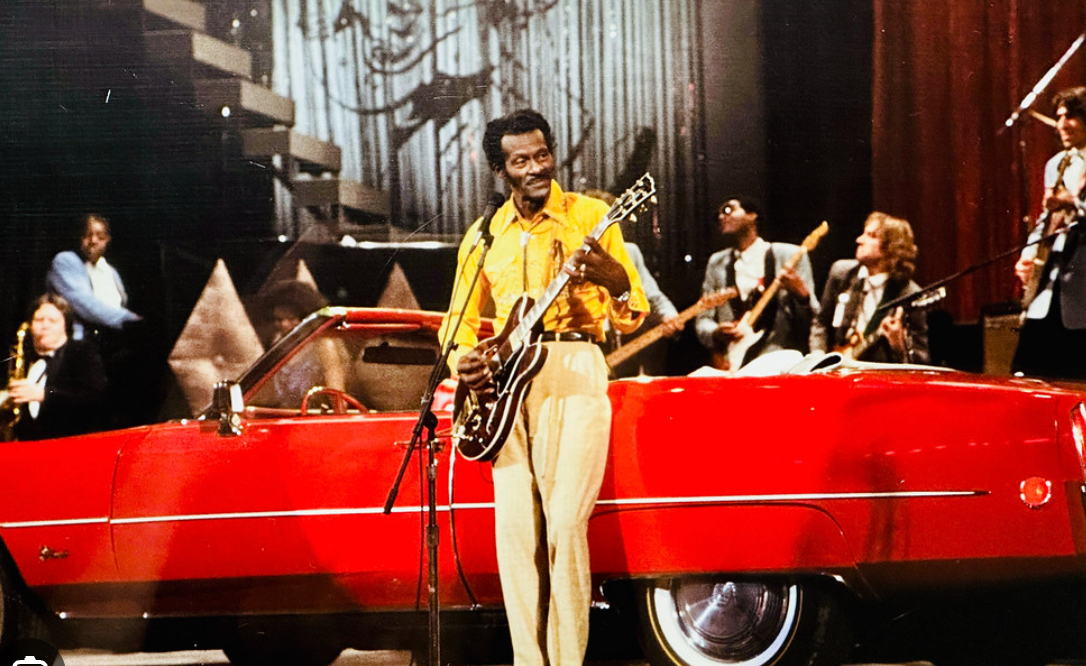
Chuck Berry’s Cadillac Eldarado, Smithsonian Museum of African American History and Culture, Washington DC
Cadillac’s survival in the Great Depression depended in part on Black consumers the company had formally refused to serve. In 1932, General Motors’ executive committee convened to decide whether to let Cadillac die.
The Great Depression had gutted the luxury market, and Cadillac’s numbers told a brutal story. Production had collapsed 84 percent, from more than 20,000 cars in 1928 to barely 3,000 five years later.
Packard, its main rival, still had a foothold with old-money buyers. Cadillac had nothing left but its name. From the earliest days of mass car ownership, automobiles functioned as status symbols in American life, and Cadillac had built its entire identity on guarding that gate.
A man who had not been invited to that meeting knocked on the door and asked for ten minutes. His name was Nicholas Dreystadt, a German immigrant who had come to the United States in 1912 as a twenty-two-year-old mechanic and worked his way up to head of Cadillac’s national service division.
He had spent years traveling to dealerships across the country, and he had noticed something the executives upstairs had not. A striking number of the Cadillacs coming in for service belonged to Black doctors, lawyers, ministers, entertainers, and boxers.
They were new Cadillacs, and by General Motors’ own written policy, none of them should have existed.
Cadillac did not sell to Black customers

How Nicholas Dreystadt ended racism at Cadillac in the 1930s — or tried to — Hagerty Media
As a matter of accepted dealer practice, reinforced by corporate norms about brand exclusivity, Cadillac dealers routinely refused to sell to Black customers, a practice reinforced by corporate norms and tolerated at high levels. This was no oversight. It was company policy.
The company had spent decades building Cadillac into what business historian Ed Cray called America’s status symbol, and GM’s leadership believed that status depended on exclusivity coded as whiteness.
Dealers actually turned Black buyers away at the door, regardless of what was in their bank account.
Black buyers built a workaround. They circumvented the policy by paying white intermediaries, often hundreds above retail, to purchase vehicles on their behalf, creating a parallel market that diverted profits away from GM.
Dreystadt discovered this arrangement and did the math that GM’s executives had somehow missed. What Dreystadt saw was not just hypocrisy but a measurable revenue leak. Every one of those markups was going into a stranger’s pocket instead of General Motors’ own.
He proposed something that, for 1932, was radical only because of who profited:
sell Cadillacs directly to the people already buying them.
The cash itself raises a question worth answering directly. Black Americans in this era were not barred outright from banking by law, but in practice they were shut out of it.
White-owned banks routinely refused Black customers loans, and banking relationships depended on the kind of long-standing personal trust that segregation made almost impossible to build across the color line.
Black communities built their own alternative:
*more than 130 Black-owned banks opened between 1888 and 1930,*
institutions like Maggie Walker’s St. Luke Penny Savings Bank in Richmond and the Binga State Bank in Chicago, created because the mainstream system would not serve them.
That exclusion had roots going back to 1874, when the collapse of the Freedman’s Savings Bank wiped out the savings of tens of thousands of formerly enslaved depositors and left a distrust of banking institutions that lasted generations.
For many Black families, cash on hand, not a bank balance, was simply how wealth was kept, a habit born of exclusion rather than choice. That same cash is what showed up at Cadillac dealerships in the hands of buyers a company had decided, on paper, did not exist.
The money Black buyers carried into those showrooms came from the same system of exclusion that kept them out of the dealership in the first place.
The committee gave Dreystadt eighteen months. By 1934, Cadillac sales had risen 70 percent, and Dreystadt was named head of the entire division. By 1940, sales were up tenfold from their Depression low.
Some historians caution against attributing Cadillac’s entire recovery to Black consumers alone. Their numbers were relatively small. While historians debate the extent to which Black consumers drove Cadillac’s recovery, the timing is clear:
the policy shift coincided with an immediate sales increase and the elimination of intermediary markups.
What followed reveals more about American racial capitalism than about the automobile industry itself. Dropping the sales ban did not mean Cadillac embraced its new customers.
For decades after 1934, the company’s national advertising remained almost entirely white. The dealerships were a different matter entirely, and individual owners often kept discriminating on their own terms long after corporate policy had supposedly changed.

Appreciation: Warren Brown’s freewheeling commentary on cars and life — The Washington Post
Automotive journalist Warren Brown has written about his own mother being turned away from a Cadillac dealership in New Orleans in the 1960s, thirty years after Dreystadt’s reforms, and having to secure her Coupe DeVille through a white intermediary just as Black buyers had done in 1930.
That gap between policy and practice is the real story here, and it is a familiar one to anyone who has covered how American institutions integrate on paper while resisting integration in fact. Cadillac wanted Black money, but it did not want to be seen wanting Black customers.
The two positions coexisted for decades without much apparent contradiction from the people running the company.
For Black buyers themselves, the meaning of the car went beyond the transaction. Historian Meagan Monahan has argued that purchasing a Cadillac signified not only wealth but a personal victory against a system designed to deny that wealth any visible expression.
In an era when redlining kept Black families out of the neighborhoods that signaled arrival, and country clubs and resorts kept them out of the leisure spaces that signaled belonging, a Cadillac in the driveway was one of the few status markers the country could not zone or blackball away.
Peter Drucker, who knew Dreystadt personally through a later consulting project at GM, put it more starkly. He wrote that Cadillac was the only success symbol available to an affluent Black man who had no access to good housing, exclusive resorts, or any other outward sign of having made it in America.
There was a more practical dimension too, one that had nothing to do with status and everything to do with survival.

Q&A with Author Gretchen Sorin on Her book ‘Driving While Black’ | The New York Public Library
Historian Gretchen Sorin, whose book Driving While Black remains the definitive account of Black travel during the Jim Crow era, has documented why large cars specifically, Cadillacs and Buicks among them, became preferred vehicles for Black families making long trips.
That safety concern had already produced its own solution decades before Sorin wrote about it. In 1936, a Harlem mail carrier named Victor Hugo Green published the first edition of what became known as the Green Book, a guide listing hotels, restaurants, and gas stations across the country that would serve Black travelers without incident.

Victor Hugo Green’s Green Book for African American travelers
Green compiled it himself from his own experience and from reports sent in by fellow postal carriers, and it remained in print until 1966, two years after the Civil Rights Act made much of its purpose obsolete. Sorin’s research draws heavily on Green’s original guide, and Green himself died in 1960, before the fight the guide documented was finished.
Restaurants along the route might refuse service. Motels might refuse rooms. A car roomy enough to sleep in and to carry food for the journey was not a luxury indulgence. It was a contingency plan for a country that offered no guarantee of a place to eat or stay.
Sorin has also pushed back on the modern stereotype that Black Americans today own Cadillacs at disproportionate rates, a useful corrective for anyone tempted to flatten this history into a simple brand-loyalty narrative.
The cultural afterlife of that history is now well documented.

How the museum talked Chuck Berry into giving up his prized red Cadillac — The Washington Post
Chuck Berry’s 1973 Cadillac Eldorado convertible sits on permanent display at the Smithsonian’s National Museum of African American History and Culture, a car that moved from blues and jazz era status symbol to a museum artifact of American history.
From soul and funk to hip-hop, the Cadillac became shorthand for arrival, the same role it had played decades earlier for Black doctors, lawyers, ministers, and athletes.
None of this is folklore, and none of it should be flattened into a tidy redemption arc either. Cadillac did not have a change of heart in 1932. It had a balance sheet problem, and a mid-level manager with the nerve to point out that the company’s own racism was costing it money.
For decades, Black buyers paid a racism tax just to own what they could already afford outright.
The policy change exposed a deeper contradiction:
Cadillac was willing to accept Black wealth but not Black visibility.
Corporate rules shifted, but representation and dealership behavior lagged, revealing how economic inclusion did not translate into social equality. Long before General Motors admitted Black Americans belonged in its showrooms, Black Americans had already decided Cadillac belonged in their driveways.
History is not just about what companies sold. It is also about who they refused to sell to, who found ways around those barriers anyway, and how those excluded customers often shaped American business far more than executives ever admitted.
If this piece gave you a new way to think about luxury, race, and the hidden economics of discrimination, I would appreciate your claps and your thoughts.
Further Reading and Viewing
How Nicholas Dreystadt ended racism at Cadillac in the 1930s, or tried to. The fullest account of Dreystadt’s pitch to GM, and the source for how little Cadillac’s marketing actually changed once the sales ban lifted.
The Man Who Saved the Cadillac. The original 1995 magazine profile that most later retellings, including this one, trace back to. Worth reading for the texture Drucker’s anecdote doesn’t capture, including who Dreystadt actually was as a person.
Did Sales to Blacks Save Cadillac During the Depression? The strongest skeptical take available, with the math laid out plainly on why the “Black buyers alone saved Cadillac” version oversimplifies a more complicated recovery.
Did Black America Save Cadillac? Jim Crow Museum. A careful fact-check that separates what is documented from what has calcified into legend, including the debunked claim that Black Americans were financially insulated from the Depression.
African Americans Saved Cadillac, Los Angeles Sentinel. The story as told in the Black press, by a writer whose own business background gives the piece a different vantage point than the automotive trade coverage.
Driving While Black: African American Travel and the Road to Civil Rights, Gretchen Sorin. The definitive book on why large cars mattered to Black travelers beyond status, and the best corrective to the modern Cadillac-ownership stereotype. Also the basis for the Ric Burns PBS documentary of the same name, worth seeking out if you’d rather watch than read.
Driven! America’s Obsession with the Automobile, University of Iowa Libraries. The source for the framing claim that opens the piece, on how automobile ownership became a status symbol from the earliest years of mass car ownership, well before Cadillac entered the picture.
Black People Been Banking: A History Of Black Banks From 1888–1930, Black Enterprise. The source for the scale of Black-owned banking built in response to exclusion from mainstream institutions, and the context for why cash, not bank deposits, carried Black wealth in this era.
Building Trust in the Financial System Is Key to Closing the Racial Wealth Gap, Urban Institute. The source on the Freedman’s Savings Bank collapse and its lasting effect on Black Americans’ relationship with banking institutions.
Victor H. Green, Author and Pioneer, Federal Highway Administration. The source on Victor Hugo Green, the Harlem postal worker who created the Green Book, the travel guide that Sorin’s research builds on.
메타데이터
- post_id
- 6a82d418e87a
- slug
- the-cadillac-paradox-6a82d418e87a
- url
- https://medium.com/the-polis/the-cadillac-paradox-6a82d418e87a
- canonical_url
- https://medium.com/the-polis/the-cadillac-paradox-6a82d418e87a
- author_url
- https://medium.com/@jusbouey
- status
- ok
- fetched_at
- 2026-07-15 10:47:00