Coping with Wanderlust When You Feel Trapped
Research-backed ways to cope with uninstantiated wanderlust
Coping with Wanderlust When You Feel Trapped
Research-backed ways to cope with uninstantiated wanderlust
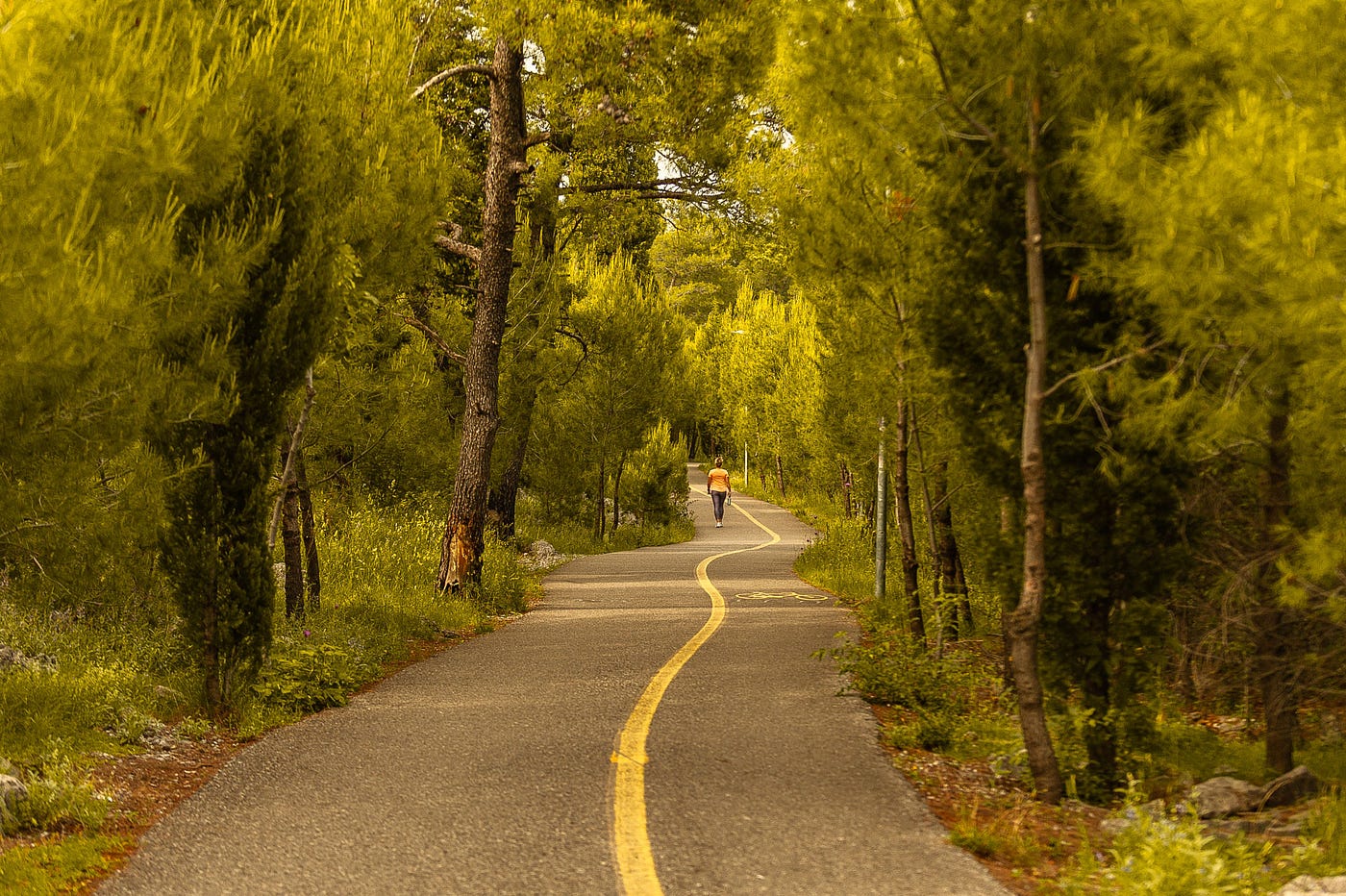
Photo by Alexander Nadrilyanski | Pexels
Psychology researchers studying Self-Determination Theory found that travel directly satisfies 3 of our most foundational human needs — autonomy, competence, and relatedness. When you can’t satisfy those fundamental needs — even not being able to travel to places and experiences close by — this causes your soul or inner child to feel as if something is missing. Here are 12 research-backed ways to cope with uninstantiated wanderlust.
1. Your Restlessness Is Not a “Bad” Feeling
When you can’t move or travel — whether by lockdown, by disability, or by financial walls — mental health researchers have found it isn’t dramatic to say these effects are real and adverse. A cross-sectional study on Ecuadorian young adults during COVID-19 found that higher mobility restriction was significantly associated with greater depressive symptoms, poor sleep quality, and lower sense of coherence, with women and young people bearing the heaviest psychological cost. Don’t be too hard or second-guess yourself — your longing is valid.
2. Know What Kind of Wanderlust You’re Carrying
Not all wanderlust is the same. There’s expansion wanderlust — a good kind of wanderlust, rooted in curiosity and a hunger to grow — and there’s escape wanderlust, a red flag that something underneath your current life needs addressing. Clinical researchers studying coping and motivation note that when travel fantasies are mostly about getting away from something rather than going toward something, the underlying dissatisfaction — work that feels hollow, relationships that feel stifling, a lack of direction.
3. Use Memory as a Restorative Tool
Environmental psychologists want you to know that you don’t have to be in a place for it to heal you. In an online study of 234 adults, Eleanor Ratcliffe and Kalevi Korpela found that memories of favorite places — specifically memories involving a sense of self and time — predicted restorative perceptions of those places through place identity, meaning the memory itself carries psychological healing and restoration. Pulling out old travel photos, writing detailed sensory journal entries from a trip, or assembling a photobook can be great restorative tools.
4. Imagination Is Regulation
There’s a reason you feel something real when you watch a documentary about Patagonia or scroll through images of Kyoto in Autumn. Research on restorative environments confirms that simply imagining being in a cherished or desired environment can produce measurable stress relief and mood improvement, especially when the imagined space carries personal meaning. Practice slowing down the imagination to let yourself inhabit the place mentally — the smell of rain on stone streets, the weight of a pack, the particular blue of a foreign afternoon — rather than just passively consuming the imagery.
5. Plan Concretely, Even If “Later” Is Uncertain
Travel researchers and psychologists studying agency and coping state future planning restores a sense of control even when the future is unclear. Building a detailed travel spreadsheet — routes, estimated costs, best seasons, specific restaurants or trails — converts an unresolvable craving into a living creative project, and that reframe reduces wanderlust distress.
6. Work on Place Attachment with Your Current Environment
Place attachment — that quiet emotional bond to a specific location — is studied by environmental psychologists as a direct driver of wellbeing. Research published in the Journal of Environmental Psychology found that place attachment satisfies at least thirteen documented psychological needs, including belonging, relaxation, positive emotion, personal growth, and a felt sense of freedom. The catch: attachment grows slowly, through accumulated memory and routine. Try visiting the same café every Saturday morning; walking the same park loop after work; reading on the same bench each week; inviting a friend over for dinner, celebrating a small milestone at a nearby restaurant, taking seasonal photos of your neighborhood or park; learning your neighbors’ names, volunteer nearby, or attend supportive community events.
7. Be a Deliberate Tourist in Your Own City
Expanding your activity space—the set of physical environments you regularly move through — is associated with better mental health than staying inside a narrow radius around or in your home. Walk a different walking path every Thursday. Find the most historic café in town. Look up the actual history of your neighborhood or town — there’s almost always something strange and fun with exploring. Environmental psychologists describe this as building local novelty, and the brain’s novelty-seeking pathways don’t particularly care whether you’re in Lisbon or your hometown— it cares whether something is genuinely new to you.
8. Watch the Comparison Spiral Closely
Social media has made wanderlust more painful as it creates the constant impression that everyone else is perpetually in motion while you are permanently still. Researchers studying emotion regulation have found that cognitive reappraisal — deliberately reconsidering the meaning of a situation rather than suppressing the emotion — is one of the most evidence-supported tools for reducing emotional distress. The reframe is someone else’s journey isn’t evidence against mine.
9. Grow Your Social Roots Wherever You Are
Research on mobility limitations and emotional dysfunction found that social ties significantly buffered the relationship between restricted mobility and emotional dysfunction — meaning connection doesn’t just feel good, it protects your mental health when your movement is constrained. Wanderlust is partly a hunger for relatedness — for new people, new conversations, new ways of being seen.
10. Creative Projects Help
Environmental psychology researchers studying creative reappraisal found that creative insight during reappraisal engaged the hippocampus and ventral striatum in ways that produced both immediate emotional relief and long-lasting reductions in negative affect. Try writing an essay about that trip that changed you. Make the photo book. Start the blog you’ve been putting off. Build the fictional world set in a city you haven’t visited yet. Turning wanderlust into a made thing turns the longing energy into something productive.
11. Learn to Recognize When You're in Crisis
Wanderlust, left unaddressed, can turn into chronic depression, hopelessness, or a feeling that your real life is perpetually on pause. Disability and chronic illness researchers have documented that individuals with mobility impairments show significantly higher rates of depression, more negative affect, greater pessimism, and weaker perceived control over their health and lives compared to those without limitations. If wanderlust turns into despair your next move is to seek out professional support.
12. You Can Have A Home and A Dream
With wanderlust you don’t have to choose between belonging here and longing for elsewhere. Place attachment research suggests that strong emotional bonds to a home environment can coexist with and even stabilize the desire to explore, providing the psychological security that makes future adventures more meaningful when they eventually arrive.
The Takeaway
For wanderlust, understanding and processing the emotion can look like many things — redirecting the curiosity, novelty-seeking, and desire for growth into memory, imagination, local exploration, creative projects — all of which carry real, documented benefits for mood, identity, and wellbeing — never stop wondering.
Seth Jantz | Essayist with an M.A. in Psychology
Post may also be found on Substack.
메타데이터
- post_id
- 6a858b64f7b7
- slug
- coping-with-wanderlust-when-you-feel-trapped-6a858b64f7b7
- url
- https://medium.com/@sethjantz/coping-with-wanderlust-when-you-feel-trapped-6a858b64f7b7
- canonical_url
- https://medium.com/@sethjantz/coping-with-wanderlust-when-you-feel-trapped-6a858b64f7b7
- author_url
- https://medium.com/@sethjantz
- status
- ok
- fetched_at
- 2026-06-26 21:52:29