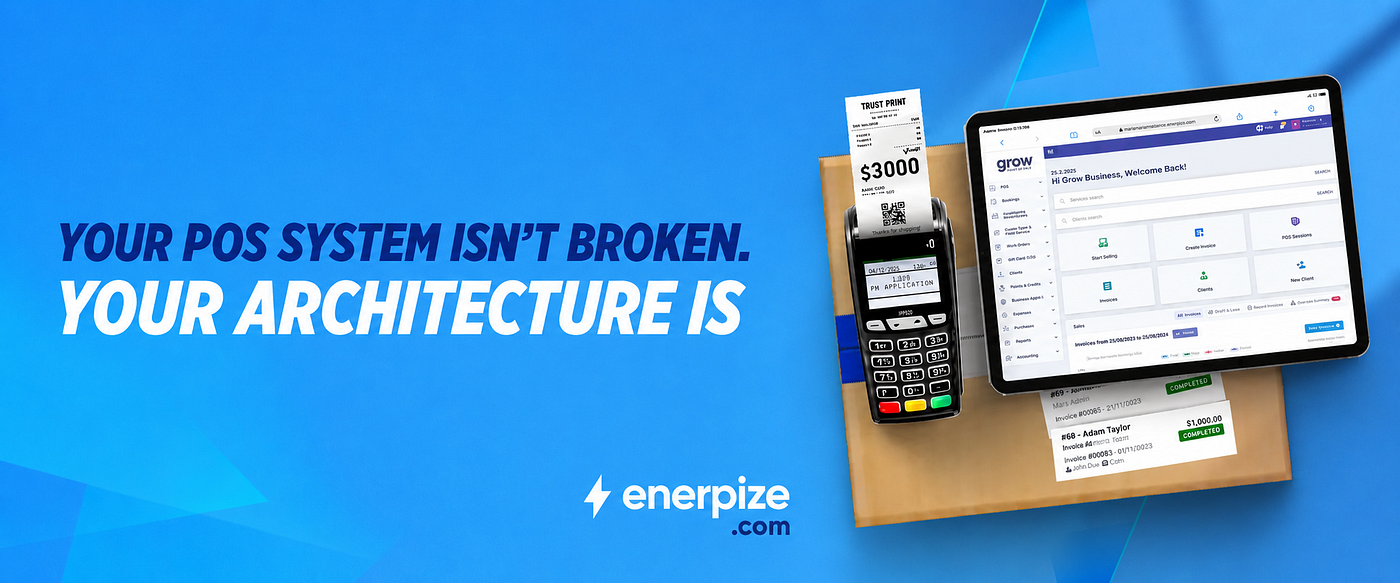
Your POS System Isn’t Broken. Your Architecture Is
Why the “integration” checkbox on every software pricing page is lying to you
Your POS System Isn’t Broken. Your Architecture Is
Why the “integration” checkbox on every software pricing page is lying to you
Most retail business owners have been sold the same promise at least twice.
The sales rep pulls up the pricing page, points to the checkmarks next to “Inventory Integration” and “Accounting Integration,” and explains that everything talks to everything. One system. One dashboard. No more reconciliation headaches.
Then the business goes live. And a few months in, the stock count on the inventory screen is off by three units. The books are behind by a day. Someone’s chasing a discrepancy between what the POS says it sold and what the accountant’s platform actually shows.
The product didn’t fail. The checkmarks were accurate.
The problem is that “integration” can mean two completely different things, and the pricing page doesn’t tell you which one you bought.
The connector trap
Here’s what most POS “integrations” actually look like under the hood.
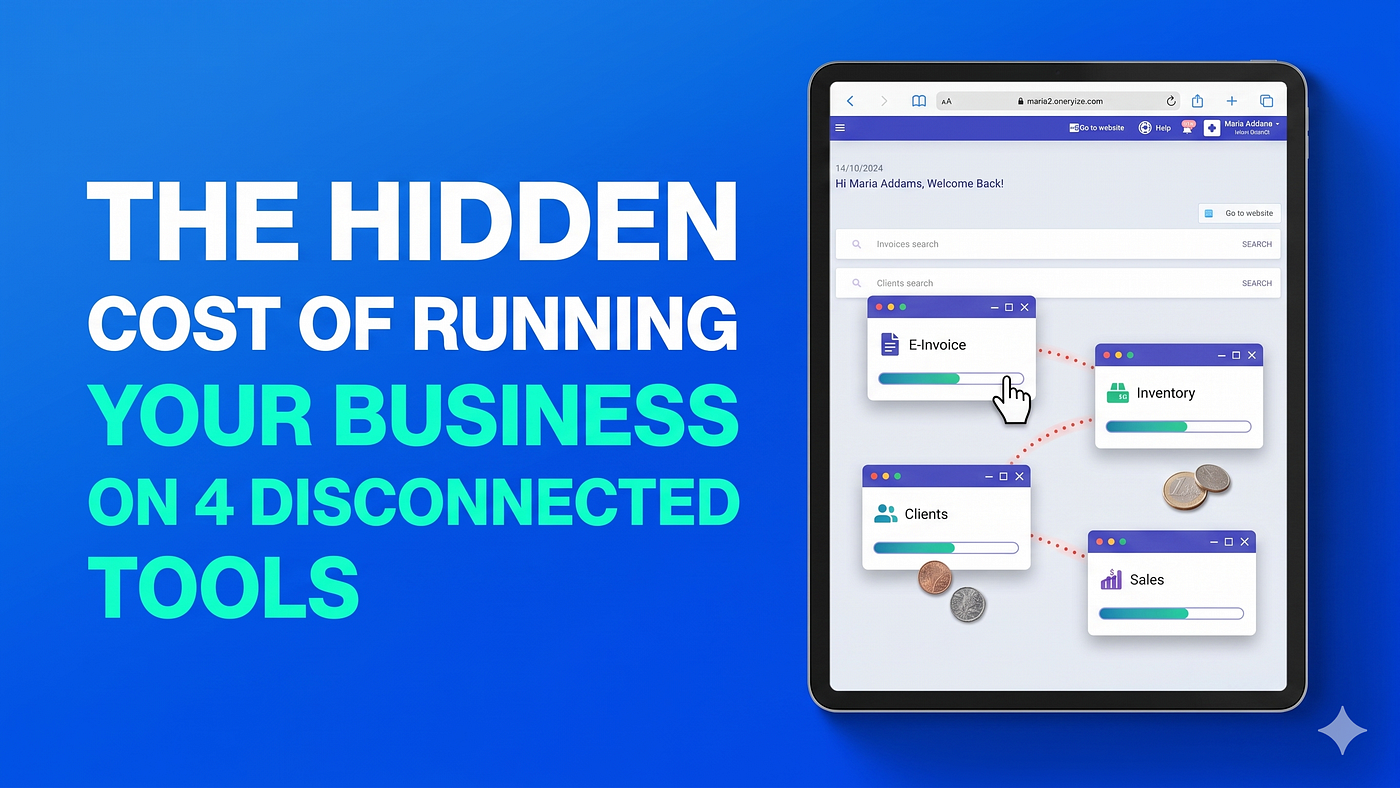
Your POS records a sale in its own database. A connector — usually a third-party middleware tool or an API sync layer — wakes up on a schedule, reads the POS database, translates the data into a format your inventory or accounting platform understands, and pushes it across. Everything works. Until it doesn’t.
The connector has its own failure modes. API rate limits. Connectivity drops. Update conflicts when either vendor pushes a new version. Silent failures that don’t throw an error — they just stop syncing, and you find out three days later when someone notices the books don’t match the register.
These aren’t rare edge cases. They’re the normal failure mode of connector-based integration. The business isn’t running on one system. It’s running on three systems held together by a fourth system nobody really manages.
The cost isn’t just the connector’s monthly subscription fee. It’s the staff time on manual reconciliation, the stockouts caused by yesterday’s inventory count, the accountant’s extra hours at month-end untangling what the POS reported versus what the ledger shows. That cost is invisible until you add it up.
What real integration actually requires
A completed sale at the register is a single event. It should trigger multiple simultaneous outcomes: stock decreases, revenue is recorded, the journal entry posts to the chart of accounts, the customer record updates. Not on a schedule. Not through a sync. Simultaneously, because all of those modules share the same transaction record and the same database.
That’s the architectural difference that matters. When the POS, inventory, and accounting modules run in the same system on the same database, there is no sync delay, no data format translation, no API rate limit, no single point of failure in a middleware layer. The sale happens. Everything downstream of it updates instantly.
This isn’t a premium feature. It’s a structural decision the software vendor made when they built the product. Bolt-on integration was added later, to a POS that was built as a point-of-sale tool first. Native integration exists in systems that were built as complete business platforms and include POS as one module inside a broader architecture.
The question is which one you’re evaluating.
The specific places where connector-based integration shows its seams
Inventory count discrepancy. A customer buys the last unit of a product. The POS records the sale. The inventory system, syncing every four hours, still shows one unit available. A staff member confirms stock over the phone. The item ships. The complaint arrives. This is the normal operating condition of a connector-based sync, not a malfunction.
Month-end reconciliation. A sale processed at 11pm on Tuesday doesn’t appear in the accounting platform until the morning sync. If there’s a connectivity issue, it doesn’t appear until someone notices and manually re-triggers the process. The P&L report always carries a small asterisk of uncertainty because the books are always slightly behind the register.
Update breaks. Either the POS vendor or the accounting vendor pushes a platform update. The connector, which was built against specific API versions, breaks. The business owner finds out by noticing a discrepancy. Diagnosing and fixing it requires either technical knowledge or a support ticket to a third-party vendor who had no involvement in the original setup.
Cost center blindness. The POS produces a per-location sales report. The accounting platform has no knowledge of which branch generated which revenue unless someone manually allocates it. The books are consolidated but not broken down by location, because the assignment has to happen somewhere in the middle, in a connector layer that wasn’t designed for that level of nuance.
The question worth asking before the next software demo
It’s not “does your POS integrate with accounting and inventory?” Every platform will say yes.
The better question is: when a sale goes through at the register, how many separate databases does that transaction write to? And if the answer is more than one, what happens when the sync between them fails?
A native system has one answer to that question. One database, one transaction, everything updated in the same write. A connector-based system has a different answer — and that answer is where the reconciliation hours and the stockout complaints and the month-end discrepancies come from.
The checkmark on the pricing page is real. The architecture behind it is the part worth reading carefully.
Enerpize is a cloud ERP platform with native POS, inventory, and accounting integration — no add-ons, no connectors, starting at $9.99 per month. The full breakdown of how native POS integration works across inventory, accounting, purchase management, and multi-location operations is here: Is There a POS System That Connects Directly to Inventory and Accounting Without Add-Ons?
메타데이터
- post_id
- 6abdfd1b58d1
- slug
- your-pos-system-isnt-broken-your-architecture-is-6abdfd1b58d1
- url
- https://medium.com/@enerpize/your-pos-system-isnt-broken-your-architecture-is-6abdfd1b58d1
- canonical_url
- https://medium.com/@enerpize/your-pos-system-isnt-broken-your-architecture-is-6abdfd1b58d1
- author_url
- https://medium.com/@enerpize
- status
- ok
- fetched_at
- 2026-06-20 20:29:01