Part VIII — The Crow’s Nest
Part eight of a series chronicling Hurricane Helene recovery from the perspective of a homeowner, disaster recovery volunteer, and…
Part VIII — The Crow’s Nest
Part eight of a series chronicling Hurricane Helene recovery from the perspective of a homeowner, disaster recovery volunteer, and community advocate.
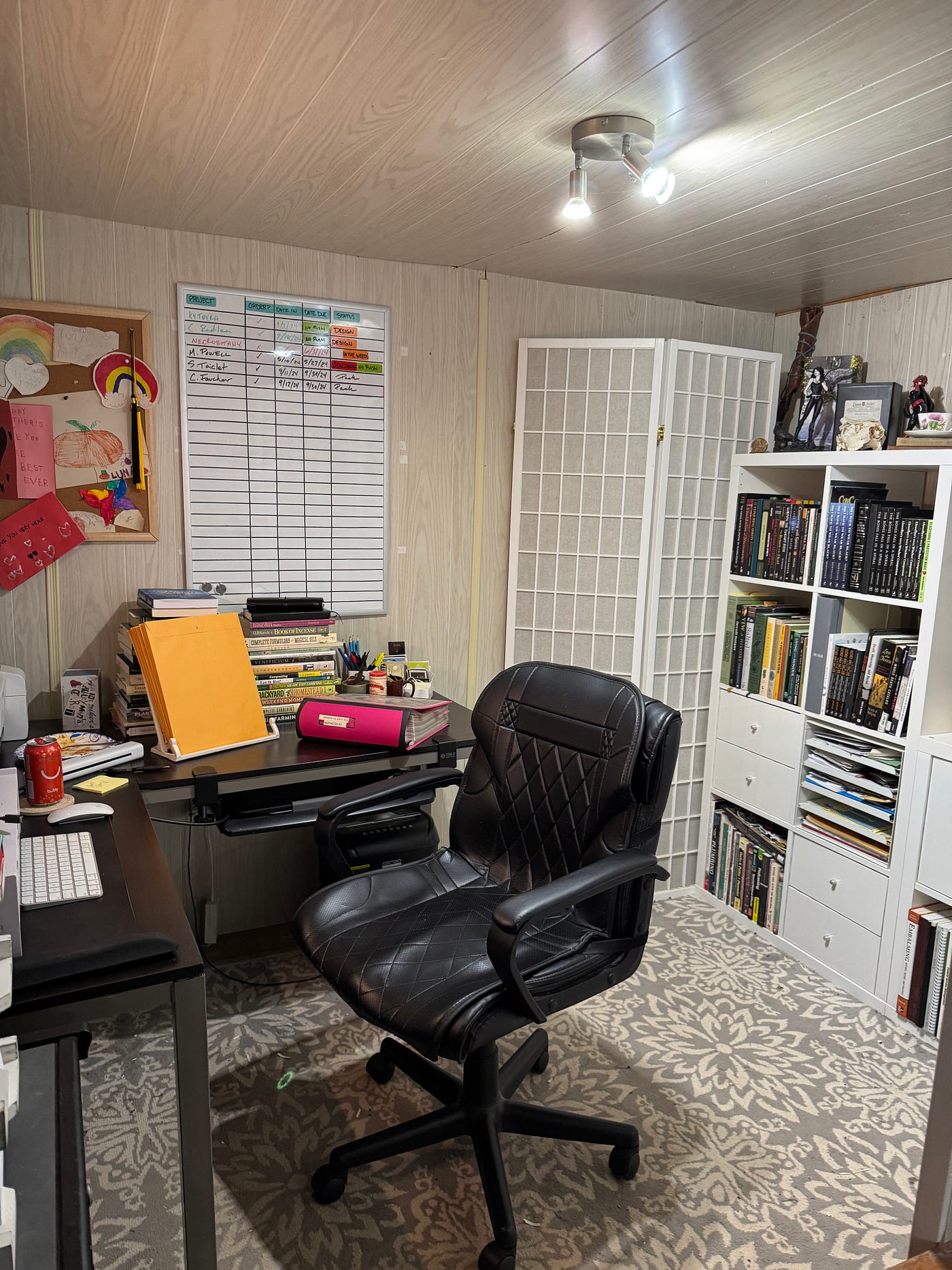
My office only a few days before the storm.
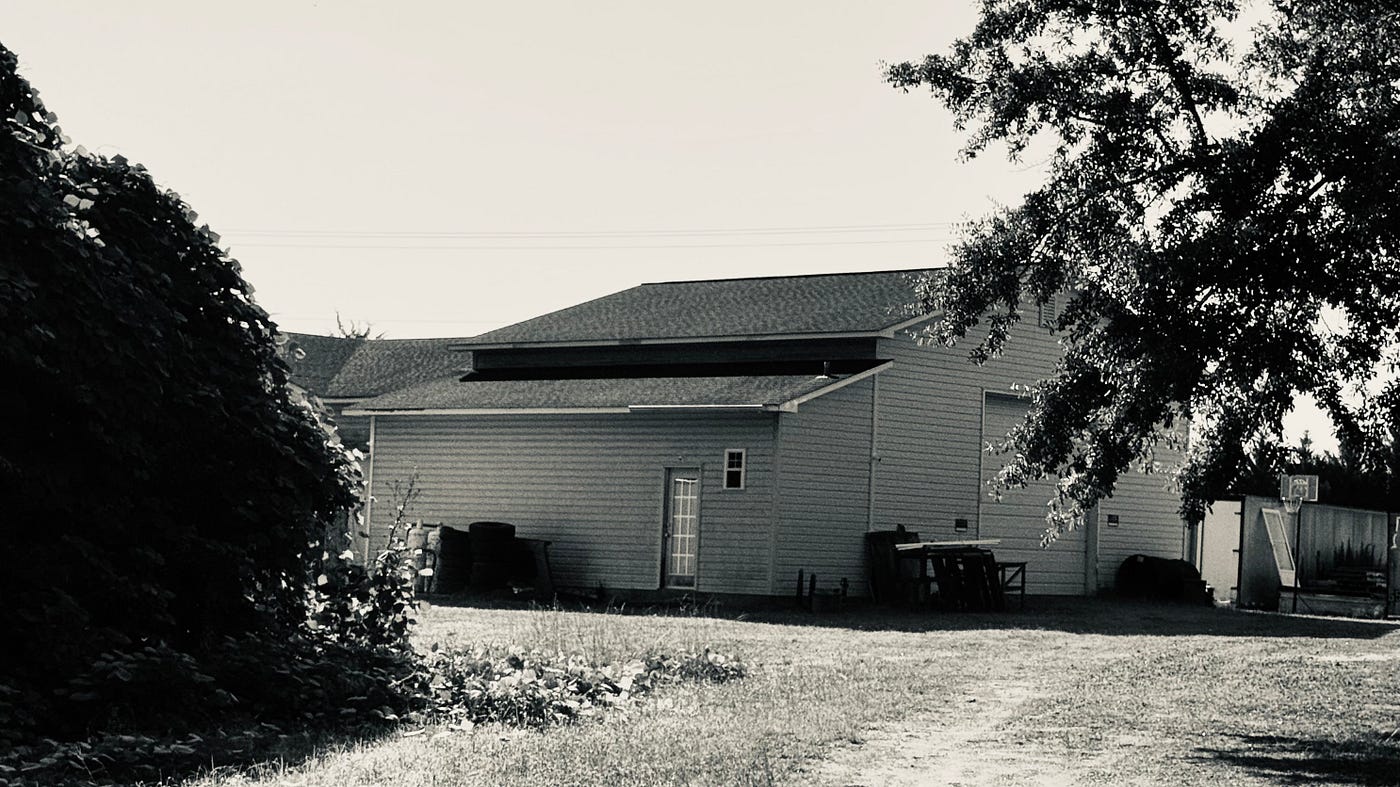
Behind our home and tucked beneath the trees stands a ten-by-twenty-foot shed that was never quite big enough. There was nothing remarkable about it when it arrived — it was an ordinary storage building bought on a pay-to-own plan from a local business. Over the years I insulated it, ran electricity and internet to it without ever quite getting around to plumbing, covered the walls with the sort of paneling that’s cheap but looks nice enough, built shelves, hung lights, and watched it become something more than it was ever meant to be.
Not my home… my work.
People have a tendency to imagine creative work as something romantic. They picture writers in libraries and artists in airy lofts and clergy in sanctuaries but the reality is usually much less glamorous. My work happened in a shed where it leaked occasionally and the floor creaked and the insulation was imperfect. In the summer it was unbearably hot, and in winter I wore gloves while working because I couldn’t keep my hands warm enough to type.
I loved it anyway.
Every book I’ve written began there. Every podcast interview and livestream. Hundreds of classes taught to students scattered across the world. Ideas left Rutherford County and somehow found people thousands of miles away because the internet has a strange way of collapsing geography.

The workbench, where someone can usually be seen perched, working on a project.
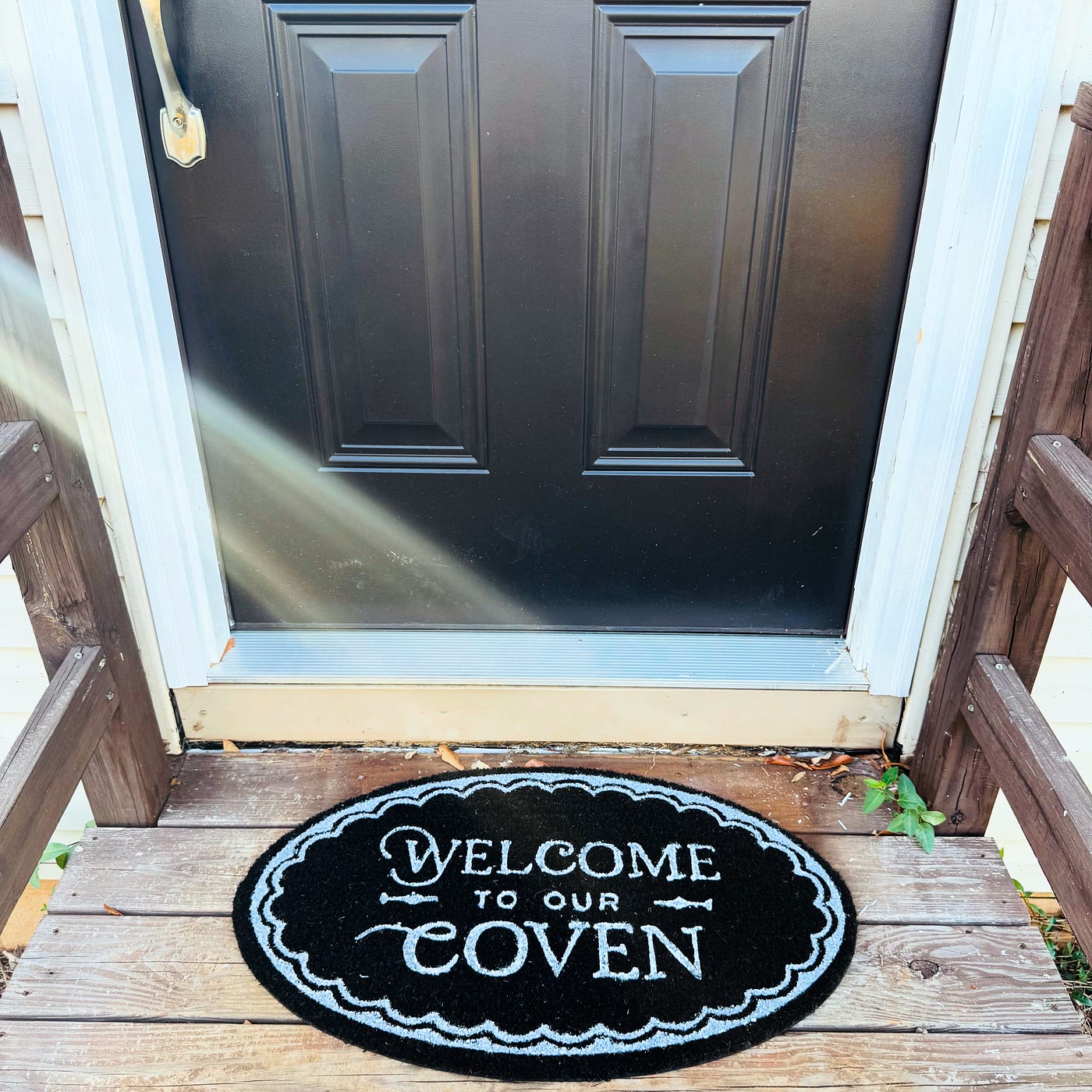
And over time, that little shed stopped belonging only to me. It became the office for The Coven of Leaves, and later, the Indivisible RuCo Coalition. Meetings happened there. Grant applications and public comments were written there. Disaster recovery presentations were assembled there. Volunteers were coordinated, supplies sorted, archives kept, and countless phone calls made.
It accumulated teaching props and tents and folding tables and artwork waiting to be finished and half-written manuscripts and half-eaten sandwiches and boxes waiting to be mailed and coffee cups forgotten on shelves.
When a neighbor had an idea but nowhere to make it real, or a neighborhood child needed to build a diorama or teenagers with a garage band wanted to make flyers, or a small business needed a logo, or care packages needed assembling for a resource fair — it happened there. And over time, it became the sort of place where people arrived carrying problems and left carrying possibilities.
One of the stranger things about disaster recovery is discovering how many words we don’t have. There is no insurance category for “the outbuilding where fourteen years of your life’s work happened.” No line item for “the place where people found you when they were grieving.” No depreciation schedule for trust. No replacement-cost estimate for community.
Heavy equipment doesn’t distinguish between the rooms where you slept and the rooms where you became yourself.
For years I’d imagined one last finishing touch — I wanted one of those old wooden tavern signs hanging out front. Hand carved and lovingly painted, swaying gently in the wind. It would simply read: The Crow’s Nest.
There’s an old tradition aboard sailing ships that the crow’s nest belongs to the person looking outward. Their job isn’t to steer the ship or raise the sails. Their job is to climb higher than anyone else and keep watch — to spot storms before they arrive, search for land, and warn everyone below what lies ahead.
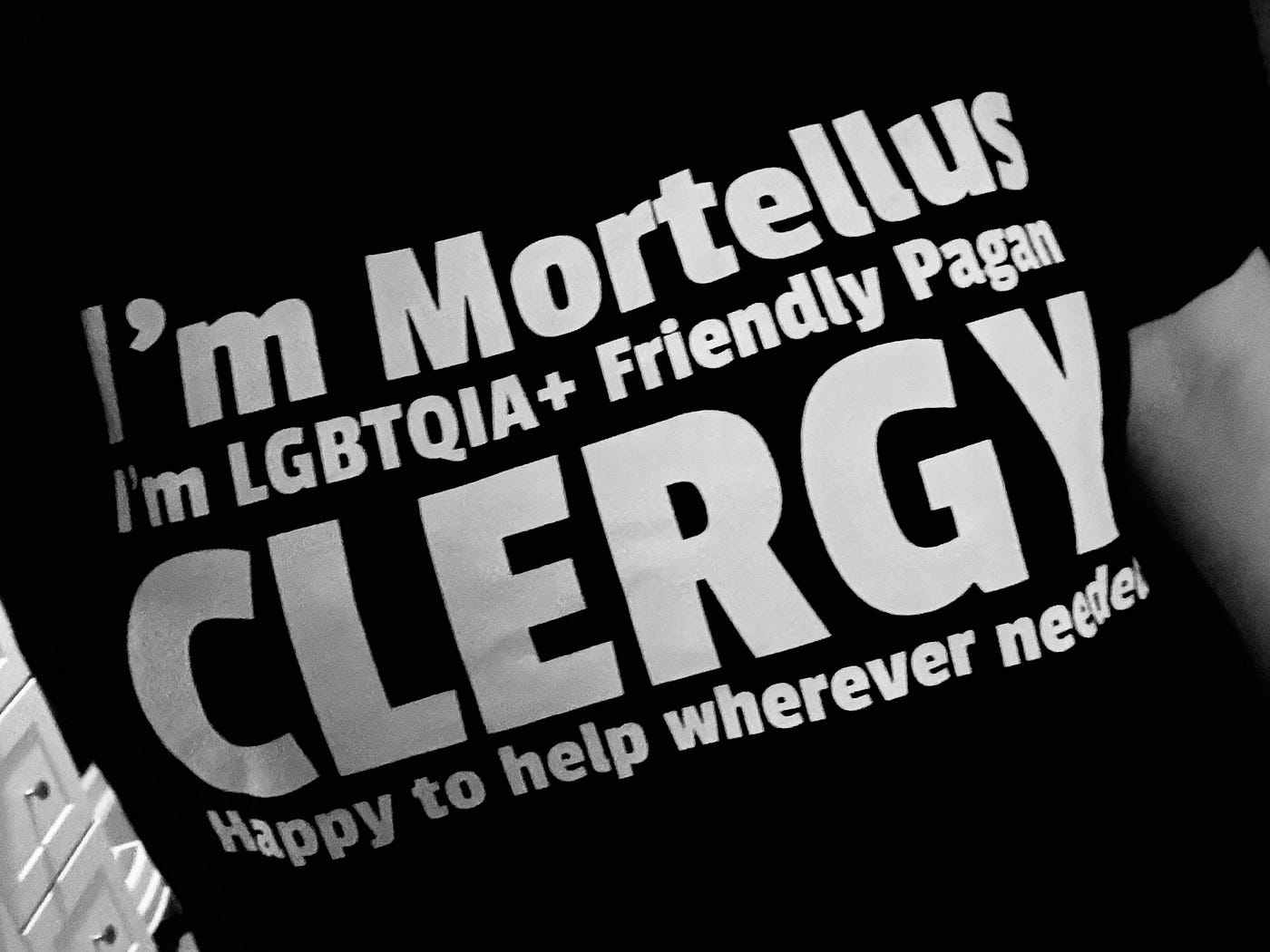
I’ve spent much of my adult life trying to do exactly that. Sometimes through books. Sometimes through ministry. Sometimes through advocacy. Sometimes through disaster recovery. That room mattered not because it was mine, but because it was where we kept watch. It belonged to all of us.
When the excavators arrive, they’ll flatten the house — and they’ll flatten the Crow’s Nest too.
The difference is that neither insurance, nor FEMA, nor Renew NC will rebuild it.
Would you like to help us survive the incredibly stressful vacation we’re taking thanks to Hurricane Helene? We have a LinkTree that includes our GoFundMe, Wishlists, and contact information.
메타데이터
- post_id
- 6acb2ed60e3a
- slug
- part-viii-the-crows-nest-6acb2ed60e3a
- url
- https://medium.com/building-sanctuary/part-viii-the-crows-nest-6acb2ed60e3a
- canonical_url
- https://medium.com/building-sanctuary/part-viii-the-crows-nest-6acb2ed60e3a
- author_url
- https://medium.com/@acrowandthedead
- status
- ok
- fetched_at
- 2026-07-14 12:07:13